
ICU Medical Portex Endotracheal Tube Recall Alert, One Death Reported, Affected Lots and What Parents Should Know
The U.S. Food and Drug Administration (FDA) issued an Early Alert on November 25, 2026, about certain ICU Medical Portex endotracheal tubes after a manufacturing problem was found that can make some tubes softer than intended. In newborns and young infants, an overly soft tube may be hard to insert, may kink or may resist ventilation.
ICU Medical reported one death associated with the issue as of November 16, 2026, according to the FDA. The manufacturer sent customer removal notices on November 20, 2026.
Hospitals and healthcare facilities should check inventory against the FDA lot list, stop using affected tubes immediately, and destroy or quarantine them. These are hospital-supplied clinical devices, not household products, so parents cannot check them at home. A parent who is worried about their child’s treatment should ask the hospital’s clinical team or patient safety department.
This is an Early Alert about a potentially high-risk issue, not yet a confirmed Class I recall. The FDA has not announced a final classification, and no court has found the cause of the reported death.
ICU Medical Portex Endotracheal Tube Alert: Quick Facts
| Detail | Official information |
| Manufacturer / brand | ICU Medical, Inc. / Portex |
| Affected devices | Uncuffed endotracheal tubes and Polar preformed endotracheal tubes |
| Product codes / sizes | Five / 2.5 mm, 3.0 mm and 3.5 mm |
| Population of concern | Newborns and young infants |
| Manufacturer customer notice | November 20, 2026 |
| FDA Early Alert | November 25, 2026 |
| Reported deaths | One, as of November 16, 2026 |
| Serious injuries | Not specified in the public alert |
| Manufacturing issue | Variation in plasticizer concentration in the resin |
| Risks | Difficult intubation, kinking, resistance to ventilation, inadequate ventilation |
| Total affected units | Not disclosed |
| Required action | Discontinue use; destroy or quarantine affected inventory |
| Final FDA classification | Not announced |
| ICU Medical customer service / complaints | 800-258-5361 / 866-216-8806 |
| Consumer compensation program | None announced |
Source: FDA Early Alert: ICU Medical Removes Portex Endotracheal Tubes.
Which Portex Endotracheal Tubes Are Affected?
The FDA lists five product configurations across two Portex designs. Facilities should match the item number, device identifier and manufacturing lot.
| Item number | Description | Device identifier (UDI-DI) |
| 100/127/025 | Uncuffed Murphy Eye oral/nasal tube, 2.5 mm | 15019315019807 |
| 100/127/030 | Uncuffed Murphy Eye oral/nasal tube, 3.0 mm | 15019315019814 |
| 100/127/035 | Uncuffed Murphy Eye oral/nasal tube, 3.5 mm | 15019315019821 |
| 100/134/030 | Polar Clear South oral uncuffed tube, 3.0 mm | 15019315020551 |
| 100/134/035 | Polar Clear South oral uncuffed tube, 3.5 mm | 15019315020568 |
The FDA announcement shows a shortened identifier for item 100/134/030. The full identifier above is confirmed in the AccessGUDID record. A matching product code does not mean every lot is affected, since the lot list decides.
How to Check Affected Lot Numbers
The FDA published a separate spreadsheet of affected lots: Download the official FDA list of affected Portex lots. If it does not open, go to the Early Alert page and select “Full List of Affected Lots.” Use the official list rather than partial lists published elsewhere.
- Find the packaging or inventory record.
- Note the item number, device identifier and lot number.
- Compare them with the FDA lot spreadsheet and ICU Medical’s November 20 notice.
- Remove matching stock from clinical use immediately.
- Contact ICU Medical if identifiers are missing or unclear.
An unexpired tube can still be affected. The expiration date does not override the safety notice.
Why Is ICU Medical Removing These Tubes?
ICU Medical found inconsistent plasticizer concentrations in the resin used for certain tubes. Plasticizers affect how flexible a plastic is, so some tubes may be too soft.
| Potential problem | Clinical concern |
| Excessively soft tubing | Difficulty positioning the tube |
| Kinking | Restricted airflow |
| Increased ventilation resistance | Harder to deliver adequate respiratory support |
| Delayed intubation or unplanned tube replacement | Delayed airway and extra procedures |
| Inadequate ventilation | Potentially life-threatening complications |
This is a material and manufacturing problem. The FDA alert does not identify bacterial contamination or chemical poisoning.
What Is a Portex Endotracheal Tube?
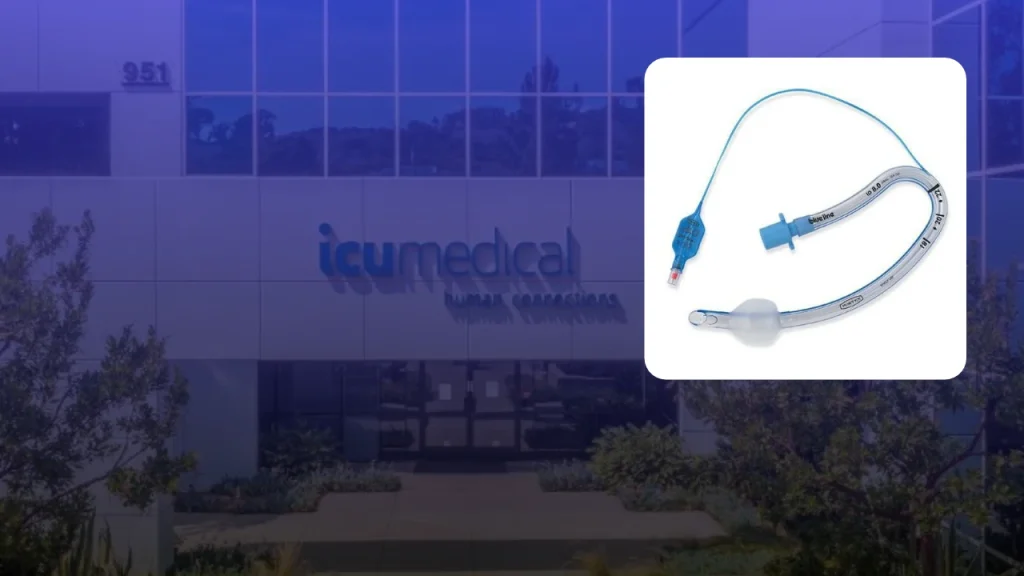
An endotracheal tube (ET tube) is placed in the windpipe by trained clinicians to maintain an airway. It is used during neonatal resuscitation, mechanical ventilation, emergency airway management and general anesthesia. The Portex Polar preformed tubes are designed for head, neck or mouth procedures where it helps to keep the tube connections out of the surgical field. Uncuffed tubes have no inflatable seal. Clinicians choose the type and size for each patient.
Why Are Newborns and Infants Especially Vulnerable?
Newborns, especially premature babies, have very small airways and little respiratory reserve, so even a small restriction or delay can matter. However, infant breathing problems have many possible causes. A complication during intubation does not show that an affected Portex tube was used or that a defect caused it. That needs an individual clinical review.
What Is Known About the Reported Death?
The FDA says ICU Medical reported one death associated with the issue as of November 16, 2026. The public alert does not say:
- The patient’s identity or exact age
- The hospital or state
- The date of death
- The specific product and lot involved
- The patient’s underlying condition
- A final determination of cause
A death reported in association with a device problem does not prove the device was the sole cause. Under 21 CFR § 803.16, an adverse-event report is not necessarily an admission of causation. Source: FDA, MAUDE database guidance.
What Should Hospitals and NICUs Do?
Under ICU Medical’s November 20 notice and the FDA alert, facilities should:
- Inspect all storage areas (units, supply rooms, surgical and NICU stock) for affected item and lot numbers.
- Stop using affected inventory immediately.
- Destroy it under institutional procedures, or segregate and quarantine it until destruction is possible, and post ICU Medical’s notice near the stock until then.
- Forward the notification and Response Form to anyone who received the products.
- Report adverse health events and complaints to ICU Medical and FDA MedWatch.
- Coordinate with clinical and procurement teams so unaffected airway equipment stays available.
If an affected tube is already in a patient, the treating clinicians must decide how to keep the airway safe. Removing a breathing tube from a ventilated patient without preparation can itself be dangerous. Parents and caregivers should never remove, reposition or adjust a breathing tube. Raise concerns with the attending clinician right away.
How Can Parents Find Out Whether Their Baby Received an Affected Tube?
Most parents will not know the brand or lot of a breathing tube. If your child was intubated during neonatal care or surgery, contact the hospital and ask:
- Was a Portex endotracheal tube used?
- What were its item number and size?
- Is the lot number available, and is it on ICU Medical’s removal list?
- Were any insertion difficulties, ventilation resistance, kinking or unplanned tube replacements documented?
- Is any follow-up recommended, and has the hospital reviewed the incident through its patient safety process?
Confirming a Portex tube was used does not prove it came from an affected lot. An affected lot does not prove that tube malfunctioned or hurt your child.
Can Parents Request Their Child’s Medical Records?
Generally yes. Under the HIPAA Privacy Rule (45 CFR §§ 164.502(g) and 164.524), a parent or legal guardian acting as a minor’s personal representative can usually access the child’s designated medical records, subject to exceptions and state law. Useful records include NICU records, intubation and anesthesia notes, respiratory therapy notes, ventilator and oxygen monitoring data, procedure reports, discharge summaries and documentation of equipment used.
Lot numbers may be kept in separate hospital inventory or patient safety systems that are not part of the records you can request. Providers generally must respond within 30 calendar days, with one possible 30-day extension if they give written notice. Source: HHS, HIPAA personal representatives and minors.
Is This a Class I FDA Recall?
Not yet, based on the records reviewed as of November 26, 2026. The FDA uses an Early Alert to warn of a potentially high-risk device issue before it completes its formal recall classification.
| FDA action | Meaning |
| Early Alert | Preliminary notice of a potentially high-risk device issue |
| Class I recall | Reasonable probability of serious adverse health consequences or death |
| Class II recall | Temporary or reversible harm, or a remote probability of serious harm |
| Class III recall | Adverse health consequences are unlikely |
Providers should not wait for a final classification to follow the removal instructions. Related reading: Philips Lumify Ultrasound FDA Early Alert. Official explainer: FDA, What Is an Early Alert?
Which Federal Laws Apply?
| Provision | Relevance |
| 21 U.S.C. § 351 | Adulterated medical products |
| 21 U.S.C. § 360h | FDA device notification and recall authority |
| 21 U.S.C. § 360i | Device records and adverse-event reporting |
| 21 U.S.C. § 360k | Federal preemption of some state device requirements |
| 21 CFR Part 7 | Recall procedures and classifications |
| 21 CFR Part 803 | Medical Device Reporting |
| 21 CFR Part 806 | Reports of device corrections and removals |
| 21 CFR Part 820 | Quality management requirements |
| 45 CFR § 164.524 | Patient access to medical records |
The FDA’s Quality Management System Regulation (QMSR), which amended 21 CFR Part 820 and incorporates ISO 13485:2016, took effect on February 2, 2026. A manufacturing-related alert does not by itself show that ICU Medical violated a specific regulation. Source: FDA quality and compliance guidance.
Must Hospitals Report Device-Related Deaths?
Yes, when federal requirements apply. Under 21 CFR § 803.30, qualifying user facilities must report information reasonably suggesting a device caused or contributed to a death or serious injury.
| Event | Report to | General deadline |
| Device-related death | FDA and the manufacturer, if known | 10 working days |
| Device-related serious injury | The manufacturer (or FDA if unknown) | 10 working days |
Manufacturers have separate reporting duties, and states may add their own adverse-event rules. A report can be required before the cause is settled. Source: FDA mandatory reporting requirements.
Can Parents Sue ICU Medical?
Potentially. Families whose child was seriously harmed by a defective medical device may have claims under state law. The Early Alert is a safety action, not a judgment or a settlement requiring ICU Medical to pay families.
| Possible claim | What may need to be shown |
| Manufacturing defect | The particular tube departed from its intended specifications and caused harm. |
| Design defect | The design was defective under state law. |
| Failure to warn | Inadequate safety information contributed to an injury. |
| Negligence | A legal duty was breached, causing harm. |
| Medical malpractice | A provider departed from the standard of care and caused injury. |
| Wrongful death | A qualifying death resulted from legally actionable conduct. |
The reported material inconsistency may matter to a manufacturing-defect claim, but families must link the specific device, the malfunction and the child’s outcome. Federal device law can also preempt certain state claims depending on the device’s regulatory history and the type of claim. See also Medline Hospital Bed Recall 2026.
Could a Hospital Be Responsible?
Possibly, depending on the facts. A manufacturer’s defect and a provider’s negligence are separate questions. Relevant issues include when the hospital received the notice, whether it identified affected stock, whether staff followed procedures and whether any departure from the standard of care contributed to harm. Using a product before a problem was known is not automatically negligent, and an intubation complication is not automatically malpractice. Medical experts usually must review the full clinical and equipment records first.
Is There a Class Action or Compensation Program?
No class action, settlement or public compensation program for the November 2026 Portex alert has been verified. There is no announced settlement fund, claim form, payment amount, administrator or deadline. Because patients’ conditions and injuries differ, these claims are highly individual, and families who suspect a device-related injury may want to consult an attorney experienced in medical-device or medical malpractice cases.
How Much Compensation Might Be Available?
No schedule exists. Depending on state law and the evidence, a successful claim may cover medical expenses, ongoing care, rehabilitation, disability-related losses and other recoverable damages, and wrongful death or survival claims may add more. Some states set special filing rules, damage caps or deadlines for malpractice claims, and a patient being a minor does not always postpone every deadline. Get individualized legal advice promptly.
What Evidence Should Families Preserve?
- Medical records and treatment timelines
- Device identifiers and lot information, where available
- Hospital correspondence, bills and any photos of packaging
- Notes about unplanned tube replacements or ventilation difficulty
An attorney can advise whether to send a formal evidence-preservation request to the hospital or manufacturer. Never remove equipment from a hospital or interfere with its clinical use. Patient safety comes first. Another hospital-level safety action is covered in Par Health Injectable Drug Recall.
How to Contact ICU Medical
| Department | Contact |
| Customer service | 800-258-5361 / [email protected] |
| Global Complaint Management | 866-216-8806 / [email protected] |
| Notification and Response Form help | [email protected] |
Providers can use these contacts to confirm affected inventory, get missing notices and discuss replacement stock. The FDA alert does not announce a universal refund or credit.
How to Report a Problem to the FDA
Healthcare professionals and families can report device problems through FDA MedWatch. Include the device, lot number, clinical event and outcome if known. A MedWatch report is not a lawsuit or compensation claim. Facilities must separately meet any mandatory reporting duties.
Alert Timeline
| Date | Development |
| February 2, 2026 | FDA’s Quality Management System Regulation takes effect |
| November 16, 2026 | Reporting cutoff for the one death associated with the issue |
| November 20, 2026 | ICU Medical sends customer safety notifications |
| November 25, 2026 | FDA publishes its Early Alert |
| November 26, 2026 | Removal instructions in effect; no final classification announced |
Frequently Asked Questions
Which sizes are affected? Certain 2.5 mm, 3.0 mm and 3.5 mm uncuffed tubes identified by the FDA.
Are all Portex breathing tubes recalled? No. The alert concerns specified lots of five product configurations.
Has a baby died? The FDA reports one death associated with the issue as of November 16, 2026. The patient’s age and the cause of death were not disclosed.
What is the defect? Variable plasticizer concentration may make some tubes softer than intended.
Can affected tubes still be used? The FDA and manufacturer say to stop using affected inventory. Management of a tube already in a patient is for the treating clinicians.
Is there bacterial contamination? None has been identified as the reason for this alert.
Can parents check whether their baby received an affected tube? Yes. Ask the hospital for device and procedure records, and for the lot number if it is available.
Is this a Class I recall? Not yet. It is an Early Alert, and no final classification has been identified.
Can hospitals get replacement tubes? Contact ICU Medical directly about replacement stock and credits.
Can parents get compensation? No public program exists. Individual legal remedies may be available if a defective device or other actionable conduct caused documented harm.
The Bottom Line
ICU Medical’s November 2026 Portex tube removal concerns a potentially serious manufacturing problem affecting selected breathing tubes used in neonatal and infant care. One death has been reported in association with the issue, but its circumstances and cause have not been publicly established. Hospitals should check inventory against the FDA lot list, remove affected stock and keep unaffected airway equipment available. Parents with concerns should talk to their child’s medical team, request records and consider an independent legal evaluation if they suspect a serious device-related injury.
Official Sources
- FDA: Early Alert, ICU Medical Removes Portex Endotracheal Tubes
- FDA: Full List of Affected Lots
- FDA: What Is an Early Alert?
- AccessGUDID
- FDA: Mandatory Medical Device Reporting
- FDA: Recalls, Corrections and Removals
- FDA: QMSR FAQs
- HHS: Personal Representatives and Minors Under HIPAA
- FDA MedWatch
Disclaimer: AllAboutLawyer.com is an independent legal information website, not a law firm or healthcare provider. This article provides general information, not legal or medical advice. Healthcare professionals should follow official safety notices and clinical protocols. Reported adverse events do not by themselves establish device liability or causation. Information reflects FDA sources as of November 26, 2026 and may change.
About the Author
Israr Ahmad is a legal content researcher with 4+ years of experience covering class action settlements and consumer rights cases. He has researched and published coverage of 2,500+ settlements using verified court records, settlement administrator filings, and government sources. Learn more about Israr.