
Huawei Found Guilty on 10 Federal Criminal Counts, Why a Brooklyn Jury Convicted the Chinese Tech Giant and What Happens Next
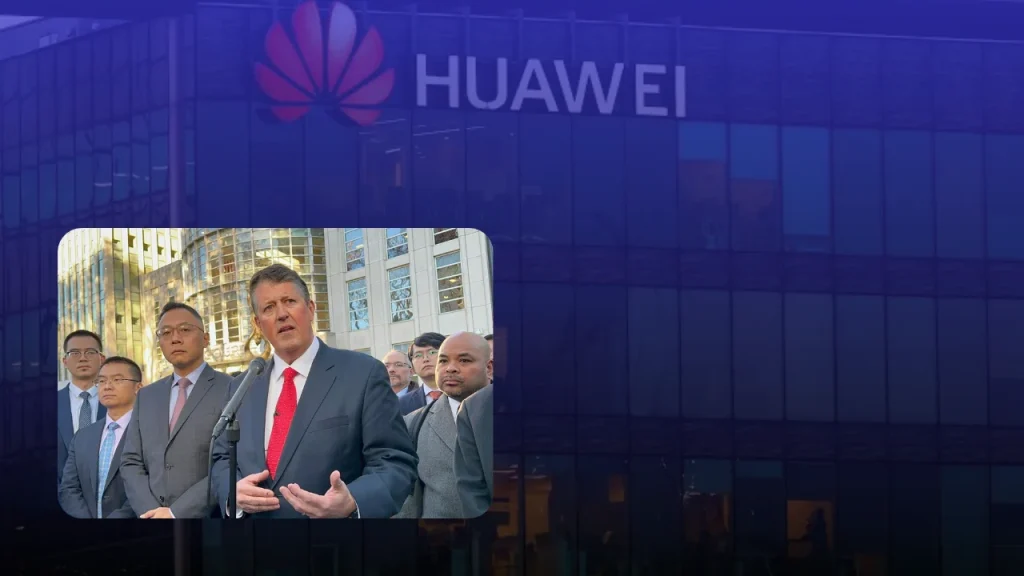
A federal jury in Brooklyn, New York, convicted Huawei Technologies Co., Ltd. and three subsidiaries on 10 of 12 criminal counts on November 24, 2026. The charges involved conspiracy to steal American trade secrets, bank fraud, wire fraud, money laundering conspiracy and violations of U.S. sanctions on Iran.
The jury acquitted Huawei of racketeering conspiracy under the RICO Act and of conspiracy to obstruct justice. U.S. District Judge Ann M. Donnelly has set sentencing for September 14, 2027. Huawei disputes the charges, and its lawyer Brian Heberlig has said the company will appeal.
The verdict does not by itself ban Huawei products in the United States, make owning a Huawei phone illegal or create a consumer compensation fund. Each point is explained below.
Huawei Criminal Case 2026: Quick Facts
| Detail | Information |
| Case | United States v. Huawei Technologies Co., Ltd., et al. |
| Case number | 1:18-cr-00457 |
| Court | U.S. District Court, Eastern District of New York (Brooklyn) |
| Judge | Ann M. Donnelly |
| Prosecutor | U.S. Department of Justice; U.S. Attorney Joseph Nocella (EDNY) |
| Corporate defendants | Huawei Technologies Co., Ltd.; Huawei Device Co., Ltd.; Huawei Device USA Inc.; Futurewei Technologies Inc. |
| Trial began | September 2026 |
| Verdict | November 24, 2026 |
| Counts before the jury | 12 |
| Guilty | 10 |
| Not guilty | Racketeering conspiracy; conspiracy to obstruct justice |
| Sentencing | September 14, 2027 |
| Penalties | Not yet decided |
| Appeal | Huawei says it will appeal; no appeal filed yet |
| Consumer settlement or claim form | None |
| Official DOJ announcement | Justice Department press release, November 24, 2026 |
Why Was Huawei Found Guilty in the United States?
Prosecutors presented two main sets of allegations. The first was a scheme to obtain confidential technology from American companies. The second was that Huawei misled banks about its business in Iran, giving it access to the U.S. financial system in violation of sanctions.
Huawei argued that prosecutors had stitched together old, already-resolved civil disputes with unrelated financial allegations to portray a company-wide criminal enterprise. The jury accepted much of the government’s case but rejected its broadest theory.
Which Huawei Companies Were Convicted in Brooklyn?
Four corporate defendants were tried: Huawei Technologies Co., Ltd.; Huawei Device Co., Ltd.; Huawei Device USA Inc.; and Futurewei Technologies Inc. The U.S. Attorney’s Office said one or more of the companies was convicted of each offense it listed, without saying which. Trade press reporting on the verdict sheet says the three subsidiaries were convicted on two conspiracy counts, trade-secret conspiracy and wire fraud conspiracy, while the parent company was convicted on all 10. Confirm the defendant-by-defendant breakdown against the verdict sheet in the court file before relying on it.
What Was Huawei Convicted Of and Acquitted Of?
Convicted (10 counts, by category as announced):
- Conspiracy to steal trade secrets, 18 U.S.C. § 1832(a)(5)
- Bank fraud and bank fraud conspiracy, 18 U.S.C. §§ 1344 and 1349
- Wire fraud and wire fraud conspiracy, 18 U.S.C. §§ 1343 and 1349
- Conspiracy to defraud the United States, 18 U.S.C. § 371
- Iran sanctions violations under the International Emergency Economic Powers Act (IEEPA), 50 U.S.C. § 1705
- Money laundering conspiracy, 18 U.S.C. § 1956(h)
Acquitted:
- Racketeering conspiracy, 18 U.S.C. § 1962(d)
- Conspiracy to obstruct justice, 18 U.S.C. § 1512(k)
Public reports describe which charges fall into which category but do not agree on exact count numbers, so this article does not assign them.
Which American Companies Did Prosecutors Say Huawei Stole Trade Secrets From?
Prosecutors identified five U.S. companies. The details below are the government’s allegations as set out in its charging documents and trial coverage.
| Company | Technology at issue |
| T-Mobile | “Tappy” smartphone-testing robot |
| Cisco Systems | Router source code |
| CNEX Labs | Solid-state storage and semiconductor technology |
| Quintel USA | Wireless antenna technology |
| Fujitsu | Telecommunications equipment |
T-Mobile and the Tappy robot. Prosecutors alleged that Huawei engineers photographed and measured the testing robot after signing a confidentiality agreement, and that an employee took a robot part from a restricted lab. In a separate 2017 civil case in Washington state, a jury awarded T-Mobile about $4.8 million for breach of contract. That jury did not award trade secret damages or find willful and malicious misappropriation. Civil and criminal cases use different standards and remedies.
Cisco. Prosecutors alleged Huawei copied Cisco’s router code, citing internal code comments that referenced Cisco spelled backward.
Fujitsu. Prosecutors alleged a Huawei engineer photographed Fujitsu equipment at a trade show while using a badge with a false company name.
CNEX Labs and Quintel. Prosecutors alleged Huawei used a university researcher to get at CNEX hardware and data without disclosing its role. For Quintel, they alleged Huawei attached a confidential Quintel slide to a patent filing.
Huawei says the five disputes were old civil matters. The verdict does not mean every past Huawei intellectual property dispute resulted in a criminal conviction.
What Are Trade Secrets Under the Economic Espionage Act and 18 U.S.C. § 1839?
Information qualifies as a trade secret when its owner takes reasonable steps to keep it secret and it has economic value because it is not generally known or readily ascertainable by proper means. Under 18 U.S.C. § 1832, knowingly stealing a trade secret, or conspiring to, is a federal crime. Independent development and lawful reverse engineering are not trade secret theft. The Defend Trade Secrets Act of 2016, 18 U.S.C. § 1836, separately gives owners a civil claim.
How Did Huawei’s Skycom Business in Iran Lead to U.S. Sanctions Charges?
The Iran case centered on Skycom Tech Co. Ltd., which did telecommunications business in Iran. Prosecutors argued that Huawei controlled Skycom while telling banks, including HSBC, that it was an independent local partner. Relying on those assurances, banks cleared dollar transactions through the U.S. financial system. Because dollar payments touch U.S. banks, the conduct fell within the reach of American sanctions and fraud laws.
Huawei was not prosecuted simply for being a Chinese company doing business abroad. The charges rest on alleged false statements to financial institutions and the use of U.S. banking services in violation of sanctions.
Which U.S. Sanctions Laws Apply to Huawei’s Iran Dealings?
| Law or regulation | Function |
| 50 U.S.C. §§ 1701, 1702 | Presidential authority to regulate transactions during declared emergencies |
| 50 U.S.C. § 1705 | Civil and criminal penalties for IEEPA violations |
| 31 C.F.R. Part 560 | Iranian Transactions and Sanctions Regulations |
| 31 C.F.R. § 560.203 | Prohibits evasion of the sanctions |
| 31 C.F.R. § 560.204 | Restricts exports and supplies to Iran |
The Treasury Department’s Office of Foreign Assets Control (OFAC) administers the program. Licenses and exceptions exist, so not every Iran-related transaction is unlawful. Official resource: OFAC Iran Sanctions Program.
Related: US Treasury Targets Iran’s Shadow Banking Network, What the $14.7 Billion FinCEN Finding and New OFAC Sanctions Mean Under U.S. Law. That November 2026 action is separate from the Huawei prosecution.
How Do Bank Fraud, Wire Fraud and Money Laundering Laws Apply to Huawei?
- Bank fraud, 18 U.S.C. § 1344: knowingly executing a scheme to defraud a financial institution or obtain its assets by false representations.
- Wire fraud, 18 U.S.C. § 1343: using interstate or international electronic communications to further a fraudulent scheme.
- Fraud conspiracy, 18 U.S.C. § 1349: an agreement to commit those offenses; each participant need not perform every act.
- Conspiracy to defraud the United States, 18 U.S.C. § 371: here, alleged interference with OFAC’s enforcement functions.
- Money laundering conspiracy, 18 U.S.C. § 1956(h): financial transactions intended to promote specified unlawful activity, which is not limited to hiding cash from crime.
Why Was Huawei Acquitted of RICO Racketeering Conspiracy?
RICO, enacted in 1970, targets a pattern of racketeering by an enterprise. Prosecutors alleged under 18 U.S.C. § 1962(d) that Huawei’s conduct over roughly two decades was part of one criminal enterprise. The jury rejected that theory. AP described the racketeering count as the most serious charge Huawei faced.
A conviction on fraud or trade-secret conspiracy does not automatically prove a RICO conspiracy. The acquittal matters because a RICO conviction would have opened enterprise-related forfeiture under 18 U.S.C. § 1963. It does not undo the 10 convictions or rule out other forfeiture.
What Happened to Huawei CFO Meng Wanzhou?
Canadian authorities arrested Meng Wanzhou in Vancouver on December 1, 2018, at the request of the United States. U.S. prosecutors accused her of misleading HSBC about Huawei’s relationship with Skycom. In September 2021 she entered a deferred prosecution agreement, which was not a guilty plea, and returned to China. Charges against her were dismissed in December 2022. The November 2026 verdict is against the corporate defendants and is not a conviction of Meng or founder Ren Zhengfei.
Source: DOJ announcement on Meng Wanzhou’s deferred prosecution agreement.
Huawei Criminal Case Timeline From 2018 to 2027
| Date | Development |
| 2012–2013 | Reporting raises questions about Huawei’s control of Skycom in Iran |
| December 1, 2018 | Meng Wanzhou arrested in Vancouver |
| January 2019 | DOJ announces charges in New York and Seattle |
| May 16, 2019 | Huawei and affiliates added to the Commerce Department Entity List |
| February 2020 | Charging documents expanded to add RICO and trade-secret conspiracy |
| September 2021 | Meng enters deferred prosecution agreement |
| December 2022 | Charges against Meng dismissed |
| April 2026 | Latest superseding indictment filed |
| September 2026 | Trial begins in Brooklyn |
| November 24, 2026 | Jury convicts on 10 counts, acquits on two |
| September 14, 2027 | Scheduled sentencing |
The prosecution spans several presidential administrations, so it is not a new action begun in November 2026.
How Much Could Huawei Be Fined After the Guilty Verdict?
No penalty has been set. AP reported that the company could face billions of dollars in penalties at sentencing. That is a press estimate, not a court finding. The court must apply the statutes and the sentencing guidelines for organizations, and maximums cannot simply be added together.
| Law | Potential consequence |
| 18 U.S.C. § 1832(b) | Corporate trade secret fine of up to the greater of $5 million or three times the value of the stolen secret |
| 50 U.S.C. § 1705(c) | Criminal fine of up to $1 million per qualifying willful sanctions violation |
| 18 U.S.C. § 3571(d) | Alternative fine of up to twice the gross gain or loss |
| 18 U.S.C. §§ 982, 2323 | Criminal forfeiture |
| 18 U.S.C. § 3663A | Mandatory victim restitution where applicable |
| U.S. Sentencing Guidelines, Chapter Eight | Framework for sentencing organizations |
A fine is paid to the government, forfeiture is loss of property, and restitution compensates victims for legally recognized losses. A corporation cannot be imprisoned. Individual employees could face prison only through separate proceedings establishing personal guilt.
For another corporate money laundering and sanctions case, see DOJ Reviews Binance’s $4,316,126,163 Plea Agreement, What the 2026 Compliance Review Means for Binance Users.
What Is Huawei’s Response to the Guilty Verdict?
Huawei said it was disappointed, disputed the remaining charges and welcomed the racketeering acquittal. Its attorney Brian Heberlig said it plans to appeal. Huawei’s position does not change the verdict. A 2026 statement is available from Huawei’s newsroom.
Can Huawei Appeal Its Conviction to the Second Circuit?
Yes. Before appeal, Huawei can move for acquittal under Federal Rule of Criminal Procedure 29 or for a new trial under Rule 33. After the final judgment, it can appeal to the U.S. Court of Appeals for the Second Circuit. Under Federal Rule of Appellate Procedure 4(b), a notice of appeal is generally due within 14 days of the triggering event. Possible issues include evidentiary rulings, jury instructions, statutory interpretation and sufficiency of evidence. No appellate ruling exists yet.
Is Huawei Banned in the United States in 2026?
Huawei faces heavy restrictions, but it is not a blanket criminal ban on private possession.
- Entity List: The Commerce Department added Huawei and affiliates on May 16, 2019. Licensing requirements apply to covered exports, reexports and transfers under the Export Administration Regulations, 15 C.F.R. Parts 730–774.
- FCC Covered List: Under the Secure and Trusted Communications Networks Act and the Secure Equipment Act of 2021, covered equipment faces equipment-authorization limits. See the FCC Covered List.
- Federal procurement: Section 889 of the FY2019 National Defense Authorization Act limits federal purchasing and contracting involving covered telecommunications equipment.
Is It Illegal to Own a Huawei Phone in America After the Verdict?
No. The verdict does not make owning an existing Huawei phone illegal, require anyone to surrender a device, disable phones or trigger a recall. Importing, selling and network compatibility are separate questions governed by FCC and import rules, so check a specific device before buying from an overseas seller.
The verdict also does not prove that every Huawei device spies on users. Government concerns about Huawei network infrastructure are separate from evidence about any consumer device. Users concerned about security should install updates and review app permissions.
Can American Huawei Customers Get Compensation or File a Claim?
No. No consumer settlement, claims administrator or claim form has been announced. Owning a Huawei device does not by itself show a compensable loss. People with a legally recognized harm may have separate claims, such as breach of contract or warranty, state consumer protection or trade secret misappropriation. Businesses directly harmed by the conduct may have rights under federal restitution law and the Crime Victims’ Rights Act, 18 U.S.C. § 3771, depending on the sentencing court’s findings.
Is There a Separate Huawei Criminal Case in Seattle?
Yes. In January 2019, DOJ charged Huawei Device Co., Ltd. and Huawei Device USA Inc. in the Western District of Washington with trade secret theft, wire fraud and obstruction tied to T-Mobile technology. Reports indicate trial is set for October 2027. The Brooklyn verdict does not dispose of that case, and those defendants are presumed innocent of unresolved charges. Source: DOJ announcement of the Washington state charges.
What Should U.S. Businesses Working With Huawei Do Now?
The conviction does not automatically void every contract, but it underlines compliance duties. Companies should:
- Check whether the Huawei entity is on a federal restricted-party list.
- Determine whether products, software or technology fall under the Export Administration Regulations, and whether a license is required.
- Review FCC equipment-authorization limits and Section 889 contracting rules.
- Review confidentiality agreements and access controls for intellectual property.
- Consult sanctions and export-control counsel before any potentially restricted transaction.
Exporting without a required license can create civil or criminal exposure even for companies that are not defendants.
Frequently Asked Questions About the Huawei Guilty Verdict
Why was Huawei found guilty in November 2026?
A Brooklyn jury convicted Huawei and three subsidiaries on counts involving trade secret conspiracy, bank and wire fraud, Iran sanctions violations and money laundering conspiracy.
Was Huawei found guilty of all 12 counts?
No. It was convicted on 10 and acquitted of racketeering conspiracy and conspiracy to obstruct justice.
Was Huawei found guilty under the RICO Act?
No. The jury acquitted it of RICO conspiracy.
When will Huawei be sentenced?
September 14, 2027, in federal court in Brooklyn.
How much will Huawei have to pay?
Not decided. Possible penalties include fines, forfeiture and restitution.
Was Meng Wanzhou found guilty?
No. She entered a deferred prosecution agreement in 2021, and her charges were dismissed in 2022.
Is Huawei shutting down?
No shutdown has been ordered, and Huawei says it will continue operating.
Will Huawei phones stop working in the U.S.?
The verdict does not disable existing devices. Software support and network compatibility are separate issues.
Can Huawei customers receive settlement checks?
No compensation program has been announced.
What Happens Next in United States v. Huawei?
Next come post-trial motions, sentencing submissions and the court’s decision on penalties, with sentencing set for September 14, 2027. An appeal could follow in the Second Circuit, and the Seattle case remains pending. For U.S. consumers, the key point is that the corporate verdict does not criminalize owning Huawei devices. For businesses, it reinforces the risks of sanctions violations, trade secret misappropriation and false statements to banks.
Official Sources and Legal References
- U.S. Department of Justice: Huawei convictions, November 24, 2026
- DOJ: Washington state criminal prosecution announcement
- DOJ: Meng Wanzhou deferred prosecution agreement
- 18 U.S.C. § 1832
- 18 U.S.C. § 3571
- 50 U.S.C. § 1705
- OFAC Iran Sanctions Program
- FCC Covered Equipment and Services List
- Federal court records for case 1:18-cr-00457, GovInfo
Disclaimer: This article offers general legal information, not legal or financial advice. Sentencing, post-trial motions and appeals are unresolved. Unresolved charges in separate cases are not findings of guilt.
Researched and written by Israr Ahmad, legal content researcher and founder of AllAboutLawyer.com. All facts verified against the official Justice Department announcements and federal court records for case 1:18-cr-00457, the U.S. Code and federal regulations, and news reports of the verdict and Huawei’s response (the signed verdict sheet was not directly reviewed), as of November 26, 2026. Last Updated: November 26, 2026.
About the Author
Israr Ahmad is a legal content researcher with 4+ years of experience covering class action settlements and consumer rights cases. He has researched and published coverage of 2,500+ settlements using verified court records, settlement administrator filings, and government sources. Learn more about Israr.