
Philips Lumify Ultrasound FDA Early Alert, 4 Deaths and 8 Serious Injuries Reported, What Hospitals, EMS Teams and Patients Need to Know
The U.S. Food and Drug Administration (FDA) issued an Early Alert on October 9, 2026 about the Philips Lumify diagnostic ultrasound system. Philips Ultrasound reported four deaths and eight serious injuries associated with the issue as of September 29, 2026.
In plain terms, the Lumify app can unexpectedly ask a user to register a transducer again, and scanning cannot continue until that registration is done. Separately, the USB connection between the transducer and the phone or tablet can become unstable. Either problem can interrupt imaging and delay diagnosis or treatment.
Immediate action for healthcare providers: Use affected Lumify systems only where Wi-Fi or cellular service is readily available, unless a backup ultrasound device is immediately on hand. Keep a backup ultrasound device or another imaging method available at all times, and check your software version against the FDA’s list before use.
One distinction matters: this is an Early Alert about specific Lumify software versions. It is not a notice that every Philips ultrasound machine has been recalled.
Philips Lumify Ultrasound FDA Early Alert: Quick Facts
| Detail | What is verified |
| Manufacturer | Philips Ultrasound |
| Product | Philips Lumify Diagnostic Ultrasound System (transducer used with the Lumify app on a compatible Android or iOS device) |
| FDA premarket clearance | 510(k) K192226, cleared September 6, 2019 |
| Reported deaths | 4 |
| Reported serious injuries | 8 |
| Reporting cutoff for those figures | September 29, 2026 |
| Philips customer letter | September 24, 2026 |
| FDA Early Alert | October 9, 2026 |
| Main hazards | Unexpected transducer re-registration that blocks scanning; unstable USB connection |
| Possible consequence | Delayed diagnosis or treatment, which may lead to serious injury or death |
| Affected software | Specific Lumify iOS and Android versions listed by the FDA |
| Number of affected units | Not stated in the FDA Early Alert |
| Fix status | Philips was developing a software update for the registration issue and still assessing the USB issue |
| Refund, replacement or consumer payout | None announced |
| Philips U.S. customer support | 800-722-9377 |
The reported deaths and injuries are described by the FDA as associated with the issue. The alert does not say the device was the sole cause of each death.
Which Philips Lumify Software Versions Are Affected?
The FDA lists these Lumify software versions and device identifiers. Compare your own system against the FDA notice instead of assuming every Philips ultrasound product is affected.
| Platform | Affected software version | UDI-DI (GTIN) |
| iOS | 2.X | 00884838103405 |
| iOS | 5.0 | 00884838120266 |
| iOS | 5.1.2 | 00884838124141 |
| iOS | 5.1.3 | 00884838124141 |
| Android | 1.X | 00884838106987 |
| Android | 3.X | 00884838100121 |
| Android | 4.X | 00884838108455 |
| Android | 5.1 | 00884838122116 |
| Android | 5.1.1 | 00884838122116 |
Official list: FDA Early Alert: Diagnostic Ultrasound System Issue from Philips Ultrasound
How to Check Whether Your Philips Lumify System Is Affected
- Confirm the product. It should be a Philips Lumify system: a Philips transducer, the Lumify app and a compatible phone or tablet.
- Find the app version. Ask your biomedical engineering team or device administrator.
- Compare it with the FDA table above and the official notice, including the device identifier where available.
- Find the Philips letter dated September 24, 2026. If your facility never received it, contact Philips.
- Call Philips if unsure. U.S. customers can reach the Philips Ultrasound Customer Care Solutions Center at 800-722-9377.
Patients usually cannot see a device’s software version. You can ask the clinic, hospital or ambulance service whether it uses an affected Lumify system and whether staff reviewed the FDA notice.
What Is Wrong With the Philips Lumify Ultrasound System?
Unexpected Transducer Re-Registration
The Lumify app can fail to recognize a transducer that was already registered and ask the user to register it again, with no warning. Registration needs Wi-Fi or cellular service, and scanning is blocked until it is finished. That is a real problem anywhere signal is weak or missing.
Unstable USB Connection
Philips also reported that the USB cable connecting the transducer to the phone or tablet may disconnect or become unstable during use. At the time of the FDA notice, Philips was still assessing the cause and the solution.
These are two different problems. The first involves software recognition and connectivity requirements. The second is about the physical connection during a scan.
Why Is the Philips Lumify Issue More Serious in Ambulances and Emergency Care?
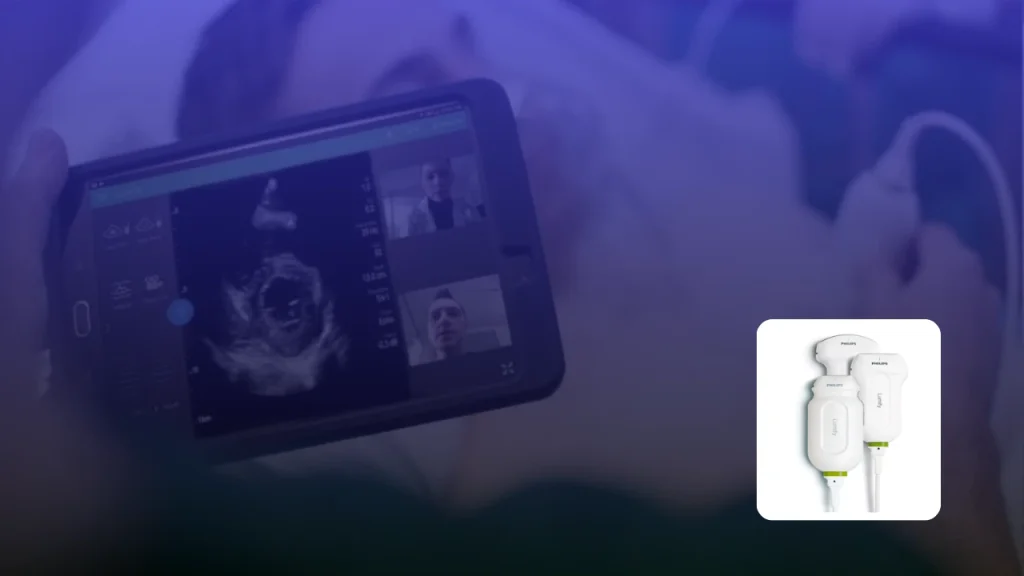
Lumify is a portable, point-of-care ultrasound system. It is meant for places beyond a hospital imaging suite, including ambulances, aircraft and field settings. The FDA noted that for a point-of-care device, losing function can have bigger consequences than with a traditional ultrasound machine.
In a hospital, a clinician can often switch to another machine. On a roadside or in a helicopter, that may not be an option, and a delay of even a few minutes can matter when a patient is unstable.
This does not mean every scan on every Lumify system is unreliable. It means the failure modes are most dangerous exactly where the device is most useful.
What Do the 4 Deaths and 8 Serious Injuries Mean?
As of September 29, 2026, Philips had reported eight serious injuries and four deaths associated with the issue. The FDA did not publish patient details or a case-by-case account, so the alert cannot be used to decide what role the device played in any single outcome.
These numbers are a safety signal that regulators and providers should take seriously. They are not a legal finding of liability against Philips.
What Should Hospitals, Clinics and EMS Agencies Do About the Philips Lumify Alert?
Based on the Philips letter of September 24, 2026 and the FDA notice:
- Use affected Lumify systems only where Wi-Fi or cellular service is readily available, unless a backup ultrasound device is immediately available.
- Keep backup ultrasound equipment or another imaging method on hand.
- Share the Philips notice with everyone who uses the affected equipment.
- Post the notice near affected devices.
- Make sure staff know what to do if a scan is blocked or interrupted mid-procedure.
- Install Philips software updates promptly once they are released and validated.
Do not treat a promised software update as a substitute for these steps. The FDA notice says the registration fix was in development and the USB issue was still being assessed. It does not confirm a final fix for both problems.
Which Federal Laws and FDA Rules Apply to the Philips Lumify Alert?
Medical device alerts sit inside a specific legal framework. These are the provisions most relevant here.
| Law or rule | What it covers | Why it matters here |
| Federal Food, Drug, and Cosmetic Act (FD&C Act), 21 U.S.C. § 301 et seq. | The main federal law governing medical devices | Gives the FDA authority over device safety, labeling and manufacturing |
| 510(k) premarket notification, 21 U.S.C. § 360(k); 21 C.F.R. Part 807 | Clearance of devices shown to be substantially equivalent to an existing device | Lumify was cleared through this route (K192226); classified under 21 C.F.R. § 892.1550 |
| Medical Device Reporting, 21 U.S.C. § 360i; 21 C.F.R. Part 803 | Requires manufacturers to report deaths and serious injuries tied to a device, and requires user facilities to report deaths and serious injuries to the FDA and the manufacturer | The reporting path that produces figures like the 4 deaths and 8 serious injuries |
| Reports of Corrections and Removals, 21 C.F.R. Part 806 | Manufacturers must report certain corrections and removals made to reduce a health risk | Covers customer letters and software corrections like the one Philips sent |
| Recalls, 21 C.F.R. Part 7, Subpart C, and Part 810 | FDA’s recall classifications and its authority to order recalls in serious cases | Explains why an Early Alert is not the same as a classified recall |
| Quality Management System Regulation, 21 C.F.R. Part 820 | Design controls, complaint handling and corrective action requirements for device makers | Sets the standard for how a manufacturer must investigate and fix a device problem |
| State product liability and wrongful death law | Negligence, strict liability and failure-to-warn claims | The usual basis for a patient’s claim, rather than federal law |
Two legal points are worth knowing. First, FDA’s Early Alert communications are meant to give the public early notice of potentially high-risk device problems before a recall is formally classified, so an alert can change as the agency finishes its review. Second, for devices cleared through the 510(k) route, the U.S. Supreme Court held in Medtronic, Inc. v. Lohr, 518 U.S. 470 (1996), that federal law generally does not bar state-law injury claims. That is different from the stricter rule for devices approved through full premarket approval, addressed in Riegel v. Medtronic, Inc., 552 U.S. 312 (2008). Whether either case applies to a particular claim is a question for a qualified attorney.
Is Philips Offering a Repair, Replacement or Refund for Lumify?
The FDA alert announces no consumer refund, replacement or compensation program. It describes updated instructions for use and ongoing work on the software and USB issues. Lumify is professional equipment used mostly by hospitals, clinics and emergency services, so any remedy would come through Philips’ customer notification and software update process, not a rebate.
Facilities that own affected systems should contact Philips for current service instructions. Patients should not assume they are owed a payment just because their provider uses Philips equipment, and there is no public claim form or filing deadline tied to this alert.
How to Report a Philips Lumify Problem to the FDA (MedWatch)
Healthcare professionals and consumers can report adverse events or quality problems through MedWatch, the FDA’s safety reporting program: FDA MedWatch: Report a Problem With a Medical Product
Helpful details to include:
- The device model and software version, if known
- The date and setting where the problem happened
- What occurred, such as a re-registration prompt or a connection drop
- Whether scanning or treatment was delayed
- Any communications from the facility or from Philips
Facilities can also report to Philips at 800-722-9377. If a patient needs urgent care, contact the treating team or emergency services first and report afterward.
Could a Patient Have a Legal Claim Over a Philips Lumify Failure?
An FDA alert is not a lawsuit and does not prove that Philips is responsible for a particular injury or death.
A claim would turn on facts such as which device was involved, whether it actually showed the reported malfunction, how long care was delayed, whether another imaging option was available, and what the medical evidence shows about the connection to the outcome. Medical device cases usually involve expert testimony and state-specific rules on negligence, product defect, failure to warn and wrongful death, plus filing deadlines that vary by state.
Anyone who believes a Lumify malfunction affected their care can keep their medical records and any incident documentation, ask the provider what happened, and speak with a qualified product liability attorney soon, since deadlines can be short.
For a separate example of how a medical device problem can reach the courts, see Ethicon Physiomesh Lawsuit, Settlement Updates, Who Qualifies, And What To Do Next. That article concerns a different device and says nothing about Philips.
Is This the Same as the Philips EPIQ Elite Ultrasound Recall?
No. The FDA has a separate Class II recall record for the Philips EPIQ Elite Diagnostic Ultrasound System, model 795234, software version 14.0. It involves a Doppler measurement display problem that could produce inaccurate blood-flow velocity readings and lead to misdiagnosis. The record lists recall number Z-3249-2026, 484 units and an August 7, 2026 initiation date.
That is a different product with a different problem. Users should match the exact model and software version to the correct FDA record. Record: FDA Class 2 Device Recall: Philips EPIQ Elite Diagnostic Ultrasound System
Philips Lumify FDA Early Alert: Key Dates
| Date | Event |
| September 6, 2019 | FDA clears the Lumify Diagnostic Ultrasound System (510(k) K192226) |
| August 7, 2026 | Initiation date of the separate Philips EPIQ Elite Class II recall |
| September 24, 2026 | Philips sends affected customers a letter with updated instructions |
| September 29, 2026 | Cutoff for the 8 serious injuries and 4 deaths reported by Philips |
| October 9, 2026 | FDA publishes the Early Alert on Lumify |
| October 12, 2026 | No refund program, final fix or recall classification confirmed in the sources reviewed |
Frequently Asked Questions About the Philips Lumify Ultrasound FDA Alert
Has Philips recalled all of its ultrasound machines after four deaths?
No. The Early Alert covers specific Philips Lumify software versions. The separate EPIQ Elite recall involves a different product and issue.
Is this a Class I recall of Philips Lumify?
The FDA notice is an Early Alert, and the sources reviewed did not show a final recall classification. The FDA may update the status as its review continues, so check the official page for changes.
Which Philips Lumify software versions are affected?
iOS 2.X, 5.0, 5.1.2 and 5.1.3, and Android 1.X, 3.X, 4.X, 5.1 and 5.1.1, as listed in the FDA notice.
What makes Philips Lumify stop scanning?
The app may fail to recognize a registered transducer and ask for re-registration, which needs Wi-Fi or cellular service. Philips has also reported that the USB connection may become unstable.
Are the four deaths confirmed to have been caused by Philips Lumify?
Philips reported four deaths associated with the issue as of September 29, 2026. The alert does not say the device was the sole cause of each death.
Is it safe for a hospital to keep using an affected Lumify system?
The FDA recommends using it only where Wi-Fi or cellular service is readily available, unless a backup device is immediately available, and keeping backup imaging options ready. Facilities should follow the full Philips notice and their own clinical protocols.
Is a software fix available?
Philips was developing an update for the registration issue and still assessing the USB issue. The alert does not give a release date for either fix.
Can patients get a refund or compensation?
The FDA alert announces no refund, replacement or compensation program for patients.
What should I do if I think a Lumify problem delayed my care?
Talk to the facility that treated you, keep your medical records, consider a MedWatch report, and speak with a qualified attorney if you think you may have a legal claim.
How can a U.S. hospital contact Philips about the alert?
Call the Philips Ultrasound Customer Care Solutions Center at 800-722-9377.
Sources and Verification Notes
- U.S. Food and Drug Administration, Early Alert: Diagnostic Ultrasound System Issue from Philips Ultrasound, October 9, 2026: https://www.fda.gov/medical-devices/medical-device-recalls-and-early-alerts/early-alert-diagnostic-ultrasound-system-issue-philips-ultrasound. Primary source for the affected versions, injury and death figures, interim precautions and Philips contact information.
- U.S. Food and Drug Administration, Class 2 Device Recall Philips EPIQ Elite Diagnostic Ultrasound System: https://www.accessdata.fda.gov/scripts/cdrh/cfdocs/cfRes/res.cfm?id=222248. Source for the separate EPIQ Elite recall.
- U.S. Food and Drug Administration, 510(k) Premarket Notification K192226, Lumify Diagnostic Ultrasound System: https://www.accessdata.fda.gov/scripts/cdrh/cfdocs/cfpmn/pmn.cfm?id=K192226. Source for the clearance history.
- AuntMinnie, “FDA: Philips Lumify ultrasound issue tied to 4 deaths”: https://www.auntminnie.com/clinical-news/ultrasound/news/15837150/fda-philips-lumify-ultrasound-issue-tied-to-4-deaths. Independent coverage consistent with the FDA figures.
Verification note: The FDA notice does not state the number of affected Lumify units or announce a refund program. This article does not treat the Early Alert as a blanket recall of all Philips ultrasound products, and no final recall classification, software fix date or compensation program was verified as of October 12, 2026.
This article is general information, not medical or legal advice. Healthcare professionals should follow official device instructions and clinical protocols.
Researched and written by Israr Ahmad, legal content researcher and founder of AllAboutLawyer.com. All facts verified against the FDA’s official Early Alert, the FDA’s 510(k) and recall records, and independent trade coverage, as of October 12, 2026. Last Updated: October 12, 2026.
About the Author
Israr Ahmad is a legal content researcher with 4+ years of experience covering class action settlements and consumer rights cases. He has researched and published coverage of 2,500+ settlements using verified court records, settlement administrator filings, and government sources. Learn more about Israr.