
Ghostbusters Song Lawsuit, Ray Parker Jr. vs. Huey Lewis, the Settlement and the Royalty Fight
The Ghostbusters song lawsuit is not one case. It is three separate legal fights over one 1984 hit: a copyright claim by Huey Lewis and the News that Ray Parker Jr.’s theme copied “I Want a New Drug,” a 2001 lawsuit by Parker over what Lewis said about the confidential settlement, and a royalty-accounting dispute between Parker and the companies that publish the song, Sony and EMI.
No court ever ruled that the Ghostbusters theme infringed Lewis’s song. The first case settled. No newly filed 2026 lawsuit between Parker and Lewis has been identified. Recent articles from Parade (July 27, 2026) and RouteNote (October 26, 2026) are retelling an old story, not reporting a new filing.
Ghostbusters Song Lawsuit: Key Facts
| Detail | What the record shows |
| Song at issue | “Ghostbusters” by Ray Parker Jr., from the 1984 film Ghostbusters |
| Song it was compared to | “I Want a New Drug” by Huey Lewis and the News, from the 1983 album Sports |
| Writers of “I Want a New Drug” | Huey Lewis and Chris Hayes |
| Original claim | Copyright infringement, filed 1984 |
| Reported defendants | Ray Parker Jr., Columbia Pictures, Golden Torch Music, Raydiola Music, Ivan Reitman, Arista Records |
| How it ended | Settled out of court with a confidentiality agreement; no trial verdict |
| Settlement date | Disputed: 1985 in some accounts, 1995 in contemporary 2001 reports |
| Settlement amount | Never made public |
| Second lawsuit | Filed March 2001 by Parker against Lewis in California; alleged breach of the confidentiality agreement |
| Third dispute | Parker’s royalty and accounting claims against Sony/ATV and EMI, Los Angeles Superior Court; reported in 2013 and again in 2025 |
| Chart performance | “Ghostbusters” spent three weeks at No. 1 on the Billboard Hot 100; “I Want a New Drug” peaked at No. 6 |
| New 2026 lawsuit | None identified |
| Class action or claim form | None |
How Did Filmmakers Use “I Want a New Drug” Before Ray Parker Jr. Wrote Ghostbusters?
The filmmakers wanted a theme that would define the movie. According to former Huey Lewis and the News guitarist Chris Hayes, in a March 2025 MusicRadar interview, director Ivan Reitman wanted “I Want a New Drug” for the film. The band turned the opportunity down. Other accounts say the studio asked the band to write an original theme and that the band declined because of touring and a wish not to be known as a soundtrack act. The sources do not agree on which request was made, so treat both versions as recollections, not court findings.
What is consistent is that the production had been using “I Want a New Drug” as a temp track, a placeholder song dropped into a rough cut to set the tempo and mood of a scene before the final music exists. After the band passed, the studio hired Ray Parker Jr. on a tight deadline to write a theme. Hayes has suggested the production wanted something with a similar feel, and some accounts say Parker worked with footage that already carried the temp music.
Temp tracks create a known legal risk. They prove the filmmakers had access to the earlier song, and they can push a composer toward the placeholder. But none of that, on its own, proves Parker deliberately copied anything, and no court found that he did.
Why Did Huey Lewis Say Ghostbusters Copied “I Want a New Drug”?
When “Ghostbusters” came out in June 1984, listeners noticed that its bass-driven groove and rhythmic feel sounded close to Lewis’s song. Lewis and his collaborators sued for copyright infringement in 1984, naming Parker, Columbia Pictures, Golden Torch Music, Raydiola Music, Reitman and Arista Records, and seeking damages and other relief.
Two songs sounding alike is not enough to win. Copyright protects the specific way a musical idea is expressed, not a style, a groove or a general feel. A plaintiff has to show the other side had access to the song and then copied protected expression that is substantially similar. Access was easy to argue here because of the temp track. Substantial similarity is the harder part, and it was never tested at trial.
Did Ray Parker Jr. Settle the Huey Lewis Copyright Lawsuit?
Yes. The original case settled out of court, with a confidentiality agreement that limited what either side could say. The amount was never made public, and sources disagree about the year, with some retrospective articles saying 1985 and 2001 reporting about the agreement saying 1995. The settlement papers were not public, so that discrepancy cannot be resolved from the available sources.
A settlement is not a verdict and is not an admission of wrongdoing. Parties settle to avoid cost, delay and risk. No one can accurately say a court ordered Parker to pay Lewis, and any specific dollar figure that circulates online is unconfirmed.
One fact keeps coming up in later retellings: after the 2001 episode, Lewis said on camera that the film company had paid to resolve the matter. That statement led directly to the second lawsuit.
Why Did Ray Parker Jr. Sue Huey Lewis in 2001?
In March 2001, Parker sued Lewis in California over comments Lewis made on VH1’s Behind the Music. Lewis discussed the old dispute and suggested the music industry had effectively paid to make it go away. Parker said that broke the confidentiality agreement, which, according to the lawsuit, barred both men from discussing the matter beyond a joint statement saying it had been resolved amicably. He alleged the comments were false and damaging and asked for compensatory and punitive damages and attorney fees. Some accounts also say he sought return of settlement money, which has not been confirmed in the sources reviewed.
This was not a second copyright case. The court was not asked whether the songs were similar. It was asked whether Lewis violated a contract.
Related article: Reese’s Pumpkin Lawsuit, Florida Case Dismissed, Hershey Changes Packaging, New York Class Action Continues
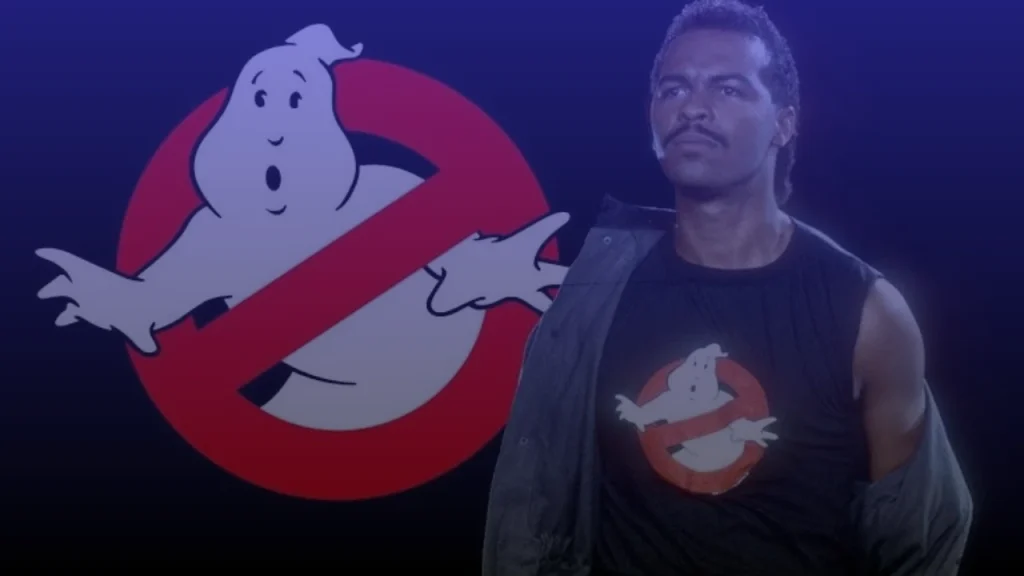
Did Ray Parker Jr. Win His Lawsuit Against Huey Lewis?
Parker said on The Adam Carolla Show in 2016 that he sued Lewis and received money. Some accounts put the figure in the tens of thousands of dollars, others have suggested more. No public judgment or settlement document confirming an amount was found, so the number should not be reported as a court award.
What Is Ray Parker Jr.’s Royalty Lawsuit Against Sony and EMI About?
The third dispute has nothing to do with copying. It is about money.
In 2013, TMZ reported that Parker accused EMI and Sony/ATV Music Publishing of shortchanging him on royalties from the song, claiming he was owed 75% of gross receipts under his arrangement and seeking more than $100,000. An attorney at Valensi Rose PLC, which has represented Parker, later described a Los Angeles Superior Court case seeking financial reports and an accounting, and said the review showed substantial unpaid royalties. On April 23, 2025, Courthouse News reported Parker was challenging how EMI and Sony paid him and how they consulted him on commercial licensing of the song.
Those are Parker’s allegations. No court ruling that Sony or EMI withheld royalties was found, and the current docket status could not be confirmed as of November 1, 2026.
A royalty-accounting claim usually asks a court to order the publisher to produce statements, then to pay any shortfall the statements reveal. Under California law, a written-contract claim generally has a four-year limit (Cal. Code Civ. Proc. § 337), and punitive damages generally are not available for a pure breach of contract (Cal. Civ. Code § 3294).
Who Owns the Ghostbusters Song and Who Gets Paid When It’s Used?
Two separate copyrights exist in almost every recorded song:
- The musical composition: the music and lyrics. Parker wrote it. Publishing rights were handled through Golden Torch Music, which was later acquired by Sony-related interests, and Sony’s licensing information lists Sony/ATV Tunes LLC as publisher.
- The sound recording: the specific recorded performance, which can be owned by a different party, usually a label.
A writer can transfer ownership or grant a license to a publisher, but a transfer must be in writing and signed (17 U.S.C. § 204(a)), and ownership can be divided or assigned under § 201(d). That is why the person who wrote a hit and the company that controls it are often different.
A movie, ad or TV show that wants to use the song generally needs permission for both the composition and the recording. Money flows in several streams:
- Synchronization fees for pairing the song with video.
- Mechanical royalties for reproductions and streams, which for U.S. interactive streaming and downloads are administered by the Mechanical Licensing Collective under the Music Modernization Act of 2018 and the compulsory license in 17 U.S.C. § 115.
- Public performance royalties through performing rights organizations such as ASCAP and BMI.
A publisher’s share of these streams, and what it owes the writer, is exactly what a royalty-accounting suit tests.
Can Ray Parker Jr. Take Back Rights to Ghostbusters Under Copyright Termination?
Possibly. Under 17 U.S.C. § 203, an author can terminate a grant of rights made on or after 1978 during a five-year window that opens 35 years after the grant, provided the work was not made for hire and proper advance notice is served. For a grant tied to a 1984 song, that window has already opened. Whether Parker has served a termination notice has not been reported. This is a possibility under the statute, not something the record shows.
What Copyright Laws Apply to the Huey Lewis and Ray Parker Jr. Dispute?
Copyrightable works, 17 U.S.C. § 102. Musical works and sound recordings are protected, but § 102(b) excludes ideas, procedures and concepts. That is why a groove or general feel is not owned by anyone.
Exclusive rights, 17 U.S.C. § 106. Owners control reproduction, derivative works, distribution and public performance, and can authorize others.
Infringement, 17 U.S.C. § 501. Someone who violates an exclusive right is liable. The plaintiff must prove ownership of a valid copyright and copying of protected expression.
Registration, 17 U.S.C. § 411(a). Under Fourth Estate Public Benefit Corp. v. Wall-Street.com (2019), a U.S. work generally has to be registered, or a registration refused, before suing.
Remedies, 17 U.S.C. §§ 502, 504 and 505. Courts can issue injunctions, award actual damages and the infringer’s profits, or award statutory damages of $750 to $30,000 per work, up to $150,000 for willful infringement. They can also award costs and attorney fees. Section 412 can bar statutory damages and fees where registration came too late.
Statute of limitations, 17 U.S.C. § 507(b). Civil copyright claims must generally be brought within three years of accrual. The Supreme Court has held that a fresh infringing act restarts the clock for that act (Petrella v. MGM, 2014) and that damages are not capped at three years back when a claim is timely under the discovery rule (Warner Chappell Music v. Nealy, 2024). A decades-old dispute therefore can’t simply be reopened because a song remains popular.
How courts judge musical similarity. Courts generally ask whether the defendant had access and whether the works are substantially similar in protected expression. Key examples include Arnstein v. Porter (2d Cir. 1946); Bright Tunes Music v. Harrisongs Music (S.D.N.Y. 1976), which found unconscious copying in a George Harrison song; and Skidmore v. Led Zeppelin (9th Cir. 2020, en banc), which ended the Ninth Circuit’s “inverse ratio rule” that let strong evidence of access lower the similarity required. Recent cases such as Gray v. Hudson (Katy Perry, 9th Cir. 2022) show that common musical building blocks are not protectable. These decisions did not exist in 1984, but they show how a modern court would approach the same facts.
Fair use, 17 U.S.C. § 107. Not claimed in this dispute as far as the record shows.
Breach of confidentiality. Parker’s 2001 claim rested on contract law. A settlement agreement is generally enforceable by its terms, and in California a settling party can ask the court to enforce it under Code of Civil Procedure § 664.6. A party accused of breach can raise defenses based on what the agreement actually barred.
For another example involving unauthorized song use and a damages award, see Tracy Chapman Lawsuit, Singer Wins $450K From Nicki Minaj Over Unauthorized Song Use. For a related music-licensing dispute, see Neil Young Sues Trump 47 Committee for $10 Million Over “Rockin’ in the Free World” After 2020 Settlement.
What Can Songwriters Learn From the Ghostbusters Lawsuits?
The three cases show where music disputes usually start:
- Temp tracks. A placeholder song that shapes the final score can create access evidence and similarity problems. Composers asked to write “something like” an existing song should ask who clears the risk and get indemnity terms in writing.
- Settlements with confidentiality clauses. These need clear wording about what each side may say, and who pays if someone slips.
- Publishing deals. Know whether you are assigning ownership or granting a license, your royalty percentage, how often you get statements, whether you have audit rights, and whether you keep approval rights over licensing.
- Termination rights. Writers who assigned rights decades ago should check whether a § 203 window is open.
Is There a New Ghostbusters Song Lawsuit in 2026?
No new Parker v. Lewis case has been identified. The 2026 coverage is revisiting the history. The royalty dispute with Sony and EMI has a longer, separate history, and its current status could not be confirmed from an accessible docket.
There is no class action, settlement fund or claim form tied to any of these disputes. Fans, viewers and listeners have no claim to compensation.
Frequently Asked Questions About the Ghostbusters Song Lawsuit
Did Ray Parker Jr. steal “I Want a New Drug” for the Ghostbusters theme?
Huey Lewis and his collaborators alleged that the theme copied protected parts of their song. The case settled, and no court found that Parker infringed.
Why did the Ghostbusters filmmakers approach Huey Lewis first?
According to former band guitarist Chris Hayes, the production wanted “I Want a New Drug” and had been using it as temp music. Other accounts say they asked the band to write a new theme. The band declined either way.
How much did Huey Lewis get in the Ghostbusters settlement?
The amount is confidential. Figures that circulate online are unconfirmed.
When was the Ghostbusters lawsuit settled?
Sources conflict. Some retrospective articles say 1985, and 2001 reports about the agreement say 1995.
Why did Ray Parker Jr. sue Huey Lewis in 2001?
He said Lewis breached the confidentiality agreement by discussing the dispute on VH1’s Behind the Music.
Did Ray Parker Jr. win the 2001 lawsuit?
He said publicly in 2016 that he got money. No public judgment confirms the amount or terms.
Did Ray Parker Jr. sue Sony and EMI over Ghostbusters royalties?
Yes. Royalty and accounting claims were reported in 2013 and again in 2025. No final ruling was found.
Does Sony own the Ghostbusters song?
Sony-related publishing interests are listed for the composition. Ownership of the composition, publishing administration and the sound recording are separate interests.
Can Ray Parker Jr. get the Ghostbusters rights back?
Section 203 of the Copyright Act allows termination of certain grants after 35 years if its conditions are met. No termination notice has been reported.
Is there a Ghostbusters lawsuit settlement claim form?
No. There is no public claims process for any of these disputes.
Bottom Line: What the Ghostbusters Song Lawsuits Actually Decided
The public record supports four points. Huey Lewis sued over the similarity between two hit songs. That case settled without a verdict. Parker later sued Lewis over what he said about the settlement. And Parker has separately fought Sony and EMI over royalties and licensing. What the record does not supply is the settlement amount, the settlement year beyond conflicting reports, or a final ruling in the royalty case.
Sources and References
- MusicRadar: Former Huey Lewis and the News guitarist Chris Hayes on the Ghostbusters plagiarism dispute, March 21, 2025
- Parade: The Ghostbusters Theme Sparked a Major Copyright Lawsuit Over an ’80s Hit, July 27, 2026
- RouteNote: Was the Ghostbusters Theme Copied? The Huey Lewis Lawsuit Explained, October 26, 2026
- MPR News: Ghostbusters Theme Song Was the Subject of a Lawsuit, August 11, 2016
- The Week: A Brief History of Copyright Cases Against Musicians, May 5, 2023
- TMZ: Ray Parker Jr. Says His Ghostbusters Money Disappeared, September 30, 2013
- Courthouse News Service: Who You Gonna Call?, April 23, 2025
- Valensi Rose PLC: Who You Gonna Call?, attorney commentary
- 17 U.S.C. § 106
- 17 U.S.C. § 501
- 17 U.S.C. § 504
- 17 U.S.C. § 507
- U.S. Copyright Office: What Musicians Should Know About Copyright
- 17 U.S.C. §§ 102, 107, 115, 201, 203, 204, 411, 412, 502 and 505; Cal. Code Civ. Proc. §§ 337 and 664.6; Cal. Civ. Code § 3294
This article is for informational purposes only and does not constitute legal advice. Laws vary by state and individual circumstances differ. For advice about your specific situation, consult a qualified attorney.
Researched and written by Israr Ahmad, legal content researcher and founder of AllAboutLawyer.com. All facts verified against MusicRadar, Parade, RouteNote, Courthouse News Service, MPR News, TMZ, Valensi Rose PLC commentary, Title 17 of the U.S. Code and the U.S. Copyright Office, as of November 1, 2026. Last Updated: November 1, 2026.
About the Author
Israr Ahmad is a legal content researcher with 4+ years of experience covering class action settlements and consumer rights cases. He has researched and published coverage of 2,500+ settlements using verified court records, settlement administrator filings, and government sources. Learn more about Israr.