
Elissa Slotkin DOJ Probe, Why Aaron Reitz Targeted Her Political Speech and Whether She Faces Criminal Charges
Sen. Elissa Slotkin (D-Mich.) has told U.S. Attorney Aaron Reitz to withdraw a November 12 letter suggesting her public comments about future congressional oversight could violate federal civil rights laws. In her November 18, 2026 reply, Slotkin called the threatened investigation baseless and said her remarks are protected political speech.
Has Slotkin been charged with a crime? No. Reitz’s letter is a records-preservation demand. It is not an indictment, a grand jury subpoena or a court order, and no charge, subpoena or lawsuit over this November dispute has been publicly verified.
The larger question is a constitutional one: can a federal prosecutor threaten a sitting senator over statements about investigating the president’s administration after the January 2027 change in committee control?
Elissa Slotkin DOJ Investigation: Key Facts at a Glance
| Question | Verified status (as of November 19, 2026) |
| Who is involved? | Sen. Elissa Slotkin (D-Mich.) and U.S. Attorney Aaron Reitz, Southern District of Texas (Houston) |
| What triggered the dispute? | Slotkin’s public comments about accountability investigations after Democrats gain committee power |
| When did Reitz send his letter? | Thursday, November 12, 2026, posted publicly on X |
| When did Slotkin respond? | Wednesday, November 18, 2026 |
| Laws Reitz cited | 18 U.S.C. § 241 and 18 U.S.C. § 242 |
| Deadline in Reitz’s letter | 6 p.m. Eastern, November 19, 2026, to confirm receipt and preservation of records |
| Is Slotkin facing charges? | No announced charges |
| Main defenses Slotkin raised | First Amendment, Speech or Debate Clause, Justice Department policy, attorney ethics rules |
| Court ruling on the dispute? | None |
Why Did Aaron Reitz Target Elissa Slotkin’s Remarks?
The dispute grew out of what Democratic lawmakers have said they plan to do once they chair committees in January 2027.
Slotkin said on CNN’s The Lead that Democrats should “go hard on accountability, not just Trump,” meaning officials and associates around the president, not only Trump himself. In a separate recorded discussion for Vox’s America, Actually, she said she wanted people considering jobs in the administration to understand that improper conduct could carry future legal consequences, and that this could deter it.
Trump and other critics read those comments as a threat against people who simply work for his administration. Slotkin’s Senate office disputed that reading and said a widely shared clip left out the question she was answering about accountability.
Reitz’s November 12 letter took the critics’ view. He wrote that her oversight plans appeared to have no legitimate legislative purpose and “may therefore be unlawful,” and he accused her of seeking to intimidate Trump supporters. That is his characterization. It is not a finding by any court.
What Did Aaron Reitz’s November 12 Letter to Slotkin Demand?
Reitz is the U.S. Attorney for the Southern District of Texas. His letter to Slotkin:
- cited 18 U.S.C. §§ 241 and 242;
- told Slotkin, her staff and campaign personnel to preserve records and communications related to her statements;
- asked for written confirmation by 6 p.m. Eastern on November 19, 2026 that she received the letter and took preservation steps; and
- was published on X, and according to Slotkin’s office it went online before she received it.
The letter did not announce charges and did not establish that Slotkin violated either statute.
Is Reitz’s November 19 Deadline Legally Binding on Slotkin?
A preservation letter puts the recipient on notice that records may matter to a future proceeding. Federal law separately punishes destroying evidence to obstruct an official proceeding. But a prosecutor’s letter is not a grand jury subpoena or court order, and it does not compel testimony or authorize a search. No court order enforcing Reitz’s demand against Slotkin has been reported.
How Did Elissa Slotkin Respond to Aaron Reitz on November 18?
In her letter, as reported by NBC News, Slotkin wrote that Reitz’s “threat of investigation is baseless, and you should withdraw your letter immediately.” She also argued that:
- her statements about oversight are protected by the First Amendment;
- legitimate legislative activity is shielded by the Constitution’s Speech or Debate Clause;
- Reitz broke Justice Department policy by announcing the threat publicly instead of going through her lawyer or the Office of Senate Legal Counsel; and
- his threats were “frivolous” and a violation of his ethical duties as an attorney.
Those are Slotkin’s allegations. No court or disciplinary body has ruled that Reitz acted with an improper motive. She has also reserved the right to consider further legal action, which is not the same as having filed a lawsuit.
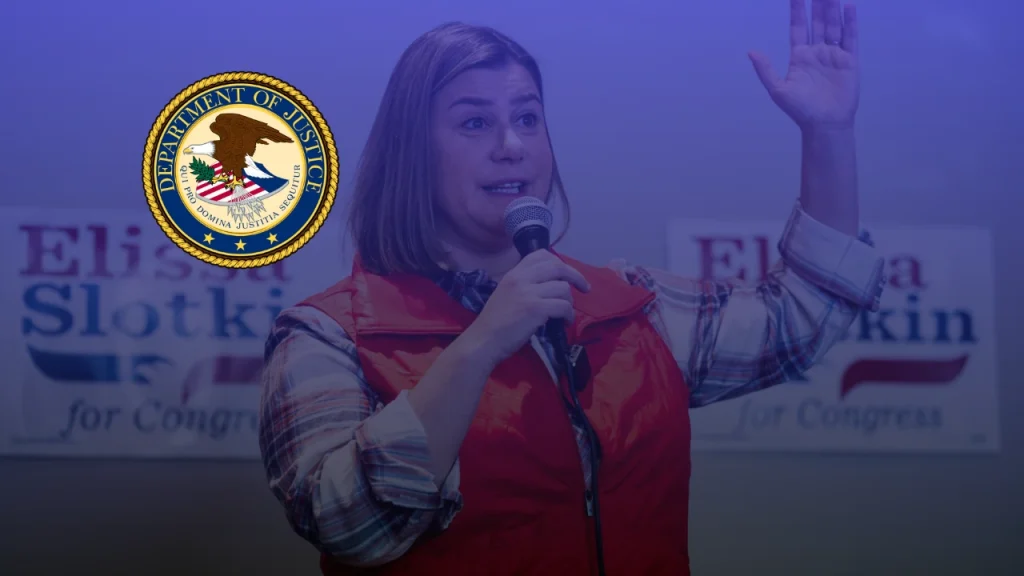
Did Attorney General Todd Blanche Say Elissa Slotkin Committed a Crime?
Not as reported. According to coverage of Blanche’s November 12 interview on The Dan Abrams Show, he acknowledged that Slotkin’s comments alone were not criminal and said no criminal investigation into those remarks was underway. Separately, asked whether he approved Reitz’s letters, Blanche said he does not oversee “every single thing that’s done,” as reported by The National News Desk.
Blanche has also said that Congress has an important oversight role, while the White House has argued that congressional investigations have constitutional limits. The Justice Department’s leadership has not publicly confirmed any criminal investigation of Slotkin arising from her oversight comments.
What Do 18 U.S.C. §§ 241 and 242 Require Before Slotkin Could Be Charged?
| Statute | What it covers | Why it matters here |
| 18 U.S.C. § 241 (conspiracy against rights) | Two or more people conspiring to injure, oppress, threaten or intimidate someone in exercising a federally protected right | Requires an actual agreement and criminal intent. Announcing a plan for congressional oversight is not, without more, evidence of such a conspiracy. |
| 18 U.S.C. § 242 (deprivation of rights under color of law) | Willfully depriving a person of a federal right while acting under government authority | Requires willful conduct that deprives someone of a protected right. Reitz’s letter does not show those elements. |
Legal experts quoted by Democracy Docket described the letters to Slotkin and Sen. Richard Blumenthal as meritless attempts to chill speech. That is expert opinion, not a court ruling, and Reitz has said he is “not interested in chilling free speech.”
Does the First Amendment Protect Elissa Slotkin’s Statements?
Political speech sits at the core of First Amendment protection, including criticism of a president and advocacy for investigations. The First Amendment does not protect true threats or actual criminal conspiracies. The legal question is whether there is evidence of conduct that meets a criminal statute, not whether the language was sharp. Blanche’s reported statement that her comments alone were not a crime bears directly on that question.
How Does the Speech or Debate Clause Apply to Slotkin and Reitz?
Article I, Section 6 of the Constitution says senators and representatives “shall not be questioned in any other Place” for any speech or debate in Congress. The Supreme Court has addressed its reach in several cases:
- McGrain v. Daugherty (1927) recognized investigation as part of Congress’s legislative power.
- Watkins v. United States (1957) held that Congress cannot investigate purely to expose private affairs without a valid legislative purpose.
- Eastland v. United States Servicemen’s Fund (1975) gave strong immunity to legitimate committee investigations and subpoenas.
- Gravel v. United States (1972) and Hutchinson v. Proxmire (1979) limited the clause: it covers legislative acts, not every public statement or press activity.
Practically, that means Slotkin’s future committee work would receive the clause’s strongest protection, while her television and podcast interviews are better defended under the First Amendment than under Speech or Debate. Reitz’s position, in turn, rests on the argument that oversight with no legitimate legislative purpose falls outside the clause.
For a broader explanation, see Can the DOJ Prosecute Members of Congress for Investigating the President? The White House Counsel’s Letter and the Constitutional Fight Behind It.
Why Is a Houston-Based U.S. Attorney Involved in a Michigan Senator’s Remarks?
Slotkin represents Michigan, and her interviews were recorded and broadcast outside Texas. Reitz has said the lawmakers’ statements “reach nationwide and into the Southern District of Texas” and that he is coordinating with Justice Department headquarters. Federal criminal venue generally depends on where the alleged offense occurred, so jurisdiction would be an early contested issue in any prosecution. No Texas prosecution of Slotkin has been publicly verified.
Which Other Democrats Received Aaron Reitz Preservation Letters?
Slotkin was not the only recipient. Reported letters from Reitz include:
- Sen. Richard Blumenthal (D-Conn.), November 11: over his inquiry into private donors funding the White House ballroom project. Blumenthal called the threat “baseless” and sent Reitz a preservation demand of his own.
- Sen. Elissa Slotkin (D-Mich.), November 12: over her accountability comments.
- Sen. Elizabeth Warren (D-Mass.), November 15: over her Face the Nation appearance. Her deadline was 6 p.m. Eastern on November 23. Reitz’s post about her used the words “tomahawk” and “scalps.”
- Rep. Robert Garcia (D-Calif.), November 16: the incoming House Oversight chair, also with a November 23 deadline.
- Sen. Adam Schiff (D-Calif.), reported November 18: over what Reitz called a “target list” of private Americans and firms.
See Aaron Reitz Letter to Richard Blumenthal, Can DOJ Prosecute a Senator for Investigating Trump’s White House Ballroom Donors? for the first letter in the series.
How Is the Slotkin–Reitz Dispute Different From the Pirro “Illegal Orders” Video Case?
It is a separate matter. In November 2025, Slotkin and five other Democratic lawmakers with military or intelligence backgrounds released a video reminding service members they may refuse unlawful orders. After the White House criticized it, the U.S. Attorney’s Office in Washington, led by Jeanine Pirro, explored charges. In February 2026, a federal grand jury declined to indict the six lawmakers.
That outcome meant the proposed charges were not approved. It was not a judicial ruling granting blanket immunity for future statements. The November 2026 dispute concerns different remarks and a different prosecutor.
Could Aaron Reitz Face an Ethics Investigation Over the Slotkin Letter?
On November 16, the watchdog group Campaign for Accountability said it filed a complaint with the State Bar of Texas over Reitz’s letters, alleging misuse of prosecutorial power to burden lawmakers’ oversight activity. A bar complaint is an allegation, not a finding.
Slotkin separately argues that Reitz’s public posting conflicts with Justice Department media-relations policy in the Justice Manual. Whether any internal policy was violated has not been publicly determined.
What Happens Next After Slotkin’s Response to Reitz?
Things to watch:
- Whether Reitz withdraws the letter, answers Slotkin or escalates.
- Whether Slotkin confirms or declines the November 19 preservation request, and what she says publicly.
- Whether Justice Department leadership clarifies the status of any inquiry.
- The outcome of the Texas State Bar complaint.
- Whether any recipient goes to court.
When Democrats take committee gavels in January 2027, any subpoenas would still be limited by legislative purpose, privilege and witnesses’ rights. For those rules, see Can Democrats Subpoena Trump, His Family, Banks and Private Companies in 2027? What Congress Can Legally Demand Under Trump v. Mazars, Executive Privilege and Contempt Law.
Frequently Asked Questions About Elissa Slotkin and Aaron Reitz
Has Elissa Slotkin been arrested or indicted?
No. No arrest, indictment or criminal complaint arising from Reitz’s November 12 letter has been publicly verified.
Can President Trump order the DOJ to investigate Sen. Slotkin?
A president can voice enforcement priorities, but prosecutors must still follow federal criminal law and the Constitution. A presidential demand is not a charge, and any case would need evidence of conduct meeting a criminal statute.
Can Sen. Slotkin sue U.S. Attorney Aaron Reitz?
She has said she may consider legal action, but she has not been reported to have sued. A lawsuit would face hurdles such as standing, sovereign immunity and prosecutorial immunity.
Is Aaron Reitz’s preservation letter the same as a subpoena?
No. A preservation letter asks someone to keep records. A subpoena is a legal order issued through a grand jury or court process.
Can Congress investigate Trump administration officials after January 2027?
Yes, within its constitutional and committee-authorized powers. Legislative purpose, executive privilege and other protections can limit specific investigations and subpoenas.
The Bottom Line: Slotkin Has Been Warned, Not Charged
As of November 19, 2026, Slotkin has received a federal prosecutor’s public preservation demand, rejected it in writing, and has not been charged, subpoenaed or sued in connection with it. No court has decided whether Reitz’s theory under 18 U.S.C. §§ 241 and 242 can apply to statements about congressional oversight.
Sources and Legal References
- Aaron Reitz’s November 12 public post and letter
- NBC News report on Sen. Slotkin’s November 18 response
- Democracy Docket: legal experts on Reitz’s letters to Slotkin and Blumenthal
- The National News Desk: Reitz’s letter to Rep. Robert Garcia and Blanche’s comments
- 18 U.S.C. § 241, Conspiracy against rights (Cornell LII)
- 18 U.S.C. § 242, Deprivation of rights under color of law (Cornell LII)
- Eastland v. United States Servicemen’s Fund, 421 U.S. 491 (1975)
- U.S. Senate: About Congressional Investigations
- DOJ Justice Manual, Media Relations
- Campaign for Accountability: bar complaint against U.S. Attorney Aaron Reitz
Disclaimer: AllAboutLawyer.com provides legal information, not legal advice. Allegations about motives, ethics violations or criminal conduct are not findings of any court or disciplinary body.
Researched and written by Israr Ahmad, legal content researcher and founder of AllAboutLawyer.com. All facts verified against Aaron Reitz’s published letter, news reports of Sen. Slotkin’s response, the U.S. Code, the Justice Manual and Supreme Court opinions, as of November 19, 2026. Last Updated: November 19, 2026.
About the Author
Israr Ahmad is a legal content researcher with 4+ years of experience covering class action settlements and consumer rights cases. He has researched and published coverage of 2,500+ settlements using verified court records, settlement administrator filings, and government sources. Learn more about Israr.