
Can Democrats Subpoena Trump, His Family, Banks and Private Companies in 2027? What Congress Can Legally Demand Under Trump v. Mazars, Executive Privilege and Contempt Law
Votes from the November 3, 2026 midterms were still being counted when this article was published, and control of the House and Senate had not been finally decided. This article explains what a Democratic majority could and could not legally do if it takes power in January 2027.
Can Democrats Subpoena Donald Trump, the Trump Family, Banks and Companies?
Yes, with legal limits. A Democratic majority in the House, the Senate or both could, once the new Congress organizes in January 2027, authorize committee subpoenas for documents and testimony from a wide range of people and organizations. That includes executive-branch officials, members of the Trump family, banks, federal contractors and other private companies, as long as the request serves a valid legislative or oversight purpose within the committee’s jurisdiction.
The limits matter just as much as the power:
- A subpoena is not an accusation. It is a legal demand for information. Receiving one does not mean a person or company broke the law.
- Subpoenas aimed at the president personally face a special test under Trump v. Mazars USA, LLP, 591 U.S. 848 (2020).
- Executive privilege, the Fifth Amendment and other legal protections can limit what has to be produced, and disputes can take months or years to resolve.
- Congress cannot arrest, indict or imprison anyone through a committee. Enforcement runs through contempt statutes and the courts, and prosecutions are decided by the Department of Justice (DOJ).
Quick Facts: Congressional Subpoenas in 2027
| Question | Answer |
| Can Democrats subpoena President Trump? | Yes in principle, but subject to executive privilege and the Mazars separation-of-powers test |
| Can Congress subpoena Trump’s family members? | Yes, if the request is within a committee’s jurisdiction and serves a legislative purpose |
| Can Congress subpoena banks? | Yes. Banks are common subpoena recipients |
| Can Congress subpoena private companies? | Yes |
| Can companies simply refuse? | No. They can negotiate or challenge, but ignoring a valid subpoena risks contempt |
| Can individuals plead the Fifth? | Yes, for answers that could incriminate them personally |
| Can corporations plead the Fifth? | No (Braswell v. United States, 487 U.S. 99 (1988)) |
| Is executive privilege absolute? | No (United States v. Nixon, 418 U.S. 683 (1974)) |
| Statute for criminal contempt | 2 U.S.C. §§ 192 and 194 |
| Statute for compelled testimony with immunity | 18 U.S.C. § 6005 |
| When does the new Congress begin? | Noon, January 3, 2027 (20th Amendment, Section 1) |
| When do subpoenas expire? | At the end of the Congress that issued them (January 3, 2029 for the 120th Congress) |
| Does a subpoena mean a crime was committed? | No |
What Has Been Reported About Democratic Investigation Plans for 2027?
Reuters reported on August 8, 2026, citing four people familiar with the discussions, that senior House Democrats and committee aides were developing a strategy to use hearings, subpoenas and document requests to obtain records from companies and financial players tied to President Trump’s political and business orbit. According to the report, Democrats also planned to scrutinize Trump-linked financial vehicles, including 1789 Capital, a venture capital firm where Donald Trump Jr. is a partner, and foreign sovereign wealth funds with investments in Trump family-linked entities.
Reuters also reported that:
- The approach prioritizes building evidence through investigations over an immediate impeachment effort, though impeachment was described as an option if evidence meets the threshold.
- Party leaders had begun sending letters to companies, contractors and organizations that could be connected to investigations, requesting records and laying the groundwork for subpoenas if Democrats win the House.
- No final target list had been set and no formal investigations had begun, and Reuters could not determine whether any named entity faced accusations of wrongdoing.
The Washington Post has separately reported that House Democrats are preparing oversight of Trump family ventures, including cryptocurrency projects, along with the use of executive power and other areas.
Important: Being mentioned in reporting about possible oversight is not an accusation, and a letter requesting records is not a subpoena. A voluntary request creates no legal duty to comply. Only a properly authorized subpoena does.
What Is a Congressional Subpoena, and How Is It Different From a Criminal Subpoena?
A congressional subpoena is a legal order issued under a House or Senate committee’s authority that requires a person or organization to produce documents (subpoena duces tecum), appear and testify (subpoena ad testificandum), or both. Committees also use voluntary requests, transcribed interviews and depositions.
A congressional subpoena is not a criminal process. Committees investigate to inform legislation and oversight. They cannot indict, convict or authorize a search of a home or office. Information gathered by a committee can be referred to law enforcement, but prosecutors decide independently whether to act. For the difference between a congressional referral and a prosecution, read What Is A DOJ Referral? Meaning, Who Can Make One, How the Justice Department Reviews It and What Happens Next.
What Is the Legal Source of Congress’s Subpoena Power?
The Constitution does not use the word “subpoena.” The power is implied from Congress’s legislative authority in Article I, and the Supreme Court has recognized it for nearly a century:
| Case | What it established |
| McGrain v. Daugherty, 273 U.S. 135 (1927) | Congress may compel testimony and documents as an auxiliary to its legislative power |
| Watkins v. United States, 354 U.S. 178 (1957) | Congress has no general power to expose private affairs for the sake of exposure, and inquiries need a valid legislative purpose |
| Eastland v. U.S. Servicemen’s Fund, 421 U.S. 491 (1975) | The Speech or Debate Clause (Article I, Section 6) shields legitimate legislative acts, including issuing subpoenas, from many lawsuits. The case involved a subpoena for a bank’s records |
| Trump v. Mazars USA, LLP, 591 U.S. 848 (2020) | Subpoenas for a sitting president’s personal information must pass a four-part separation-of-powers analysis |
| Senate Select Committee v. Nixon, 498 F.2d 725 (D.C. Cir. 1974) (en banc) | To overcome presidential-communications privilege, Congress must show the evidence is demonstrably critical to its legislative function |
Congress can investigate without proving a crime. Legitimate subjects include how federal contracts are awarded, whether ethics and disclosure laws are adequate, and how agencies spend appropriated money. But a subpoena cannot be used merely to punish or expose someone or to replace a criminal investigation.
Who Can Issue a Subpoena in 2027, and When?
Only a chamber’s majority controls its committees. The practical picture depends on which party wins what:
| Outcome | Subpoena power |
| Democrats win the House only | House committees controlled by Democrats can issue subpoenas. Senate committees remain under Republican control |
| Democrats win the Senate only | Senate committees can issue subpoenas. House committees remain under Republican control |
| Democrats win both | Both chambers’ committees can issue subpoenas, and investigations can be coordinated |
Timing: newly elected members take office at noon on January 3, 2027 (20th Amendment, Section 1). Each chamber then adopts rules for the 120th Congress, and committees organize and adopt their own procedures. In the House, Rule XI, clause 2(m) gives committees and subcommittees authority to issue subpoenas. Under the rules in the 119th Congress, committees may authorize subpoenas by committee vote or delegate that authority to the chair, and committee rules differ. Senate committees likewise follow their own rules. The new rules for 2027 will decide the details. For how a change in control affects Congress overall, read What Happens If Democrats Win the House, the Senate or Both in the 2026 Midterms? Impeachment, Investigations, Nominations and the Legal Powers of Congress Over President Trump.
A subpoena lasts only as long as the Congress that issued it. Delay is therefore a real strategy: if enforcement litigation outlasts the 120th Congress on January 3, 2029, the subpoena expires and the new Congress must start again.
Can Democrats Subpoena President Donald Trump Personally?
Yes in principle, but this is the hardest target.
Executive privilege. The Supreme Court recognized a qualified privilege for confidential presidential communications in United States v. Nixon, 418 U.S. 683 (1974), and also held that it is not absolute. In a congressional setting, the D.C. Circuit in Senate Select Committee v. Nixon required Congress to show that the information is demonstrably critical to its legislative function and not available elsewhere.
Separation of powers. In Trump v. Mazars USA, LLP, the Supreme Court addressed House subpoenas for President Trump’s personal financial records. It held that those subpoenas could not be judged like subpoenas to ordinary citizens, and it directed courts to weigh four considerations:
- Is the legislative purpose strong enough to involve the president and his papers? Courts should consider whether the information is available from other sources.
- Is the subpoena no broader than reasonably necessary?
- Has Congress offered detailed and substantial evidence that the subpoena advances a valid legislative purpose?
- What burdens does the subpoena place on the president?
The Court did not say Congress can never obtain a president’s personal records. It said the request gets closer scrutiny. Read the Supreme Court’s opinion in Trump v. Mazars.
Compelling the president to testify. Compelling a sitting president to appear is far harder than obtaining documents. Presidents have appeared voluntarily on rare occasions (President Gerald Ford testified before a House Judiciary subcommittee in October 1974), but no modern court has forced a sitting president to testify before Congress. Expect negotiation, written answers or litigation.
Different context: criminal and state cases. Trump v. Vance, 591 U.S. 786 (2020), held that a sitting president has no absolute immunity from a state grand jury subpoena. That case involved a criminal subpoena, not a congressional one, but it shows that presidential status is not a blanket shield.
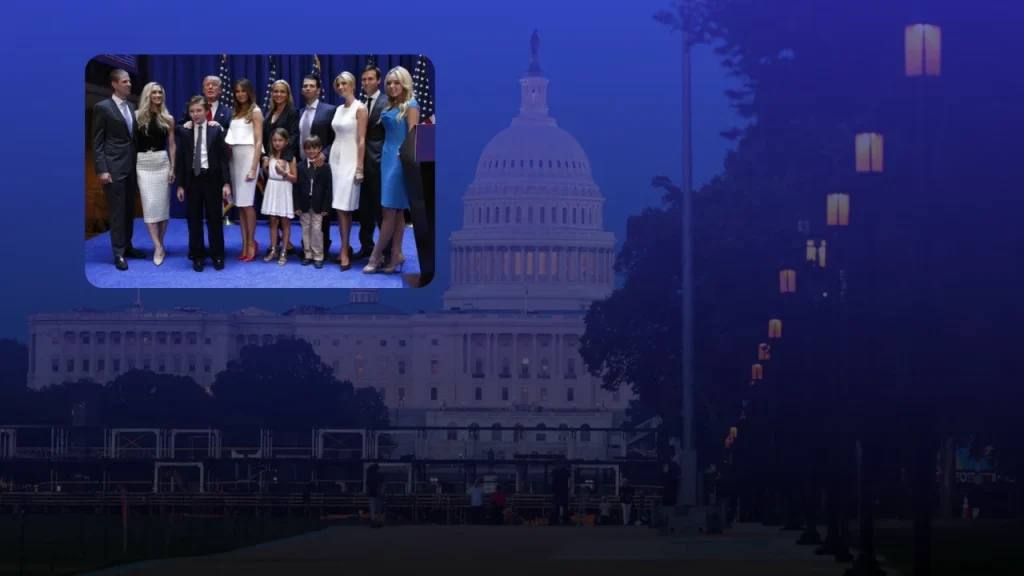
Can Congress Subpoena Trump’s Family Members Such as Donald Trump Jr., Eric Trump and Jared Kushner?
Yes. A family relationship gives no general immunity. The committee must still show jurisdiction and a legislative purpose, and the demand must be pertinent to the inquiry.
Family members can raise individual protections:
- The Fifth Amendment, for answers that could incriminate them personally.
- Attorney-client privilege and work-product protection, subject to the caution described below.
- Overbreadth, burden and pertinence objections.
They cannot claim presidential executive privilege for private business activity. Executive privilege belongs to the executive branch and covers official presidential communications, not family business records. Someone who held a government role, such as a White House adviser, may face questions about official communications where privilege can be asserted and contested.
Can Congress Subpoena Trump’s Bank Records and Financial Information?
Yes. Banks are among the most common recipients of congressional subpoenas, and the Mazars case itself involved subpoenas to Deutsche Bank and Capital One, along with Trump’s accounting firm Mazars USA, in 2019.
Why third-party subpoenas matter. Reuters reported that Democrats believe going after private companies and financial players will prove more fruitful than confronting a White House they expect to resist oversight. A bank can be subpoenaed directly, even when the information concerns the president.
Can Trump or a customer block a bank subpoena? A customer may try to sue to stop disclosure, and Mazars shows the president can raise separation-of-powers objections even when the subpoena goes to a third party. But the Speech or Debate Clause and Eastland can make pre-enforcement lawsuits against a committee hard to win, and the outcome depends on who sues and what is sought.
Laws that shape bank subpoenas:
- Right to Financial Privacy Act (12 U.S.C. §§ 3401–3423): restricts federal agencies’ access to customer bank records. It generally does not cover Congress, so banks do not have the same statutory shield against committee demands.
- Suspicious Activity Reports (31 U.S.C. § 5318(g)): the Bank Secrecy Act imposes strict confidentiality on these reports, which can limit what a bank can hand over even to Congress.
- Tax returns (26 U.S.C. § 6103(f)): the chairs of the House Ways and Means Committee and Senate Finance Committee may request a taxpayer’s returns from the Treasury Secretary. In the dispute over President Trump’s returns, the Supreme Court declined to block their release to the House committee in November 2022.
A subpoena for bank records does not mean investigators found illegal transactions. It means lawmakers believe the records may inform an authorized inquiry.
Can Congress Subpoena Private Companies, Contractors and Technology Firms?
Yes. A committee within its jurisdiction can subpoena any U.S. company. Companies become relevant when they hold information about federal contracts, regulatory decisions, grants, procurement or other matters Congress oversees.
| Business category | Information a committee might seek |
| Federal contractors | Contracts, bids, amendments, payments and communications with agencies |
| Banks and investment firms | Transaction records, ownership documents and due-diligence files |
| Technology companies | Government contracts, regulatory communications and certain business records |
| Foreign-linked investors | Payments and relationships with entities tied to the administration |
Which laws are investigators likely to examine? Depending on the subject, committees often look at:
- The Federal Acquisition Regulation and procurement law.
- The False Claims Act (31 U.S.C. §§ 3729–3733) for contractors.
- The Foreign Emoluments Clause (Article I, Section 9, Clause 8) and the Domestic Emoluments Clause (Article II, Section 1, Clause 7), which concern payments from foreign governments and extra payments from the federal or state governments to a president.
- The Foreign Agents Registration Act (22 U.S.C. § 611 et seq.).
- Financial disclosure rules under the Ethics in Government Act.
Courts have never fully resolved the reach of the Emoluments Clauses against a president. The Supreme Court vacated the lower-court rulings in Trump v. Citizens for Responsibility and Ethics in Washington as moot in 2021, so the question remains open.
Can a company refuse? It can negotiate, object or seek court relief on valid grounds such as lack of jurisdiction, no legitimate legislative purpose, overbreadth or undue burden. It generally cannot ignore a valid subpoena because it thinks the investigation is political. In practice, most companies negotiate the scope. Fighting a subpoena is expensive and public.
Can Congress Demand Emails, Text Messages and Cloud Data?
Yes, if covered by a valid subpoena and tied to the inquiry. Committees commonly seek emails, messages, calendars and internal memos.
Two points to understand:
- Stored Communications Act (18 U.S.C. § 2702): cloud and email providers face restrictions on disclosing the content of customer communications. The statute has no explicit congressional-subpoena exception, so committees usually seek content from the company or individual that owns or sent it, rather than from the provider.
- Overbreadth: a demand for unrelated personal messages can be challenged. A subpoena compels production through a legal process. It does not authorize a search of a home, office or phone.
Can Executive Privilege Block Congressional Subpoenas?
Executive privilege is a real but limited constitutional doctrine. It covers confidential presidential communications and certain deliberative materials. It does not automatically protect:
- A president’s personal bank statements or ordinary business records.
- Facts known to a former official that do not involve protected communications.
- Records held by a private company or relative.
When the privilege is asserted, the usual path is negotiation (accommodation), such as limiting the scope, allowing in camera review or providing alternative sources. If that fails, courts decide, and they weigh the committee’s need against the privilege. In Trump v. Thompson, 20 F.4th 10 (D.C. Cir. 2021), the D.C. Circuit rejected a former president’s effort to block release of White House records to the House January 6 committee, and the Supreme Court declined to intervene in January 2022. That case involved a former president and a sitting president’s decision not to assert privilege, so it does not settle how a sitting president’s own assertions would fare, but it shows that courts do not treat the privilege as automatic.
Can People Plead the Fifth Amendment Before Congress?
Yes. The Fifth Amendment privilege against self-incrimination applies in congressional hearings (Quinn v. United States, 349 U.S. 155 (1955)). A witness may decline to answer when the answer could reasonably expose the witness to criminal prosecution (Hoffman v. United States, 341 U.S. 479 (1951)).
- Individuals (including executives and family members) may invoke the privilege question by question. It is not a blanket right to refuse to appear.
- Corporations cannot. The privilege is personal. In Braswell v. United States, 487 U.S. 99 (1988), the Court held that a corporate records custodian cannot resist producing corporate records on Fifth Amendment grounds.
- Personal documents. An individual’s own act of producing documents can itself be testimonial in some circumstances (United States v. Hubbell, 530 U.S. 27 (2000)), but this protection does not extend to corporate records.
Can Congress Force Testimony Over a Fifth Amendment Claim?
Yes, through immunity. Under 18 U.S.C. § 6005, a congressional committee can seek a court order compelling testimony after granting immunity. The request must be approved by a two-thirds vote of the committee (or of the chamber), and the Attorney General must be notified in advance and may ask for a delay of up to 20 days. Immunity is “use and derivative use” immunity (Kastigar v. United States, 406 U.S. 441 (1972)): the compelled testimony and evidence derived from it cannot be used against the witness, but the witness can still be prosecuted on independently obtained evidence, and for perjury or contempt related to the testimony.
Can Companies Claim Attorney-Client Privilege or Protect Trade Secrets Before Congress?
They can assert them, but there is an important caveat that many articles omit. Congress has long taken the position that common-law privileges such as attorney-client privilege and work-product protection are not binding on it. Committees decide whether to accept a claim, and they often do in practice, but they are not required to. Courts have not definitively resolved the question.
For companies, that means:
- A privilege log and a documented negotiation with committee staff matter.
- Copying a lawyer on an email does not make it privileged.
- Trade secrets and commercial confidentiality are not a complete defense, but committees often agree to protective handling such as closed sessions or confidentiality arrangements.
What Happens If Someone Refuses to Comply With a Congressional Subpoena?
Congress has four enforcement routes, and each has weaknesses.
1. Negotiation and accommodation
Most disputes end here. Committees narrow requests, set rolling production schedules or accept alternatives.
2. Criminal contempt (2 U.S.C. §§ 192 and 194)
A person who willfully fails to appear, refuses to produce documents or refuses to answer a pertinent question commits a misdemeanor, punishable by a fine and imprisonment for one to twelve months (2 U.S.C. § 192). Under § 194, the contempt is certified to the U.S. Attorney for the District of Columbia after a committee report and a vote of the full chamber.
Recent examples show how it works for private individuals: Stephen Bannon (2022) and Peter Navarro (2023) were convicted of contempt of Congress for defying House January 6 committee subpoenas, and each served a four-month sentence. But when the Department of Justice declines to prosecute, there is no case. The DOJ has historically declined to prosecute executive-branch officials who withhold documents at a president’s direction, and it declined to prosecute Attorney General Merrick Garland after the House held him in contempt in 2024.
3. Civil enforcement
A chamber can sue in federal court for an order compelling compliance. In the Senate, 28 U.S.C. § 1365 and 2 U.S.C. §§ 288b and 288d provide a statutory process, but § 1365 excludes subpoenas to executive-branch officials who assert a governmental privilege. In the House, the full chamber (or its institutional leadership under House rules) must authorize suit. Cases can last years, and the subpoena can expire with the Congress.
4. Inherent contempt
Congress has historically had the power to arrest and hold witnesses itself. It has not been used in modern times and would face serious legal and practical obstacles.
A refusal does not mean immediate arrest. There are multiple procedural steps before any penalty.
Obstruction and false statements
Separate federal crimes apply to anyone dealing with a congressional inquiry: 18 U.S.C. § 1001 (false statements), 18 U.S.C. § 1505 (obstruction of congressional proceedings), 18 U.S.C. § 1512 (destroying or tampering with documents) and 18 U.S.C. § 1621 (perjury). These can create exposure even if the underlying conduct was lawful.
What Should Companies Do If They Expect a Congressional Subpoena?
- Preserve documents now. Suspend routine deletion of relevant emails, messages, contracts and financial records once a request is reasonably anticipated. Destroying records after learning of an inquiry can violate 18 U.S.C. § 1512.
- Identify custodians and the people who hold responsive information.
- Separate privileged material and prepare a privilege log.
- Respond through counsel and engage with committee staff early to narrow the scope.
- Request confidential handling for trade secrets and personal data.
- Do not treat a letter as a subpoena, or a subpoena as a letter. Know which one you received.
Can Congress Indict Trump or Send Him or His Family to Prison?
No. A committee cannot convict anyone. It can hold hearings, issue reports and make criminal referrals. Prosecutors independently decide whether to investigate or charge, and an indictment requires a grand jury for federal felonies. A referral is not an indictment.
Can Democrats Investigate Without Proving a Crime?
Yes. Congress may investigate to decide whether to legislate, for example on procurement rules, disclosure requirements, conflict-of-interest law or foreign influence. A committee can uncover politically damaging facts that are not crimes. But it cannot use subpoenas solely to expose private information or as a substitute for law enforcement (Watkins; Mazars).
What Happens If President Trump Tells Federal Agencies Not to Cooperate?
Expect an accommodation fight. The White House can instruct executive officials to withhold documents under executive privilege or other grounds, and it may argue that a committee lacks a legitimate purpose. Congress’s options are negotiation, civil enforcement (with the limits described above), using the appropriations process to pressure agencies, or public hearings. Disputes in Trump’s first term, including the Mazars case, show these fights can last years. Because subpoenas expire with each Congress, time favors the party resisting.
What Does a Democratic Congress Mean for Ordinary Americans?
The most likely effects are informational and legislative rather than criminal:
- More public detail about federal contracts and how taxpayer money is spent.
- Possible bills on procurement, disclosure, lobbying, conflicts of interest and foreign payments.
- Public hearings and committee reports, though some material stays confidential.
- Possible criminal referrals, which prosecutors may or may not pursue.
Frequently Asked Questions About Congressional Subpoenas in 2027
Can Democrats subpoena Donald Trump in 2027?
Yes in principle, if they control the relevant chamber. But executive privilege and the Trump v. Mazars four-part test make subpoenas to the president personally difficult to enforce, and compelling a sitting president to testify is rare.
Can Congress subpoena Trump’s bank records?
Yes. Congress has done so before. The Mazars case involved Deutsche Bank and Capital One. A subpoena to a bank must still serve a legitimate legislative purpose and be reasonably tailored.
Can Democrats subpoena Donald Trump Jr., Eric Trump or Jared Kushner?
Yes, if their records or testimony are relevant to a valid inquiry within a committee’s jurisdiction. They can invoke the Fifth Amendment for incriminating questions and raise other objections.
Can Congress subpoena Trump’s family businesses?
Yes. A company cannot plead the Fifth Amendment, and its custodian cannot refuse to produce corporate records on that ground (Braswell).
Can a private company ignore a congressional subpoena?
No. It can negotiate or challenge the subpoena on valid grounds, but willful refusal can lead to contempt under 2 U.S.C. § 192.
Can executives plead the Fifth before Congress?
Yes, individual executives can for personal testimony that could incriminate them, but the company cannot withhold its records on that basis.
Can Congress force someone to testify after they plead the Fifth?
Yes, through a court order granting immunity under 18 U.S.C. § 6005, which requires a two-thirds committee vote and notice to the Attorney General.
Can Trump claim executive privilege to block every subpoena?
No. The privilege is qualified and covers confidential presidential communications, not personal bank accounts or ordinary business records.
Can Congress send someone to jail for ignoring a subpoena?
Possibly. A willful refusal is a misdemeanor under 2 U.S.C. § 192 punishable by one to twelve months’ imprisonment, but it requires a House or Senate vote, certification to the U.S. Attorney and a prosecution decision. A subpoena alone does not result in arrest.
Does the Justice Department have to prosecute contempt of Congress?
It is supposed to present the matter, but the DOJ has historically asserted prosecutorial discretion, especially when an executive official withholds records at the president’s direction.
Can Democrats get Trump’s tax returns?
The House Ways and Means Committee chair can request returns from the Treasury under 26 U.S.C. § 6103(f). In the earlier dispute, the Supreme Court declined in November 2022 to block their release to the committee.
Do Democrats need to prove a crime to investigate?
No. They need a valid legislative or oversight purpose. A subpoena is not proof of wrongdoing.
Can Congress subpoena a company’s emails and text messages?
Yes, subject to jurisdiction, scope and applicable privileges. Cloud providers face extra limits under the Stored Communications Act.
Can attorney-client privilege stop a congressional subpoena?
It can limit what is produced, but Congress considers common-law privileges discretionary, not binding. Expect negotiation.
When can the first subpoenas be issued?
After the new Congress begins on January 3, 2027, and committees organize and adopt their rules. The exact timing will depend on each chamber and committee.
Do subpoenas expire?
Yes. A subpoena generally lapses when the Congress that issued it ends, which would be January 3, 2029 for the 120th Congress.
Does a subpoena mean a person or company did something wrong?
No. It is a demand for information.
Final Takeaway: Congress Has Broad Subpoena Power, but It Is Not Unlimited
If Democrats win a chamber, they gain real authority from January 3, 2027 to compel documents and testimony from banks, contractors, private companies, family members and executive-branch officials. That power is strongest against private parties and weakest against a sitting president asserting executive privilege.
The key legal markers are Trump v. Mazars (special scrutiny for presidential records), Eastland and the Speech or Debate Clause (limits on suing to stop a subpoena), Braswell (no corporate Fifth Amendment), 2 U.S.C. §§ 192 and 194 (criminal contempt), 18 U.S.C. § 6005 (immunity) and the time limit set by the end of each Congress.
What happens next depends on the final election results, which committees get control, which investigations are authorized and how the White House and recipients respond. Reported plans are not formal investigations, and no person or company should be presumed to have done anything wrong because their name appears in a news story.
Sources and Legal Authorities
Reporting on investigation plans
- Reuters: Democrats plan Trump investigations over impeachment if they win House, sources say, August 8, 2026
- Washington Examiner summary of the Reuters report, August 8, 2026
- Outlook India: Democrats prepare broad White House probes, citing The Washington Post
Supreme Court and federal appellate decisions
- Trump v. Mazars USA, LLP, 591 U.S. 848 (2020)
- McGrain v. Daugherty, 273 U.S. 135 (1927)
- Watkins v. United States, 354 U.S. 178 (1957)
- United States v. Nixon, 418 U.S. 683 (1974)
- Braswell v. United States, 487 U.S. 99 (1988)
- Eastland v. U.S. Servicemen’s Fund, 421 U.S. 491 (1975)
Statutes and congressional rules
- 2 U.S.C. § 192 and 2 U.S.C. § 194
- 18 U.S.C. § 6005
- Congressional Research Service: Congressional Oversight Manual
- U.S. Constitution, National Archives
- House Rules of the 119th Congress, Rule XI
Other authorities cited
Quinn v. United States, 349 U.S. 155 (1955); Hoffman v. United States, 341 U.S. 479 (1951); United States v. Hubbell, 530 U.S. 27 (2000); Kastigar v. United States, 406 U.S. 441 (1972); Trump v. Vance, 591 U.S. 786 (2020); Trump v. Thompson, 20 F.4th 10 (D.C. Cir. 2021); Senate Select Committee v. Nixon, 498 F.2d 725 (D.C. Cir. 1974) (en banc); 28 U.S.C. § 1365; 2 U.S.C. §§ 288b, 288d; 26 U.S.C. § 6103(f); 12 U.S.C. §§ 3401–3423; 31 U.S.C. § 5318(g); 18 U.S.C. §§ 1001, 1505, 1512, 1621, 2702; 31 U.S.C. §§ 3729–3733; 22 U.S.C. § 611 et seq.; U.S. Const. art. I, § 6; art. I, § 9, cl. 8; art. II, § 1, cl. 7; amend. XX, § 1; amend. V.
This article is general legal information, not legal advice. AllAboutLawyer.com is an independent information website, not a law firm.
Researched and written by Israr Ahmad, legal content researcher and founder of AllAboutLawyer.com. All facts verified against the U.S. Constitution (National Archives), published Supreme Court and federal appellate opinions, the U.S. Code, House rules, the Congressional Research Service and Reuters reporting, as of November 4, 2026. Last Updated: November 4, 2026.
About the Author
Israr Ahmad is a legal content researcher with 4+ years of experience covering class action settlements and consumer rights cases. He has researched and published coverage of 2,500+ settlements using verified court records, settlement administrator filings, and government sources. Learn more about Israr.