
Can the DOJ Prosecute Members of Congress for Investigating the President? The White House Counsel’s Letter and the Constitutional Fight Behind It
White House Counsel Will Scharf has sent a three-page letter to Rep. Robert Garcia (D-Calif.), the expected chair of the House Oversight and Government Reform Committee, warning that some congressional investigative tactics could amount to “blatant criminality.” The letter is dated Monday, November 9, 2026, and became public on Wednesday, November 11. Garcia rejected it, saying Congress’s oversight power comes from Article I of the Constitution and does not need the White House’s permission.
The short legal picture: Congress has broad investigative power, and legitimate legislative acts such as authorized subpoenas get strong constitutional protection. But Congress’s power has limits, and no member of Congress is immune from prosecution for separate crimes. The letter is a warning, not a charge, a court ruling or an announced investigation. As of November 12, no criminal case against Garcia or any other lawmaker tied to the letter had been reported.
This article explains the law. It does not take a side in the political dispute.
The Dispute: Key Facts
| Question | What is reported |
| Who wrote the letter? | White House Counsel Will Scharf |
| Who received it? | Rep. Robert Garcia, ranking member and incoming chair of House Oversight |
| Date | Monday, November 9, 2026 (public November 11) |
| Length | Three pages |
| Main warning | Probes meant to abuse or intimidate “may cross the line into blatant criminality”; unlawful subpoenas meant to deprive people of constitutional rights “may warrant further investigation” |
| Case cited | Watkins v. United States (1957) |
| Garcia’s response | “It appears Donald Trump has something to hide”; Congress is a co-equal branch and does not need White House permission |
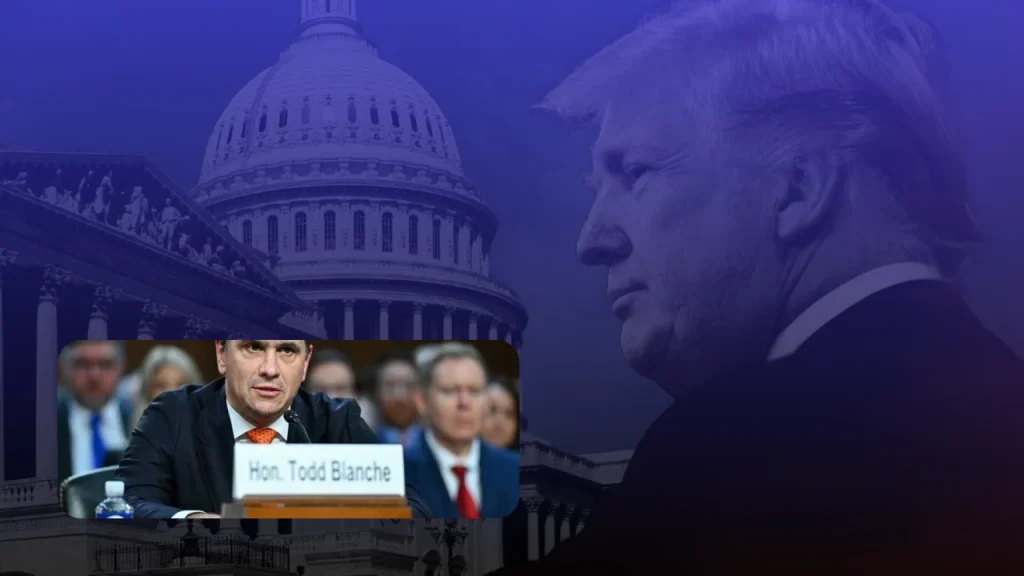
| Earlier events | After the November 3 election, Garcia posted “Lawyer up.” On November 7, President Trump posted that he wanted the Justice Department to investigate Democrats he accused of threatening officials and donors. On November 8, Attorney General Todd Blanche said an investigation “could” happen but did not confirm one or name a statute |
| Charges announced? | None reported |
| New Congress begins | January 3, 2027 |
One reported detail: a spokesperson for the Oversight Democrats said on November 11 that the committee had not yet received the letter, which had first been published by Punchbowl News.
What the Letter Says
Scharf argues that congressional investigations must serve a legitimate legislative purpose. He cites Watkins, where the Supreme Court said Congress has no power to expose private affairs just for the sake of exposure or to punish. The letter says the White House is “monitoring the abusive and capricious threats” from Democratic legislators and that the administration “will not be extorted and will not be cowed by unlawful process.”
The letter points to Democratic rhetoric, including Garcia’s “lawyer up” post and comments about issuing subpoenas “like candy” or “Mardi Gras beads.”
Garcia says the administration is trying to intimidate Congress and that Democrats will investigate alleged wrongdoing involving the administration, the Trump family and corporate allies. Other Democrats have called the letter outrageous. Supporters of the letter see it as a legitimate defense of constitutional limits and of officials’ ability to serve without politicized process. Critics describe it as an attempt at intimidation. The letter does not itself block any investigation.
Trump’s Post and Blanche’s Comments
On November 7, President Trump posted that he was ordering a Justice Department investigation of Democrats he accused of threatening administration officials and Republican donors, and called them “extortionists.” On November 8, Attorney General Blanche said on Sunday news programs that the department would defend administration officials, and that whether it would investigate lawmakers would depend on what was said and whether it amounted to a crime. He acknowledged Congress’s oversight role and that free speech protects criticism of the president. Reporting says he did not confirm that an investigation had opened, name targets or identify a criminal statute.
A social media post or an interview is not an indictment, a warrant or a judicial finding. A federal prosecution needs conduct that meets the elements of a specific federal offense, plus admissible evidence.
Congress’s Power to Investigate
- Source of the power: Article I does not mention investigations by name. The Supreme Court has long held that investigating is an implied part of legislating. In McGrain v. Daugherty, 273 U.S. 135 (1927), the Court said Congress may compel information needed to legislate.
- No crime required: a committee does not need evidence of a crime to examine how agencies spend money or follow the law. Congress can investigate to decide whether laws need to change.
- Limits: under Watkins v. United States, 354 U.S. 178 (1957), there is no general power to expose for exposure’s sake, and Barenblatt v. United States, 360 U.S. 109 (1959), confirmed that Congress’s inquiries must relate to a valid legislative purpose. Committees must also stay within their delegated jurisdiction, and witnesses keep constitutional rights such as the Fifth Amendment privilege (Quinn v. United States, 349 U.S. 155 (1955)).
- Presidential records: in Trump v. Mazars USA, LLP, 591 U.S. 848 (2020), the Court set a four-part test for congressional subpoenas seeking a sitting president’s personal information, reflecting separation-of-powers concerns.
- Committee subpoena power: House Rule XI, clause 2(m), authorizes committee subpoenas, and each committee’s rules say who can issue them. The House adopts rules for the new Congress in January 2027, so the exact process for Oversight will depend on what is adopted.
For a deeper guide on what lawmakers can demand, see Can Democrats Subpoena Trump, His Family, Banks and Private Companies in 2027? What Congress Can Legally Demand Under Trump v. Mazars, Executive Privilege and Contempt Law.
The Speech or Debate Clause
Article I, Section 6 provides that for “any Speech or Debate in either House,” members “shall not be questioned in any other Place.” The clause is meant to keep the executive and judiciary from interfering with legislative work.
- Eastland v. U.S. Servicemen’s Fund, 421 U.S. 491 (1975): the Court held that issuing a committee subpoena for bank records fell within the “legitimate legislative sphere,” so the clause barred a suit against members, and that allegations of improper motive did not change that result. This is the case most often cited against attempts to challenge a subpoena by attacking its motives.
- Gravel v. United States, 408 U.S. 606 (1972): the clause covers acts integral to the legislative process, including aides’ work, but not conduct outside it.
- United States v. Johnson, 383 U.S. 169 (1966): prosecutors cannot use a member’s legislative speech and motives to build a case.
- United States v. Brewster, 408 U.S. 501 (1972): taking a bribe is not a legislative act, so a member can be prosecuted for it even though it relates to official duties.
- Hutchinson v. Proxmire, 443 U.S. 111 (1979) and Doe v. McMillan, 412 U.S. 306 (1973): press releases, newsletters and some public distribution of material fall outside the clause.
- United States v. Rayburn House Office Building, 497 F.3d 654 (D.C. Cir. 2007): a search of a member’s office can implicate the clause.
- Arrest clause: the same section protects members from “Arrest” during attendance at sessions, “except Treason, Felony and Breach of the Peace,” which the Court has read to cover only civil arrest (Williamson v. United States, 207 U.S. 425 (1908)). It does not shield members from criminal arrest.
| Conduct | General position |
| Voting, committee hearings, authorized committee subpoenas, committee reports | Generally protected |
| Accepting a bribe | Not protected |
| Separate crimes (fraud, obstruction, etc.) | Not automatically protected |
| Press conferences, social media posts, fundraising | Generally not legislative acts, so not protected by the clause (though First Amendment protections may apply) |
| Threats of violence | Not protected by the clause |
For related rules on investigating a sitting member, see Can a Member of Congress Be Searched or Investigated? Speech or Debate Clause and Rayburn Explained.
What this means for the letter: the more an alleged act looks like a legislative one, such as a formally authorized subpoena in an authorized investigation, the harder a criminal case becomes. The more it looks like conduct outside that sphere, such as public statements or private threats, the less the clause helps. Whether any future act falls on one side or the other is untested and would be decided by courts case by case.
Related article: After the 2026 Midterms, What Can Congress Legally Change at the Supreme Court, and What Can’t It?
Which Federal Laws Could Be Involved?
The letter does not name a statute, and Blanche reportedly did not either. These are federal laws commonly discussed in this kind of dispute, with their general elements. None of this suggests any person has violated them.
- Conspiracy against rights, 18 U.S.C. § 241, and deprivation of rights under color of law, § 242: the letter’s phrase about “depriving citizens of their constitutional rights and privileges” echoes the subject matter of these laws. They require an agreement or action to injure or deprive someone of a federally protected right, and § 242 requires action under color of law. Speech or Debate doctrine would be a central issue if either were applied to legislative acts.
- Extortion and threats: Trump and Blanche used the word “extortion.” Federal extortion under the Hobbs Act, 18 U.S.C. § 1951, generally involves obtaining property through wrongful use of threatened force or fear, and § 875(d) involves threats to injure reputation with intent to extort. Threat statutes such as 18 U.S.C. §§ 115 and 875(c) are limited by the First Amendment; in Counterman v. Colorado, 600 U.S. 66 (2023), the Court required proof that the speaker had at least a reckless mental state for a “true threat.” Political criticism and announcements of lawful oversight are generally protected speech. Whether any statement crosses a legal line depends on its words and context.
- Obstruction of congressional proceedings, 18 U.S.C. § 1505: makes it a crime to corruptly obstruct proceedings before Congress. Lawmakers have invoked it in disputes over withheld documents and witness conduct.
- False statements, 18 U.S.C. § 1001: applies to materially false statements to Congress in investigations conducted under committee authority (see § 1001(c)).
- Contempt of Congress, 2 U.S.C. §§ 192 and 194: a witness who defaults on a subpoena can face criminal contempt referral, and the House can also enforce subpoenas through civil suits. The standing of Congress to sue was addressed in Committee on the Judiciary v. McGahn, 968 F.3d 755 (D.C. Cir. 2020) (en banc, later proceedings at 973 F.3d 121). DOJ has long held, through Office of Legal Counsel opinions, that it will not prosecute an executive official who follows the president’s assertion of executive privilege. Courts have not settled every aspect of that position.
- Bribery, 18 U.S.C. § 201: the offense at issue in Brewster.
Executive Privilege
The White House can assert executive privilege over some presidential communications, but it is not absolute. United States v. Nixon, 418 U.S. 683 (1974), rejected an absolute privilege in a criminal case. Trump v. Mazars applied special scrutiny to subpoenas for a sitting president’s personal information. In Trump v. Thompson, 20 F.4th 10 (D.C. Cir. 2021), the court addressed a former president’s privilege claim against a House committee. Disputes are usually resolved through negotiation, and sometimes litigation, over particular requests.
Could DOJ Actually Open a Case Against a Member?
The Justice Department can investigate members of Congress for crimes outside the protected sphere. Internal DOJ guidance (Justice Manual, Title 9, chapter 85, on protecting government integrity) calls for consultation with the Public Integrity Section in matters involving members of Congress. It is policy rather than constitutional immunity, so confirm the current section number before citing it.
A letter or a social media post does not authorize an arrest. A prosecutor needs probable cause, a grand jury for felony charges, and an offense that survives Speech or Debate and First Amendment challenges. A “criminal referral” from anyone is information for prosecutors, not a charge. For how referrals work, see What Is a DOJ Referral? Meaning, Who Can Make One, How the Justice Department Reviews It and What Happens Next.
Impeachment and Other Tools
The House has the sole power to impeach (Art. I, § 2, cl. 5), the Senate tries impeachments (Art. I, § 3, cls. 6 and 7), and conviction requires a two-thirds vote. Impeachment does not itself impose criminal punishment, and a person removed from office can still face prosecution (Art. I, § 3, cl. 7). Each chamber can also discipline its own members, including expulsion by a two-thirds vote (Art. I, § 5, cl. 2). Congress’s other tools include hearings, legislation, appropriations and reports.
What Democrats Have Said They May Investigate
Reporting says Democrats are preparing an oversight agenda that includes how the Trump family’s wealth has grown since the president returned to office, administration and corporate-ally dealings, and donors, including donors to the White House ballroom project. The president and the White House have long denied wrongdoing. These are possible oversight areas, not findings. Mentioning a person or company as a possible witness does not mean they did anything wrong, and a hearing cannot convict anyone of a crime.
Both Sides of the Argument
The White House’s argument: congressional power is limited to legitimate legislative purposes, and subpoenas and threats meant only to harass, punish or deter public service can be unlawful. Officials should be able to serve without fear of politicized process, and Watkins supports the limit.
Congressional Democrats’ argument: oversight is a core Article I power that does not require the executive’s permission, Speech or Debate protects legislative acts regardless of motive (Eastland), and the letter and DOJ comments are an attempt to chill lawful oversight.
Where the law is firm: both a broad congressional investigative power and its limits are settled in Supreme Court precedent, and Speech or Debate does not protect all conduct. Where it is untested: how those rules apply to specific future subpoenas, public statements and privilege claims, and whether anything said so far could support a federal charge.
What Happens Next
The 120th Congress begins January 3, 2027. After rules and committee leadership are set, the Oversight Committee can issue document requests, hold hearings and, where authorized, issue subpoenas. The White House may negotiate, assert privileges, or challenge particular demands in court. Any criminal matter would need its own legal basis and would face Speech or Debate and First Amendment defenses. As of November 12, 2026, the letter is a warning about future events.
Frequently Asked Questions
Can the president prosecute lawmakers for investigating him?
A president does not prosecute anyone directly. The Justice Department brings federal charges, and it needs a specific offense and evidence. Authorized legislative acts such as committee subpoenas are strongly protected by the Speech or Debate Clause, though members can be prosecuted for separate crimes.
Who is Will Scharf?
He is the White House counsel and wrote the November 9 letter.
Who is Robert Garcia?
A California Democrat, the ranking member of the House Oversight Committee and its expected chair when the new Congress starts.
Has Garcia been charged?
No charge tied to the letter has been reported as of November 12, 2026.
What did Trump say on November 7?
He posted that he wanted the Justice Department to investigate Democrats he accused of threatening officials and donors. Blanche later said an investigation was possible but did not confirm one or name a statute.
Does the Speech or Debate Clause protect subpoenas?
Authorized committee subpoenas generally fall within the protected legislative sphere under Eastland. The clause does not cover everything a member does.
Can Congress investigate without proof of a crime?
Yes, if the inquiry has a legitimate legislative purpose, such as studying whether laws need to change.
Can the White House block a subpoena with executive privilege?
Not automatically. Privilege claims are judged against specific requests, and courts have rejected absolute claims.
Can a member of Congress be arrested?
Yes, for crimes. The constitutional arrest privilege has been read to cover only civil arrest.
Is threatening an investigation a crime?
Not by itself. A crime requires conduct meeting a statute’s elements, and the First Amendment protects much political speech.
Does a criminal referral force prosecution?
No. It is only information for prosecutors.
Could an investigation lead to impeachment?
It could produce facts relevant to impeachment, but impeachment requires a House majority vote and Senate conviction needs two-thirds.
Sources and Legal References
- Reuters, November 11, 2026: White House tells Democrats that investigating Trump administration could be criminal
- CBS News: Top White House lawyer warns of “blatant criminality” in Democrats’ investigations push
- Scharf letter (PDF hosted by Punchbowl News)
- Fox News: Trump orders DOJ probe into Democrats over alleged threats against admin officials (Nov. 7)
- The National News Desk: Blanche says DOJ will defend Trump officials as Democrats prepare investigations (Nov. 8)
- Democracy Docket: Blanche threatens to investigate congressional Democrats. It’s unclear for what
- House Oversight Democrats: Garcia statement on White House counsel threats
- House Oversight Democrats: Garcia statement after the election
- U.S. Senate, About Investigations
- DOJ OLC, Scope of Congressional Oversight and Investigative Power with Respect to the Executive Branch
- Justice Manual, Title 9, Chapter 85: Protection of Government Integrity
- Eastland v. U.S. Servicemen’s Fund, 421 U.S. 491 (1975)
- Trump v. Mazars USA, LLP, 591 U.S. 848 (2020)
- United States v. Brewster, 408 U.S. 501 (1972)
- U.S. Const. art. I, §§ 2, 3, 5, 6; art. II, § 4; McGrain v. Daugherty, 273 U.S. 135 (1927); Watkins v. United States, 354 U.S. 178 (1957); Barenblatt v. United States, 360 U.S. 109 (1959); Quinn v. United States, 349 U.S. 155 (1955); Gravel v. United States, 408 U.S. 606 (1972); United States v. Johnson, 383 U.S. 169 (1966); Hutchinson v. Proxmire, 443 U.S. 111 (1979); Doe v. McMillan, 412 U.S. 306 (1973); Williamson v. United States, 207 U.S. 425 (1908); United States v. Nixon, 418 U.S. 683 (1974); Counterman v. Colorado, 600 U.S. 66 (2023); United States v. Rayburn House Office Building, 497 F.3d 654 (D.C. Cir. 2007); Trump v. Thompson, 20 F.4th 10 (D.C. Cir. 2021); Committee on the Judiciary v. McGahn, 968 F.3d 755 (D.C. Cir. 2020) (en banc); 2 U.S.C. §§ 192, 194; 18 U.S.C. §§ 115, 201, 241, 242, 875, 1001, 1505, 1951; House Rule XI, cl. 2(m)
Disclaimer: AllAboutLawyer.com provides general U.S. legal information, not legal advice, and Israr Ahmad is not an attorney. No attorney-client relationship is created by reading this article. This article describes the law and reported events without endorsing any party’s position. Allegations and warnings reported here are not findings of wrongdoing, and no criminal charge connected to the letter had been reported as of November 12, 2026.
About the Author
Israr Ahmad is a legal content researcher with 4+ years of experience covering class action settlements and consumer rights cases. He has researched and published coverage of 2,500+ settlements using verified court records, settlement administrator filings, and government sources. Learn more about Israr.