
Closed School Discharge Lawsuit, Student Borrowers Sue Education Department Over Denied Loan Relief
Status as of October 30, 2026: The lawsuit is newly filed. The class has not been certified, no judge has ordered any loan discharge, and no settlement, payout or lawsuit claim form exists. Borrowers should keep making required payments unless their servicer or a court says otherwise.
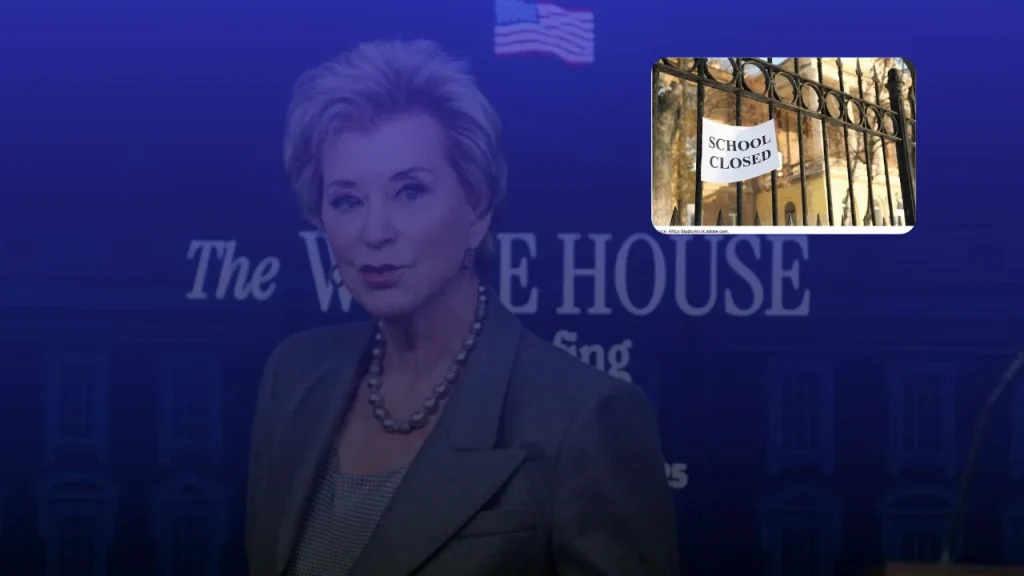
A new federal proposed class action accuses the U.S. Department of Education and Secretary Linda McMahon of refusing to honor expanded closed school discharge eligibility for borrowers whose colleges shut down before they could finish their programs.
The lawsuit, Gaussoin v. McMahon, was filed October 28, 2026, in the U.S. District Court for the District of Columbia. It says borrowers from four groups of troubled for-profit schools were given longer eligibility windows in a January 2025 Education Department decision, but that the Department has stopped applying those windows and keeps denying applications under the older, shorter rules. The Department says it stands by how it runs the program.
The lead plaintiff, former Brooks Institute student Kendrick Gaussoin, says he applied in August 2026 and was denied even though he believes he qualifies under the 2025 decision. These are allegations in a complaint, not court findings.
Quick Facts: Gaussoin v. McMahon
| Detail | Information |
| Case name | Gaussoin v. McMahon |
| Case number | 1:26-cv-03784 |
| Filed | October 28, 2026 |
| Court | U.S. District Court for the District of Columbia |
| Judge | Randolph D. Moss |
| Lead plaintiff | Kendrick Gaussoin (former Brooks Institute student) |
| Defendants | Education Secretary Linda McMahon and the U.S. Department of Education |
| Plaintiff’s attorneys | National Student Legal Defense Network (Student Defense) |
| Main issue | Alleged failure to implement the January 2025 expanded closed school discharge eligibility |
| Law cited | Administrative Procedure Act and Higher Education Act |
| Proposed class | Federal loan borrowers from covered schools who withdrew within the expanded periods and have not received a discharge |
| Stage | Class certification not yet decided; Department has not filed a response in the docket reviewed |
| Settlement | None announced |
| Claim form for this lawsuit | None |
| Official discharge application | studentaid.gov/closedschoolform |
What Is Closed School Discharge?
Closed school discharge cancels a borrower’s qualifying federal student loans when their school closes and they cannot finish their program. It rests on the Higher Education Act (including 20 U.S.C. § 1087(c)) and Department regulations such as 34 C.F.R. § 685.214 for Direct Loans.
Generally, borrowers qualify if they were enrolled when the school closed, or withdrew within a set look-back period before closure, and did not complete a comparable program elsewhere. Unlike borrower defense to repayment, it does not require proof that the school committed misconduct.
The Department can extend the usual look-back period in exceptional circumstances. That extension is the core of this case.
Background: Why These Schools Closed and How the Look-Back Rules Work
The Standard 120-Day and 180-Day Windows
Under the regular rules, a borrower who withdrew before the school closed generally qualifies only if they left within a short look-back window: 120 or 180 days before closure, depending on the loan. The complaint says Gaussoin’s older loans fall under the 120-day rule. Borrowers who left earlier than that window are normally denied, even when the school was already collapsing when they left.
Why the Department Can Extend the Window
The Department has discretion to extend the window when a school’s closure involves exceptional circumstances, such as a long, visible decline before it shut down. It has done this before. In 2021 it extended the look-back for ITT Technical Institute back to March 31, 2008, and earlier it extended the window for Corinthian Colleges. Student advocates, including the National Consumer Law Center, had long pushed for longer windows after sudden closures of for-profit chains, arguing that students who left during the collapse were wrongly shut out.
What Happened to the Schools in the 2025 Decision
- Career Education Corporation (CEC): The Department tied the extended date, May 6, 2015, to the day CEC announced it would close or sell all campuses except two brands. Brooks Institute, where Gaussoin studied, was among the CEC schools that later closed.
- Education Corporation of America (ECA): The operator of Virginia College and Brightwood College announced it was closing nearly all campuses in early December 2018, stranding roughly 20,000 students. Advocates pointed out that the Department had placed ECA on heightened cash monitoring in March 2015, and that its Virginia College chain was denied accreditation in 2018 over issues including job placement.
- Education Management Corporation (EDMC): The Art Institutes and Argosy campuses were part of this group, and many closed in late 2018 and 2019 after the chain’s ownership changed. The Department used October 17, 2017, as the extended date for campuses it owned at that point and that later closed.
- Bay State College: The Massachusetts school began facing significant accreditation challenges on April 23, 2021, the extended date, and closed in August 2023 after losing accreditation.
The January 16, 2025 Decision
On January 16, 2025, the Department under the Biden administration announced the extended windows for these four groups, as part of a wider set of student loan relief approvals. The effect was to let borrowers who left earlier, while the schools were already failing, qualify for discharge. The current lawsuit says the Department has not carried that decision out.
What Is the Lawsuit About?
On January 16, 2025, the Department determined that closures at four groups of schools involved exceptional circumstances, which extended the look-back periods for former students. The complaint alleges the Department has since rescinded, abandoned or failed to implement that decision without a lawful explanation, and that borrowers who should qualify are still being rejected under the ordinary rules.
The complaint also alleges that, on information and belief, the Department has not granted a single closed school discharge under the 2025 decision. That is the plaintiffs’ claim, not a finding by the court.
The January 2025 Decision: Four School Groups, Four Extended Dates
| School Group | Extended Eligibility Date | Examples Named in the Complaint |
| Career Education Corporation (CEC) | May 6, 2015 | Brooks Institute, Le Cordon Bleu, Missouri College, Briarcliffe College, Sanford-Brown |
| Education Corporation of America (ECA) | December 16, 2016 | Virginia College, Brightwood College, EcoTech, Golf Academies |
| Education Management Corporation (EDMC) | October 17, 2017 | Art Institutes campuses, Argosy University, Miami International University of Art & Design |
| Bay State College | April 23, 2021 | Bay State College |
These are the starting points for the expanded eligibility periods, not the dates every school closed. For example, the CEC date reflects when that company announced it would close or sell most of its campuses. Campus, ownership and enrollment records matter, and attending a school with a similar name does not by itself establish eligibility.
Who Is Kendrick Gaussoin?
Gaussoin enrolled at Brooks Institute, a for-profit photography and arts college in Ventura, California, in September 2014, and paid for it with federal Direct Loans. He attended through fall 2015 and took an approved leave of absence, with a last date of attendance of December 17, 2015. When he tried to return in August 2016, he learned the school was closing. He says he never finished his program, transferred credits to complete it elsewhere or received a refund.
| Event | Date |
| Enrolled at Brooks | September 2014 |
| Last date of attendance | December 17, 2015 |
| Brooks Institute closed | August 19, 2016 |
| Department announces expanded eligibility | January 16, 2025 |
| Gaussoin applies for discharge | August 23, 2026 |
| Denial letter | August 31, 2026 |
| Class action filed | October 28, 2026 |
The Department denied his application through its servicer, MOHELA, reportedly because he withdrew more than 180 days before the school closed. His complaint says his loans were first disbursed in 2014 and 2015, so a 120-day standard applied rather than 180 days, and that the denial ignored the 2025 extension, which pushed the relevant Brooks eligibility date back to May 6, 2015. He argues the letter never explained why that extension was not applied.
Who Could Be in the Proposed Class?
The complaint proposes a class of borrowers who:
- Attended a school covered by one of the four extended periods, or borrowed federal loans (such as Parent PLUS) for a student who did.
- Withdrew without completing the program on or after the applicable extended date.
- Have not received a closed school discharge for the loans taken out for that school.
The class would not cover everyone who ever attended a school that later closed. Parent PLUS borrowers may qualify when the student meets the requirements, and the federal application has a section for them.
What Legal Claims Are Being Made?
The plaintiffs bring three claims under the Administrative Procedure Act:
- Unlawfully withheld or delayed action (5 U.S.C. § 706(1)): The Department allegedly failed to carry out a decision it was required to implement.
- Arbitrary and capricious action (5 U.S.C. § 706(2)): The Department allegedly cannot effectively abandon an announced eligibility policy without proper process and explanation.
- Unlawful denial of Gaussoin’s application: He challenges the August 31 denial for applying the wrong standard and ignoring the extended look-back period.
What Does the Lawsuit Ask the Judge to Order?
The plaintiffs mainly seek court-ordered action, not a cash settlement:
- Certification of the class.
- A declaration that the failure to implement the 2025 decision is unlawful.
- An order requiring the Department to apply the extended look-back periods and instruct servicers to do the same.
- A halt to collection on qualifying loans of proposed class members while discharges are processed.
- Notice to borrowers about their eligibility, plus a status report on compliance.
- Reconsideration and approval of Gaussoin’s own application.
- Attorneys’ fees and costs.
None of this has been granted. There is currently no court order suspending payments or collections for anyone, and the complaint sets no settlement fund or per-person payment.
What Has the Education Department Said?
In NPR reporting published October 29, 2026, Department spokesperson Ellen Keast criticized the previous administration’s expansion as improper and said the Department stands by its implementation of the program. The plaintiffs counter that the 2025 decision has not been publicly withdrawn or formally changed through the required process, and that the Department cannot simply stop applying it.
Latest Court Status
The case was assigned to Judge Randolph D. Moss. Along with the complaint, the plaintiff filed a class-certification motion, and a corrected class action complaint followed the same day after the court’s filing system flagged errors. Summonses were issued and a standing order entered.
As of October 30, the docket reviewed shows no ruling on class certification, no discharge order and no decision on the merits. The next things to watch are the Department’s response, any motion to dismiss and the judge’s handling of class certification. If a class is certified, it means the case can proceed on behalf of the whole group, but it is not a ruling that the group wins.
How Is This Different From Other Student Loan Lawsuits?
Several cases involve the Education Department but raise different issues:
- The records case, Project on Predatory Student Lending v. U.S. Department of Education, is a Freedom of Information Act suit seeking records on whether announced group discharges were actually processed.
- The Woods v. U.S. Department of Education credit report lawsuit concerns loans borrowers say were canceled but still showed as debt on credit reports.
- The MOHELA student loan servicing class action covers servicer allegations including overcharges, ignored discharges and PSLF delays.
The Gaussoin case asks something narrower: whether the Department is honoring its own expanded closed school eligibility decision in the first place.
What Should Borrowers From Closed Schools Do Now?
- Confirm your school and campus. Check whether it falls under one of the four groups in the table above.
- Gather your dates. Transcripts, enrollment records, leave-of-absence papers and school letters can establish your last date of attendance and withdrawal.
- Check your loan type and first disbursement date. Direct, FFEL and Perkins loans can qualify; private loans are not covered. Disbursement dates can affect which look-back rule applies.
- Review your records at StudentAid.gov. Confirm your loans, servicer and status.
- Apply or reapply if you qualify. Use the official application, which has a Parent PLUS section.
- Keep any denial letter. Save the full letter and the stated reason, and if you think the 2025 extension applies, ask your servicer or the Department in writing how it was considered.
- Do not stop paying on your own. The lawsuit does not automatically pause payments or collections.
- Beware of paid “registration” offers. No public registration or claim process exists for this lawsuit, and discharge applications are free.
Closed School Discharge Lawsuit FAQs
Is there a class action over closed school loan discharges?
Yes, a proposed one. Kendrick Gaussoin filed it October 28, 2026, against Secretary McMahon and the Education Department. The class has not been certified.
Which schools are involved?
The complaint identifies schools tied to Career Education Corporation, Education Corporation of America, Education Management Corporation and Bay State College, including Brooks Institute, Le Cordon Bleu, Virginia College, Brightwood College, the Art Institutes, Argosy University and Bay State College.
Why did the Department extend the eligibility windows in 2025?
The Department treated the closures of these four school groups as exceptional circumstances and set extended dates tied to when each school’s collapse became visible, such as CEC’s May 2015 announcement that it would close or sell most campuses. The goal was to let students who left during the decline, not just in the final months, qualify.
Can former Brooks Institute students qualify?
Possibly. The 2025 decision extended the relevant CEC period back to May 6, 2015, but each borrower must still meet the other requirements, including not completing the program.
Can Parent PLUS loans be discharged?
A parent may qualify when the student they borrowed for meets the closed school discharge requirements.
Has the judge ordered loans canceled?
No. As of October 30, 2026, there is no such order.
Do I need to register for the lawsuit?
No registration or claim form has been announced. Keep your records and monitor the case instead of paying anyone to register you.
Is there a settlement or deadline?
No. There is no settlement fund, payout, claims administrator or claim deadline.
Do private student loans qualify?
No. The federal program covers qualifying federal loans only.
What Happens Next?
The Department must respond, and the court will decide whether the case can go forward as a class action. If the plaintiffs win, they seek implementation of the extended periods, notice to eligible borrowers and relief from qualifying loans, but the court has not decided whether they are entitled to any of it. For now, the key takeaway for borrowers is that the 2025 dates may matter even when a school closed years ago, and a denial based only on the ordinary look-back period may not address that extension.
AllAboutLawyer.com is an independent legal information website, not a law firm. This article is for informational purposes only and is not legal advice. The allegations in Gaussoin v. McMahon have not been proven in court.
Sources
- Corrected Class Action Complaint, Gaussoin v. McMahon, No. 1:26-cv-03784 (filed October 28, 2026): https://static1.squarespace.com/static/68a733df04d0801eecae5b19/t/6ae23b92d0b5df55cb57cbb6/1793211282579/Closed%2BSchool%2BDischarges%2BComplaint%2B2026.pdf
- Gaussoin v. McMahon, U.S. District Court for the District of Columbia docket: https://dockets.justia.com/docket/district-of-columbia/dcdce/1%3A2026cv03784/298096
- 20 U.S.C. § 1087, Repayment by Secretary of loans of bankrupt, deceased, disabled, or defrauded borrowers: https://www.law.cornell.edu/uscode/text/20/1087
- 34 C.F.R. § 685.214, Closed School Discharge: https://www.law.cornell.edu/cfr/text/34/685.214
- 34 C.F.R. § 682.402, FFEL discharge rules: https://www.law.cornell.edu/cfr/text/34/682.402
- Federal Student Aid, School Closure Loan Discharge Application: https://studentaid.gov/closedschoolform
- NPR/KPBS, Their colleges closed, but the government refuses to erase their debts, lawsuit says (October 29, 2026): https://www.kpbs.org/news/education/2026/10/29/their-colleges-closed-but-the-government-refuses-to-erase-their-debts-lawsuit-says
- Federal Student Aid, Student Loan Default and Collections FAQs: https://studentaid.gov/articles/default/
- U.S. Department of Education press release, January 16, 2025, additional closed school discharge actions (PDF): https://www.ednc.org/wp-content/uploads/2025/04/January-16-PR-Cardona-MR.pdf
- NASFAA, Biden Administration Announces Final Student Loan Debt Relief Approvals: https://www.nasfaa.org/news-item/35444/Biden_Administration_Announces_Final_Student_Loan_Debt_Relief_Approvals
- Project on Predatory Student Lending, Group Discharges (extended closed school discharge table): https://www.ppsl.org/groupdischarge
- National Consumer Law Center, Supplemental Closed School Discharge Testimony: https://www.nclc.org/images/pdf/student_loans/Supplemental-Closed-School-Discharge-Testimony.pdf
- Inside Higher Ed, Education Department outreach after the Education Corporation of America closure: https://www.insidehighered.com/node/25929
- Connecticut Public, The Education Department is canceling $150 million of student loan debt (December 2018): https://www.ctpublic.org/2018-12-14/the-education-department-is-canceling-150-million-of-student-loan-debt
Research note: The complaint details, docket entries and the Department’s statement are attributed to the filed complaint and published reporting. The Department had filed no response in the docket materials reviewed, and no ruling on class certification was found as of October 30, 2026.
About the Author
Israr Ahmad is a legal content researcher with 4+ years of experience covering class action settlements and consumer rights cases. He has researched and published coverage of 2,500+ settlements using verified court records, settlement administrator filings, and government sources. Learn more about Israr.