
Student Loan Forgiveness Credit Report Lawsuit, Were You Affected? Woods v. U.S. Department of Education, No. 1:26-cv-3335
If your student loans were supposed to be wiped out years ago but your credit report still shows a balance — you weren’t imagining it. Two borrowers are now suing the U.S. Department of Education in Washington, D.C., claiming the agency keeps reporting canceled federal loans as active debt to Equifax, Experian, and TransUnion. Here’s what that means for you.
PUBLISHED September 25, 2026 — Lawsuit filed one day earlier, September 24, 2026. This article will be updated as the case develops.
Student Loan Forgiveness Credit Report Lawsuit — Key Facts
| Lawsuit Filed | September 24, 2026 |
| Defendant | U.S. Department of Education |
| Alleged Harm | Continuing to report discharged, legally cancelled federal student loans as active debt to Equifax, Experian, and TransUnion |
| Law Alleged | Fair Credit Reporting Act (FCRA) |
| Who Is Affected | An estimated 300,000-plus borrowers whose loans were discharged under Department group discharges between April 2022 and January 2025, covering schools including Corinthian Colleges, ITT Tech, the Art Institutes, and Ashford University |
| Court & Case Number | U.S. District Court for the District of Columbia, No. 1:26-cv-3335 |
| Current Stage | Newly filed. No rulings yet |
| Lead Plaintiff Deadline | N/A — newly filed putative class action; no certification schedule set |
| Settlement Status | No settlement. No claim form exists |
| Last Updated | September 25, 2026 |
Who Is Being Sued, and Why Are Borrowers Suing the Department of Education Over Credit Reporting?
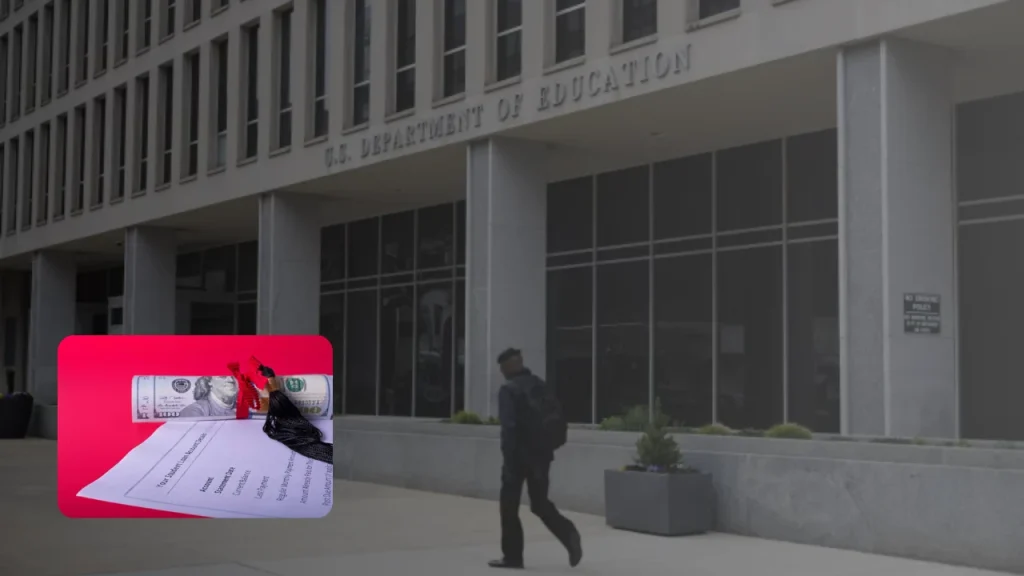
The U.S. Department of Education owns and oversees federal student loans, including the group discharges it approved between April 2022 and January 2025 for borrowers defrauded by schools like Corinthian Colleges, ITT Tech, the Art Institutes, and Ashford University. Those discharges were supposed to zero out the affected loans completely. Borrowers say that instead, the Department — through servicers like MOHELA — kept telling the three major credit bureaus those same loans were still owed.
What Did the Department of Education Allegedly Do to Borrowers Whose Loans Were Already Forgiven?
The Fair Credit Reporting Act requires anyone who supplies information to credit bureaus to reasonably investigate disputes and correct information that’s wrong — in plain terms, if you tell them a debt is cancelled and show your proof, they have to check and fix it. This putative class action alleges the Department failed to do that, even when borrowers did everything right.
Take Jorge Cortes, a Marine Corps veteran who borrowed about $54,000 to attend ITT Technical Institute. His loans were covered by the Department’s August 16, 2022 ITT discharge — yet a $21,586 balance remained on his credit report as of this summer. Or the lawsuit’s other named plaintiff, Woods, who attended Ashford University: she disputed her “cancelled” loan with all three credit bureaus on February 9, 2026, attaching her transcript, diploma, and the Department’s own discharge announcement. Her servicer, MOHELA, called the dispute “frivolous” or “irrelevant” on March 17, 2026. By August 2026, her reported balance had actually grown to $71,901 — about $2,000 more than when she filed the dispute.
“These borrowers have done everything asked of them,” said Eileen Connor, PPSL’s president and executive director, in a statement announcing the suit.
If you’re dealing with a loan servicer that keeps reporting numbers that don’t match what you were told, you’re not the only one — our coverage of the Nelnet class action over student loan credit reporting errors covers a similar pattern with a different servicer. And if your discharge itself is stuck rather than just misreported, the MOHELA lawsuit over unprocessed loan discharge applications may be the more relevant read.
A discharge letter from the government should be the end of the story. For borrowers like Cortes and Woods, it’s turned into a second fight just to get their own paperwork believed.
Are You Part of the Woods v. Department of Education Lawsuit?
Here’s exactly how to know if this case touches your situation.
- Borrowers whose federal loans were discharged under a Department group discharge between April 2022 and January 2025
- Anyone whose discharge covered a school like Corinthian Colleges, ITT Tech, the Art Institutes, Ashford University, or a similar for-profit school found to have defrauded students
- People who disputed a “cancelled” loan still showing a balance with Equifax, Experian, or TransUnion and got nowhere
- Borrowers whose servicer refused, delayed, or dismissed a dispute about an already-discharged loan
You do NOT necessarily qualify just because you attended a for-profit college — this case is specifically about loans that were already discharged but kept showing up as debt on your credit file.
Related article: Is Kratom Legal in New York? What the 2025-2026 Laws Actually Say
Borrowers Outside Washington, D.C. — Are You Still Covered?
Yes. This case was filed in federal court because the defendant is a federal agency, not because of where the plaintiffs live. Federal student loan discharges and credit reporting apply nationwide, so your state doesn’t determine whether this case could eventually cover you.
Not sure if your discharged loan is still showing up as debt? A free consultation with a consumer protection attorney can help you figure out your options, including a possible individual FCRA claim.
What Is the Woods Lawsuit Asking the Court to Award?
No money yet. No claim form yet. This is a newly filed putative class action, not a settlement — anyone telling you otherwise is ahead of the facts.
The FCRA generally allows borrowers to recover actual damages, and for willful violations, statutory damages, punitive damages, and attorney’s fees. The exact dollar amount sought in this complaint is UNVERIFIED — not confirmed from a named primary source at this time.
What Could Affected Borrowers Receive If This Case Succeeds?
Impossible to say yet. It depends on how the court rules on class certification, what the evidence shows about the Department’s reporting practices, and whether the case settles or goes to trial. If your credit report shows a discharged loan as active right now, talk to a consumer protection attorney about your options — you don’t have to wait for this case to resolve to start fixing your own credit file.
What Should Borrowers With Forgiven Loans Do Right Now?
- This lawsuit doesn’t cover you automatically yet — no class has been certified. No panic, but check your own paperwork.
- Pull your credit reports from Equifax, Experian, and TransUnion (free at AnnualCreditReport.com) and check whether a discharged loan still shows a balance.
- If you find one, dispute it with the credit bureau and with your servicer directly, attaching your discharge notice or any Department communication confirming the cancellation.
- Save every piece of correspondence. A documented paper trail — like Woods’s disputes, her servicer’s response, and the agency’s own admission — is exactly what makes a claim provable.
- There’s no lead plaintiff deadline yet since this case was just filed. Monitor the docket for Woods v. U.S. Department of Education, No. 1:26-cv-3335, in the U.S. District Court for the District of Columbia.
- An individual FCRA claim is an option now if your situation is serious — you don’t need to wait for a class ruling.
Student Loan Forgiveness Credit Report Lawsuit — Full Timeline
| Milestone | Date |
| Group discharges begin | April 2022 |
| Group discharges conclude | January 2025 |
| Woods disputes reporting with all three credit bureaus | February 9, 2026 |
| MOHELA responds, calls dispute “frivolous” or “irrelevant” | March 17, 2026 |
| Department email confirms MOHELA not yet directed to process the discharge | September 10, 2026 |
| Lawsuit filed | September 24, 2026 |
| Next scheduled hearing | UNVERIFIED — no hearing date set yet |
| Expected resolution | UNVERIFIED — case was just filed |
Student Loan Forgiveness Credit Report Lawsuit — Frequently Asked Questions
Is there a lawsuit against the Department of Education for credit reporting right now?
Yes. Two borrowers filed Woods v. U.S. Department of Education, No. 1:26-cv-3335, in the U.S. District Court for the District of Columbia on September 24, 2026, alleging FCRA violations tied to discharged federal student loans still being reported as debt.
Do I need to do anything right now to be part of the Department of Education lawsuit?
No — this isn’t a class action you can join yet. No class has been certified. If you believe your discharged loan is still being misreported, check your credit reports and consider talking to an attorney about your own dispute or claim.
When will the Woods v. Department of Education case resolve?
Too early to say. The case was filed one day before this article was published, and no motions have been ruled on. Cases against federal agencies can take months to years to resolve.
Can I file my own FCRA claim against the Department of Education instead of joining this case?
Yes. Since no class has been certified, filing your own claim is a separate path, and may be worth pursuing sooner if a discharged loan on your credit report is currently affecting your ability to borrow or rent.
How will I find out if the Department of Education case settles or wins?
Court dockets are public. The Project on Predatory Student Lending, which represents the plaintiffs, also posts case updates on its website, and legal and financial news outlets are actively covering this litigation.
What does it mean that this is a “putative class action” and why does that matter?
“Putative” means proposed but not yet certified. Until a judge certifies the class, this lawsuit legally represents only the two named plaintiffs — everyone else described as affected is part of the allegations, not yet part of a certified group with guaranteed rights in the case.
What specific laws does the Department of Education allegedly violate?
The complaint alleges violations of the Fair Credit Reporting Act, which requires entities that furnish information to credit bureaus to reasonably investigate and correct disputed, inaccurate information.
How much could affected borrowers get if this case succeeds?
No claim form or payout structure exists yet. The FCRA allows for actual damages and, for willful violations, statutory and punitive damages plus attorney’s fees — but the specific amount sought in this case is UNVERIFIED at this time.
Sources Used in This Student Loan Forgiveness Credit Report Lawsuit Article
Project on Predatory Student Lending (Class Counsel) — “Student Borrowers Sue Education Department for Reporting Cancelled Loans as Debt,” official press release, Sept. 24, 2026: https://www.ppsl.org/news/student-borrowers-sue-education-department-for-reporting-cancelled-loans-as-debt
Reuters (via CNBC) — “Student loan borrowers sue Trump administration over forgiven debts on credit reports,” Sept. 24, 2026: https://www.cnbc.com/2026/09/24/student-loan-borrowers-sue-credit-reports-forgiven-loans.html
U.S. District Court for the District of Columbia — official case access via PACER: https://www.dcd.uscourts.gov/
Researched and written by Israr Ahmad, legal content researcher and founder of AllAboutLawyer.com. All facts verified against Class Counsel’s official press release and Reuters reporting on September 25, 2026. Full docket verification pending.
Last Updated: September 25, 2026.
This article is for informational purposes only and does not constitute legal advice. Laws vary by state and individual circumstances differ. For advice about your specific situation, consult a qualified attorney.
About the Author
Israr Ahmad is a legal content researcher with 4+ years of experience covering class action settlements and consumer rights cases. He has researched and published coverage of 2,500+ settlements using verified court records, settlement administrator filings, and government sources. Learn more about Israr.