
Luxury Brand Chrome Hearts Drops Trademark Lawsuit Against Neil Young Band Name Here’s What It Means
Luxury fashion brand Chrome Hearts has voluntarily dropped its trademark infringement lawsuit against rock legend Neil Young and his backing band, the Chrome Hearts. The case is over — but the legal story behind it is worth understanding, especially if you’ve ever wondered how two different businesses can fight over the same name.
How the Lawsuit Started
The Los Angeles-based brand, which has been in business since 1988 selling Chrome Hearts-branded clothing and accessories, filed its lawsuit in California federal court in September 2025, accusing Young of trademark infringement.
The band name is a direct reference to a lyric from Young’s 1976 song “Long May You Run.” But the fashion brand has been operating under the Chrome Hearts name for decades and holds federally registered trademarks dating back to 1991.
Chrome Hearts alleged it never granted Young any license or permission to use its intellectual property. The brand claimed Young and his bandmates intentionally and knowingly capitalized on the confusion between the Chrome Hearts trademarks and the band’s name.
Why Selling Merchandise Made It Worse
Under U.S. trademark law, two businesses in different industries can sometimes share a similar name without a problem. The trouble here started the moment the band sold merchandise.
The brand alleged that Young’s use of the name and the sale of band merchandise could trick fans and consumers into believing there was a collaboration between the two. Third-party vendors had already started selling T-shirts that combined Young’s image with Chrome Hearts’ iconic logo styling — suggesting a connection that did not exist.
This is the same legal theory at the heart of other high-profile brand disputes. When a band or artist sells physical goods under a name that consumers confuse with an existing brand, courts treat it as a commercial trademark conflict — even if the artist never intended to copy anyone. For a deeper look at how consumer confusion drives these cases, see our coverage of the Lululemon v. Costco trademark lawsuit.
Neil Young Kept Performing Anyway
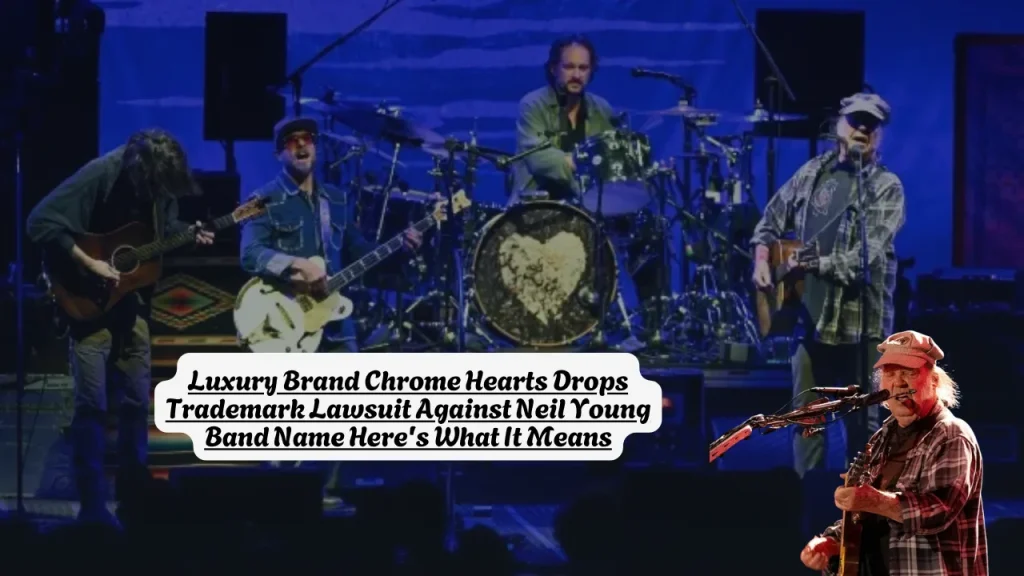
Despite the lawsuit, Young and the band did not stop. They continued to operate under the Chrome Hearts name, playing a string of gigs while the case was pending. As part of Record Store Day 2026, Young and the Chrome Hearts released their live album As Time Explodes, and Young recently finished recording a second studio album with the band.
Young and the Chrome Hearts had also been scheduled to tour Europe in the summer of 2026, but in February Young announced he was canceling the tour, saying he had decided to take a break from touring. That cancellation appears to be unrelated to the lawsuit.
Related article: Charlotte Teacher Kendrick Gonzalez Sues CMPD Police After a Stranger’s Crime Ended Up on His Record
What “Voluntarily Dismissed” Actually Means
A voluntary dismissal means the party that filed the lawsuit — here, Chrome Hearts the brand — chose to drop it before a judge ruled. It does not automatically mean the other side won or lost.
The court filing did not clarify whether a settlement was reached or whether the lawsuit was simply dropped without any resolution between the two parties.
In practice, voluntary dismissals in trademark cases often follow a private settlement — money, a licensing arrangement, a behavior agreement, or some combination. But they can also happen when the filing party decides the cost of litigation outweighs the benefit of continuing. Without a public statement from either side, it is impossible to know which applies here.
This pattern — file, pressure, dismiss — appears in brand disputes regularly. The Loverboy trademark lawsuit followed a similar arc: a name conflict, legal pressure, and an out-of-court resolution that let the brand keep its name.
Frequently Asked Questions
Did Chrome Hearts and Neil Young reach a settlement?
The court filing does not say. Chrome Hearts filed a voluntary dismissal without publicly disclosing whether a settlement, payment, or agreement was involved. Neither side has issued a statement.
What was the lawsuit actually about — copyright or trademark?
It was a trademark infringement case, not a copyright case. Chrome Hearts claimed Young’s band name and merchandise caused consumer confusion with its registered trademark — a standard Lanham Act claim under federal law.
Can two businesses legally share the same name?
Sometimes, yes — if they operate in clearly separate industries and there is no likelihood of consumer confusion. The merchandise sales here crossed into Chrome Hearts’ core market of branded clothing and accessories, which is what made coexistence legally difficult.
Is Neil Young’s band still called the Chrome Hearts?
Yes. Young and the Chrome Hearts kept using the name throughout the lawsuit and have released a live album and finished recording a second studio album under that name.
What law governs trademark disputes like this in the U.S.?
Federal trademark disputes fall under the Lanham Act (15 U.S.C. § 1051 et seq.), which prohibits the use of a mark that is likely to cause consumer confusion with a registered trademark.
Sources
- Rolling Stone — Chrome Hearts Drops Lawsuit Against Neil Young Over Band Name (May 2026)
- Everett Post / ABC Audio — Luxury brand Chrome Hearts drops lawsuit over Neil Young’s band name (May 2026)
- Complex — Neil Young and His Band Sued by Chrome Hearts for Trademark Infringement (September 2025)
- Harris Sliwoski LLP — Neil Young’s “Chrome Hearts” Band Faces Trademark Lawsuit (November 2025)
- Cornell Law LII — Lanham Act, 15 U.S.C. § 1051: law.cornell.edu/uscode/text/15/1051
Prepared by the AllAboutLawyer.com Editorial Team and reviewed for factual accuracy against official legal sources on May 16, 2026. Last Updated: May 16, 2026.
Disclaimer: This article is for general informational and educational purposes only and does not constitute legal advice. Laws vary by state and jurisdiction. For advice about your specific situation, consult a qualified attorney.
About the Author
Israr Ahmad is a legal content researcher with 4+ years of experience covering class action settlements and consumer rights cases. He has researched and published coverage of 2,500+ settlements using verified court records, settlement administrator filings, and government sources. Learn more about Israr.