
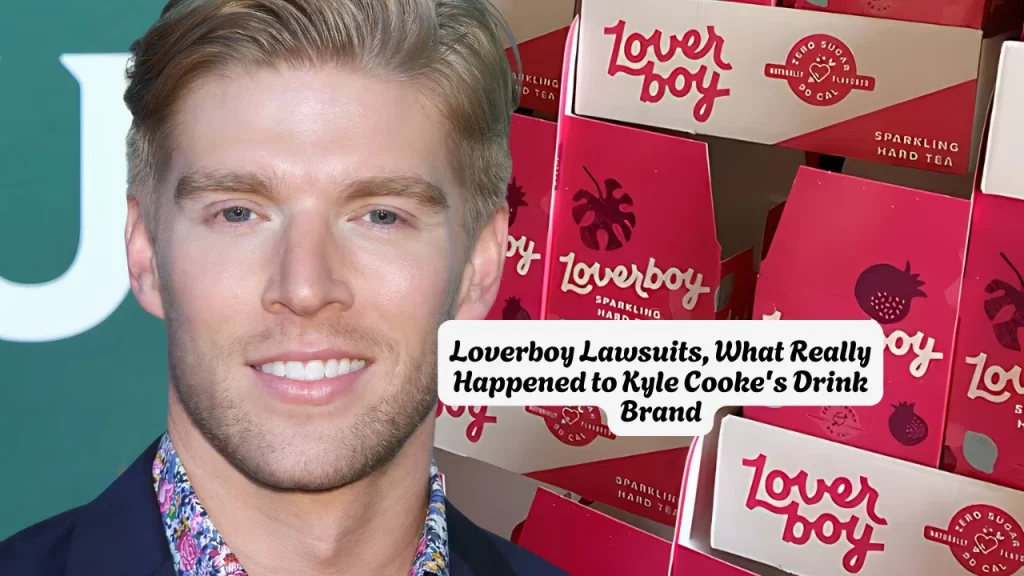
Loverboy Lawsuits, What Really Happened to Kyle Cooke’s Drink Brand
Kyle Cooke launched Loverboy in 2018 with his then-fiancée Amanda Batula, turning their reality TV fame into a real business selling sparkling hard teas and canned cocktails. But the road wasn’t smooth. Cooke’s alcoholic drink line lost millions of dollars, and the brand ran into two separate lawsuits that drained his finances and played out publicly — first in court, then on Bravo.
Here is every Loverboy legal battle explained in plain English, from the trademark fight to the distributor dispute, and the bankruptcy risk making headlines right now.
Quick Facts
| What | Detail |
| Company | Loverboy Inc. |
| Founders | Kyle Cooke & Amanda Batula |
| Founded | 2018 |
| Lawsuit #1 | Trademark infringement — Loverboy Bar NYC (2020) |
| Lawsuit #2 | Distributor contract dispute — Night Shift Distributing (2021) |
| Lawsuit #1 Outcome | Settled and dismissed, February 2021 |
| Lawsuit #2 Outcome | Dismissed with prejudice, September 2021 |
| Current Status | Brand facing bankruptcy risk as of 2026 |
Lawsuit #1: The NYC Bar That Owned the Name First (2020–2021)
What Happened
In September 2020, the owner of Loverboy Bar in New York City sued Cooke for trademark infringement. This was the first major legal threat the brand faced — and it struck at something fundamental: the right to use the Loverboy name at all.
The bar owner argued in court documents that the local bar had been making commercial use of the Loverboy name in connection with its services well before Cooke launched his brand, including the marketing and sale of original craft cocktails and to-go cocktails. In other words, a small Manhattan bar had been operating under that name first — and saw Cooke’s growing national brand as a direct threat.
The bar owner tried to get Cooke to change the name of Loverboy and to pay damages for willful infringement. Triple damages for willful trademark infringement is a real legal remedy — it’s designed to punish companies that knowingly use someone else’s brand.
How Loverboy Pushed Back
Cooke didn’t roll over. He counterclaimed for declarative relief, citing that his company had the right to use the name and pointing out that the bar’s cocktails were only marketed within New York City, whereas his beverages were marketed to a much larger demographic.
That geographic argument matters in trademark law. A local bar and a national beverage brand can sometimes co-exist under the same name if they operate in clearly different markets. Cooke’s legal team leaned into that distinction.
The Outcome
The case was settled out of court and dropped in February 2021. The specific terms were not made public, but Cooke kept the Loverboy name — which means the settlement likely favored his position or involved a confidential agreement.
Related article: Candace Owens Is Being Sued by France’s First Couple Here’s Everything That’s Happened
Lawsuit #2: The Distributor Who Wanted to Get Paid (2021)
What Happened
Even before the bar lawsuit fully closed, Loverboy was already heading into a second legal battle — this one over a broken distribution deal in Massachusetts.
Night Shift Distributing, a Massachusetts-based wholesaler, came on board in October 2019. Loverboy terminated the distribution agreement in December 2020, and Night Shift took Loverboy to court on January 13, 2021.
Night Shift’s core argument was straightforward: you can’t just walk away from us without paying for our rights to your brand. At the center of the dispute was whether Loverboy owed Night Shift fair market value compensation for its brand rights under Massachusetts distribution law.
Night Shift’s second petition requested full compensation including the cost of merchantable inventory plus a 10% handling charge, the cost of sales and marketing material, and the fair market value of the distribution rights being terminated. The numbers were significant — Night Shift had sold 75,000 cases of Loverboy product worth about $3 million in the previous year, accounting for nearly 12% of the wholesaler’s case sales.
Loverboy’s Counterclaim
Loverboy didn’t just defend — it went on offense. Loverboy filed a civil lawsuit against Night Shift and its co-founder Rob Burns in the U.S. District Court of Massachusetts on May 7, 2021, alleging that Burns and Night Shift used false, misleading, unfair and deceptive practices to induce Loverboy into a contractual relationship.
The Legal Grey Area
The timing of everything made this case complicated. A crucial question throughout the legal dispute pertained to a new Massachusetts statute regulating the termination of distribution agreements. Loverboy terminated the contract shortly before the statute came into effect. That timing may have been strategic — or simply lucky — but it gave Loverboy a significant legal argument.
The Outcome
According to a September 9, 2021 filing in the United States District Court for the District of Massachusetts, both parties agreed to dismiss the case with prejudice, with each side paying their own attorneys’ fees and costs and waiving their rights to an appeal.
A dismissal with prejudice means the case cannot be refiled. Neither side admitted wrongdoing. It ended in a draw, but the legal battle had already taken a serious toll on Cooke personally.
The Financial Cost: $200,000 in One Month
While both lawsuits ended without a loss in court, they nearly broke Cooke financially. He laid it out plainly on camera.
Cooke said on Summer House: “I’m in a lawsuit. I’ve spent $200,000 on legal fees this month. I’m $4 million in debt with the loan for my business. Everything is on the line.”
That $4 million figure wasn’t just legal costs — it was a personal business loan Cooke had taken out to fund Loverboy’s growth. The lawsuits layered hundreds of thousands in legal fees on top of that existing debt.
Where Loverboy Stands in 2026
Both lawsuits are resolved, but Loverboy’s financial crisis is far from over — and it’s back in the public eye through Summer House Season 10.
Kyle Cooke revealed that Loverboy is on the brink of bankruptcy, with only six months of cash reserves left. Cooke personally invested $500,000 into Loverboy and stopped paying himself a salary to keep the business afloat, while also personally guaranteeing a $4 million loan.
There is still $2.1 million left on that loan. If Loverboy fails, Cooke faces personal bankruptcy.
During Summer House Season 10, Cooke revealed that Loverboy is looking for an operational partner to avoid bankruptcy. In early April 2026, Cooke took to Instagram to share that he had received an outpouring of support and inquiries about how people could help, including marketing ideas, new product concepts, and PowerPoint proposals from fans.
The brand itself has expanded well beyond its original hard tea lineup. Over time, Loverboy developed from alcoholic beverages to include non-alcoholic drinks, spritzes, a canned espresso martini, and THC-infused non-alcoholic sodas. But expansion costs money, and the alcohol industry has grown increasingly difficult for small independent brands.
Frequently Asked Questions
Did Kyle Cooke lose either of his lawsuits?
No. Both cases — the 2020 trademark dispute with Loverboy Bar NYC and the 2021 distributor dispute with Night Shift — ended in settlements or mutual dismissals. Cooke kept the Loverboy name and did not pay damages in either case.
What was the Loverboy trademark lawsuit about?
A New York City bar called Loverboy Bar sued Kyle Cooke in September 2020, claiming it had used the Loverboy name before his drink brand launched. The bar wanted Cooke to rebrand and pay damages. The case settled out of court in February 2021, and Cooke kept the name.
What happened with Night Shift Distributing?
Night Shift was Loverboy’s Massachusetts distributor. After Cooke terminated the deal in December 2020, Night Shift sued for compensation. Loverboy countersued, alleging deceptive business practices. Both sides ultimately agreed to dismiss the case in September 2021, with each paying their own legal costs.
Is Loverboy going bankrupt in 2026?
Loverboy has publicly said it faces a serious cash shortage, with reserves estimated to last around six months as of early 2026. Kyle Cooke has personally guaranteed millions in business loans. The brand is actively seeking an operational or investment partner to survive. No formal bankruptcy filing has been made.
How much did the lawsuits cost Loverboy?
Cooke stated publicly that he spent $200,000 in legal fees in a single month during the height of the distributor lawsuit. Total legal costs across both cases were not officially disclosed.
Did Amanda Batula play a role in the lawsuits?
Amanda Batula co-founded Loverboy but stepped back from day-to-day operations in 2024. The lawsuits were brought against Loverboy Inc. and Kyle Cooke as the primary party, not Batula individually. As co-founder, however, the financial consequences of those legal battles affected the business she helped build.
Sources & References
Last Updated: April 10, 2026
Disclaimer: This article is for informational purposes only and does not constitute legal advice. The information presented is based on publicly available sources including court filings, official statements, and credible news reporting. Legal outcomes depend on specific facts and applicable law. For advice about a particular legal situation, consult a qualified attorney.
About the Author
Israr Ahmad is a legal content researcher with 4+ years of experience covering class action settlements and consumer rights cases. He has researched and published coverage of 2,500+ settlements using verified court records, settlement administrator filings, and government sources. Learn more about Israr.