
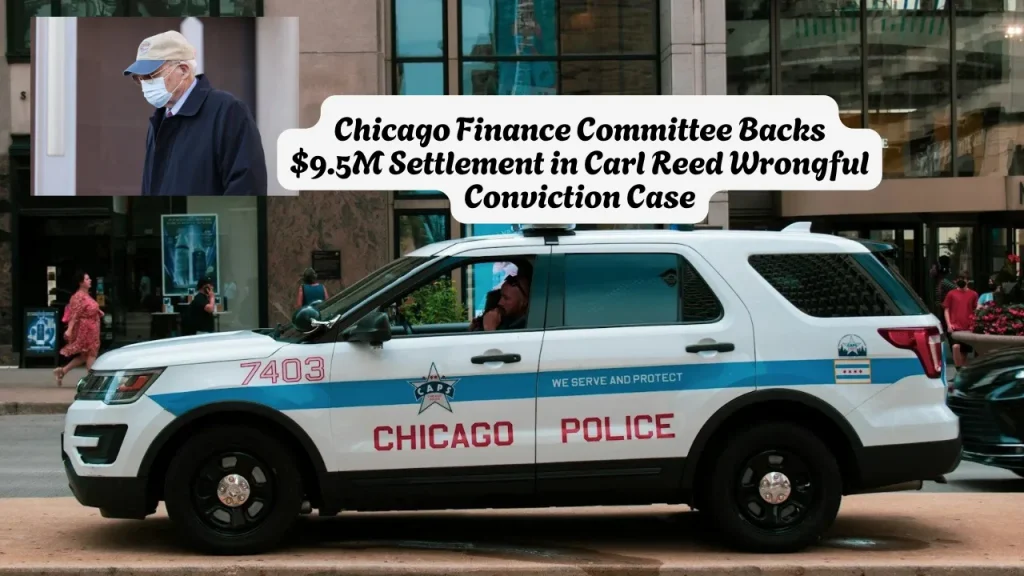
Chicago Finance Committee Backs $9.5M Settlement in Carl Reed Wrongful Conviction Case
On Monday, April 13, 2026, the Chicago City Council’s Finance Committee unanimously recommended a $9.5 million settlement for Carl Reed, a man who spent 19 years in prison for a murder he did not commit. Reed was convicted in 2005 for the stabbing death of 66-year-old Kim Van Vo at an assisted living facility. His lawsuit alleged that Chicago police detectives used extreme physical and psychological torture to extract a false confession from him. The full City Council is expected to cast a final vote on the payout on Wednesday, April 15, 2026.
Quick Case Facts
| Field | Detail |
| Plaintiff | Carl Reed |
| Settlement Amount | $9.5 Million |
| Years Incarcerated | 19 Years |
| Original Sentence | 27 Years (2005) |
| Exoneration Date | Charges dropped in 2023 |
| Lead Detective | Richard Zuley |
| Final Council Vote | Scheduled for April 15, 2026 |
The Allegations – Torture and False Confession
The lawsuit detailed a harrowing 55-hour interrogation. Reed, who suffers from severe learning disabilities, diabetes, and seizures, alleged that detectives:
- Denied Medical Care: Withheld his essential diabetes medication during the interrogation.
- Physical Abuse: Shackled him to a wall on a metal bench, beat him, and psychologically tormented him.
- Coercion: Forced him to sign a pre-written confession that he could not read. Reed testified he believed he was signing release papers to go home and receive medical treatment.
Related article: Albertsons Reaches $774 Million National Opioid Settlement Framework
Forensic Evidence & Exoneration
The move toward settlement was fueled by a complete lack of physical evidence linking Reed to the 2005 crime:
- DNA & Fingerprints: Forensic testing of a knife blade, a towel, and hairs found at the crime scene did not match Reed.
- Lack of Injuries: Despite the victim being stabbed 11 times with a handle-less blade, Reed had no injuries on his hands or blood on his clothing when arrested.
- Commutation: Governor JB Pritzker commuted Reed’s sentence in April 2020. Three years later, Cook County prosecutors formally dropped all charges after a review of the misconduct allegations.
The “Zuley” Connection
A major factor in the settlement is the involvement of former Detective Richard Zuley. Zuley has been a central figure in multiple wrongful conviction cases in Chicago.
- Track Record: Plaintiffs’ attorneys highlighted Zuley’s “disturbing track record” of procuring false confessions and omitting exculpatory evidence.
- Wider Impact: This settlement is one of several recent high-dollar payouts involving Zuley’s former team, contributing to the city’s mounting police misconduct liabilities.
Frequently Asked Questions
How much of the $9.5 million will Reed actually receive?
Typically, attorney fees in these civil rights cases range from 33% to 40%. Additionally, a portion may be used to pay back any liens or debts accrued during his nearly two decades of incarceration.
Why did Reed plead guilty if he was innocent?
In 2005, prosecutors sought the death penalty. After four years in jail awaiting trial, Reed agreed to a 27-year sentence in exchange for the state dropping the death penalty and life-without-parole options—a common outcome in “coerced confession” cases.
Is this the largest settlement in Chicago history?
No. While $9.5 million is substantial, Chicago recently reached a $90 million “global settlement” in 2025 to resolve 176 lawsuits related to former Sgt. Ronald Watts, and an $18.5 million settlement for Francisco Benitez in late 2025.
“Missing Pillars” of Legal Reporting
- Discovery Insights: Thousands of pages of Zuley’s personnel files and previous lawsuit testimonies were reviewed during discovery, revealing a systemic failure to supervise detectives with high complaint volumes.
- Bellwether Context: This case acts as a bellwether for vulnerable suspects. It sets a precedent for how courts value the “loss of life years” for individuals with cognitive disabilities who are targeted for coerced confessions.
- Objector Status: The Fraternal Order of Police (FOP) has historically objected to such settlements, though no formal objection was raised during Monday’s unanimous Finance Committee vote.
- Tax Implications: Under federal law, settlements for physical injury and wrongful incarceration are generally non-taxable. However, any portion allocated for “punitive damages” or “interest” could be subject to IRS tax.
- Attorney Fee Breakdown: The legal team, led by firms specializing in civil rights, is expected to receive approximately $3.1 million in fees and costs, pending court approval of the final distribution.
Last Updated: April 14, 2026
Disclaimer: This article is for informational purposes only and does not constitute legal advice. Legal outcomes depend on specific facts and applicable law. For advice regarding a particular situation, consult a qualified attorney.
About the Author
Israr Ahmad is a legal content researcher with 4+ years of experience covering class action settlements and consumer rights cases. He has researched and published coverage of 2,500+ settlements using verified court records, settlement administrator filings, and government sources. Learn more about Israr.