
Can Ilhan Omar Lose Her U.S. Citizenship? Denaturalization, Parent-Based Citizenship and Federal Law Explained
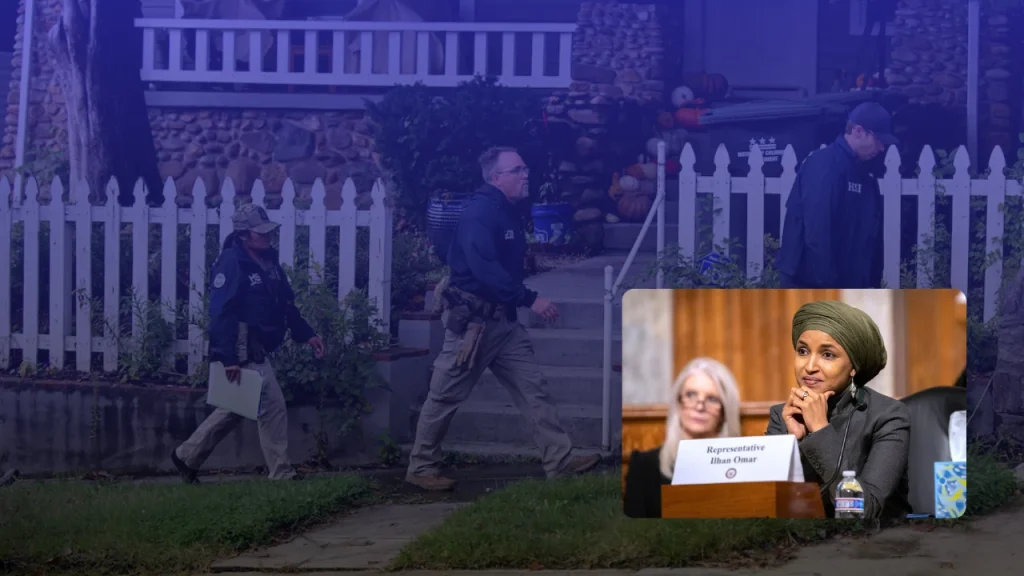
Homeland Security Investigations agents searched U.S. Rep. Ilhan Omar’s Washington-area home on October 12, 2026, under what the Department of Justice called a judicially authorized search warrant, as part of what it described as an ongoing federal criminal investigation. Reports say the inquiry centers on her family’s immigration paperwork and could lead to fraud charges and a possible attempt to revoke her citizenship. Omar denies any wrongdoing and calls the search political intimidation.
The legal point readers most often miss is this: an investigation or a search warrant does not change anyone’s citizenship. Under 8 U.S.C. § 1451, citizenship obtained through naturalization can be revoked only through a court proceeding, or after a criminal conviction, and the government carries a heavy burden of proof. As of October 16, 2026, no public denaturalization complaint, criminal charge or court order revoking Omar’s citizenship has been identified in the sources reviewed.
Quick Facts: Ilhan Omar’s Citizenship and the Federal Investigation
| Question | What the available information shows |
| Person under investigation | U.S. Rep. Ilhan Omar (D-Minn.), who represents Minnesota’s 5th District |
| Search of her home | October 12, 2026, by Homeland Security Investigations under a judicially authorized warrant |
| Department of Justice statement | The search is “part of an ongoing federal criminal investigation” |
| Reported charges listed in the warrant | Conspiracy, immigration fraud and false statements, according to people familiar with the document |
| Reported investigative focus | Whether Omar or her father, Nur Omar Mohamed, misstated her birth date so she could derive citizenship as a minor when he naturalized in 2000 |
| Reported background | Fled Somalia as a child and became a U.S. citizen in 2000 at age 17 |
| Main denaturalization law | 8 U.S.C. § 1451 |
| Criminal procurement statute | 18 U.S.C. § 1425 |
| Parent-based citizenship law for a 2000 acquisition | Former INA § 321 (former 8 U.S.C. § 1432) |
| Current child citizenship law | INA § 320 (8 U.S.C. § 1431), effective February 27, 2001 |
| Government’s burden in a civil case | Clear, unequivocal and convincing evidence |
| Public denaturalization lawsuit identified | No |
| Court order revoking her citizenship | No |
| Omar’s response | Denies wrongdoing; calls the search an abuse of power |
Source limitation: The search warrant and Omar’s immigration file have not been made public. Several details above come from anonymous sources quoted by major news organizations, so they are allegations and reports, not established facts.
What Do We Know About the October 12, 2026 Search of Ilhan Omar’s Home?
Homeland Security Investigations agents executed the warrant early on Monday, October 12, 2026. A Justice Department spokesperson said the warrant was “judicially authorized” and that the action was part of an ongoing federal criminal investigation, without naming Omar.
The Washington Post and The New York Times, citing people familiar with the matter, reported that the warrant lists potential offenses including conspiracy, immigration fraud and false statements. Homeland Security Secretary Markwayne Mullin said in September 2026 that his department was investigating issues around Omar’s family immigration and suggested the outcome could include deportation. Omar’s communications director said she has done nothing wrong.
None of this establishes that anyone committed fraud. A search warrant shows that a judge found probable cause to authorize a search. It does not decide guilt, and it does not alter citizenship.
How Did Ilhan Omar Become a U.S. Citizen?
According to public reporting, Omar was born in Somalia, fled the civil war as a child and arrived in the United States in 1995. She became a U.S. citizen in 2000, reportedly at age 17.
Reports say federal agents are focused on whether Omar or her father intentionally misstated her birth date on immigration paperwork so she could be eligible to derive citizenship through him as a minor when he was naturalized in 2000. Omar’s father died in June 2020.
Her complete immigration file has not been released, so the exact legal route to her citizenship, and the dates involved, are not publicly confirmed. Readers should treat the “derived through her father” account as the reported working theory of the investigation, not a finding.
What Is the Difference Between Naturalization and Derivative Citizenship?
U.S. law treats an adult who applies for citizenship differently from a child who acquires it automatically through a parent.
- Individual naturalization: An adult files Form N-400 and must show lawful permanent residence, required residence, good moral character and an oath of allegiance.
- Derivative citizenship: A child automatically becomes a citizen when a parent naturalizes and the statutory conditions in force at that time are met. The child does not file an individual application.
That difference matters because the legal question in a case like Omar’s is different for each route. For derivative citizenship, the questions include the parent’s naturalization, the child’s age and the child’s lawful permanent residence at the relevant time.
Official guidance: USCIS — Citizenship and Naturalization.
Which Citizenship Law Could Apply to Ilhan Omar’s 2000 Citizenship?
If Omar acquired citizenship in 2000 through a parent’s naturalization, the law that applied was former INA § 321, formerly codified at 8 U.S.C. § 1432. Congress repealed it through the Child Citizenship Act of 2000, which took effect on February 27, 2001, and replaced it with INA § 320 (8 U.S.C. § 1431).
This timing matters because today’s rules cannot simply be applied to an acquisition that happened in 2000.
What Did Former INA § 321 Require for Children Born Abroad?
Under former INA § 321, a foreign-born child generally acquired citizenship when:
- Both parents naturalized, or the surviving parent naturalized after the other parent’s death, or the parent with legal custody naturalized after a legal separation.
- The naturalization of the qualifying parent occurred while the child was under 18.
- The child was residing in the United States as a lawful permanent resident when the parent naturalized, or began to reside here in that status while still under 18.
Because the law turned on the child being under 18 when the parent naturalized, the child’s date of birth is central to this reported investigation.
Primary source: U.S. Department of State — 8 FAM 301.9, Acquisition of Citizenship by Parents’ Naturalization Before the Child Citizenship Act of 2000.
Does the Child Citizenship Act of 2000 Change the Analysis for Omar?
Not for an acquisition that occurred before February 27, 2001. The current statute, 8 U.S.C. § 1431, gives automatic citizenship to a child under 18 who is a lawful permanent resident living in the legal and physical custody of a U.S. citizen parent. It governs children who meet its conditions on or after its effective date.
Primary sources: 8 U.S.C. § 1431 and U.S. Department of State — Child Citizenship Act of 2000 effective date.
What Does 8 U.S.C. § 1451 Say About Revoking Citizenship?
Section 1451 is the main federal statute for revoking naturalization. Its key provisions are:
- § 1451(a): U.S. attorneys must institute proceedings in a federal district court to set aside an order admitting a person to citizenship and cancel the certificate of naturalization if the order was illegally procured or was procured by concealment of a material fact or by willful misrepresentation. A revocation is effective as of the original date of the order.
- § 1451(b): The person is entitled to sixty days’ personal notice to answer the government’s petition, unless waived.
- § 1451(d): A person who claims citizenship through a parent’s naturalization loses that citizenship if the parent’s naturalization is revoked under subsection (a) because of concealment of a material fact or willful misrepresentation.
- § 1451(e): When a person is convicted under 18 U.S.C. § 1425 of knowingly procuring naturalization in violation of law, the trial court must revoke the naturalization and cancel the certificate.
- § 1451(f): The court sends a certified copy of any revocation order to the Attorney General, and the person must surrender the canceled certificate.
- § 1451(h): The Attorney General keeps the power to correct, reopen, alter, modify or vacate a naturalization order.
Primary source: 8 U.S.C. § 1451 — Revocation of Naturalization.
What Must the Government Prove to Denaturalize a Citizen Like Ilhan Omar?
The Supreme Court has set a demanding standard for civil denaturalization:
- Clear, unequivocal and convincing evidence: In Schneiderman v. United States, 320 U.S. 118 (1943), the Court required this high standard because losing citizenship is so serious. It is higher than the usual “more likely than not” civil standard but below the criminal standard of proof beyond a reasonable doubt.
- Materiality and willfulness: In Kungys v. United States, 485 U.S. 759 (1988), the Court explained that a concealment or misrepresentation claim requires proof of a misrepresentation, willfulness, materiality and that the misrepresentation procured citizenship.
- Causal link for illegal procurement: In Maslenjak v. United States, 582 U.S. 335 (2017), the Court held that when the government claims citizenship was illegally procured through a lie, it must show the lie played a role in the person’s acquiring citizenship, not merely that a false statement was made.
- No judicial discretion once grounds are proven: In Fedorenko v. United States, 449 U.S. 490 (1981), the Court held that courts have no equitable discretion to refuse revocation when the statutory grounds are established.
These cases mean that an inconsistent date or a technical paperwork error, standing alone, is not enough. The government would have to identify the specific statement or eligibility requirement at issue and prove it under the applicable standard.
Primary legal sources: Schneiderman v. United States, 320 U.S. 118 (1943) and Kungys v. United States, 485 U.S. 759 (1988).
Why Would a Wrong Birth Date Matter Under Former INA § 321?
Under former INA § 321, the child had to be under 18 when the parent naturalized. If a birth date was falsified to make a child appear younger than she was, the government could argue that the statutory age condition was not actually met, which is an illegal-procurement theory, or that the date was a willful misrepresentation of a material fact.
Whether that is what happened is unknown. The claim is reported by anonymous sources, and Omar’s records and birth documents have not been made public. Under Maslenjak and Kungys, the government would also need to prove that any false date mattered to the acquisition of citizenship.
Can the Government Revoke Ilhan Omar’s Citizenship Without a Court Case?
No. Under § 1451, revocation requires either a civil proceeding in federal district court under subsection (a) or a conviction under 18 U.S.C. § 1425 under subsection (e). An investigation, a search warrant or a public statement by an official does not revoke citizenship. As long as no court has entered such an order, Omar remains a U.S. citizen in law.
Related articles: Has Ilhan Omar Ever Been Charged With a Crime? What the Public Record Shows, Ilhan Omar and the House Oversight Committee, What Did Congress Request and What Could Happen Next? Along with Ilhan Omar Financial Disclosure Investigation, Why Did Reported Asset Values Rise to $30 Million? And Why Is the Trump Administration Investigating Ilhan Omar? Immigration Probe Explained And Importantly Why Was Ilhan Omar’s Home Searched? Fraud Allegations, Legal Issues and What Happens Next.
What Is the Difference Between Civil Denaturalization and Criminal Prosecution?
| Feature | Civil denaturalization (8 U.S.C. § 1451(a)) | Criminal case (18 U.S.C. § 1425 and related laws) |
| Who brings it | U.S. attorney in federal district court | Federal prosecutors through an indictment or information |
| Burden of proof | Clear, unequivocal and convincing evidence | Beyond a reasonable doubt |
| Possible result | Court order revoking citizenship and canceling the certificate | Criminal penalties, plus mandatory revocation of naturalization after conviction under § 1451(e) |
| Right to a jury | Generally no jury in a § 1451(a) case | Yes |
| Notice | Sixty days to answer under § 1451(b) | Governed by criminal procedure |
Which Criminal Laws Could Apply to an Immigration Paperwork Investigation?
The reported warrant lists conspiracy, immigration fraud and false statements. The federal statutes commonly used for those categories are:
- 18 U.S.C. § 1425: Knowingly procuring naturalization or citizenship contrary to law, or by false statement, is a federal crime. Conviction triggers revocation under 8 U.S.C. § 1451(e).
- 18 U.S.C. § 1546: Fraud and misuse of visas, permits and other immigration documents, including false statements in immigration papers.
- 18 U.S.C. § 1001: False statements within the jurisdiction of a federal agency.
- 18 U.S.C. § 371: Conspiracy to commit an offense against the United States.
- 18 U.S.C. § 3291: Sets a ten-year limitations period for nationality and citizenship offenses, including violations of §§ 1423 to 1428 and § 1546. This is a significant hurdle for prosecutors when the paperwork dates to 2000 or earlier. How prosecutors would address it has not been disclosed, and these provisions are listed as the general legal framework, not as charges that have been filed.
No charge has been filed against Omar in the sources reviewed.
Does the Statute of Limitations Protect Ilhan Omar From Civil Denaturalization?
Probably not as a general rule. Section 1451 contains no express statute of limitations for civil revocation, and in Costello v. United States, 365 U.S. 265 (1961), the Supreme Court addressed the absence of a time limit. That does not make old cases easy to win: the government still must produce clear, unequivocal and convincing evidence, and faded records and unavailable witnesses can weaken its case.
Primary source: Costello v. United States, 365 U.S. 265 (1961).
How Does the Death of Omar’s Father Affect the Case?
Nur Omar Mohamed died in June 2020, so he cannot explain any paperwork he completed or answer questions about it. Investigators can still use government records, signed forms, certificates, immigration and school records and testimony from other people.
His death does not prove fraud, does not automatically cancel anyone’s citizenship and does not by itself end an investigation. It does make some questions harder to answer, especially about intent, which is an element of willful misrepresentation.
Could 8 U.S.C. § 1451(d) Apply Because Omar’s Citizenship Reportedly Came Through Her Father?
It could matter, but only in a specific way. Under § 1451(d), derivative citizenship is lost when a parent’s naturalization is revoked under § 1451(a) on the ground of concealment of a material fact or willful misrepresentation. That requires a revocation of the parent’s naturalization, and no such order has been identified.
The statute does not say how a revocation proceeding would work against a deceased parent. The government could also attempt a direct claim that the child’s own acquisition of citizenship was unlawful. Which route, if any, the government might use has not been disclosed, and no filing identifies one.
Background source: Associated Press — Ilhan Omar announces her father’s death, June 2020.
Can Congress or the President Strip Ilhan Omar of Citizenship by Order?
No. The Fourteenth Amendment protects citizenship, and in Afroyim v. Rusk, 387 U.S. 253 (1967), the Supreme Court held that Congress cannot take away citizenship from a person against that person’s will. Citizenship that was lawfully acquired cannot be removed by executive order, a political statement or an administrative decision. Revocation under § 1451 rests on a different premise: that the citizenship was unlawfully obtained to begin with, which a court must find.
Could Ilhan Omar Be Deported if She Lost Her Citizenship?
A person recognized as a U.S. citizen cannot be deported. If a court were to revoke citizenship, any removal would require separate immigration proceedings. Her prior status as a refugee or lawful permanent resident, the grounds on which her citizenship was set aside and any available defenses would all matter.
No court has revoked Omar’s citizenship, and no removal order exists in the sources reviewed.
What Happens Next in the Ilhan Omar Investigation?
The next developments that would resolve open questions are an unsealed warrant or affidavit, a criminal indictment or information, a civil denaturalization complaint filed by a U.S. attorney, or the release of the underlying immigration records. Any of these would show the specific statement or eligibility requirement in dispute and the legal theory.
Until then, the accurate description is that Omar is the subject of a reported federal investigation and remains a U.S. citizen.
For continuing coverage, see our related article, Ilhan Omar Immigration Investigation, Relatives Reportedly Subpoenaed as Questions About Citizenship Records Grow.
Frequently Asked Questions About Ilhan Omar’s Citizenship
Can Ilhan Omar lose her U.S. citizenship?
Federal law allows naturalized citizenship to be revoked if it was illegally procured or obtained by concealment of a material fact or willful misrepresentation. That requires a federal court proceeding or a conviction under 18 U.S.C. § 1425, and the government must meet a high burden of proof. No court has revoked Omar’s citizenship.
What law lets the government revoke Ilhan Omar’s citizenship?
The main statute is 8 U.S.C. § 1451. Subsection (a) provides for civil revocation in federal district court, subsection (d) addresses citizenship derived from a parent’s revoked naturalization and subsection (e) provides for revocation after a conviction under 18 U.S.C. § 1425.
Did Ilhan Omar become a citizen through her father?
Reports say she derived citizenship when her father naturalized in 2000, when she was a minor. Her immigration file has not been released, so the exact legal route is not publicly confirmed.
Why does Ilhan Omar’s birth date matter?
For a child to derive citizenship under former INA § 321, she generally had to be under 18 when the parent naturalized. Reports say agents are examining whether her birth date was misstated on paperwork. That is an allegation from anonymous sources, not a finding.
Did federal agents search Ilhan Omar’s home?
Yes. Homeland Security Investigations agents executed a judicially authorized search warrant on October 12, 2026, according to the Justice Department, which described it as part of an ongoing federal criminal investigation. The Department did not publicly name Omar in its statement.
Has Ilhan Omar been charged with a crime?
No charge has been identified in the sources reviewed as of October 16, 2026. A search warrant and an investigation are not charges.
Has the government filed a lawsuit to revoke Ilhan Omar’s citizenship?
No public denaturalization complaint has been identified. Under 8 U.S.C. § 1451(b), a person sued for revocation has sixty days to answer the petition.
What is the burden of proof in a denaturalization case against Ilhan Omar?
In a civil case, the government must prove its claim by clear, unequivocal and convincing evidence under Schneiderman v. United States. In a criminal case under 18 U.S.C. § 1425, it must prove guilt beyond a reasonable doubt.
Does the ten-year statute of limitations apply to Ilhan Omar?
For criminal charges under 18 U.S.C. §§ 1425 and 1546, 18 U.S.C. § 3291 sets a ten-year limit. Section 1451 has no express limit for civil revocation. How the government would handle timing in this matter has not been disclosed.
Does the death of Ilhan Omar’s father end the investigation?
No. Investigators can use records and other witnesses. His death makes it impossible for him to explain his paperwork and may make intent harder to prove, but it does not establish wrongdoing or bar an inquiry.
Can Ilhan Omar be deported while she is a citizen?
No. A person who is lawfully recognized as a U.S. citizen cannot be deported. Any removal would require a court first revoking her citizenship and a separate immigration proceeding.
Official Laws and Sources
- 8 U.S.C. § 1451 — Revocation of Naturalization (Office of the Law Revision Counsel, current through Pub. L. 119-120).
- 8 U.S.C. § 1431 — Children born outside the United States and lawfully admitted for permanent residence.
- U.S. Department of State, 8 FAM 301.9 — Acquisition of Citizenship by Parents’ Naturalization Before the Child Citizenship Act of 2000.
- U.S. Department of State — Child Citizenship Act of 2000 effective date.
- 18 U.S.C. §§ 371, 1001, 1425, 1546 and 3291.
- Schneiderman v. United States, 320 U.S. 118 (1943).
- Kungys v. United States, 485 U.S. 759 (1988).
- Costello v. United States, 365 U.S. 265 (1961).
- Fedorenko v. United States, 449 U.S. 490 (1981); Maslenjak v. United States, 582 U.S. 335 (2017); Afroyim v. Rusk, 387 U.S. 253 (1967).
- Reuters, “US agents search congresswoman Omar’s home in probe,” October 12–13, 2026.
- Bloomberg Law, “Federal Agents Search Representative Ilhan Omar’s Home,” October 12, 2026.
- The New York Times and The Washington Post reports on the October 12, 2026 search warrant and investigative focus, October 13, 2026.
- Associated Press — Omar announces her father’s death, June 2020.
Disclaimer: This article is general information, not legal advice. An investigation is not proof of wrongdoing, and no court has found that Ilhan Omar or her father committed immigration fraud. AllAboutLawyer.com is a consumer legal information website, not a law firm.
Researched and written by Israr Ahmad, legal content researcher and founder of AllAboutLawyer.com. All facts verified against the official text of 8 U.S.C. § 1451 (Office of the Law Revision Counsel, current through Pub. L. 119-120) and Reuters, Bloomberg Law, New York Times and Washington Post reports on the October 12, 2026 search, as of October 16, 2026. Last Updated: October 16, 2026.
About the Author
Israr Ahmad is a legal content researcher with 4+ years of experience covering class action settlements and consumer rights cases. He has researched and published coverage of 2,500+ settlements using verified court records, settlement administrator filings, and government sources. Learn more about Israr.