
Sayed Mohassib Arrested in Katie Suarez Killing, Brooklyn Shore Parkway Greenway Stabbing, Charges and What Happens Next
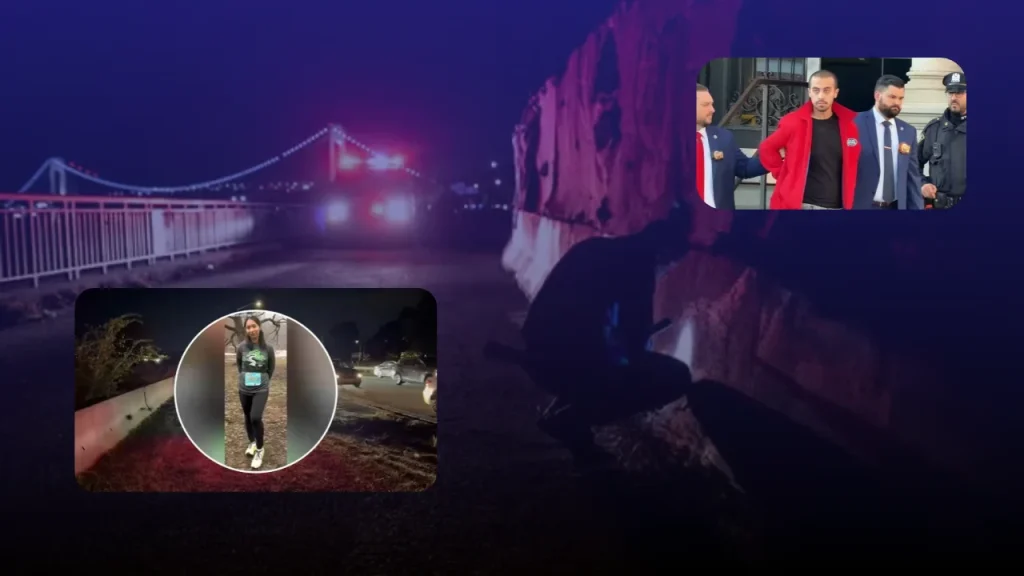
The NYPD arrested 27-year-old Sayed Mohassib on Saturday, November 7, 2026, and charged him with murder in the fatal stabbing of 28-year-old Katie Suarez. Suarez was attacked while jogging on the Shore Parkway Greenway in Bath Beach, Brooklyn, on October 30, 2026, and died on November 2. News outlets report he faces second-degree murder, tampering with physical evidence and criminal possession of a weapon. Mohassib was a New York City Department of Education school aide.
Motive has not been publicly established, and investigators have not confirmed that the two knew each other. An arrest is not a conviction. The charges are allegations, and Mohassib is presumed innocent unless prosecutors prove them in court.
Katie Suarez Killing: Quick Facts
| Detail | Reported information |
| Victim | Katie Suarez, 28, Brooklyn resident and TD Bank employee |
| Defendant | Sayed Mohassib, 27 |
| Date of attack | October 30, 2026 |
| Location | Shore Parkway Greenway near Bay 17th Street, Bath Beach, Brooklyn |
| Injuries | Stab wounds to the neck |
| Hospital | NYU Langone Hospital–Brooklyn |
| Date of death | November 2, 2026, according to her family |
| Arrest | November 7, 2026 |
| Reported charges | Second-degree murder, tampering with physical evidence, criminal possession of a weapon |
| Employment | NYC Department of Education school aide (P.S. 200, Brooklyn); suspended |
| Motive | Not publicly established |
| Prior relationship | None confirmed |
| Court status | Arraignment, plea and bail details not confirmed as of November 8 |
| Civil claim or settlement | None reported |
What Happened to Katie Suarez on the Shore Parkway Greenway on October 30, 2026?
According to the timeline NYPD Chief of Detectives Joseph Kenny gave reporters, Suarez finished work at about 6:30 p.m. She met her parents near a Wendy’s, changed into running clothes and left for her run while preparing for a race. Her father planned to meet her afterward.
At about 7:56 p.m. he called, and she said she was roughly half a mile away. When she did not arrive, he went looking. At about 8:16 p.m. he found her unconscious under a tree near Shore Parkway and Bay 17th Street with a serious neck injury. She was taken to NYU Langone Hospital–Brooklyn in critical condition. Her family confirmed she died on Monday, November 2.
Police focused on the window between about 7:56 p.m. and 8:12 p.m. They asked drivers to share dashcam footage. The greenway reportedly had no surveillance cameras covering the attack location. Police early on described the attack as appearing random and reportedly said Suarez was not robbed or sexually assaulted. Police reportedly offered a reward (reported as $10,000) and searched the waterfront with K9 units, drones and divers.
How Did the NYPD Identify Sayed Mohassib as the Suspect?
Police arrested Mohassib at his home after detectives developed evidence they say placed him at the scene. Much of the following comes from law-enforcement sources cited by news outlets, not from a public court filing.
- Surveillance video. NBC New York, citing two law-enforcement sources, reported that detectives reviewed footage near the running path showing a man in the area, and used more video to develop a lead at a nearby barbershop and near Mohassib’s home. Reports also say investigators identified a man leaving the greenway around the time of the attack. The stabbing itself was not reported to be on video.
- Statements to investigators. NBC New York reported that Mohassib allegedly said he had been walking along the Belt Parkway with a knife and later blacked out, waking up covered in blood. ABC7 also reported he allegedly said he could not remember the killing. These are reported statements, not a guilty plea.
- The knife. Reports say investigators looked for the weapon after allegedly seeing footage of him disposing of garbage. NBC New York said police searched a sanitation barge, and ABC7 reported the knife was traced to a Staten Island landfill. Reports are not consistent, and no public forensic report confirms a recovered knife matched the crime.
Finding an object believed to be the weapon is not the same as proving it was used. Prosecutors would need to establish its identity, chain of custody and link to the attack.
Who Is Sayed Mohassib? Reported Employment, NYPD and Military History
Reports identify Mohassib as a Department of Education school aide at P.S. 200 in Brooklyn. The Department said it suspended him and would move to end his employment, and that it is supporting the NYPD.
Several outlets, citing sources, reported that he briefly served with the NYPD in late 2022 and was removed, later served in the U.S. Marines, and was unsuccessful in trying to return to the NYPD. Some reports mention psychological evaluations tied to that history. Accounts differ on dates and circumstances, and the underlying personnel and medical records were not available for review.
These reports do not establish a diagnosis, explain the attack, or prove the Department of Education knew of a specific risk. No public finding says he harmed a student or committed any offense at the school.
ABC7 reported the only connection investigators had found between the two was that both attended Brooklyn College. Attending the same college does not show they met or had a dispute.
What Charges Does Sayed Mohassib Face Under New York Penal Law?
The NYPD’s public information office confirmed charges of murder, tampering with physical evidence and criminal possession of a weapon. The complaint or indictment was not available in the sources reviewed, so the exact subsections are unverified.
Murder in the Second Degree, Penal Law § 125.25
Second-degree murder includes several theories. Under § 125.25(1), a person is guilty when, with intent to cause another’s death, he causes that death. A different theory, § 125.25(2), covers deaths caused by depraved indifference to human life. Which theory prosecutors use has not been verified.
It is a Class A-I felony. Under Penal Law § 70.00, the sentence can be life imprisonment, with a minimum term generally between 15 and 25 years. That is the statutory framework, not a prediction. First-degree murder (§ 125.27) requires specific aggravating factors, and none has been reported.
Tampering With Physical Evidence, Penal Law § 215.40
Under § 215.40(2), a person commits this Class E felony when, believing certain physical evidence is about to be produced or used in an official proceeding, he intentionally suppresses it by concealing, altering or destroying it. The reported disposal of a knife may explain the charge, but prosecutors must prove each element, including the required belief and intent.
Criminal Possession of a Weapon, Penal Law Article 265
New York has several weapon offenses. For example, § 265.01(2) covers possessing certain dangerous instruments, including a dangerous knife, with intent to use them unlawfully against another. The reported charge’s degree and subsection have not been identified, so it would be premature to say he is charged under § 265.01(2).
What Happens Next in the Mohassib Criminal Case in Brooklyn?
As of November 8, no arraignment, plea, bail decision or next court date had been confirmed. The usual New York steps are:
- Arraignment (CPL § 180.10). A judge informs the defendant of the charges and right to counsel, he enters a plea, and the court decides release or bail. Second-degree murder is a bail-qualifying offense, so a judge can set bail or order him held.
- Grand jury (CPL Article 190). For felonies, prosecutors generally present evidence to a grand jury, which decides whether to indict. This is not a trial.
- Arraignment on the indictment. If indicted, he is arraigned again in the trial court.
- Discovery and motions (CPL Article 245). Prosecutors must share evidence, and the defense can file motions.
- Suppression hearings. If police say he made statements, the defense can challenge them. Under CPL § 710.30 the prosecution must give notice of statements it plans to use, and CPL § 60.45 governs when a confession is admissible. The court may hold a hearing on voluntariness and Miranda compliance.
- Trial or plea. The state must prove guilt beyond a reasonable doubt, or the case can end in a plea agreement.
The speedy-trial rule (CPL § 30.30) requires the prosecution to be ready for trial within six months for most felonies, subject to excluded time.
New York Courts explain the process in its guides to basic steps in a criminal case, arraignments and grand jury proceedings.
Could Mental-Health Issues Affect the Mohassib Case Under New York Law?
Reports of Mohassib’s reported statements and history raise questions the court may examine, though none is established:
- Fitness to proceed (CPL Article 730). A court can order an examination if there is reason to doubt a defendant can understand the proceedings or help in his defense.
- Lack of criminal responsibility (Penal Law § 40.15; CPL § 250.10). A defendant can raise an affirmative defense that, because of mental disease or defect, he lacked substantial capacity to know or appreciate the nature or wrongfulness of his conduct. The defense must give notice, and it is hard to prove. Voluntary intoxication, alone, is treated differently.
Neither has been raised in public reporting. They explain procedure and do not suggest an outcome.
Could Katie Suarez’s Family File a Wrongful Death Lawsuit in New York?
A criminal case and a civil case are separate. A wrongful death action under EPTL § 5-4.1 is brought by the estate’s personal representative for eligible family members, generally within two years of death. Where a criminal action is commenced against the same defendant, § 5-4.1 can extend that deadline, subject to its limits. Damages are described in EPTL § 5-4.3, and a separate survival claim for the injuries she suffered before death may be available under EPTL § 11-3.2. A civil case has a lower burden of proof than a criminal trial.
The family may also be eligible for help from the New York State Office of Victim Services, which can reimburse certain costs such as funeral expenses and counseling.
No wrongful death suit, settlement, public fund or claim form tied to Suarez’s death had been identified as of November 8. For a general overview, see What Is a Wrongful Death Lawsuit? Everything Families Need to Know.
What Questions Remain Unanswered in the Katie Suarez Case?
- Motive. No explanation has been given for the attack.
- Relationship. No evidence shows the two knew each other beyond the reported shared college.
- The knife. Reports differ, and no forensic confirmation is public.
- Charging papers. The complaint or indictment has not been made available.
- Court status. No confirmed arraignment, plea or bail ruling.
- Records. The NYPD, military and Department of Education records behind press reports have not been reviewed publicly.
- Civil claims. None reported against Mohassib or any other party.
For comparison with other New York and California homicide investigations, read NYC Subway Shooting, Man Fatally Shot at Midtown Manhattan’s 53rd Street Station as NYPD Hunts Suspect and Arcadia Shooting, Teen Girl Killed in Apartment, Paul Anthony Cruz Jr. Critically Injured in Pasadena.
Related AllAboutLawyer Coverage
- What Is a Wrongful Death Lawsuit? Everything Families Need to Know
- NYC Subway Shooting, Man Fatally Shot at Midtown Manhattan’s 53rd Street Station as NYPD Hunts Suspect
- Arcadia Shooting, Teen Girl Killed in Apartment, Paul Anthony Cruz Jr. Critically Injured in Pasadena
- Criminal Lawyer
Sayed Mohassib and Katie Suarez: Frequently Asked Questions
Who is Sayed Mohassib?
A 27-year-old man arrested November 7, 2026, and charged in the fatal stabbing of Katie Suarez. Reports identify him as a New York City Department of Education school aide who had earlier briefly served with the NYPD and later in the Marines.
Who was Katie Suarez?
A 28-year-old Brooklyn woman who worked at a TD Bank branch and ran along the Shore Parkway Greenway. She was stabbed on October 30, 2026, and died on November 2.
What charges does Sayed Mohassib face?
Second-degree murder, tampering with physical evidence and criminal possession of a weapon, according to the NYPD and news reports. The exact subsections have not been verified.
What is the penalty for second-degree murder in New York?
It is a Class A-I felony that can carry life imprisonment, with a minimum term generally between 15 and 25 years under Penal Law § 70.00.
Has the NYPD said why Katie Suarez was attacked?
No. Police have not publicly established a motive or confirmed that the two knew each other.
Was the stabbing caught on camera?
The greenway reportedly had no cameras covering the attack site. Investigators reviewed nearby footage, but no video of the stabbing has been reported.
Did Sayed Mohassib confess?
Law-enforcement sources told news outlets he made statements to investigators, including that he blacked out and woke up covered in blood. That is not a guilty plea, and the statements have not been tested in court.
Has Mohassib been convicted?
No. He is presumed innocent unless proven guilty.
Has he been arraigned or had bail set?
No confirmed arraignment, plea or bail decision had been reported as of November 8, 2026.
Can Katie Suarez’s family sue?
Yes, New York law allows a wrongful death claim through the estate’s personal representative, generally within two years of death, subject to statutory extensions.
Is there a settlement or claim form?
No. This is a criminal homicide case, not a class action.
Bottom Line: What Is Confirmed and What Is Not in the Mohassib Case
Confirmed by police: Katie Suarez was fatally stabbed on October 30, 2026, on the Shore Parkway Greenway, and the NYPD arrested and charged Sayed Mohassib on November 7. Reported but not tested in court: the video leads, his alleged statements, the search for a knife and his background. Unknown: motive, any prior relationship, the exact charging theory and his court schedule. The next meaningful update should come from the arraignment and the charging papers.
Sources and Official Legal References
News reporting
- ABC News – Suspect arrested in connection with NYC jogger’s murder
- CBS New York – Arrest made in killing of Katie Suarez
- CBS New York – NYPD timeline of Brooklyn Shore Parkway Greenway stabbing
- NBC New York – Man arrested for Brooklyn jogger’s stabbing death
- Gothamist – NYPD arrests and charges city schools employee in murder of Brooklyn jogger
- ABC7 New York – DOE employee charged with murder in stabbing of Brooklyn jogger Katie Suarez
- FOX 5 New York – Man charged with murder in deadly stabbing of Brooklyn runner
New York laws and court guidance
- Penal Law § 125.25 – Murder in the second degree
- Penal Law § 215.40 – Tampering with physical evidence
- Penal Law § 265.01 – Criminal possession of a weapon in the fourth degree
- Penal Law § 70.00 – Sentence of imprisonment for felony
- New York Courts – Basic Steps in a Criminal Case
- New York Courts – Preliminary Hearing and Grand Jury
- EPTL § 5-4.1 – Wrongful death action
- EPTL § 5-4.3 – Wrongful death damages
- EPTL § 11-3.2 – Survival of personal injury claims
Verification note: The arrest and charges were confirmed by the NYPD through news reports. Investigative details come from news outlets citing law-enforcement sources. The criminal complaint, indictment and underlying employment records were not independently reviewed.
AllAboutLawyer.com is an independent legal information website, not a law firm. This article is for general information only and is not legal advice. The charges discussed are allegations, not findings of guilt, and Sayed Mohassib is presumed innocent unless and until proven guilty in court.
Researched and written by Israr Ahmad, legal content researcher and founder of AllAboutLawyer.com. All facts verified against NYPD-sourced news reports (ABC7, CBS New York, NBC New York, Gothamist, FOX 5), the New York Penal Law and Criminal Procedure Law, and New York Courts guidance, as of November 8, 2026. Last Updated: November 8, 2026.
About the Author
Israr Ahmad is a legal content researcher with 4+ years of experience covering class action settlements and consumer rights cases. He has researched and published coverage of 2,500+ settlements using verified court records, settlement administrator filings, and government sources. Learn more about Israr.