
Judge Ana Reyes Proposes Jessie Liu as Special Master to Investigate DOJ and Interior Lawyers in the East Potomac Golf Links Case
On November 7, 2026, U.S. District Judge Ana C. Reyes gave notice that she intends to appoint Jessie K. Liu, the former U.S. Attorney for the District of Columbia, as a special master. Liu would investigate whether Justice Department attorneys, Interior Department and National Park Service officials, and other government personnel made misleading statements to the court or broke professional-conduct rules in the lawsuit over East Potomac Golf Links.
The parties have until 10 a.m. on Friday, November 13, 2026, to respond to the proposed appointment. Liu has not yet been formally appointed, and no one has been found to have committed misconduct. Judge Reyes has said that opening the inquiry is not a finding of wrongdoing.
East Potomac Special Master Inquiry: Quick Facts
| Detail | Latest verified information |
| Case | DC Preservation League et al. v. Department of the Interior et al. |
| Case number | 1:26-cv-00477 (ACR), U.S. District Court for the District of Columbia |
| Judge | U.S. District Judge Ana C. Reyes |
| Filed | February 13, 2026 |
| Plaintiffs | DC Preservation League, Dave Roberts and Alex Dickson |
| Defendants | Department of the Interior, National Park Service, Secretary Doug Burgum and Jessica Bowron |
| Main legal basis | Administrative Procedure Act, plus environmental and historic-preservation laws |
| Proposed special master | Jessie K. Liu, U.S. Attorney for D.C. 2017–2020; now a partner at Liu Shur Kravis LLP |
| Notice of intent | November 7, 2026 |
| Response deadline | 10 a.m., Friday, November 13, 2026 |
| Conduct under review | Government attorneys’ and officials’ statements and conduct through October 31, 2026 |
| Misconduct findings | None |
| Preliminary injunction | Granted October 26, 2026; appealed to the D.C. Circuit (No. 26-5374) |
| Announced closure date | November 15, 2026 |
What Is the East Potomac Golf Links Lawsuit About?
East Potomac Golf Links, also called East Potomac Park Golf Course, is a public 36-hole facility on the Potomac River near the National Mall. The DC Preservation League and two golfers sued in February 2026. They challenge the Trump administration’s plans to close and redesign it into a championship-style course, and argue the plans were pushed ahead without the required environmental and historic review. Reporting on the complaint says it also invokes the 1897 act of Congress that created the park.
President Donald Trump has publicly backed a “world-class” renovation involving Interior Secretary Doug Burgum and golf architect Tom Fazio. He announced a closure beginning November 15, 2026, lasting roughly 15 months.
Why Did Judge Ana Reyes Open an Ethics Inquiry? Timeline of the East Potomac Case
| Date | What happened |
| February 13, 2026 | DC Preservation League and two golfers file suit. |
| July 2026 | Reyes declines to halt plans at that stage but refuses to dismiss the case, pressing the government on the President’s public statements. |
| September 18, 2026 | Plaintiffs file an amended and supplemental complaint. |
| About October 9–10 | Crews cut down hundreds of trees, reported as more than 400 (some local reports said about 500), after the court received very short notice. |
| October 13 | Reyes issues a temporary restraining order barring further tree removal. |
| October 18 | Trump publicly describes a championship renovation and a November 15 closure. |
| October 26 | Reyes grants a preliminary injunction. |
| October 27–28 | The government appeals and acknowledges the renovation and closure direction in court filings. |
| October 30 | After a nearly three-hour hearing, Reyes announces a formal inquiry into possible misrepresentations and ethical violations. |
| November 7 | Reyes names Jessie Liu as her proposed special master. |
| November 13 | Deadline for the parties’ responses. |
| November 15 | Administration’s announced closure date. |
The core problem was a mismatch. Government lawyers had told the court there was no formal plan to close or fully redesign the course, while the President was announcing exactly that. Reyes wrote that the case “started as a case about golf” and had become much more, because it forced the court to reconcile the President’s statements with sworn testimony from government employees and arguments from senior Justice Department lawyers.
What Happened at the October 30 Hearing With Associate Attorney General Stanley Woodward Jr.?
Reyes opened by reading the D.C. Bar’s professional-conduct rules on candor toward a tribunal, particularly Rule 3.3. She questioned Associate Attorney General Stanley Woodward Jr., the Justice Department’s third-ranking official, about contradictions between presidential statements, court representations and agency actions.
She raised concerns that lawyers may have:
- given the court materially misleading information;
- left out relevant details;
- timed the tree-cutting notices to avoid court review;
- directed witnesses to withhold information from sworn declarations.
She ordered all relevant documents and communications preserved. Trump later said publicly that Reyes would be held “fully responsible” if anyone were hurt or killed at the course. The Justice Department has said it will keep defending the President’s agenda.
Who Is Jessie K. Liu, the Proposed East Potomac Special Master?
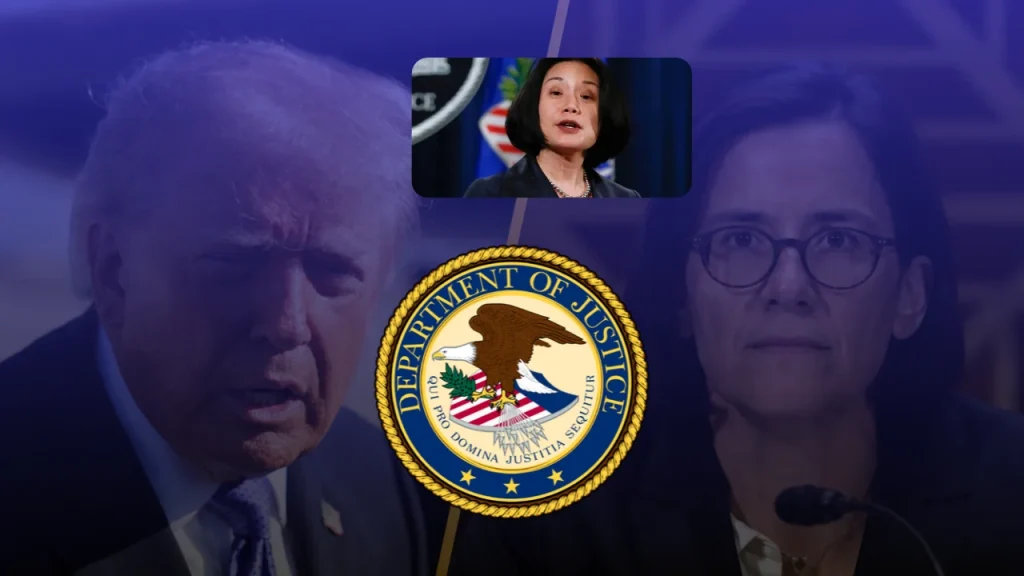
Liu served as U.S. Attorney for the District of Columbia from 2017 to 2020 in the first Trump administration and held senior roles at the Justice Department and Treasury Department. She is now a partner at Liu Shur Kravis LLP, where her work includes government investigations, internal investigations and complex litigation involving government entities. Her background gives the proposed appointment visible independence from the plaintiffs’ side.
What Can a Special Master Do Under Federal Rule of Civil Procedure 53 in the East Potomac Case?
Rule 53 governs special masters in federal court. Key points:
- Appointment limits. A court may appoint a master to handle matters that cannot be effectively and timely handled by an available judge (Rule 53(a)(1)(C)). The master generally must not have grounds for disqualification under 28 U.S.C. § 455 unless the parties consent, and the court must weigh fairness and cost (Rule 53(a)(2)–(3)).
- Notice and opportunity to be heard. The court must give the parties notice and a chance to be heard before appointing a master (Rule 53(b)(1)). That is why Reyes set the November 13 deadline.
- The order defines the job. The appointment order must set out the master’s duties, any limits on authority, how the master communicates with the court, how the record is kept and how the master is paid (Rule 53(b)(2)).
- Powers. Unless the order says otherwise, a master can regulate proceedings, take evidence and take steps to carry out assigned duties (Rule 53(c)). In this inquiry that is expected to mean reviewing documents, questioning witnesses under oath and possibly holding evidentiary hearings.
- Report and objections. The master reports to the court, and parties may object. Judge Reyes decides what to accept, and the master has no final say (Rule 53(f)).
Reporting says Reyes indicated she may run the inquiry herself if the government objects to her choice.
What Ethics Rules Apply to Justice Department Lawyers in the East Potomac Case?
- D.C. Rule of Professional Conduct 3.3 (Candor Toward the Tribunal). A lawyer may not knowingly make a false statement of fact or law to a court, and must correct a false statement of material fact or law previously made.
- D.C. Rule 8.4(c). Prohibits conduct involving dishonesty, fraud, deceit or misrepresentation.
- D.C. Rule 8.4(d). Prohibits conduct that seriously interferes with the administration of justice.
- D.C. Rule 5.1. Addresses the responsibilities of supervising lawyers.
- 28 U.S.C. § 530B (McDade Amendment). Makes federal government attorneys subject to the state and local federal-court rules of professional ethics that apply where they practice.
- U.S. District Court for D.C. local rules. The court has its own attorney-conduct and discipline rules.
A key point: the inquiry asks whether statements were made knowingly or left uncorrected. A changed plan is not itself misconduct. A statement that was true when made is not a violation merely because plans later changed.
What Could Happen to the Lawyers? Possible Consequences Under Federal Law
The special master investigates and reports. Any outcome rests with Judge Reyes. Options available to a federal court include:
- No action. The inquiry could find no violations.
- Sanctions under the court’s inherent authority. Chambers v. NASCO, Inc., 501 U.S. 32 (1991), recognizes federal courts’ inherent power to sanction bad-faith conduct.
- Sanctions under 28 U.S.C. § 1927 or Rule 11. These address unreasonable and vexatious multiplication of proceedings and improper filings.
- Contempt. A court can punish disobedience of its orders (18 U.S.C. § 401).
- Referral for discipline. A court can refer a lawyer to a bar or disciplinary authority.
None of these has been ordered. Lawyers involved are entitled to notice and a chance to respond.
What Does the East Potomac Preliminary Injunction Actually Do?
On October 26, Reyes granted a preliminary injunction. It bars the government from removing or damaging more trees at the course and requires 10 business days’ written notice to the court before any irreparable change to the course and East Potomac Park. She found the plaintiffs likely to succeed on their claim that the government improperly split the overall renovation into separate environmental reviews. That is a preliminary finding, not a final ruling.
The government has appealed to the D.C. Circuit (No. 26-5374). Injunction appeals are authorized by 28 U.S.C. § 1292(a)(1), and the government can seek a stay pending appeal under Federal Rule of Civil Procedure 62 and Federal Rule of Appellate Procedure 8.
Which Federal Laws Govern the Underlying East Potomac Golf Links Renovation Dispute?
| Law | Why it matters |
| Administrative Procedure Act, 5 U.S.C. §§ 702–706 | Allows judicial review of agency action and permits courts to set aside action found arbitrary or unlawful |
| 5 U.S.C. § 705 and Federal Rule of Civil Procedure 65 | Provide temporary relief while review continues |
| National Environmental Policy Act, 42 U.S.C. § 4332 | Requires environmental review of major federal actions; at issue is whether the project was improperly divided |
| National Historic Preservation Act, 54 U.S.C. § 306108 | Requires federal agencies to consider effects on historic properties |
| National Park Service Organic Act, 54 U.S.C. § 100101(a) | Sets the Park Service’s conservation mission |
| 40 U.S.C. § 8106 | Restricts constructing buildings and structures on federal parks and grounds in D.C. without congressional authority |
| 1897 act creating East Potomac Park | Cited in reporting on the complaint as limiting use of the park |
What Is Still Undecided in the East Potomac Golf Links Case?
- Whether Jessie Liu will be formally appointed. The final order has not been verified.
- Whether the government objects to Liu, and whether Reyes then runs the inquiry herself.
- Whether any lawyer or official violated an ethics rule. No finding has been made.
- Whether the D.C. Circuit will uphold, narrow or lift the preliminary injunction.
- Whether the court will stop the planned November 15 closure. The plaintiffs’ request had not been decided.
- Whether the redevelopment ultimately violates NEPA, the National Historic Preservation Act or other statutes. No final ruling has been issued.
What Does This Mean for East Potomac Golfers and the Public?
The ethics inquiry is separate from the merits of the renovation, though the two overlap in the same case. Golfers face uncertainty about the November 15 closure date. Public access, environmental review, historic preservation and funding questions remain before the court. Readers should watch for the November 13 responses, any appointment order and the D.C. Circuit’s handling of the appeal. For more lawsuits against federal agencies and officials, see our Government & Civil Rights coverage.
Related AllAboutLawyer Coverage
- Stephen Miller Named Trump’s White House Chief of Staff, Why Susie Wiles Left and What Happens Next
- Government & Civil Rights
East Potomac Special Master Frequently Asked Questions
Who is Jessie Liu and why did Judge Ana Reyes choose her?
Jessie K. Liu is a former U.S. Attorney for D.C. (2017–2020) and now a partner at Liu Shur Kravis LLP, with experience in government investigations. Her service under the first Trump administration is widely noted as supporting the appearance of independence.
Has Jessie Liu been appointed special master yet?
No. Reyes announced her intent on November 7. The parties have until 10 a.m. on November 13 to respond.
Did Trump administration lawyers lie to the court?
That has not been found. Reyes has said the inquiry does not itself show misconduct. It will examine whether statements were accurate, complete and corrected when necessary.
What is the East Potomac case number?
1:26-cv-00477 (ACR) in the U.S. District Court for the District of Columbia.
Can a federal judge investigate government attorneys?
Yes. Federal courts have inherent authority over lawyers appearing before them, and Rule 53 allows a special master to assist. Final decisions stay with the judge.
What could happen if misconduct is found?
Options include sanctions, contempt findings or referral for professional discipline. None has been ordered.
Is East Potomac Golf Links still scheduled to close on November 15?
The administration announced that date, but the court has not ruled on the plaintiffs’ request to stop the closure, and the injunction restricts irreversible changes and further tree removal.
How many trees were cut down at East Potomac Golf Links?
Reports said more than 400, with some local reports saying about 500.
Bottom Line: What Is Confirmed and What Is Not in the East Potomac Special Master Inquiry
Judge Ana Reyes has formally signaled she will appoint Jessie Liu to investigate whether government lawyers and officials misled the court in the East Potomac Golf Links case. The inquiry is serious, but it is an investigation, not a verdict. No finding of misconduct exists, the appointment is not yet final, and the underlying questions about the renovation remain before the court and on appeal.
Sources and Official References
Court and case records
- DC Preservation League et al. v. Department of the Interior et al., No. 1:26-cv-00477 (D.D.C.), including the October 26, 2026 preliminary injunction opinion (Document 103), via Justia
- D.C. Circuit appeal No. 26-5374
News reporting
- The Washington Post, November 7, 2026, reporting on the proposed special master
- Associated Press and ABC News (Good Morning America), reporting on the inquiry and tree removals
- Fox 5 DC and WJLA, reporting on the restraining order, injunction and ethics inquiry
- Newsweek, reporting on the inquiry announcement and President Trump’s comments about Judge Reyes
- Golf Digest and WTOP, reporting on earlier hearings and the injunction
Legal references
- Federal Rule of Civil Procedure 53 (Legal Information Institute)
- D.C. Rules of Professional Conduct 3.3, 5.1 and 8.4 (D.C. Bar)
- 5 U.S.C. §§ 702–706; 42 U.S.C. § 4332; 54 U.S.C. §§ 100101, 306108; 40 U.S.C. § 8106; 28 U.S.C. §§ 530B, 1292, 1927; 18 U.S.C. § 401
- Chambers v. NASCO, Inc., 501 U.S. 32 (1991)
AllAboutLawyer.com is an independent legal information website, not a law firm. This article is for general information only and is not legal advice. No finding of misconduct has been made against any attorney or official, and all individuals are presumed to have acted properly unless and until a court finds otherwise.
Researched and written by Israr Ahmad, legal content researcher and founder of AllAboutLawyer.com. All facts verified against the court’s docket and opinion, the Federal Rules of Civil Procedure, the D.C. Rules of Professional Conduct and contemporaneous news reporting, as of November 8, 2026. Last Updated: November 8, 2026.
About the Author
Israr Ahmad is a legal content researcher with 4+ years of experience covering class action settlements and consumer rights cases. He has researched and published coverage of 2,500+ settlements using verified court records, settlement administrator filings, and government sources. Learn more about Israr.