
California DMV License Plate Lawsuit, Federal Judge Blocks Recall of Iasmine Abdennabi’s “RVRTSEA” Plate in First Amendment Case
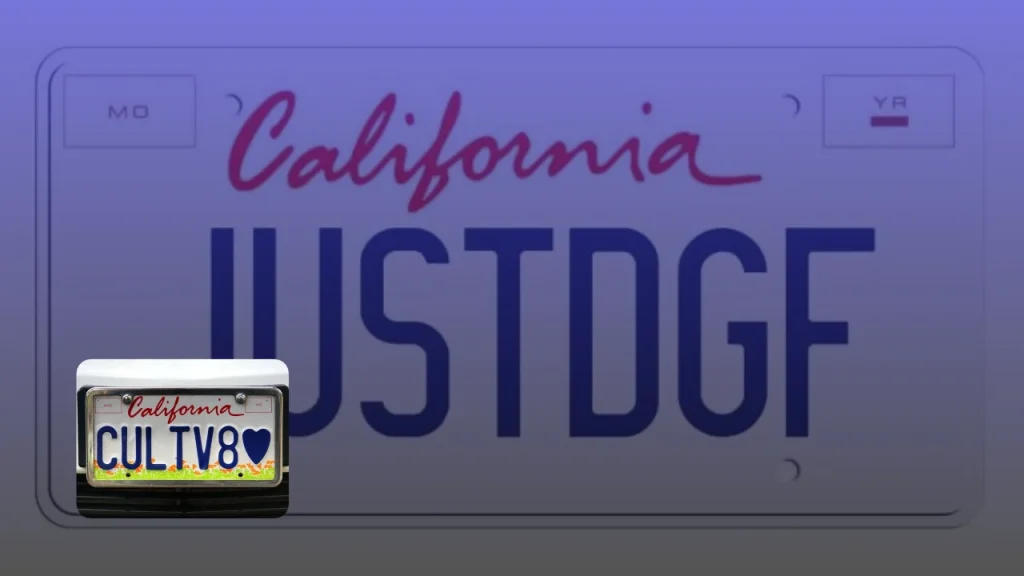
A California woman has sued the state’s Department of Motor Vehicles after the agency recalled her personalized license plate reading “RVRTSEA,” an abbreviation of the political slogan “From the river to the sea, Palestine will be free.” Her lawsuit says California violated the First Amendment by canceling a plate she says expresses support for equal civil and political rights for people living between the Jordan River and the Mediterranean Sea.
The court has already acted. On October 30, 2026, U.S. District Judge Richard Seeborg granted Iasmine Abdennabi a temporary restraining order (TRO). It bars California DMV Director Steve Gordon, and those acting with him, from recalling or denying her “RVRTSEA” plates until a preliminary-injunction hearing set for November 18, 2026. At this early stage, the judge found she had shown a strong likelihood of success on her constitutional claims.
This is not a final ruling that California’s personalized-plate rules are unconstitutional. The order protects Abdennabi’s plates temporarily. It does not stop the DMV from enforcing its rules against other drivers.
Abdennabi v. Gordon: Quick Facts
| Case detail | Information |
| Plaintiff | Iasmine Abdennabi |
| Defendant | Steve Gordon, Director of the California DMV (official capacity) |
| Case name | Abdennabi v. Gordon |
| Current case number | 3:26-cv-12497-RS |
| Initial intake listing | 4:2026cv12497 (before reassignment) |
| Court | U.S. District Court, Northern District of California |
| Judge | Richard Seeborg |
| Plaintiff’s attorney | Michael Millen |
| Disputed plate | RVRTSEA |
| Plate issued | May 22, 2024 |
| DMV recall order | October 23, 2025 |
| Final agency decision delivered / effective | August 17, 2026 / September 16, 2026 |
| Lawsuit filed | October 26, 2026 |
| TRO granted | October 30, 2026 (Document 19) |
| Preliminary-injunction hearing | November 18, 2026, at 1:30 p.m. |
| Main legal issue | First Amendment free speech (applied to California through the Fourteenth Amendment) |
| Laws challenged | California Vehicle Code § 5105 and 13 CCR § 206.02(c)(4)(D) |
| Class action? | No |
| Settlement or claim form? | None |
The case number above comes from the signed October 30 order. The initial filing appeared under an Oakland-division intake number before the case was reassigned.
What Does the RVRTSEA License Plate Mean?
“RVRTSEA” abbreviates “From the river to the sea, Palestine will be free.” The phrase is highly contested, and people attach very different meanings to it.
Abdennabi says her message is support for equal civil and political rights for all people living between the Jordan River and the Mediterranean Sea. Many Palestinian rights advocates read the phrase as a call for freedom and equality. Critics, including people who complained to the California DMV, read it as a call for Israel’s destruction or as hostility toward Jewish people.
The lawsuit does not ask the court to settle that political debate. Its core question is narrower: can a state agency revoke a personalized plate because officials consider its political message offensive or linked to violence?
Timeline: How Abdennabi Got the Plate and Why the DMV Recalled It
The details below follow Judge Seeborg’s signed October 30 order.
December 15, 2023: Application. Abdennabi applied online for the personalized plate “RVRTSEA.”
May 22, 2024: Plate issued. The California DMV approved the request, and she began displaying the plates.
Three motorist complaints. The DMV later received three complaints. According to the order, one anonymous complainant objected to the plate and to a Free Palestine bumper sticker displayed below it. Another said the plate made them feel angry, upset and offended. A third said it made them feel afraid, anxious and personally targeted, and one complaint read the plate as supporting terrorism and encouraging violence. These were individual reactions, not court findings that Abdennabi intended to threaten anyone.
October 23, 2025: Recall order. About 15 months after issuing the plate, the DMV ordered her to return it. The agency concluded the configuration carried connotations offensive to good taste and decency, could be read as degrading toward a group, and referred to genocide or risked inciting violence.
November 3, 2025: Appeal. Abdennabi challenged the recall. Under California Vehicle Code § 5105(b), a person ordered to return an environmental license plate may demand an administrative hearing within 10 days of receiving the order.
May 13, 2026: Administrative hearing. An administrative law judge at the California Office of Administrative Hearings heard the case. Christian Milhoan, a DMV manager over special plates and customer support, testified that the plate was revoked for its perceived connotations of violence or genocide. The judge upheld the recall.
August 17, 2026: Final agency decision. DMV Director Steve Gordon adopted the administrative decision. It took effect on September 16, 2026.
October 26, 2026: Federal lawsuit filed.
The complete federal complaint and the full administrative record were not independently available in the public materials reviewed. The procedural history above follows the signed federal order.
Why Abdennabi Sued the California DMV in Federal Court
Abdennabi’s lawsuit asks for declaratory relief, injunctive relief and nominal damages under the First and Fourteenth Amendments. Federal civil-rights claims against state officials like this one are generally brought under 42 U.S.C. § 1983, and she sued Director Gordon in his official capacity. Her main arguments are:
- Protected political expression. She says the plate expresses her political beliefs on equal rights.
- Viewpoint discrimination. She argues California is restricting her speech because of the viewpoint officials and some members of the public read into it.
- Overbroad restrictions. She challenges rules that let the state reject plates referring to violence, genocide or a risk of inciting violence.
- No threat or incitement. She denies the plate is a threat against Jewish people, an instruction to commit genocide or encouragement of violence.
This is an individual civil-rights case, not a class action. Other California drivers cannot automatically join it or receive compensation through it.
What the California DMV Argued Against Abdennabi
In the administrative process, the DMV’s position was that the plate could connote genocide or create a risk of inciting violence. It relied on motorist complaints and on California’s Vehicle Code and regulations.
In the emergency federal proceedings, the government opposed immediate relief. According to Judge Seeborg’s order, it stressed that Abdennabi waited about 10 weeks after the final administrative decision before suing. It argued that this delay undercut her claim of immediate irreparable harm and supported a laches defense. Laches is an equitable doctrine that can block relief when someone unreasonably delays asserting a right and the delay unfairly prejudices the other side. The government also said it lacked time to fully brief the constitutional questions.
The judge did not treat those arguments as a reason to deny temporary protection, but he recognized that California should have a full opportunity to present its position before the preliminary-injunction hearing. The DMV’s final defenses have not been decided. As of October 31, 2026, no final answer from the DMV had been established in the materials reviewed.
Related article: Ken Paxton’s Office Sues Harris County Over Allegedly Racially Targeted Voter Ads, What the Lawsuit Claims and What the October 30 Agreement Means
Federal Judge Seeborg’s October 30, 2026 Order Granting a Temporary Restraining Order
The order is titled Order Granting Temporary Restraining Order, Document 19, a signed 10-page ruling filed October 30, 2026.
Are California personalized plates government speech or private speech?
In Walker v. Texas Division, Sons of Confederate Veterans, 576 U.S. 200 (2015), the Supreme Court held that Texas’s specialty plate designs were government speech. Judge Seeborg explained that Walker did not decide the separate question of personalized letter-and-number combinations chosen by individual drivers. Relying on Ogilvie v. Gordon, he found Abdennabi likely to show that her plate text is private speech, not a message spoken by the State of California. That matters because private speech is protected against many forms of government censorship.
Is the DMV’s plate restriction viewpoint discrimination?
The judge then asked whether California’s restrictions are viewpoint-neutral. Even in a nonpublic forum, where the government has more room to regulate, restrictions must generally be reasonable and viewpoint-neutral. The government cannot allow some viewpoints and suppress others just because officials disagree.
He examined California Vehicle Code § 5105 and 13 CCR § 206.02(c)(4)(D) and concluded Abdennabi was likely to succeed in arguing they are unconstitutional both on their face and as applied to her.
Referring to violence is not the same as inciting it
This is likely the most important part of the reasoning. The regulation bars plates that contain fighting words, refer to illegal or violent acts (including genocide), or create a risk of inciting violence. The judge separated those categories. Fighting words and incitement are recognized categories that can fall outside First Amendment protection. Speech that merely refers to violence, discusses it or expresses an opinion about a violent conflict is different from encouraging imminent illegal acts.
He reasoned that banning every reference to violence could let officials suppress political viewpoints based on their message. This was a preliminary assessment, not a final ruling that every use of the slogan is protected.
Irreparable harm to Abdennabi’s First Amendment rights
The judge found a sufficient risk of irreparable harm. The recall made the plate subject to physical seizure, and the fact that officers had not yet taken it did not remove that risk before the court could hear the preliminary-injunction request. Lost First Amendment expression is generally treated as irreparable, because a later money award cannot restore the chance to communicate a message at a particular moment. See Elrod v. Burns, 427 U.S. 347 (1976).
What the TRO actually orders
The order bars DMV Director Steve Gordon, in his official capacity, along with his officers, employees, agents, successors and anyone acting in concert with him, from recalling or denying Abdennabi’s “RVRTSEA” plates until the preliminary-injunction hearing. The relief is personal to Abdennabi.
Read the signed order: October 30, 2026 Order Granting Temporary Restraining Order, Abdennabi v. Gordon
California Vehicle Code § 5105 and 13 CCR § 206.02: The Laws Challenged in Abdennabi v. Gordon
California Vehicle Code § 5105
This statute governs California’s environmental (personalized) license plate program. Under subsection (a), the DMV may refuse a requested combination of letters and numbers that carries connotations offensive to good taste and decency or is misleading. Subsection (b) lets the DMV cancel and order the return of an already-issued plate on the same grounds, and provides an administrative hearing process. A person must demand that hearing in writing within 10 days of receiving the order. The statute also addresses reimbursement of certain fees or replacement plates.
The constitutional concern is that “offensive to good taste and decency” may give officials too much discretion over private political expression.
13 CCR § 206.02(c)(4)(D)
This regulation sets more rules for personalized plate configurations. It directs the DMV to reject configurations that:
- contain fighting words,
- refer to illegal or violent acts,
- refer to matters such as gang activity, weapons or genocide, or
- create a risk of inciting violence.
The judge questioned whether the regulation improperly lumps together distinct categories of speech. A reference to violence is not necessarily fighting words or incitement. The regulation’s current numbering reflects a renumbering of California’s personalized-plate rules that became operative in August 2024.
Federal law the lawsuit relies on
- 42 U.S.C. § 1983 is the federal statute allowing suits against state officials for constitutional violations.
- 28 U.S.C. § 1331 gives federal courts jurisdiction over cases arising under federal law.
- 28 U.S.C. §§ 2201–2202 (the Declaratory Judgment Act) allow the declaratory and further relief she requests.
- Ex parte Young, 209 U.S. 123 (1908) is the doctrine that generally allows suits for prospective relief against a state official in his official capacity, which is why Director Gordon is the named defendant.
- Federal Rule of Civil Procedure 65 governs temporary restraining orders and preliminary injunctions.
- 42 U.S.C. § 1988 can allow a prevailing civil-rights plaintiff to recover attorney’s fees. Abdennabi’s complaint is described in the order as seeking declaratory, injunctive and nominal monetary relief, and no fee award has been decided.
- California Constitution, Article I, § 2(a) separately protects liberty of speech under state law. The signed order’s reasoning, as summarized above, centers on the federal First Amendment.
Official references:
- California Vehicle Code § 5105
- 13 CCR § 206.02
- California DMV: Personalized and Special Interest License Plates
What the First Amendment Protects in the RVRTSEA License Plate Case
The First Amendment protects political expression that is controversial, unpopular or offensive to some listeners. The Fourteenth Amendment applies that protection to state governments, including California. It does not protect every kind of speech in every setting. These Supreme Court decisions frame the dispute:
- Wooley v. Maynard, 430 U.S. 705 (1977): The state cannot force a driver to display an ideological message on a license plate, which recognizes plates as a vehicle for expression.
- Chaplinsky v. New Hampshire, 315 U.S. 568 (1942): Fighting words are a narrow category of abusive language likely to provoke an immediate breach of the peace. The DMV regulation names fighting words, but the judge questioned whether it stretches that category to cover mere references to violence.
- Brandenburg v. Ohio, 395 U.S. 444 (1969): Advocacy of force or lawbreaking can be punished as incitement only when it is directed to producing imminent lawless action and is likely to do so. A political statement does not become incitement just because someone finds its meaning disturbing.
- Counterman v. Colorado, 600 U.S. 66 (2023): True threats fall outside First Amendment protection, but the speaker must have acted with at least recklessness about the threatening nature of the statement. Some complainants said the plate made them feel afraid, which is why the line between offensive speech and a true threat matters here.
- Texas v. Johnson, 491 U.S. 397 (1989): The government cannot prohibit an idea simply because society finds it offensive or disagreeable. This bears directly on California’s “good taste and decency” standard.
- Matal v. Tam, 582 U.S. 218 (2017) and Iancu v. Brunetti, 588 U.S. 388 (2019): Rules that bar “disparaging” or “scandalous” expression can be viewpoint discrimination. Both are commonly cited against standards like “offensive to good taste and decency.”
- Cornelius v. NAACP Legal Defense & Educational Fund, Inc., 473 U.S. 788 (1985): In a nonpublic forum, restrictions must be reasonable and viewpoint-neutral. Judge Seeborg relied on this principle.
- Rosenberger v. Rector and Visitors of the University of Virginia, 515 U.S. 819 (1995): Viewpoint discrimination is an especially serious form of content-based regulation.
- Pleasant Grove City v. Summum, 555 U.S. 460 (2009) and Walker (2015): The government-speech doctrine, which the DMV could invoke to argue that plate content is its own speech. The judge found that argument unlikely to prevail for personalized text at this stage.
- Winter v. Natural Resources Defense Council, Inc., 555 U.S. 7 (2008): The standard for preliminary relief: likelihood of success, likely irreparable harm, balance of equities and the public interest.
These cases do not mean every controversial vanity plate must be approved. They explain the limits on how the state may evaluate private expression.
Ogilvie v. Gordon: The Earlier California DMV Vanity Plate Lawsuit
This is not the first federal challenge to California’s personalized plate restrictions. In Ogilvie v. Gordon, Case No. 4:20-cv-01707-JST, several residents challenged DMV rejections of their requested plates. One applicant wanted a plate for a London soccer club whose fans use the abbreviation COYW (“Come On You Whites”), which the DMV rejected because it believed it could carry a racial meaning. Other applicants were rejected on other offensiveness grounds.
On November 24, 2020, U.S. District Judge Jon Tigar granted summary judgment to the plaintiffs. The court declared that the DMV’s ban on personalized plates “offensive to good taste and decency,” as the then-applicable regulation stated it, violated the First Amendment, and it barred the DMV from enforcing that specific regulatory restriction.
That earlier ruling did not directly invalidate California Vehicle Code § 5105, which is why Abdennabi’s challenge matters. She challenges both the statute and the current regulation on violent acts, genocide and incitement. Judge Seeborg treated Ogilvie as persuasive authority on whether personalized plate characters are private speech. He did not treat it as automatically resolving every issue in the new case.
Read the earlier decision: Ogilvie v. Gordon, 540 F. Supp. 3d 920 (N.D. Cal. 2020)
Does the Abdennabi TRO Apply to All California Vanity Plates?
No. Some headlines may suggest the judge blocked California’s personalized-plate rules entirely. That is not what happened. The order protects only Abdennabi’s “RVRTSEA” plates until the preliminary-injunction hearing, and the judge stated that it does not stop California from applying the disputed laws to others. As a result:
- Other drivers cannot automatically rely on this TRO to obtain a plate that was previously rejected.
- The DMV has not lost its authority over personalized plate applications.
- The statute and regulation have not been permanently struck down.
- No class of affected drivers has been certified.
- The constitutional questions remain subject to further briefing.
A broader ruling could come eventually, but it cannot be assumed from the temporary order.
What Happens Next: November 18 Preliminary-Injunction Hearing in Abdennabi v. Gordon
| Event | Date |
| Federal complaint filed | October 26, 2026 |
| TRO motion filed | October 29, 2026 |
| TRO granted | October 30, 2026 |
| Plaintiff’s opening preliminary-injunction brief due | November 6, 2026 |
| Defendant’s opposition due | November 13, 2026 |
| Preliminary-injunction hearing | November 18, 2026, at 1:30 p.m. |
At the hearing, the court will decide whether Abdennabi should receive protection that lasts beyond the TRO. A TRO is designed to preserve the status quo for a short time. A preliminary injunction can remain in place while the lawsuit proceeds. The court may consider:
- whether California’s plate restrictions are viewpoint-neutral,
- whether the DMV’s recall authority under Vehicle Code § 5105 is constitutionally permissible,
- whether 13 CCR § 206.02(c)(4)(D) improperly restricts protected speech,
- whether the state can justify its treatment of this particular message, and
- whether relief should continue while the case is pending.
The DMV will have the chance to file a fuller defense. No trial has been scheduled and no final judgment has been entered. As of October 31, 2026, we found no final determination of the constitutional claims.
Can Other California Drivers Join the Abdennabi Lawsuit?
No class action has been filed or certified. Abdennabi is challenging the recall of her own plate. Other drivers whose plates were rejected or recalled may have separate legal questions, such as a rejection allegedly based on political viewpoint, a cancellation based on an ambiguous abbreviation, or an inconsistently applied regulation. Each situation needs its own legal analysis. The October 30 order creates no claim form, settlement program or automatic compensation for other motorists.
Related First Amendment and California DMV Lawsuits on AllAboutLawyer
These cases involve different legal issues and are not part of Abdennabi’s lawsuit:
- Long Beach Trump Car Lawsuit, When Can a City Tell You What to Put on Your Car?
- California DMV CDL Cancellation Lawsuit, 20,000 Truck Drivers Face Job Loss Over DMV’s Own Errors—What You Need to Know Before January 5
- Indiana Man Did Not Threaten Officials by Posting “86” on Facebook Lee-Lawmaster 86 First Amendment Lawsuit, ACLU Says
Frequently Asked Questions About the California DMV RVRTSEA License Plate Lawsuit
Why is the California DMV being sued over the RVRTSEA plate?
Iasmine Abdennabi argues the DMV violated her First Amendment rights when it recalled her personalized plate because of the political meaning officials attributed to its letters.
What does RVRTSEA mean on the California license plate?
The letters refer to “From the river to the sea, Palestine will be free.” Abdennabi says she intended to express support for equal civil and political rights for everyone living between the Jordan River and the Mediterranean Sea.
Did the California DMV revoke Abdennabi’s RVRTSEA plate?
Yes. The DMV ordered the plates returned on October 23, 2025, after three motorist complaints. An administrative law judge upheld the recall, and DMV Director Steve Gordon adopted that decision.
Did a federal judge reverse the DMV’s decision on the RVRTSEA plate?
Not permanently. On October 30, 2026, Judge Richard Seeborg granted a TRO preventing the state from recalling or denying Abdennabi’s plates until the November 18 preliminary-injunction hearing.
Can the California DMV take the RVRTSEA plates right now?
The October 30 order bars Director Gordon and those acting with him from recalling or denying the plates until the hearing, unless the order is modified or dissolved.
Does the Abdennabi ruling apply to every California driver?
No. The TRO protects Abdennabi only and does not block enforcement of California’s plate rules against other motorists at this stage.
Which California law lets the DMV reject or recall vanity plates?
California Vehicle Code § 5105 lets the DMV refuse or cancel certain personalized plates. 13 CCR § 206.02 adds restrictions involving fighting words, violence, genocide and incitement.
Is California’s personalized plate regulation unconstitutional?
At the TRO stage, Judge Seeborg found Abdennabi likely to succeed in challenging the statute and regulation. No final judgment declaring them unconstitutional has been entered.
Does the First Amendment protect political license plate messages in California?
Personalized plate text can be private speech protected by the First Amendment, but protection has limits, such as for true threats, incitement and fighting words. Each case turns on its facts.
Who represents Iasmine Abdennabi in the DMV lawsuit?
Attorney Michael Millen represents her in the federal case.
Is the RVRTSEA license plate lawsuit a class action?
No. It is an individual civil-rights lawsuit against DMV Director Steve Gordon in his official capacity.
When is the next hearing in Abdennabi v. Gordon?
The preliminary-injunction hearing is on November 18, 2026, at 1:30 p.m.
Is there a settlement or claim form for the California DMV plate lawsuit?
No. This is not a settlement or compensation case, and there is no claim form.
What the Abdennabi v. Gordon Case Could Mean for California Personalized License Plates
The case raises a real constitutional question about where government-issued identification ends and private political expression begins. California has a legitimate interest in keeping plates identifiable and lawful. The First Amendment limits how far officials can go in deciding which private viewpoints drivers may display. The distinction between speech that refers to violence and speech that incites imminent unlawful action is the central issue.
The October 30 order shows the court sees a serious constitutional problem with rules that may let officials suppress private messages because of their perceived viewpoint. The judge has not resolved the whole case. For now, the only confirmed result is that Abdennabi can keep the “RVRTSEA” plates while the court considers the next stage.
Sources and Legal References
Primary court record
- October 30, 2026 Order Granting Temporary Restraining Order, Document 19, Abdennabi v. Gordon, No. 3:26-cv-12497-RS
- Federal case filing index, initial complaint filed October 26, 2026
California statutes and regulations
- California Vehicle Code § 5105
- 13 CCR § 206.02
- California DMV: Personalized and Special Interest License Plates
Federal statutes and rules
- 42 U.S.C. §§ 1983, 1988; 28 U.S.C. §§ 1331, 2201–2202; Fed. R. Civ. P. 65; U.S. Const. amends. I and XIV; Cal. Const. art. I, § 2(a)
Cases
- Ogilvie v. Gordon, 540 F. Supp. 3d 920 (N.D. Cal. 2020)
- Walker v. Texas Division, Sons of Confederate Veterans, 576 U.S. 200 (2015)
- Pleasant Grove City v. Summum, 555 U.S. 460 (2009)
- Wooley v. Maynard, 430 U.S. 705 (1977)
- Cornelius v. NAACP Legal Defense & Educational Fund, Inc., 473 U.S. 788 (1985)
- Rosenberger v. Rector and Visitors of the University of Virginia, 515 U.S. 819 (1995)
- Matal v. Tam, 582 U.S. 218 (2017)
- Iancu v. Brunetti, 588 U.S. 388 (2019)
- Texas v. Johnson, 491 U.S. 397 (1989)
- Brandenburg v. Ohio, 395 U.S. 444 (1969)
- Chaplinsky v. New Hampshire, 315 U.S. 568 (1942)
- Counterman v. Colorado, 600 U.S. 66 (2023)
- Elrod v. Burns, 427 U.S. 347 (1976)
- Ex parte Young, 209 U.S. 123 (1908)
- Winter v. Natural Resources Defense Council, Inc., 555 U.S. 7 (2008)
Reporting
- San Francisco Chronicle: Pro-Palestinian License Plate Sparks First Amendment Dispute With California DMV, October 27, 2026
- Courthouse News Service: Judge Lets Bay Area Woman Keep Her RVRTSEA License Plate, October 30, 2026
- The Times of Israel: US License Plate Dispute Drags Meaning of From the River to the Sea Into Court, October 29, 2026
Disclaimer: AllAboutLawyer.com is an independent legal information website, not a law firm. This article is general information, not legal advice.
Researched and written by Israr Ahmad, legal content researcher and founder of AllAboutLawyer.com. All facts verified against the signed October 30, 2026 Order Granting Temporary Restraining Order (Document 19), the federal docket, California Vehicle Code § 5105 and 13 CCR § 206.02, as of October 31, 2026. Last Updated: October 31, 2026.
About the Author
Israr Ahmad is a legal content researcher with 4+ years of experience covering class action settlements and consumer rights cases. He has researched and published coverage of 2,500+ settlements using verified court records, settlement administrator filings, and government sources. Learn more about Israr.