
California’s $10 Million Chowchilla Prison Settlement, Who Qualifies and When Will Women Be Paid?
Payment status: Nothing has been paid yet. The $10 million settlement is tentative. A judge is scheduled to review it on December 4, 2026. If approved, notices and claim forms are expected to be mailed to the 142 women represented in the lawsuit. There is no official settlement website and no public claim form, so this is not a settlement the general public can claim.
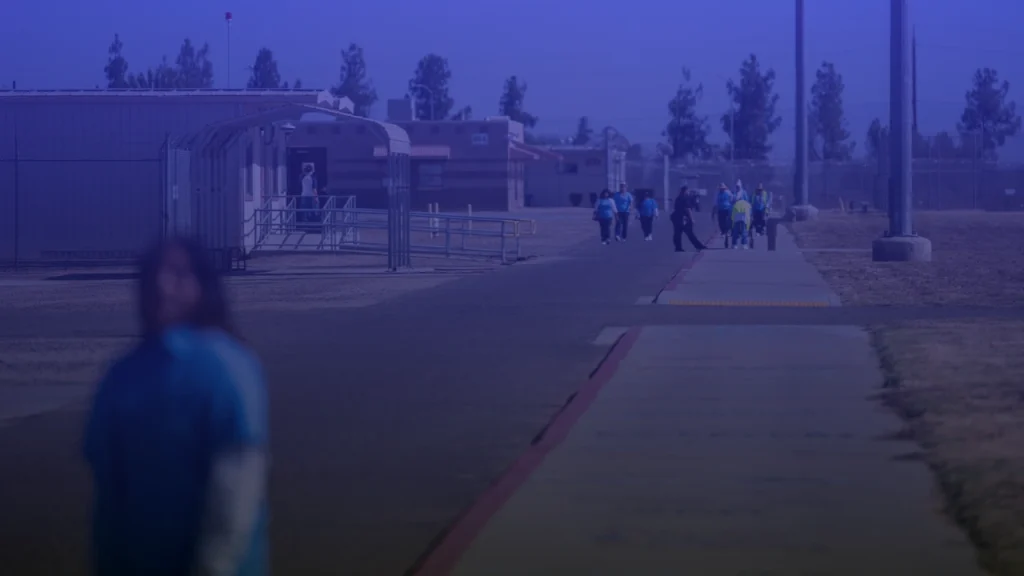
California has tentatively agreed to pay $10 million to resolve a class action over a mass use-of-force incident at the Central California Women’s Facility (CCWF) in Chowchilla. The lawsuit alleges that officers used tear gas, pepper spray and other force against incarcerated women held in a crowded dining hall during a search on August 2, 2024. The state has not admitted fault.
Quick Facts: Chowchilla Prison Settlement
| Detail | What is known |
| Settlement amount | $10 million, tentatively agreed |
| Official settlement website | None verified |
| Claim form | None available to the public; forms expected to be mailed to class members if approved |
| Defendant | State of California |
| Agency involved | California Department of Corrections and Rehabilitation (CDCR) |
| Facility | Central California Women’s Facility, Chowchilla, Madera County |
| Incident date | August 2, 2024 |
| Reported case name | Hooper v. State of California |
| Court and case number | Not verified from an accessible official docket |
| Women represented | 142 |
| Reported class allocation | $7.45 million |
| Reported attorneys’ fees | $2.5 million |
| Status | Tentative; judicial review pending |
| Review date | December 4, 2026 |
| Final payment date | Not announced |
| Admission of wrongdoing | None reported |
The published figures total $9.95 million, leaving $50,000 unexplained. The final agreement would show how the difference is treated, whether as costs, administration or another category.
What Happened at Chowchilla on August 2, 2024?
The lawsuit stems from an incident at CCWF, California’s largest women’s prison. According to allegations summarized by KQED, officers removed more than 150 women from their cells and moved them to a dining hall while they searched the housing unit. The search reportedly involved seizing possessions that did not fit in a six-cubic-foot box.
The women were allegedly kept there for hours without food, water or medication while temperatures rose. As the situation escalated, women shouted and banged on tables. Officers reportedly deployed chemical grenades and pepper spray inside the dining hall. Women were then zip-tied and moved to an outside yard, where chemical agents were allegedly used again. One woman, Christina Wind, was reported to have been beaten with batons. Others reported respiratory distress, seizures and loss of eyesight. KQED reported that 109 people were medically evaluated and three were taken to an outside medical facility.
Accounts differ on whether the force was justified. The women challenge its necessity and proportionality, while the department has described the operation as an effort to restore order. These are allegations and reporting, not findings that a court has made against every officer or the state.
Why Was Force Used? The Retaliation Allegation
The women’s broader allegations include that the operation was connected to sexual-abuse complaints against correctional officers. KQED reported a substantial rise in such complaints around the time of the incident, and some women told KQED they believed the operation was meant to frighten them into silence. That motive remains an allegation. CDCR’s internal review focused on staff conduct during the operation and, per KQED, did not determine why it was launched or whether it was tied to those complaints.
A prison may search and use reasonable force to keep order. It may not use force to retaliate against someone for making a complaint. The legal question is whether the methods, the conditions of confinement, the treatment of restrained women and the alleged failure to provide timely medical care complied with the law.
What the $10 Million Covers
The proposed agreement would resolve the class action tied to the August 2, 2024 incident. KQED reported $7.45 million for class members and $2.5 million for their attorneys. Fees of $2.5 million equal 25% of the $10 million, but the judge must approve any fee award.
No individual payment amount has been announced. Dividing $7.45 million by 142 gives only a hypothetical average, not what any woman will receive. The final agreement and approved distribution plan will show whether awards vary by injury and whether deductions apply.
Tax note: Payments for physical injuries are generally excludable from income under Section 104(a)(2) of the Internal Revenue Code, but interest or other components may be treated differently. Recipients should ask a tax professional.
Who May Qualify?
Reporting identifies 142 women represented in the class action who would receive notices if the judge approves the settlement. The exact class definition has not been verified against the agreement, so it would be premature to say every woman held at CCWF on August 2, 2024 qualifies. A settlement class is defined by the lawsuit and the court-approved agreement, not simply by having had a similar experience.
- Women in the class: You may participate under the approved terms. The official notice should explain who is included and what is required.
- Women who were injured: Injury alone does not establish class membership. Eligibility depends on the approved definition and claims procedure.
- Formerly incarcerated women: Release from prison does not by itself end eligibility. The class definition and settlement requirements control.
- Women in the separate 13-person lawsuit: That case settled for $1.9 million in March 2026 and is separate. Anyone involved should review those settlement terms before assuming she can also receive money from the $10 million fund.
The Separate $1.9 Million Settlement
Thirteen current and former incarcerated women filed a separate lawsuit over the same incident. In March 2026, KQED reported the state agreed to pay $1.9 million, with individual amounts reported between $50,000 and $200,000, and no admission of fault.
| Issue | Separate lawsuit | Class action |
| Plaintiffs | 13 women | 142 women represented |
| Reported amount | $1.9 million | Tentative $10 million |
| Status | Reported settled March 2026 | Awaiting court review |
Together the two come to $11.9 million in settlement value, if the class settlement is approved. That does not mean every woman receives money from both, or that any of it has been paid.
How to Claim, Opt Out or Object
There is no public claim form. If the judge approves the settlement, the official notice should explain how to participate.
- Watch for the official notice. If you are represented in the case, it should describe the settlement and your rights.
- Confirm you are in the class. Check the definition and any documentation required.
- Check every deadline. None has been verified. Do not rely on unofficial sites or assumed dates.
- Read the release. A class settlement can affect your right to bring related claims later.
- Keep your address current. Women who have been released or transferred should give plaintiffs’ counsel (led by attorney Mark Merin, per reporting) their current mailing address.
Objecting and requesting exclusion are different. An objection asks the court not to approve the agreement as proposed or to address a concern. Exclusion, where allowed, generally means you choose not to be bound by the class settlement. No approved notice or deadline for either has been verified, so do not assume either option exists. Do not pay any website to obtain a claim form.
Legal Issues Behind the Lawsuit
The causes of action pleaded in Hooper have not been verified from the complaint. The provisions below explain the legal issues raised by the allegations, not a confirmed list of claims.
- Eighth Amendment (cruel and unusual punishment): In Hudson v. McMillian, 503 U.S. 1 (1992), the Supreme Court said the key question in an excessive-force claim is whether force was used in good faith to maintain discipline or maliciously to cause harm.
- 42 U.S.C. § 1983: A federal civil-rights statute for people deprived of constitutional rights by someone acting under state authority. Whether it was pleaded here is unverified, and claims against a state, an agency and individual officers raise different questions about immunity and remedies.
- First Amendment retaliation: Punishing someone for a protected complaint can be unlawful. The alleged retaliatory motive has not been established as a finding.
- Prison Rape Elimination Act (34 U.S.C. § 30301 and following): A federal framework on sexual abuse in custody. It is background to the complaints, not an automatic right to damages.
- California Constitution, Article I, Section 17: Prohibits cruel or unusual punishment.
- California Civil Code § 52.1 (Bane Act): Addresses interference with rights through threats, intimidation or coercion.
- California Government Code § 845.6: Concerns a public employee’s failure to summon immediate medical care for a prisoner who needs it.
- Class settlement approval: In California Superior Court, California Rules of Court, rule 3.769 governs. In federal court, Federal Rule of Civil Procedure 23(e) applies. The court has not been verified, so confirm which applies.
What Happened to the Officers?
According to KQED, CDCR fired three officers and disciplined 31 others, ranging from reprimands to pay cuts, and several officers were reportedly still appealing. The department described the corrective action as the largest tied to a single incident in state history. Discipline is separate from the civil settlement. It does not by itself establish civil liability, and the settlement is not a criminal conviction or a finding that every officer acted unlawfully.
The Separate Federal Investigation
On September 4, 2024, the U.S. Department of Justice announced a civil-rights investigation into staff sexual abuse at two California women’s prisons, CCWF in Chowchilla and the California Institution for Women in Chino. That investigation looks at whether CDCR adequately protects incarcerated people from staff sexual abuse. It is separate from this class action and does not decide the claims in Hooper.
What Happens December 4, 2026?
A judge is scheduled to review the proposed settlement. Until the court approves it, the $10 million should not be described as finalized or guaranteed. The court may consider whether the agreement is fair, whether the distribution is appropriate, and whether class members received adequate notice. If approved, the reported plan is to mail notices and claim forms to the 142 women. No final payment date has been verified.
For other custody-related civil-rights cases, see our coverage of the Torrance jail death settlement, where the family of Juan Antonio Obeso Soto received $8.5 million and the Minnesota ICE lawsuit over racial profiling and constitutional violations.
Frequently Asked Questions
Is the $10 million Chowchilla settlement final?
No. It is tentative, with a judge scheduled to review it on December 4, 2026. No final approval order has been verified.
Who qualifies?
Reporting says 142 women represented in the class action would receive notices if it is approved. The exact class definition must be confirmed from the agreement and official notice.
Is there a claim form?
No public claim form has been verified. Forms are expected to be mailed if the judge approves.
How much will each woman receive?
Individual amounts have not been announced. The reported $7.45 million for class members will be allocated under the court-approved plan.
Why did California agree to pay?
The state tentatively agreed to resolve allegations of excessive force, inadequate medical care and retaliation from the August 2, 2024 incident. It has not admitted fault.
Were women who were already restrained sprayed?
KQED reported chemical agents were used in the dining hall and again outside after women had been zip-tied. The legal significance depends on the evidence and the law.
Is this the same as the $1.9 million settlement?
No. That settlement involved a separate lawsuit by 13 women over the same incident.
Can released women still qualify?
Possibly, if they fall within the approved class definition and meet the requirements.
Does the settlement prove California violated their rights?
No. A settlement resolves claims on agreed terms and is not necessarily an admission or a court finding.
What is the case number?
It has not been verified from an accessible official docket. The reported name is Hooper v. State of California.
Sources
- KQED, October 28, 2026, “California Agrees to Pay $10 Million in Class Action Over Women Gassed at Chowchilla Prison”: https://www.kqed.org/news/12106700/california-to-pay-10-million-to-settle-class-action-over-women-gassed-at-chowchilla-prison
- KQED, March 27, 2026, “California Agrees to $1.9 Million Settlement in Prison Use-of-Force Case”: https://www.kqed.org/news/12077737/california-agrees-to-1-9m-settlement-in-prison-use-of-force-case
- U.S. Department of Justice, September 4, 2024, civil-rights investigation announcement: https://www.justice.gov/usao-cdca/pr/justice-department-announces-civil-rights-investigation-staff-sexual-abuse-two
- CDCR, Central California Women’s Facility: https://www.cdcr.ca.gov/facility-locator/ccwf/
- U.S. Constitution, Eighth Amendment: https://constitution.congress.gov/constitution/amendment-8/
- 42 U.S.C. § 1983: https://uscode.house.gov/view.xhtml?req=granuleid:USC-prelim-title42-section1983&num=0&edition=prelim
- Prison Rape Elimination Act provisions: https://uscode.house.gov/view.xhtml?path=/prelim@title34/subtitle3/chapter303&edition=prelim
- California Civil Code § 52.1: https://leginfo.legislature.ca.gov/faces/codes_displaySection.xhtml?lawCode=CIV§ionNum=52.1
- California Government Code § 845.6: https://leginfo.legislature.ca.gov/faces/codes_displaySection.xhtml?lawCode=GOV§ionNum=845.6
- California Rules of Court, rule 3.769: https://courts.ca.gov/cms/rules/index/three/rule3_769
- Federal Rule of Civil Procedure 23: https://www.law.cornell.edu/rules/frcp/rule_23
- Hudson v. McMillian, 503 U.S. 1 (1992)
AllAboutLawyer.com is an independent legal information website, not a law firm. This article is for informational purposes only and is not legal advice.
About the Author
Israr Ahmad is a legal content researcher with 4+ years of experience covering class action settlements and consumer rights cases. He has researched and published coverage of 2,500+ settlements using verified court records, settlement administrator filings, and government sources. Learn more about Israr.