
Dolores Huerta Dies at 96, Cause of Death, Farmworker Rights Legacy and the César Chávez Controversy
Dolores Huerta’s family announced her death on October 28, 2026. The cause of death had not been disclosed in the news reports reviewed for this article.
Dolores Huerta Dies at 96: What We Know
Dolores Huerta, the American labor organizer and civil rights activist who co-founded the United Farm Workers movement, has died at age 96, according to a family announcement reported by NBC Los Angeles on October 28, 2026.
Her family asked for privacy while grieving and said it would share plans to recognize and celebrate her life and legacy. The cause of death has not been publicly confirmed, and no funeral or memorial arrangements have been independently verified. This article will be updated only when reliable sources confirm new details.
Huerta spent more than six decades advocating for farmworkers, women, immigrants and underserved communities. She organized workers, negotiated labor contracts, led consumer boycotts and campaigned for legal protections that changed how agricultural workers could organize in California. She was also known worldwide for popularizing the rallying cry “Sí, se puede,” meaning “Yes, we can.”
Her death comes months after she publicly described two sexual encounters with fellow labor leader César Chávez in the 1960s, one involving manipulation and pressure and one forced against her will. That disclosure is covered below.
Dolores Huerta: Quick Facts
| Detail | Information |
| Full name | Dolores Clara Fernández Huerta |
| Born | April 10, 1930, Dawson, New Mexico |
| Died | October 28, 2026 (age 96) |
| Cause of death | Not publicly disclosed in the reporting reviewed |
| Known for | Labor organizing, civil rights and women’s rights activism |
| Organizations | Community Service Organization (Stockton chapter), Agricultural Workers Association, National Farm Workers Association (later part of the UFW), Dolores Huerta Foundation |
| Major legal achievement | Advocacy for California’s Agricultural Labor Relations Act of 1975 |
| Famous slogan | “Sí, se puede” (“Yes, we can”) |
| Presidential Medal of Freedom | Awarded in 2012 |
| Family | Mother of 11 children, according to biographical reporting |
| Latest major public controversy | March 2026 disclosure about alleged sexual abuse by César Chávez |
Timeline of Dolores Huerta’s Life and Legal Impact
| Year | Milestone |
| 1930 | Born in Dawson, New Mexico |
| 1955 | Helped establish the Stockton chapter of the Community Service Organization, focused on voter registration and community issues |
| 1962 | Co-founded the National Farm Workers Association with César Chávez and other organizers |
| 1965 | Joined the Delano grape strike, begun by Filipino farmworkers, and helped build the national grape boycott |
| 1970 | Boycott pressure contributed to labor agreements with major grape growers |
| 1972 | Popularized “Sí, se puede” during organizing in Arizona |
| 1975 | Influential in the campaign behind California’s Agricultural Labor Relations Act |
| 1988 | Severely injured by a police baton at a San Francisco protest |
| 2012 | Received the Presidential Medal of Freedom |
| 2026 | Publicly described her experiences with César Chávez; died October 28 |
Who Was Dolores Huerta Before She Became a Civil Rights Leader?
Huerta was born in Dawson, New Mexico, on April 10, 1930. After her parents separated, she moved with her mother, Alicia Chávez, to Stockton, California, where she grew up in the Central Valley. Her mother worked in business and community affairs, while her father, Juan Fernández, worked as a miner and agricultural laborer before becoming involved in public service. Huerta later credited her upbringing and her mother’s example with shaping her commitment to community organizing.
She studied at Delta College in Stockton and earned a teaching credential. Her classroom experience was decisive: she saw children of farmworkers arriving at school hungry and without adequate clothing, and concluded that treating the effects of poverty was not enough while their parents’ working conditions stayed the same. She turned from teaching to organizing.
In 1955, Huerta helped establish a Stockton chapter of the Community Service Organization, a California Latino civil rights group working on voter registration and community issues. She later formed the Agricultural Workers Association to help farmworkers press for better conditions. These early efforts gave her experience in lobbying, public advocacy and negotiation that became central to her later influence on labor law.
Related article: Dental Intelligence $5.75M Privacy Class Action Settlement, Who Qualifies and How to Claim by January 25, 2027
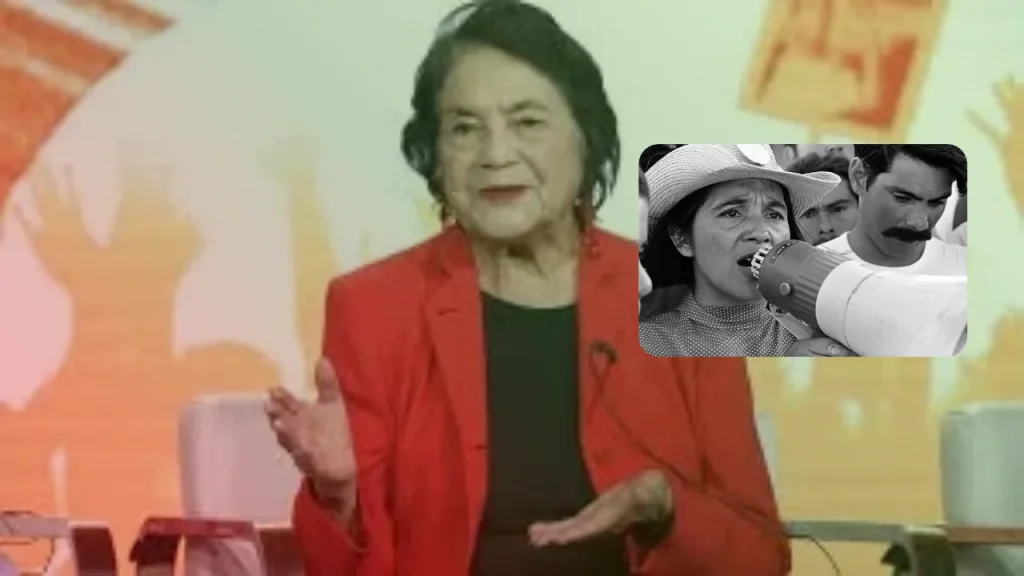
How Dolores Huerta Helped Build the United Farm Workers
In 1962, Huerta co-founded the National Farm Workers Association with César Chávez and other organizers. The organization eventually became part of the United Farm Workers (UFW).
The movement was not the work of two leaders alone. Filipino farmworkers and organizers, including Larry Itliong, Philip Vera Cruz, Pete Velasco and Andy Imutan, played essential roles. In September 1965, Filipino agricultural workers began the Delano grape strike. Huerta and the National Farm Workers Association joined the struggle, and it grew into a national and international boycott of table grapes.
Huerta became one of the movement’s leading organizers and negotiators. She worked to persuade consumers to boycott grapes, mobilize supporters nationwide and negotiate contracts aimed at improving wages and working conditions. The campaign helped produce labor agreements with major grape growers in 1970, bringing improved wages, benefits and workplace protections for participating workers.
Her role mattered because labor organizing required more than demonstrations. It also took negotiation, political lobbying, fundraising and sustained work with communities that often had limited resources and little bargaining power.
What Does “Sí, Se Puede” Mean, and Why Is Dolores Huerta Associated With It?
“Sí, se puede” translates to “Yes, we can.” Huerta used the phrase during the farmworker movement’s organizing efforts in Arizona in 1972, when organizers were discouraged by the belief that the movement could not accomplish in Arizona what it had in California. Her response became a message of determination and collective action.
The slogan eventually reached far beyond agricultural labor, becoming associated with campaigns for voting rights, immigrant rights, women’s equality and broader social change. Former President Barack Obama used the English-language phrase “Yes, We Can” as a central slogan of his 2008 campaign, and at the 2012 Presidential Medal of Freedom ceremony he praised Huerta’s work alongside Chávez in advancing rights for migrant workers and their families.
How Dolores Huerta Influenced California Labor Law
Huerta’s legacy extends beyond strikes and demonstrations. She helped build the political pressure behind legal protections for agricultural workers.
Why the California Agricultural Labor Relations Act of 1975 Mattered
The federal National Labor Relations Act of 1935 generally excluded agricultural laborers from its definition of covered employees, so farmworkers did not receive the collective-bargaining framework that applied to many other private-sector workers. California responded by enacting the Agricultural Labor Relations Act (ALRA) in 1975.
The law established a framework under which agricultural employees can decide through a secret-ballot election whether to be represented by a union, and negotiate with employers over wages, hours and working conditions. The California Agricultural Labor Relations Board (ALRB) administers the law and handles matters involving organizing rights and unfair labor practices.
Huerta was influential in the campaign supporting the law, although its enactment resulted from the work of many farmworkers, organizers, union members and policymakers.
What California Farmworkers Can Still Learn From Huerta’s Work
Under the ALRA, California agricultural employees may choose union representation and take part in protected group activity, such as acting together to ask employers to improve wages or conditions. This applies whether or not workers already belong to a union. The ALRB states that a worker’s immigration status does not determine whether the ALRA applies.
Workers who believe an employer is interfering with these rights can contact the ALRB about their options. The law does not guarantee that every workplace dispute will be resolved in the worker’s favor; the facts, applicable protections and procedures still matter. Questions about labor conditions and corporate responsibility also continue in modern litigation, such as the forced labor class action filed by Brazilian coffee workers against Starbucks, which is unrelated to Huerta or the UFW.
Dolores Huerta’s 1988 Police Beating and Civil Rights Lawsuit
According to the Dolores Huerta Foundation’s biographical account, Huerta was severely injured in 1988 while protesting the policies of then-presidential candidate George H.W. Bush in San Francisco. A San Francisco police officer struck her with a baton, breaking four ribs and rupturing her spleen, and she underwent emergency surgery. The foundation says a lawsuit against the San Francisco Police Department resulted in changes to its crowd-control tactics. A specific case number and judgment were not independently verified for this article.
The episode illustrates a core civil rights question: the line between lawful crowd control and excessive force against people exercising their rights. The First Amendment protects peaceful speech and assembly, while the Fourth Amendment governs many claims of unreasonable force by police. Which provision applies depends on the circumstances. Readers following similar disputes can see our coverage of the Minnesota lawsuit over federal agents and alleged constitutional violations and the $8.5 million Torrance jail death settlement. Those matters are separate from Huerta’s history.
Dolores Huerta’s Presidential Medal of Freedom and Other Honors
In 1993, Huerta became the first Latina inducted into the National Women’s Hall of Fame. In 1998, President Bill Clinton awarded her the Eleanor Roosevelt Human Rights Award. In 2012, President Obama presented her with the Presidential Medal of Freedom, the highest civilian honor in the United States. The following year she was inducted into the California Hall of Fame.
California also recognizes April 10 as Dolores Huerta Day. In 2026, Governor Gavin Newsom issued a proclamation marking her 96th birthday and highlighting her contributions to farmworkers, civil rights and community organizing.
Why Did Dolores Huerta Speak Out About César Chávez in 2026?
In March 2026, Huerta publicly described sexual encounters with César Chávez during the 1960s. Her statement followed a New York Times investigation into sexual misconduct allegations against Chávez, who died in 1993. She said she had kept the experiences private for approximately 60 years because she feared that speaking publicly would harm the farmworker movement she had dedicated her life to building.
In her March 18 statement, she described two encounters. She said the first involved manipulation and pressure, leaving her feeling unable to refuse because Chávez was her boss and a leader she admired. She described the second as forced against her will. She also disclosed that both encounters resulted in pregnancies, which she kept private for decades.
Her decision prompted renewed examination of leadership, power and abuse within the farmworker movement, and raised difficult questions for people who had long regarded Chávez as a civil rights icon. Recognizing the movement’s labor achievements does not require dismissing the allegations; likewise, the allegations do not erase the organizing work of Huerta, Larry Itliong and thousands of farmworkers.
Because Chávez died in 1993, the claims were never adjudicated in a criminal trial. Huerta’s statement should be understood as her account of her own experiences, alongside allegations reported by other women and the investigation that brought renewed attention to the issue. The Dolores Huerta Foundation publicly supported her after she spoke out, describing her willingness to share a painful experience as an act of courage.
What Happens to the Dolores Huerta Foundation After Her Death?
Huerta established the Dolores Huerta Foundation to continue community organizing and leadership development, particularly in California’s Central Valley. It works on civic engagement, youth leadership and community-led efforts to address local and statewide issues, reflecting her belief that lasting change requires communities to develop their own leaders.
The reporting reviewed for this article does not establish a new leadership appointment or any change to the foundation’s governance. Readers seeking information about memorials or ways to support the foundation should consult its official website.
Frequently Asked Questions About Dolores Huerta’s Death
What was Dolores Huerta’s cause of death?
It had not been disclosed in the news reports reviewed as of October 28, 2026. Her family confirmed her death at age 96 and requested privacy.
How old was Dolores Huerta when she died?
She was 96. She was born April 10, 1930, and died October 28, 2026.
Was Dolores Huerta a lawyer?
No. She was a labor organizer, civil rights activist and community leader, not a practicing attorney. Her influence on law came through organizing, lobbying, negotiation and advocacy.
What did Dolores Huerta accomplish for farmworkers?
She co-founded the National Farm Workers Association, helped organize the farmworker movement, led grape boycott campaigns, negotiated labor contracts and advocated for California’s Agricultural Labor Relations Act of 1975.
What was Dolores Huerta’s role in the Agricultural Labor Relations Act?
She helped build support for the 1975 California law establishing collective-bargaining rights and protections for agricultural workers. The law resulted from broader farmworker organizing and legislative action, not one person alone.
Did Dolores Huerta invent “Sí, se puede”?
She popularized the phrase during a 1972 organizing campaign in Arizona, and it became a rallying cry for civil rights and labor movements worldwide.
What did Dolores Huerta say about César Chávez?
In March 2026, she said she experienced two sexual encounters with Chávez in the 1960s, one involving manipulation and pressure and another she described as forced against her will. She said she kept this private for decades out of fear of damaging the movement.
Did Dolores Huerta sue the San Francisco Police Department?
The Dolores Huerta Foundation’s account says she was injured by a police baton at a 1988 protest and that a lawsuit led to changes in the department’s crowd-control tactics. A case number and judgment were not independently verified.
Will there be a Dolores Huerta memorial service?
Her family said it would share plans to honor her life. No date or location was confirmed as of publication. Monitor announcements from her family and the Dolores Huerta Foundation.
Sources and Verification Notes
- NBC Los Angeles, October 28, 2026: California Civil Rights Leader Dolores Huerta Dies at 96. Reports the family announcement and that the cause of death was not immediately available.
- The New York Times, October 28, 2026: Dolores Huerta, Labor Leader and Force for Civil Rights, Has Died.
- Dolores Huerta Foundation: Official biographical FAQ.
- Office of the Governor of California, April 10, 2026: Dolores Huerta Day proclamation.
- The White House, April 26, 2012: Presidential Medal of Freedom recipients.
- California Agricultural Labor Relations Board: About the board and the ALRA and farmworker rights.
- Dolores Huerta, March 18, 2026: Statement about César Chávez.
- Reuters, March 18, 2026: Civil rights leader Dolores Huerta accuses César Chávez of sexual assault.
- Dolores Huerta Foundation: Statement supporting Huerta after her disclosure.
This article is for informational purposes only and does not constitute legal advice or create an attorney-client relationship. AllAboutLawyer.com is a legal information website, not a law firm.
About the Author
Israr Ahmad is a legal content researcher with 4+ years of experience covering class action settlements and consumer rights cases. He has researched and published coverage of 2,500+ settlements using verified court records, settlement administrator filings, and government sources. Learn more about Israr.