
Little Giant Ladder Recall 2026, 3.66 Million Ladders Recalled Over Rapid Lock Failures. Refund, Eligibility and Your Legal Rights
Millions of Little Giant ladder owners across the United States are being told to stop using certain ladders. About 3,662,000 ladders are recalled because the Rapid Lock mechanisms can fail to engage fully, allowing the ladder to retract suddenly while someone is climbing.
The U.S. Consumer Product Safety Commission (CPSC) announced the recall on November 5, 2026, together with Little Giant Ladder Systems, LLC of Springville, Utah. The company has received 25 reports of ladders retracting unexpectedly. Nineteen involved injuries, including traumatic brain injury, skull fracture, concussion, vision loss, hearing loss, cognitive impairment, bone or joint fractures, lacerations and bruising.
The recall covers 11 Little Giant models sold at Lowe’s, Costco, Amazon, LittleGiantLadders.com and other retailers from December 2015 through October 2026, at prices of roughly $100 to $1,000.
The remedy is not a simple cash refund. The company first provides a free repair kit with added warning labels and instructions. A replacement ladder or a depreciation-based refund is offered only if a lock still malfunctions after the prescribed lubrication and a company evaluation.
This guide explains what the recall covers, how to check your ladder, what Little Giant is offering, and which federal and state laws may apply to people who were injured.
Little Giant Ladder Recall: Quick Facts
| Detail | Information |
| Company | Little Giant Ladder Systems, LLC (Springville, Utah) |
| Product | Little Giant ladders equipped with Rapid Locks |
| Recall announced | November 5, 2026 |
| CPSC recall number | 27-067 |
| Units affected | Approximately 3,662,000 |
| Affected models | 11 model lines |
| Main hazard | Sudden ladder retraction causing falls |
| Reported retractions | 25 |
| Reported injuries | 19 (3 head injury reports, 16 other injuries) |
| Other lock malfunction reports | 39 |
| Sales period | December 2015 to October 2026 |
| Price range | Approx. $100 to $1,000 |
| Where sold | Lowe’s, Costco, Amazon, LittleGiantLadders.com, other retailers |
| Manufactured in | United States, China, Mexico and Malaysia |
| Remedy | Free repair kit, evaluation, then conditional replacement or refund |
| Consumer phone | (866) 201-9069 |
| Phone hours | 8 a.m. to 5 p.m. Eastern Time, Monday to Friday |
| Settlement | None identified |
| Class action | No publicly reported class action tied to this recall identified as of November 9, 2026 |
Why Were 3.66 Million Little Giant Ladders Recalled?
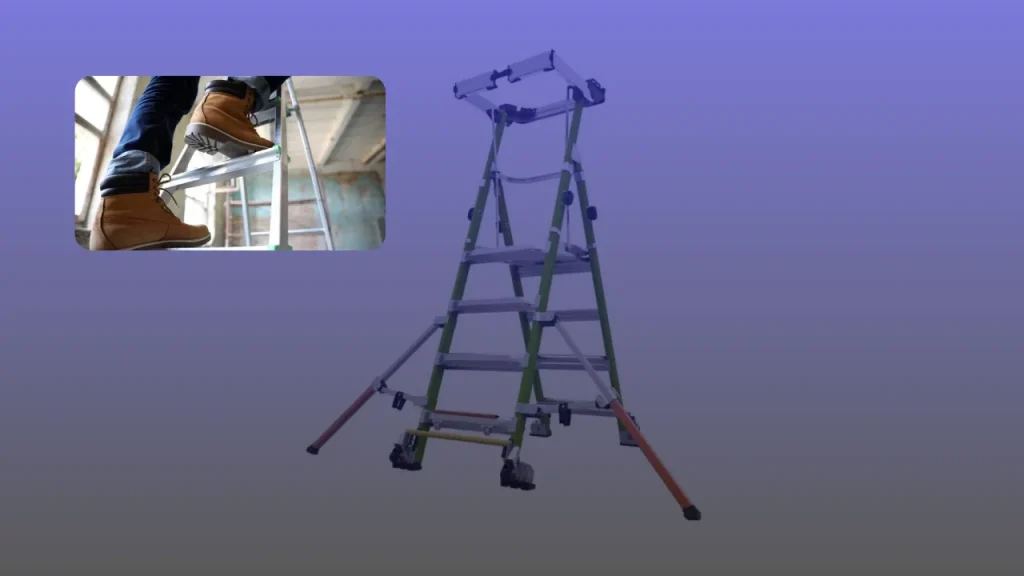
The recall concerns a component called the Rapid Lock. Rapid Locks are black or orange locking mechanisms on each ladder leg. They fit into the ladder’s rungs and let the user adjust the ladder’s height or configuration.
According to the CPSC, a Rapid Lock may not become fully engaged. If it does not, the ladder can suddenly retract or collapse while supporting a person’s weight, causing a fall from height.
The recall does not say that every affected ladder will fail or that every lock is currently defective. It says the mechanism can fail to engage properly, and that risk is serious enough that owners should stop using the ladder until they follow the recall instructions.
Which Little Giant Ladder Models Are Recalled?
The recall covers these 11 models equipped with Rapid Locks:
| Recalled model | Included? |
| Adjustable Fortress 2.0 | Yes, subject to QC sticker condition |
| Conquest 2.0 | Yes, subject to QC sticker condition |
| Dark Horse 2.0 | Yes, subject to QC sticker condition |
| Epic | Yes, subject to QC sticker condition |
| King Kombo XT | Yes, subject to QC sticker condition |
| Leveler | Yes, subject to QC sticker condition |
| MegaLite | Yes, subject to QC sticker condition |
| MegaLite+ | Yes, subject to QC sticker condition |
| Multi | Yes, subject to QC sticker condition |
| Quantum | Yes, subject to QC sticker condition |
| Vector | Yes, subject to QC sticker condition |
Not every ladder with one of these names is recalled. Only ladders without an orange rectangular “QC” sticker on the rail above one of the Rapid Locks are included.
How to Check Whether Your Ladder Is Recalled
- Find the model name. The Little Giant brand and model name are printed on the side of the ladder. Compare it with the 11 models above.
- Identify the Rapid Locks. Look at the ladder legs for the black or orange locking mechanisms that fit into the rungs.
- Check for the orange QC sticker. Look at the rail above one of the Rapid Locks. If there is an orange rectangular sticker marked “QC,” the CPSC says the ladder is not part of this recall.
Do not confuse the orange Rapid Lock itself with the separate orange QC sticker. Compare your ladder with the photos in the official notice: CPSC Little Giant Recall Notice and Product Photos.
If you are unsure, treat the ladder as potentially affected and contact Little Giant before using it.
How Many People Were Injured?
Little Giant reported 25 incidents of ladders retracting unexpectedly. Nineteen involved injuries.
Head injury reports (3): traumatic brain injury, skull fracture, concussion, vision loss, hearing loss and cognitive impairment.
Other injury reports (16): joint or bone fractures, lacerations and bruising.
The company also received 39 separate reports of Rapid Locks not working properly. These should not be added to the 25 retraction reports as though they were 64 injuries. These figures are reports received by the company, not court findings or independently verified conclusions that a legal defect caused each injury.
Where Were the Recalled Ladders Sold?
The CPSC lists these sellers:
- Lowe’s (stores and Lowes.com)
- Costco (stores and Costco.com)
- Amazon.com
- LittleGiantLadders.com
- Other retail stores and websites
Sales ran from December 2015 through October 2026, so many households and professionals may own an affected ladder bought years ago. This is a nationwide U.S. recall.
What Should Little Giant Ladder Owners Do Now?
Step 1: Stop using the ladder. Do not climb an affected ladder while checking its status or waiting for the repair kit.
Step 2: Review the official recall information. Visit Little Giant’s recall page or scan the QR code that may appear on the ladder.
Step 3: Request the free repair kit. Call (866) 201-9069 (8 a.m. to 5 p.m. Eastern Time, Monday to Friday) or use the recall website. The kit contains additional warning labels and instructions.
Step 4: Follow the safety instructions. Visually verify that every Rapid Lock is fully engaged before each climb, and lubricate the locks as the manufacturer specifies. Use only the maintenance procedure and lubricant named in the instructions.
Step 5: Request an evaluation if a lock still malfunctions. If a Rapid Lock does not work correctly after following the instructions and lubricating it, contact Little Giant. Do not return to using a ladder with a malfunctioning lock.
Does Little Giant Offer a Full Refund or Replacement?
Not automatically. The remedy has stages:
- Free repair kit with warning labels and instructions.
- Lock verification and lubrication by the owner.
- Company evaluation if a lock still malfunctions.
- If the lock still fails after evaluation, the company offers either a replacement ladder of the same or equivalent model, or a refund.
The refund is based on the ladder’s depreciated value according to the purchase date. Ladders bought within the previous 12 months may receive up to the full purchase price. The recall notice does not publish a fixed refund percentage, and there is no universal $100, $500 or other flat payment for every owner. Ask Little Giant to explain how it calculated the value of your ladder, and keep your receipt, order confirmation or proof of purchase.
Can You Sue Little Giant Over a Recalled Ladder?
Potentially, yes. A recall and a personal injury claim are separate things. The recall is a safety remedy. A product-liability lawsuit may allow an injured person to seek additional compensation if the legal requirements are met under the law of the state where the events occurred.
The recall does not by itself prove legal responsibility. Under 16 C.F.R. Part 1115, reporting a potential hazard to the CPSC or agreeing to a corrective action is not treated as an admission that a product is defective. An injured person must still prove the elements of a claim.
State Law Claims That May Apply
1. Strict product liability
Most states allow claims against manufacturers and sellers in the chain of distribution when a defective product causes injury. The framework comes from Restatement (Second) of Torts § 402A and, in many states, Restatement (Third) of Torts: Products Liability § 2. The three common categories are:
- Manufacturing defect: the ladder departed from its intended design, for example a lock that does not engage because of how it was made.
- Design defect: a reasonable alternative design could have reduced the foreseeable risk, and omitting it made the product unreasonably unsafe.
- Failure to warn or instruct: inadequate warnings or instructions about the risk, including how to verify lock engagement.
Elements generally include a defect, causation and damages. Rules vary widely by state, including which defect theories are recognized and how they are tested.
2. Negligence
A claimant may investigate whether a responsible party failed to use reasonable care in design, testing, quality control, inspection, warnings or post-sale conduct. These are possible theories, not findings that Little Giant acted negligently.
3. Breach of warranty (UCC Article 2)
- Express warranty, UCC § 2-313: statements, descriptions or samples that become part of the basis of the bargain.
- Implied warranty of merchantability, UCC § 2-314: goods must be fit for the ordinary purposes for which they are used.
- Implied warranty of fitness for a particular purpose, UCC § 2-315: where the seller knows the buyer’s particular purpose and the buyer relies on the seller’s judgment.
States adopt and modify the UCC, so details differ. Many states require the buyer to notify the seller of a breach within a reasonable time (UCC § 2-607(3)(a)). Warranty disclaimers and remedy limitations (UCC §§ 2-316 and 2-719) may also be raised, though limitations of consequential damages for personal injury from consumer goods are generally treated as unconscionable under UCC § 2-719(3).
4. Magnuson-Moss Warranty Act, 15 U.S.C. § 2301 et seq.
This federal statute governs written warranties on consumer products and allows suits for breach of written or implied warranties in some circumstances. It has its own procedural requirements, including an opportunity for the warrantor to cure, and it generally defers to state law on personal injury damages.
5. State consumer protection statutes
Depending on the state, remedies may exist for deceptive or unfair practices or failure to disclose material product information. A recall does not automatically establish a violation.
6. Wrongful death and survival claims
If a fall caused a death, state wrongful death and survival statutes may allow certain family members or the estate to bring claims, subject to strict deadlines.
Federal Laws That Govern the Recall
Consumer Product Safety Act (CPSA), 15 U.S.C. § 2051 et seq. The CPSA created the CPSC and gives it authority to address unreasonable risks of injury from consumer products.
15 U.S.C. § 2064 (CPSA § 15): Substantial product hazards Section 2064(b) requires manufacturers, distributors and retailers to report immediately to the CPSC when they obtain information reasonably supporting the conclusion that a product contains a defect that could create a substantial product hazard or creates an unreasonable risk of serious injury or death. CPSC regulations at 16 C.F.R. Part 1115 treat “immediately” as within 24 hours of obtaining reportable information. Sections 2064(c) and (d) allow the CPSC to require notification, repair, replacement or refund after the required procedures.
15 U.S.C. § 2068: Prohibited acts Among other things, section 2068(a)(2)(B) makes it unlawful to sell, offer for sale, manufacture, distribute or import a product that is subject to a voluntary corrective action taken in consultation with the CPSC and publicly announced by the CPSC. In practical terms, retailers and resellers should not continue selling recalled ladders. Section 2068(a)(4) also addresses failure to furnish required information or reports under section 2064(b).
15 U.S.C. § 2069: Civil penalties Companies that knowingly violate the CPSA, including by failing to report on time, can face civil penalties. The maximum amounts are adjusted periodically for inflation.
15 U.S.C. § 2070: Criminal penalties Knowing and willful violations of section 2068 can carry criminal penalties.
15 U.S.C. § 2072: Suits for damages Section 2072(a) provides a limited federal damages action for a person injured by a knowing (including presumed knowledge) violation of a consumer product safety rule or another rule or order issued by the CPSC. The amount in controversy generally must exceed $10,000. It is not a blanket federal right to sue after any recall. Section 2072(c) preserves state-law remedies, so common-law and statutory claims under state law remain available.
15 U.S.C. § 2055a: SaferProducts.gov database This provision, added by the Consumer Product Safety Improvement Act of 2008 (CPSIA), created the public product safety database where consumers can report harm or risk.
Occupational safety rules, where applicable For ladders used at work, OSHA ladder standards such as 29 C.F.R. § 1926.1053 (construction) and 29 C.F.R. § 1910.23 (general industry) address ladder use and condition. A worker injured on the job may also have a workers’ compensation claim, which is typically the exclusive remedy against the employer. In many states the worker can still pursue a separate third-party product liability claim against the manufacturer.
What Compensation Could Be Available?
If a claim succeeds, legally recoverable damages may include:
- Past and future medical expenses
- Lost wages and loss of earning capacity
- Pain and suffering
- Permanent impairment or disfigurement
- Loss of enjoyment of life
- Loss of consortium (for spouses, in some states)
- Punitive damages in limited cases, where state law allows and the standard (often malice, fraud or conscious disregard of safety) is met
Many states apply comparative fault rules, so misuse, failure to follow instructions or continued use after learning of a recall can be raised as defenses. Caps on certain damages exist in some states. Outcomes depend on evidence and local law.
Filing Deadlines: Statutes of Limitation and Repose
Every state sets deadlines. Personal injury and product liability limitation periods are commonly one to six years, often two to three. Many states also have statutes of repose that bar product claims a set number of years after sale or manufacture, regardless of when the injury occurred. Some states apply a discovery rule. Because Little Giant is based in Utah, Utah law may be relevant in some cases, but the governing law usually depends on where the injury and purchase occurred and where suit is filed. Waiting for a recall evaluation does not pause a legal deadline. Confirm the deadline with a licensed attorney in your state promptly.
Is There a Little Giant Ladder Class Action Lawsuit?
As of November 9, 2026, no publicly reported class action specifically arising from the November 5, 2026 Rapid Locks recall was identified. The CPSC announcement names no settlement administrator, court case number or claims process.
| Consumer option | Current position |
| Manufacturer recall remedy | Available through Little Giant under the announced conditions |
| Individual injury lawsuit | May be possible for a person with a qualifying injury and legal claim |
| Class action settlement | None identified for this recall |
Class actions require a filed case and, where applicable, certification under Federal Rule of Civil Procedure 23. A nationwide class action filed in federal court may rely on the Class Action Fairness Act, 28 U.S.C. § 1332(d), which generally requires at least $5 million in controversy and minimal diversity. If many similar federal cases are filed in different districts, they may be consolidated for pretrial proceedings under 28 U.S.C. § 1407 (multidistrict litigation).
Product-defect class actions often face contested issues such as whether the injury or economic loss is common across the class. No consumer should assume a lawsuit has been filed or that a payout is guaranteed. If a case is filed, we will update this page.
Related product-safety coverage on AllAboutLawyer.com (separate matters, not connected to the Little Giant recall):
- Bodum French Press Recall: 5.9M Units, Models, Your Rights
- Target Up&Up Baby Wipes Recall Lawsuit, Were You Affected? Finek et al. v. Target Corporation, No. 1:26-cv-06966
- Thermos Food Jar Stopper Defect Lawsuit, Were You Affected? Case Numbers Pending Verification
What If a Little Giant Ladder Already Injured You?
The recall’s replacement or refund process should not be assumed to resolve every possible legal claim. Practical steps:
- Get appropriate medical treatment and keep all records and bills.
- Photograph the ladder, locks, model information, QC sticker area and the scene.
- Keep receipts, order confirmations, warranty papers and maintenance records.
- Preserve the ladder and any failed lock parts. Do not repair, alter, lubricate or discard them without legal guidance, because they may be critical evidence.
- Write down how the ladder was positioned, what happened just before the fall, and who witnessed it.
- Report the incident to Little Giant and file a report at SaferProducts.gov.
- Be careful before signing any release or settlement paper from a company or insurer. Releases may waive legal rights.
- Consult a product-liability attorney in the state where the injury occurred. Many handle these cases on a contingency-fee basis.
An attorney can investigate the lock mechanism, manufacturing and quality records, prior incident reports and applicable state law.
Why Does the Recall Say 2027 When It Was Announced in 2026?
The CPSC listing uses a URL containing /Recalls/2027/ and recall number 27-067, but the announcement date is November 5, 2026. The CPSC numbers recalls by federal fiscal year. The federal fiscal year begins October 1 and ends September 30 (31 U.S.C. § 1102), so November 2026 falls in fiscal year 2027. The recall was not announced in 2027.
Is This the First Little Giant Ladder Recall?
No. The CPSC announced an earlier, separate Little Giant ladder recall on March 23, 2017, involving different models and locking-pin issues. Do not confuse the 2017 recall with the 2026 Rapid Locks recall. Check each notice for its own models and remedy.
Frequently Asked Questions
Which Little Giant ladders are recalled in 2026?
Adjustable Fortress 2.0, Conquest 2.0, Dark Horse 2.0, Epic, King Kombo XT, Leveler, MegaLite, MegaLite+, Multi, Quantum and Vector ladders equipped with Rapid Locks and without the orange rectangular QC sticker on the rail above one of the locks.
How many Little Giant ladders are affected?
Approximately 3,662,000 ladders.
What is wrong with Little Giant Rapid Locks?
The locks may not fully engage, which can cause the ladder to retract suddenly and create a fall hazard.
Were Little Giant ladders sold at Lowe’s and Costco recalled?
Yes, if they are one of the 11 models and lack the QC sticker. They were sold at Lowe’s, Costco, Amazon, LittleGiantLadders.com and other retailers.
What does the Little Giant ladder QC sticker mean for the recall?
The CPSC says ladders with an orange rectangular “QC” sticker on the rail above one of the Rapid Locks are not included in this recall.
Does Little Giant offer free repairs?
The company provides a free repair kit with warning labels and instructions, and an evaluation process for locks that keep malfunctioning after lubrication.
Can I get a full refund for my Little Giant ladder?
Not automatically. A replacement or depreciation-based refund is offered only if a lock still fails after the prescribed steps and company evaluation. Ladders purchased within the previous 12 months may receive up to the full purchase price.
Can I get compensation if I fell from a Little Giant ladder?
Potentially. Depending on the evidence and state law, you may have a product-liability, negligence or warranty claim. The recall itself does not guarantee compensation.
Is there a Little Giant ladder class action settlement?
None specific to the November 2026 recall was identified as of November 9, 2026.
Can I keep using the ladder while waiting for the repair kit?
No. The CPSC and manufacturer say to stop using an affected ladder until you have reviewed and followed the recall instructions.
Can retailers still sell recalled ladders?
Under 15 U.S.C. § 2068(a)(2)(B), selling a product subject to a publicly announced voluntary corrective action in consultation with the CPSC is prohibited. Do not buy a recalled ladder from a reseller or marketplace listing.
Where can I report a Little Giant ladder problem?
Contact Little Giant at (866) 201-9069 (8 a.m. to 5 p.m. Eastern Time, Monday to Friday), or submit a report at SaferProducts.gov. You can also contact the CPSC hotline at (800) 638-2772.
How long do I have to file a claim?
It depends on your state’s statute of limitations and statute of repose. Do not wait for the recall process to finish before speaking with an attorney.
The Bottom Line
The November 2026 Little Giant recall affects about 3.66 million ladders with Rapid Locks. The central risk is that a lock may fail to engage and the ladder may retract during use. Little Giant has received 25 retraction reports, including 19 injury reports involving serious head injuries, fractures and lacerations.
Owners should identify their model, check for the orange QC sticker, stop using any affected ladder, and follow the manufacturer’s recall steps. A replacement or refund is conditional, not automatic.
People who have already been hurt should treat the recall remedy and a possible injury claim as separate matters. Depending on the facts, state product-liability, negligence and warranty law may offer additional options, and filing deadlines may be running.
Check your ladder before you climb it again. A ladder that looks stable is not necessarily safe if its locks cannot be trusted.
Sources and Legal References
- U.S. Consumer Product Safety Commission: Little Giant Ladder Recall, November 5, 2026, Recall No. 27-067
- Little Giant Ladder Systems: Official Recall Notices
- 15 U.S.C. § 2064: Substantial product hazards
- 15 U.S.C. § 2068: Prohibited acts
- 15 U.S.C. § 2072: Suits for damages
- 31 U.S.C. § 1102: Federal fiscal year
- CPSC: Earlier Little Giant Ladder Recall, March 23, 2017
- 15 U.S.C. §§ 2051, 2055a, 2069, 2070 (Consumer Product Safety Act); 15 U.S.C. § 2301 et seq. (Magnuson-Moss Warranty Act); 16 C.F.R. Part 1115 (CPSC reporting regulations)
- UCC §§ 2-313, 2-314, 2-315, 2-316, 2-607, 2-719 (as adopted by individual states); Restatement (Second) of Torts § 402A; Restatement (Third) of Torts: Products Liability § 2
- Fed. R. Civ. P. 23; 28 U.S.C. §§ 1332(d), 1407; 29 C.F.R. §§ 1910.23, 1926.1053
Author: Researched and written by Israr Ahmad, Legal Content Researcher at AllAboutLawyer.com, using official CPSC recall records, manufacturer announcements and federal statutory materials.
Last updated: November 9, 2026
Disclaimer: This article provides general legal and consumer safety information, not legal advice, and does not create an attorney-client relationship. AllAboutLawyer.com is an independent legal information website, not a law firm. Recall eligibility, compensation and legal claims depend on individual facts and the law of your state. Statutes, deadlines and recall terms can change, so confirm current details with the CPSC, Little Giant and a licensed attorney.
About the Author
Israr Ahmad is a legal content researcher with 4+ years of experience covering class action settlements and consumer rights cases. He has researched and published coverage of 2,500+ settlements using verified court records, settlement administrator filings, and government sources. Learn more about Israr.