
Los Angeles County Men’s Central Jail $1.5 Million Mass Strip Search Settlement, Who Qualifies and How to Claim at Least $5,000
If you were housed in Unit 2500 or Unit 2700 at Men’s Central Jail on September 7, 2021, and were subjected to the mass search that included a visual body cavity inspection, you may qualify. You must submit a claim form by March 2, 2027. Current custody status does not matter.
Los Angeles County Men’s Central Jail Settlement: Quick Facts
| Settlement detail | Information |
| Official settlement website | https://lacountymcjmasssearchsettlement.com/ |
| Online claim form | https://lacountymcjmasssearchsettlement.com/form/claim/ |
| Settlement amount | $1,500,000 (non-reversionary fund) |
| Defendant | County of Los Angeles |
| Facility | Men’s Central Jail (MCJ) |
| Incident date | September 7, 2021 |
| Affected housing units | Units 2500 and 2700 |
| Lawsuit | Sammy Newman, et al. v. County of Los Angeles, et al. |
| Case number | 2:22-cv-03467-CAS (PDx) |
| Court | U.S. District Court, Central District of California |
| Judge | Christina A. Snyder |
| Related lawsuit | Edward Malloy v. County of Los Angeles, Case No. 2:22-cv-04836 |
| Main allegations | Unconstitutional mass strip search and visual body cavity inspections |
| Estimated class size | Approximately 182 to 224 people |
| Minimum payment | At least $5,000 per timely, valid claimant (per official settlement materials) |
| Payment method | Equal pro rata share of the net settlement fund |
| Claim form required | Yes, payment is not automatic |
| Online claim credentials | Login ID and PIN from the settlement notice |
| Claim, opt-out and objection deadline | March 2, 2027 |
| Final approval hearing | April 26, 2027, at 10:00 a.m. Pacific Time |
| Preliminary approval | Granted September 25, 2026 |
| Settlement administrator | Simpluris |
| Administrator phone | (833) 232-9120 |
| Administrator email | [email protected] |
| Current status | Preliminary approval granted; final approval pending |
What Is the Los Angeles County Men’s Central Jail $1.5 Million Settlement About?
The settlement resolves a federal class action alleging that Los Angeles County Sheriff’s Department personnel subjected incarcerated men to an unconstitutional mass strip search during a jail lockdown on September 7, 2021.
The case focuses on people housed in Units 2500 and 2700. According to the allegations, deputies required incarcerated men to remove their clothing and undergo visual body cavity inspections. Some men allegedly remained naked, were restrained, and were escorted through jail corridors to body-scanning machines. The allegations also included orders to squat and cough during inspections.
The plaintiffs argue that the manner, scope and duration of the searches went beyond what was needed to address a legitimate security concern and violated their constitutional rights.
Los Angeles County and the named Sheriff’s Department officials deny any wrongdoing. The parties agreed to settle to avoid the cost, risk and uncertainty of continued litigation. The Court has not ruled on the merits of the allegations.
Under the agreement, the County will pay $1.5 million into a non-reversionary settlement fund, which means no money returns to the County. Class members who submit timely and valid claims receive equal shares of the net fund after approved deductions. The official settlement materials state that payments will be at least $5,000.
The settlement is not final. The judge must grant final approval before any payments are distributed.
What Happened at Men’s Central Jail on September 7, 2021?
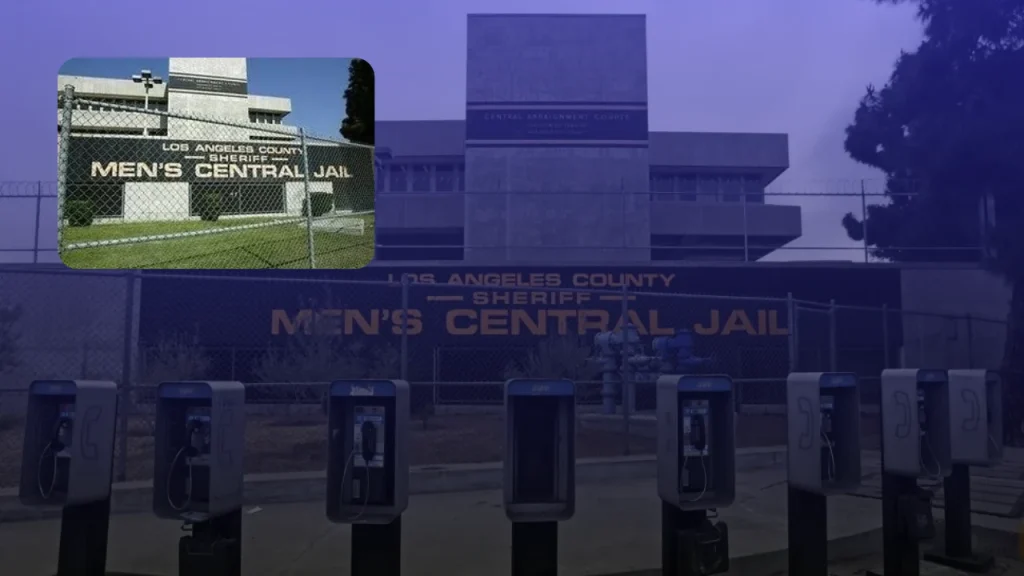
On September 7, 2021, Sheriff’s Department personnel conducted a mass search of inmates housed in Units 2500 and 2700 of Men’s Central Jail in downtown Los Angeles. According to the complaint, the search followed reports that an inmate had smuggled a firearm into the facility.
Contemporaneous news reporting described the lawsuit’s claims that inmates were ordered out of their cells and required to remove their clothing, and that armed deputies were present during the searches. After the inspections, some inmates allegedly had their hands restrained with zip ties and were moved in groups through hallways to body-scanning machines while naked or only partly clothed. Some were allegedly not given their clothing back for hours.
What Triggered the Lockdown?
News reports from the time indicated the lockdown followed a report of a man with a gun inside the facility. It was reported to be unclear whether a weapon was ever found, and the Sheriff’s Department did not explain the circumstances in response to press questions at that time.
This matters because the dispute is not whether jail officials may conduct security searches. It is whether the manner, scope and duration of these searches were justified by the security situation.
What Do the Allegations Include?
- Deputies ordered men to remove their clothing.
- Groups of inmates underwent visual body cavity inspections.
- Some individuals were ordered to squat and cough.
- Inmates were restrained with zip ties.
- Men were escorted through hallways to additional body scans.
- Some individuals allegedly remained naked for hours.
- Some inmates were allegedly exposed to officers who had no direct role in the searches.
These are allegations from the litigation and news coverage, not findings of fact by a court.
Related article: Lowe Engineers Data Breach Settlement, $50 Cash or Up to $5,500 in Documented Losses, Plus Two Years of Credit Monitoring
Who Filed the Lawsuit and When?
The class action is titled Sammy Newman, et al. v. County of Los Angeles, et al., Case No. 2:22-cv-03467-CAS (PDx), pending in the U.S. District Court for the Central District of California.
The original class complaint was filed in May 2022 by Sammy Newman and Antonio Rincon on behalf of themselves and similarly situated incarcerated individuals. A related case, Edward Malloy v. County of Los Angeles, et al., Case No. 2:22-cv-04836, followed in July 2022.
The two cases should not be confused. The official settlement website administers the Newman class action. County Claims Board records describe the proposed $1.5 million resolution as covering both the Newman class action and Malloy’s separate, non-class lawsuit. See the section on the Malloy case below for why this matters to your expected payment.
Which Laws Apply? The Legal Framework Behind the Case
This is a federal civil rights case. The federal docket identifies 42 U.S.C. § 1983 as the cause of action and classifies the matter as a prisoner civil rights lawsuit.
1. 42 U.S.C. § 1983 (Federal Civil Rights Act)
Section 1983 lets individuals sue state or local officials and government entities when they deprive someone of a federal constitutional or statutory right while acting under color of state law. It does not create rights itself. It is the mechanism for enforcing rights found elsewhere, such as in the Constitution.
A § 1983 claim generally requires that:
- The defendant acted under color of state law;
- The defendant caused the deprivation of a federal right; and
- The deprivation caused legally recognizable harm.
2. Monell Liability: Suing a County
A county cannot be held liable under § 1983 simply because it employs someone who violated the Constitution. Under Monell v. Department of Social Services, 436 U.S. 658 (1978), a local government is generally liable only when an official policy, a widespread custom or a decision by a final policymaker caused the violation. This is a significant legal hurdle in cases against counties and is one of the litigation risks that commonly drives settlements like this one.
3. The Fourth Amendment: Unreasonable Searches
The Fourth Amendment protects against unreasonable searches and seizures. People in custody have reduced privacy rights, but they do not lose all constitutional protection.
In Bell v. Wolfish, 441 U.S. 520 (1979), the Supreme Court held that courts must balance the need for a particular search against the invasion of personal rights it causes. Courts consider:
- The scope of the intrusion;
- The manner in which the search is conducted;
- The justification for initiating it; and
- The place where it is conducted.
4. The Fourteenth Amendment
The complaint also invoked the Fourteenth Amendment. The Fourteenth Amendment applies the Fourth Amendment’s protections to state and local officials and protects people in pretrial custody from punishment and from unconstitutional conditions of confinement. The class definition here does not depend on whether an individual was pretrial or sentenced.
5. Florence v. Board of Chosen Freeholders
In Florence v. Board of Chosen Freeholders, 566 U.S. 318 (2012), the Supreme Court held that jail officials may generally require people being admitted to a jail’s general population to undergo close visual inspections while undressed, without individualized suspicion, in the circumstances before the Court.
Florence does not mean every strip search is lawful. It involved intake searches. The Men’s Central Jail case involves an alleged mass search during a lockdown of people already housed in specific units. The question is whether the particular procedures, scope and circumstances were reasonable, and the settlement does not answer that question.
6. Ninth Circuit Authority
Because the case was filed in California’s Central District, Ninth Circuit decisions are relevant:
- Michenfelder v. Sumner, 860 F.2d 328 (9th Cir. 1988), addresses strip and visual body cavity searches in prisons.
- Byrd v. Maricopa County Sheriff’s Department, 629 F.3d 1135 (9th Cir. 2011) (en banc), addresses the intrusiveness of searches in detention settings.
- Bull v. City and County of San Francisco, 595 F.3d 964 (9th Cir. 2010) (en banc), upheld a jail’s strip search policy for people being admitted to custody and shows how courts weigh security needs against privacy.
These cases explain the framework. They do not establish that the County violated the law on September 7, 2021.
7. Federal Rule of Civil Procedure 23
Class action settlements must be approved under Rule 23(e). The judge must find the proposed settlement fair, reasonable and adequate. Rule 23 also requires notice to class members and gives them the right to object or opt out. This is why a preliminary approval order and a final fairness hearing are required.
8. California Law
County Claims Board records describe the Newman and Malloy lawsuits as alleging federal and state civil rights violations. The public settlement FAQ does not provide an itemized list of state-law claims. California Penal Code § 4030 regulates strip and visual body cavity searches in county facilities, but it is directed mainly at people arrested for minor offenses before arraignment, and the public documents do not say that it is the basis for this settlement. Do not assume this settlement is a California Penal Code § 4030, negligence or Eighth Amendment settlement without reviewing the court pleadings.
Why Did Los Angeles County Agree to Settle?
Both sides agreed to resolve the case rather than face the expense and uncertainty of continued litigation. A class settlement allows the parties to avoid a trial on every factual and legal dispute. The settlement is not an admission of liability and is not a finding that the searches were unconstitutional.
County records show that on April 20, 2026, the Los Angeles County Claims Board considered a proposed $1.5 million settlement covering both the Newman class action and the Malloy case. The County’s summary describes the amount as inclusive of attorneys’ fees and costs. The County approval process is separate from the federal court’s approval process. The settlement cannot take effect until the federal judge grants final approval.
Who Qualifies for the Settlement?
To be a class member, you must satisfy all of the following:
- You were incarcerated at Los Angeles County Men’s Central Jail;
- You were housed in Unit 2500 or Unit 2700;
- You were present in one of those units on September 7, 2021; and
- You were subjected to the mass search incident that included a visual body cavity inspection.
Does Everyone Held at Men’s Central Jail on September 7, 2021 Qualify?
No. Being held somewhere in the jail on that date is not enough. The settlement identifies Units 2500 and 2700, and you must have been subjected to the mass search incident.
Do Inmates in Other Units Qualify?
Not automatically. News coverage described allegations involving other parts of the facility, but the official class definition is limited to Units 2500 and 2700.
Do Formerly Incarcerated People Qualify?
Yes. Current custody status does not matter. People who have been released remain eligible if they meet the class definition.
Can a Family Member File on Someone’s Behalf?
A family member cannot claim simply because a relative was incarcerated. They may be able to help an eligible person with the process, subject to the administrator’s requirements. If you are unsure, contact the administrator.
Anyone uncertain about eligibility can contact the Settlement Administrator for verification.
How Much Money Can Eligible Inmates Receive?
Los Angeles County has agreed to pay $1.5 million into a non-reversionary Settlement Fund. The fund pays for:
- Settlement administration costs (estimated around $30,000);
- Incentive awards to three named plaintiffs ($10,000 each, totaling $30,000);
- Attorneys’ fees (class counsel may request up to one-third of the fund, about $500,000); and
- Attorneys’ litigation expenses and payments to qualifying claimants.
The remaining net amount is divided equally among all class members who submit timely and valid claims. Based on the estimated class size and expected claims rate, each approved claimant is projected to receive at least $5,000. The exact amount depends on the final number of approved claims and the amounts the Court approves.
Formula: Individual payment = Net settlement fund ÷ Number of timely, valid claims.
Illustration (not an official calculation): If $900,000 remained for class members and 150 people submitted valid claims, each would receive $6,000.
The fees, costs and incentive awards are requests until the Court rules on them. Because they come out of the fund, they affect what claimants receive.
Is the $5,000 Payment Guaranteed?
The official settlement materials state a minimum of $5,000 for class members who file timely and valid claims. You must still meet the class definition and submit a valid claim by the deadline. The minimum is not an unconditional entitlement for everyone who was held at Men’s Central Jail.
What Happens to Leftover Money?
Any residual funds remaining after distribution will go to a nonprofit human rights organization focused on addressing sexual abuse in detention settings.
Is the Payment Taxable?
Settlement payments may have tax consequences. This article is not tax advice, and you should consult a qualified tax professional about your situation.
Do You Need to File a Claim Form?
Yes. A claim form is required to receive money. The settlement is not automatic. You must submit a completed claim form by March 2, 2027. According to the settlement materials, you do not need to submit documents proving harm. Eligibility is based on your presence in the specified units during the mass search, established through the claim process.
How to File a Claim
Claim deadline: March 2, 2027.
Option 1: File Online
- Visit the official settlement website: https://lacountymcjmasssearchsettlement.com/
- Open the claim form portal: https://lacountymcjmasssearchsettlement.com/form/claim/
- Enter the Login ID and PIN from your mailed or emailed settlement notice.
- Complete the claim form. Make sure your information matches your identity and your incarceration records.
- Review and submit. Keep a copy or confirmation of your claim.
- Submit it on or before March 2, 2027.
Option 2: File by Mail or Email
Download the Claim Form from the settlement website or the Simpluris document portal, complete it, and send it by mail or email.
Mail: LA County MCJ Mass Search Settlement c/o Settlement Administrator P.O. Box 26170 Santa Ana, CA 92799
Email: [email protected]
Mailed claim forms must be postmarked by March 2, 2027.
What If You Lost Your Login ID and PIN?
Contact the administrator and request replacement credentials. Provide your full name and mailing address.
- Phone: (833) 232-9120
- Email: [email protected]
What If You Never Received a Notice?
You can still contact the administrator to ask whether you are included in the class. The administrator can check whether its records identify you as a potential class member.
Do not pay anyone to file a claim. The settlement claim process is free.
Your Four Options: Claim, Opt Out, Object or Do Nothing
| Your choice | Receive money? | Bound by the release? | Can sue the County over the same incident? |
| Submit a valid claim | Yes | Yes | No |
| Opt out | No | No | Potentially, subject to legal defenses |
| Object and stay in the class | Yes, if you also submit a valid claim | Yes | No |
| Do nothing | No | Yes | No |
Option 1: Submit a Claim
You receive a payment and remain bound by the settlement’s release of claims.
Option 2: Opt Out (Exclude Yourself)
You receive no money, but you keep the right to bring your own lawsuit against the County over the same incident. The deadline is March 2, 2027. Complete the exclusion form with your name, address, telephone number and signature, and mail it to the administrator at the P.O. Box above, postmarked by the deadline.
Opting out carries legal risk. The incident occurred in 2021, and an individual lawsuit may face time limits and other defenses. For federal civil rights claims arising in California, courts generally borrow California’s personal injury limitations period, which is two years. Whether any of that time was paused while the class action was pending depends on the facts. Anyone considering opting out should speak with a licensed attorney before the deadline.
Option 3: Object
You stay in the class and may still receive payment while telling the Court why you think the settlement should not be approved. You may disagree with the total amount, the minimum payment, the attorneys’ fees, the incentive awards or the release. The deadline is March 2, 2027.
Your written objection must include:
- The case name and number;
- Your full name, address and telephone number;
- Your email address, if available;
- Your reasons for objecting;
- Whether you or your attorney plan to appear at the final approval hearing; and
- Your signature.
Send it to the administrator and the Court:
Settlement Administrator: LA County Men’s Central Jail Settlement c/o Settlement Administrator P.O. Box 26170 Santa Ana, CA 92799
Court: U.S. District Court, Central District of California Felicitas and Gonzalo Mendez United States Courthouse 350 W. 1st Street Los Angeles, CA 90012
Follow the official notice exactly, because incomplete objections may be disregarded.
Option 4: Do Nothing
You receive no payment and are still bound by the release if the judge grants final approval. You generally cannot later sue the County over the September 7, 2021 mass search.
What Claims Are Released?
Remaining in the settlement releases claims against the County of Los Angeles and related parties arising from the mass search incident. The full scope of the release is in the Settlement Agreement on the official website. Read it carefully before deciding.
When Is the Final Approval Hearing?
- Date: April 26, 2027
- Time: 10:00 a.m. Pacific Time
- Location: Felicitas and Gonzalo Mendez United States Courthouse, 350 W. 1st Street, Los Angeles, CA 90012 (or by Zoom as directed by the Court)
Judge Christina A. Snyder granted preliminary approval on September 25, 2026. At the hearing, the judge will decide whether the settlement is fair, reasonable and adequate, and will consider objections, attorneys’ fees, costs and incentive awards. Class members do not need to attend to receive money after submitting a valid claim. Anyone who wants to speak should follow the official notice’s instructions.
When Will Payments Be Sent?
There is no guaranteed payment date. According to the settlement materials, payments are expected within approximately 90 days after the settlement becomes final, meaning after the Court’s final approval and the resolution of any appeals. An appeal or other challenge can delay payment.
After final approval, the administrator will complete the claims process, count valid claims, calculate the net fund, determine each payment and issue payments. Monitor the official website for updates.
Who Are the Lawyers and How Much Will They Receive?
The Court appointed Class Counsel, including attorneys from McLane, Bednarski & Litt (Barrett S. Litt, Lindsay Battles and Rodrigo Padilla) and the Law Offices of Jovan Blacknell. They negotiated the settlement for the class.
Class counsel will ask the Court to approve fees of up to one-third of the fund (about $500,000) plus litigation expenses. Class members are not charged separately for their services. You may hire your own attorney at your own expense. The Court must decide whether the fee and incentive requests are fair and reasonable.
Related Civil Rights and Jail Settlement Coverage
- City Of New York $28M Strip Search Settlement Nov 26 Deadline
- California’s $10 Million Chowchilla Prison Settlement
- Smith County $1.5M Jail Detention Class Action Settlement
These cases involve different allegations and class definitions. Qualifying for one does not make you eligible for another.
How Does the Edward Malloy Lawsuit Fit In?
The County’s April 2026 Claims Board summary lists both the Newman class action and the Malloy individual lawsuit as resolved by the $1.5 million recommendation, inclusive of attorneys’ fees and costs. The Simpluris website administers the Newman class settlement and the claim process.
Readers should treat $1.5 million as the gross amount, not as an amount that will all be paid out as individual checks. Fees, expenses, administration costs and incentive awards are deducted first. The County record also links the amount to the Malloy case, so the final distribution depends on the court-approved terms.
Context: Men’s Central Jail and Broader Significance
Men’s Central Jail has long drawn scrutiny over conditions of confinement, use of force and operational practices. This settlement addresses only the September 7, 2021 mass search, not broader systemic issues. It provides direct payment to a defined group and sends leftover funds to a detention-focused human rights organization.
Frequently Asked Questions
1. Is the Los Angeles County Men’s Central Jail $1.5 million settlement real?
Yes. The official Simpluris website publishes the notice, claim process and documents for Sammy Newman, et al. v. County of Los Angeles, Case No. 2:22-cv-03467-CAS (PDx). Final court approval is pending.
2. Who qualifies?
People who were housed in Unit 2500 or 2700 on September 7, 2021 and were subjected to the mass search incident involving visual body cavity inspections.
3. How much can I receive?
Each timely, valid claimant receives an equal share of the net fund. The official materials state a minimum of $5,000.
4. Is $5,000 guaranteed?
Not unconditionally. You must be a class member and file a valid, timely claim. The final amount depends on the number of approved claims and the Court’s approval of deductions.
5. Do I need to file a claim?
Yes. A completed claim form is required. You can file online, by mail or by email.
6. What is the deadline?
March 2, 2027, for claims, opt-outs and objections. Mailed forms must be postmarked by that date.
7. What do I need to file online?
The Login ID and PIN from your settlement notice. If you lost them, call (833) 232-9120.
8. Do I qualify if I was in Men’s Central Jail but not in Unit 2500 or 2700?
Not under the stated class definition.
9. Do former inmates qualify?
Yes. You do not have to be incarcerated today.
10. What if I never got a notice?
Contact Simpluris at (833) 232-9120 or [email protected] and ask whether you are in the records.
11. Do I have to prove I was harmed?
According to the settlement materials, no additional documentation of harm is required beyond establishing class membership through the claim process.
12. Can I opt out?
Yes, by March 2, 2027. You would receive no money and could pursue your own case, but you should speak with an attorney about legal deadlines first.
13. Can I object?
Yes, in writing, by March 2, 2027, following the notice’s instructions.
14. What happens if I do nothing?
You get no payment and may be bound by the release if the settlement is approved.
15. Did Los Angeles County admit wrongdoing?
No. The County denies wrongdoing, and there has been no final finding of liability.
16. Why were inmates searched?
News reports said the lockdown followed a report of a man with a gun in the jail. It was reported to be unclear whether a weapon was found.
17. Were inmates forced to remain naked?
The lawsuit alleged that some inmates remained naked or partly clothed while restrained and moved for body scans. These are allegations, not findings.
18. When is the final approval hearing?
April 26, 2027, at 10:00 a.m. Pacific Time, at the Mendez Courthouse in Los Angeles.
19. When will checks arrive?
No firm date. Payments are expected about 90 days after the settlement becomes final, which can be delayed by appeals.
20. Is the Malloy lawsuit part of this settlement?
County records say the $1.5 million resolves both Newman and Malloy’s individual case. The online claim process is for the Newman class.
21. Is the payment taxable?
It may be. Consult a tax professional.
22. Who administers the settlement?
Simpluris. Phone (833) 232-9120; email [email protected].
Final Takeaway: What Should Eligible Former Inmates Do Before March 2, 2027?
The settlement addresses serious allegations about a mass strip search and visual body cavity inspections during a September 7, 2021 lockdown. People housed in Unit 2500 or 2700 who were subjected to that search may qualify for at least $5,000. Payment is not automatic. You must submit a valid claim form.
Key dates:
- March 2, 2027: Claim deadline
- March 2, 2027: Opt-out deadline
- March 2, 2027: Objection deadline
- April 26, 2027: Final approval hearing
The $1.5 million is a gross figure. Fees, costs, administration expenses and incentive awards come out before claimant payments. The County denies wrongdoing, and the settlement is not a final determination that the searches were unconstitutional.
Official settlement website: https://lacountymcjmasssearchsettlement.com/ Online claim form: https://lacountymcjmasssearchsettlement.com/form/claim/
Researched and written by Israr Ahmad. This article is for informational purposes only and is not legal or tax advice. AllAboutLawyer.com is an independent legal-information website, not a law firm. The official settlement notice, agreement and court orders control eligibility, deadlines, payments and legal rights.
Sources
- Official Men’s Central Jail Settlement Website: https://lacountymcjmasssearchsettlement.com/
- Online Claim Form: https://lacountymcjmasssearchsettlement.com/form/claim/?lang=en
- Official Settlement FAQs: https://lacountymcjmasssearchsettlement.com/faq/?lang=en
- Official Settlement Agreement: https://cw.simpluris.com/docs/public/downloads/CNC1/SETTLEMENT_AGREEMENT
- PDF Claim Form: https://cw.simpluris.com/docs/public/downloads/CNC1/CLAIM_FORM
- Important Settlement Documents: https://lacountymcjmasssearchsettlement.com/documents/?lang=en
- Administrator Contact Information: https://lacountymcjmasssearchsettlement.com/contact/?lang=en
- Sammy Newman v. County of Los Angeles, Federal Docket: https://dockets.justia.com/docket/california/cacdce/2:2022cv03467/852784
- Los Angeles County Claims Board Record (April 20, 2026): https://file.lacounty.gov/SDSInter/ceo/claimsboards/1207100_04-20-26StatementofProceedingswithSupportingDocumentation.pdf
- Florence v. Board of Chosen Freeholders, 566 U.S. 318 (2012): https://supreme.justia.com/cases/federal/us/566/318/
- Ninth Circuit Section 1983 Outline: https://cdn.ca9.uscourts.gov/datastore/uploads/guides/section_1983/Section%201983%20Outline%202018.htm
- Los Angeles Times reporting on the September 7, 2021 lockdown and lawsuit
- Bell v. Wolfish, 441 U.S. 520 (1979); Monell v. Department of Social Services, 436 U.S. 658 (1978); Byrd v. Maricopa County Sheriff’s Department, 629 F.3d 1135 (9th Cir. 2011) (en banc); Michenfelder v. Sumner, 860 F.2d 328 (9th Cir. 1988); Bull v. City and County of San Francisco, 595 F.3d 964 (9th Cir. 2010) (en banc)
- 42 U.S.C. § 1983; Fed. R. Civ. P. 23; Cal. Penal Code § 4030
About the Author
Israr Ahmad is a legal content researcher with 4+ years of experience covering class action settlements and consumer rights cases. He has researched and published coverage of 2,500+ settlements using verified court records, settlement administrator filings, and government sources. Learn more about Israr.