
Lowe Engineers Data Breach Settlement, $50 Cash or Up to $5,500 in Documented Losses, Plus Two Years of Credit Monitoring
If Lowe Engineers sent you a notice that your personal information was potentially affected by its December 2024 cyberattack, you may qualify. You can choose a $50 payment with no proof, or claim up to $5,500 in documented losses. You can also enroll in two years of credit monitoring. You must submit a claim by January 13, 2027.
Lowe Engineers Settlement: Quick Facts
| Detail | Information |
| Official settlement website | https://lowedataincident.com/ |
| Online claim form | https://lowedataincident.com/form/claim |
| Company | Lowe Engineers, LLC |
| Case | Galdun v. Lowe Engineers, LLC |
| Case number | 26CV003778 |
| Court | Superior Court of Fulton County, Georgia |
| Data incident | December 27, 2024 to January 14, 2025 |
| First detected | January 12, 2025 |
| Breach notification letters | October 2, 2025 |
| Main allegations | Failure to adequately protect sensitive personal information |
| Eligible individuals | People Lowe Engineers notified that their personal information was potentially affected |
| Class representative | John Galdun |
| Alternative cash payment | $50, no documents required |
| Ordinary out-of-pocket reimbursement | Up to $500 |
| Extraordinary identity-theft or fraud losses | Up to $5,000 |
| Maximum combined documented-loss benefits | Up to $5,500 |
| Credit monitoring | Two years of CyEx Financial Shield Total |
| Fraud insurance | $1 million, provided through the monitoring service |
| Claim form required | Yes |
| Online claim credentials | Login ID and PIN from the settlement notice |
| Claim deadline | January 13, 2027 |
| Opt-out deadline | 30 days before the final approval hearing (date not yet set) |
| Objection deadline | 30 days before the final approval hearing (date not yet set) |
| Final approval hearing | Not yet scheduled |
| Attorneys’ fees and costs requested | $125,000, paid separately by Lowe |
| Class representative award requested | $2,500, paid separately by Lowe |
| Settlement administrator | Simpluris |
| Administrator phone | 833-360-6876 |
| Administrator email | [email protected] |
| Aggregate settlement fund | No single total cash fund is published in the official settlement summary |
| Current status | Proposed settlement; final approval pending |
What Is the Lowe Engineers Data Breach Settlement About?
The settlement resolves a class action over a targeted cyberattack on Lowe Engineers’ computer systems that began in December 2024. Unauthorized individuals allegedly accessed files containing sensitive personal information stored by the Atlanta-based engineering company.
The information potentially involved includes names, addresses, telephone numbers, dates of birth, Social Security numbers, driver’s license numbers, passport numbers, other government ID numbers, bank account and routing numbers, payment card numbers and expiration dates, medical information and health insurance information.
The lawsuit alleges that Lowe Engineers did not take adequate measures to protect the private information it held. The records included information belonging to people who interacted with the firm, including current and former employees.
Unlike settlements that pay one fixed amount to everyone, this one offers different benefits depending on whether you had no losses, ordinary expenses or identity theft and fraud losses.
Lowe Engineers denies wrongdoing, and the court has not decided whether the company violated any law. The parties settled to avoid the cost, disruption and uncertainty of continued litigation.
Important Distinctions
- The $50 payment replaces the $500 and $5,000 documented-loss reimbursements. It does not replace credit monitoring.
- The $500 and $5,000 benefits cover different kinds of losses and have different date ranges. A claimant may seek both if each qualifies, but the same expense cannot be reimbursed twice.
- $5,500 is a maximum, not a guaranteed payment.
- The $1 million of insurance is part of the monitoring service. It is not a cash payment.
When Did the Lowe Engineers Cyberattack Happen?
According to the company’s October 2, 2025 notification letter, Lowe Engineers discovered unusual activity indicating possible unauthorized network access on January 12, 2025. Its investigation determined that information may have been accessed or acquired between approximately December 27, 2024 and January 14, 2025.
| Date | Development |
| December 27, 2024 | Approximate start of unauthorized network activity |
| January 12, 2025 | Lowe Engineers identified unusual network activity |
| January 14, 2025 | End of the period when data was potentially accessed or acquired |
| October 2, 2025 | Company issued data breach notification letters |
| October 22, 2025 | John Galdun filed an earlier federal class action |
| February 18, 2026 | Federal case dismissed without prejudice after a stipulated dismissal |
| March 2026 | Current state-court case (No. 26CV003778) initiated |
| 2026 | Proposed settlement moved through preliminary approval and notice |
The incident involved the company’s internal computer systems and files. It was not described as an attack on a customer shopping website.
What Personal Information Was Exposed?
- First, middle and last names
- Residential addresses
- Telephone numbers
- Dates of birth
- Social Security numbers
- Driver’s license numbers
- Passport numbers
- Other government identification numbers
- Bank account and routing numbers
- Payment card numbers and expiration dates
- Medical information
- Health insurance information
Not every class member had every category exposed. The information varied by the records Lowe Engineers kept on each person. Exposure of a Social Security number or bank account information generally creates a greater risk of identity theft and financial fraud than exposure of an address or phone number. That is why the settlement reimburses documented losses instead of offering only a small flat payment.
Related article: Avondale Apartments $2 Million Settlement in Denver, Who Qualifies, How Payments Work and Key Deadlines
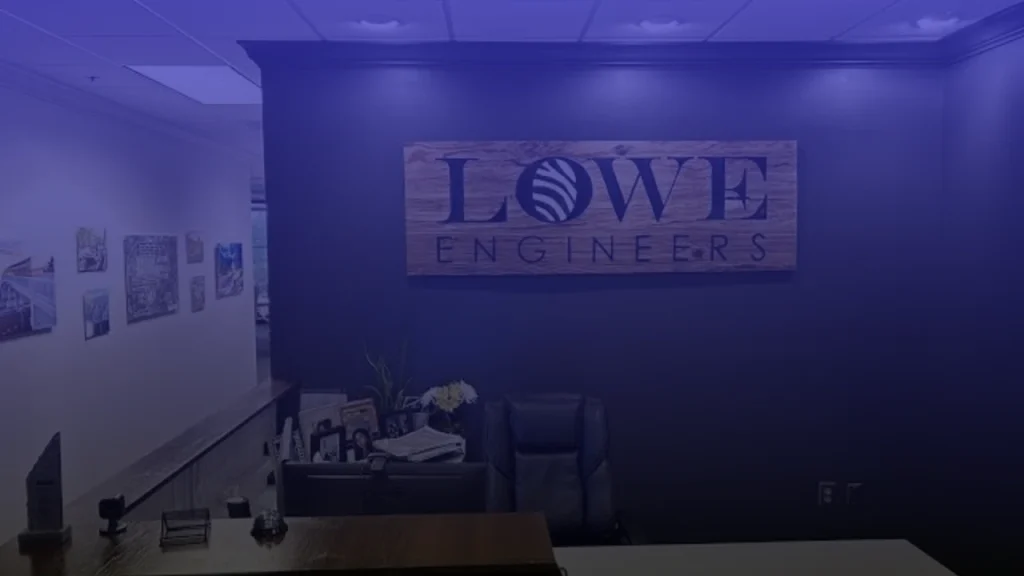
Who Filed the Lawsuit, and What Happened to the Earlier Federal Case?
Current case: Galdun v. Lowe Engineers, LLC, Case No. 26CV003778, Superior Court of Fulton County, Georgia.
Class representative: John Galdun
Defendant: Lowe Engineers, LLC
Class counsel: Raina C. Borrelli of Strauss Borrelli PLLC
Settlement administrator: Simpluris
John Galdun first filed Galdun v. Lowe Engineers, LLC, Case No. 1:25-cv-06050, in the U.S. District Court for the Northern District of Georgia on October 22, 2025. That case was dismissed without prejudice on February 18, 2026, following a stipulated dismissal by the parties.
A dismissal without prejudice is not a ruling that the allegations were false or that the company was liable. It means the case ended without a decision on the merits. The settlement is pending in the state court, so use the state-court case number when contacting the administrator.
The central questions in a case like this include whether the company used reasonable data security measures, whether the unauthorized access resulted from inadequate practices, whether class members suffered legally recognized harm and whether the company’s response satisfied its legal obligations. Receiving a breach notice does not by itself prove financial damage, but you may still qualify for settlement benefits without proving that a criminal used your information.
Which Laws Apply to the Lowe Engineers Data Breach?
The official FAQ does not give an itemized list of the causes of action in the state-court complaint. The laws below are relevant background to the duties businesses have when they hold personal information. They should not all be read as confirmed claims in this case.
1. Georgia Personal Identity Protection Act
Georgia’s Personal Identity Protection Act is found at O.C.G.A. §§ 10-1-910 through 10-1-915. Under O.C.G.A. § 10-1-912, covered information brokers and data collectors generally must notify Georgia residents when their unencrypted personal information was, or is reasonably believed to have been, acquired by an unauthorized person. Notice must be given in the most expedient time possible and without unreasonable delay, subject to exceptions such as law enforcement needs. The statute also addresses third-party service providers and notice to consumer reporting agencies in large breaches.
The settlement class includes people across the United States, so this statute does not automatically govern every class member’s claims.
2. Negligence and the Duty of Reasonable Care
Data breach suits often allege negligence. Under Georgia law, O.C.G.A. § 51-1-2 describes ordinary negligence as the lack of the reasonable care and skill that an ordinarily prudent person would use in similar circumstances. A negligence claim generally requires:
- A legal duty;
- A breach of that duty;
- A legally recognized injury; and
- A causal link between the breach and the injury.
The fact that a cyberattack occurred does not prove negligence. The question is whether reasonable safeguards were in place and whether any failure caused legally recognized harm.
3. Injury and Standing in Data Breach Cases
Whether a data breach plaintiff has suffered a legally recognizable injury is one of the most contested issues in this area of law. In federal court, plaintiffs must show an injury sufficient for Article III standing, and TransUnion LLC v. Ramirez, 594 U.S. 413 (2021), made that analysis stricter. In Georgia state court, the Georgia Supreme Court in Collins v. Athens Orthopedic Clinic, 307 Ga. 555 (2019), found that data breach plaintiffs had alleged a cognizable injury at the pleading stage in that case. Questions like these are among the litigation risks that commonly push both sides toward settlement.
4. Georgia Consumer Protection Statutes
Data breach complaints in Georgia sometimes invoke the Georgia Fair Business Practices Act, O.C.G.A. § 10-1-390 et seq., or other state consumer protection laws. The public settlement materials do not list these as confirmed claims in this case.
5. Federal Trade Commission Act
Section 5 of the FTC Act, 15 U.S.C. § 45, prohibits unfair or deceptive acts or practices, and the FTC has used it to enforce data security standards. The FTC Act generally does not give individuals a private right to sue for damages. A private data breach lawsuit should not be described as an FTC Act claim unless the complaint and the law support that.
6. HIPAA and Medical Information
The notice lists medical and health insurance information among the categories that may have been involved. That does not make this a HIPAA case. HIPAA applies to covered healthcare entities and their business associates, and a company that keeps an employee’s health insurance information is not automatically a covered entity. HIPAA also generally does not give individuals a private right to sue for damages. This should be described as a data privacy and security class action, not a proven HIPAA violation.
7. Fair Credit Reporting Act: Credit Freezes and Fraud Alerts
Federal law, 15 U.S.C. § 1681c-1, gives consumers the right to place security freezes and fraud alerts on their credit files. Security freezes are free at the three nationwide credit bureaus. This is practical protection for people notified of a breach, and it affects the ordinary-expense category because freeze fees generally should not be incurred.
8. Georgia Class Action Procedure
Class actions in Georgia state court are governed by O.C.G.A. § 9-11-23. Before a class settlement takes effect, the court must review it, order notice to the class and decide whether it is fair, reasonable and adequate. Class members may object or opt out, and the court considers requests for attorneys’ fees and service awards.
What Did the Court Actually Decide?
The official settlement website says the court has not decided whether Lowe Engineers or the plaintiff is right. Authorizing notice to the class does not mean the court found negligence or any statutory violation.
Who Qualifies for the Lowe Engineers Settlement?
The class is defined as:
All individuals to whom Lowe Engineers, LLC provided notice that their personal information was potentially affected by the December 2024 Data Incident.
If Lowe Engineers sent you a notice letter saying your information may have been affected, you are likely a class member. You do not need to prove that a criminal used your Social Security number or other data to qualify.
Do Current and Former Employees Qualify?
Potentially. The records involved are described as including information about current and former employees. Employment status alone does not establish eligibility. The question is whether Lowe Engineers provided you with notice of the incident.
Do I Need to Prove Identity Theft?
No, not to be a class member. You can choose the $50 payment and credit monitoring without proving any loss. Evidence is required only if you claim reimbursement for documented expenses or fraud losses.
Who Is Excluded?
- Lowe Engineers and its officers and directors
- Certain related companies
- Anyone who validly opts out
- The judge assigned to the case and the judge’s family and staff
- Anyone who perpetrated the data incident
If you are unsure whether you are in Lowe’s notice records, contact Simpluris.
How Much Can You Receive?
The settlement does not publish a single aggregate cash fund to be divided among class members. It offers individual benefits.
Option 1: Ordinary Out-of-Pocket Expenses (Up to $500)
You may be reimbursed for actual, documented expenses caused by the data incident that occurred between October 9, 2025 and October 15, 2026. Covered expenses may include:
- Fees for credit reports
- Credit monitoring costs
- Credit freeze and unfreeze charges
- Costs to replace identification documents
- Postage for contacting financial institutions by mail
You must provide receipts or other supporting documents. Self-prepared notes can supplement primary evidence but cannot be the only proof. Expenses already paid by an insurer or another third party do not qualify.
Option 2: Extraordinary Financial Losses (Up to $5,000)
If you experienced identity theft or financial fraud connected to the incident, you may claim up to $5,000 for losses that occurred between December 27, 2024 and January 13, 2027. You must show that:
- The theft or fraud was probably caused by the Lowe Engineers data incident;
- The loss is not already covered by the ordinary-expense category;
- You took reasonable steps to prevent the loss or recover the money, such as seeking reimbursement from your bank or insurer; and
- No one else has already reimbursed the loss.
Useful documents include bank statements, fraud reports, correspondence with your bank and evidence of your recovery efforts. A statement that you lost money is not enough.
Option 3: Alternative Cash Payment ($50)
You may instead request a one-time $50 payment. You do not need receipts, proof of identity theft or a description of losses. You must still be a class member and submit a valid claim.
The $50 payment replaces the $500 and $5,000 options. It is not added to them. You can still enroll in credit monitoring.
Can You Claim Both the $500 and $5,000 Benefits?
Potentially yes. The categories cover different losses and different time periods. For example, someone who paid $100 to replace an identification document and separately lost $2,000 to identity theft connected to the incident could seek both if each meets the requirements. The same expense cannot be claimed twice.
| Benefit | Maximum |
| Ordinary out-of-pocket expenses | $500 |
| Extraordinary financial losses | $5,000 |
| Maximum combined documented-loss benefits | $5,500 |
| Alternative cash option | $50 instead of documented-loss benefits |
| Two-year credit monitoring | Available with any option |
The $5,500 figure is the maximum across the two documented-loss categories, not a guaranteed check.
Are Settlement Payments Taxable?
Some payments may be taxable, and reimbursements of out-of-pocket losses may be treated differently from other payments. This article is not tax advice. Ask a qualified tax professional about your situation.
What Credit Monitoring Does the Settlement Offer?
All class members can enroll in two years of CyEx Financial Shield Total at no charge. The service includes:
- Fraud and identity-theft monitoring
- Monitoring of unauthorized financial transactions
- Monitoring of personal information associated with high-risk transactions
- Access to a fraud-resolution agent
- $1 million in financial fraud insurance
The $1 million insurance is part of the monitoring service, not an extra cash payment. Enrollment codes were sent to class members by postcard. If you lost yours, contact the administrator. The settlement website also has a portal where you can use your Login ID and PIN to request an email with enrollment instructions: https://lowedataincident.com/form/email-request/
The $50 cash option does not remove your eligibility for credit monitoring.
Do You Need to File a Claim?
Yes. A valid claim form is required to receive cash benefits and to elect the benefits you want. Lowe’s notice records identify potential class members, but receiving a letter does not by itself produce a payment. The claim process requires your Login ID, PIN, completed claim information and supporting documents if you claim documented losses. If you cannot find your notice, contact Simpluris to request replacement credentials.
How to File a Lowe Engineers Settlement Claim
Claim deadline: January 13, 2027.
Option 1: File Online
- Visit the official settlement website: https://lowedataincident.com/
- Open the claim form: https://lowedataincident.com/form/claim
- Enter the Login ID and PIN printed on your settlement notice.
- Choose your benefits. Be careful with the $50 option, because it replaces the documented-loss reimbursements.
- Upload supporting documents for any ordinary-expense or extraordinary-loss claim.
- Select your payment method. Online claims offer electronic options such as PayPal, Venmo and Zelle. Paper claims are paid by mailed check under the administrator’s procedures.
- Review everything, submit and keep your confirmation.
Option 2: File by Mail or Email
Download the paper claim form from the settlement website or request one from Simpluris. Mail it with supporting documents to:
Lowe Data Incident Settlement c/o Settlement Administrator P.O. Box 25226 Santa Ana, CA 92799-9958
You may also email the completed claim form and supporting documents to [email protected].
| Filing method | Deadline |
| Online claim | January 13, 2027 |
| Email claim | January 13, 2027 |
| Mailed claim | Postmarked by January 13, 2027 |
What If You Lost Your Login ID and PIN?
Contact the administrator at 833-360-6876 or [email protected]. Provide your full name and mailing address and request replacement credentials. The administrator can search its records to help identify you.
What If You Never Received a Notice?
Contact Simpluris and ask whether you are in the class records.
Do not pay anyone to file a claim. The settlement claim process is free.
Your Options: Claim, Opt Out, Object or Do Nothing
| Your choice | Receive benefits? | Bound by the release? | Can sue Lowe on your own over the same issues? |
| Submit a valid claim | Yes | Yes | No |
| Opt out | No | No | Potentially, subject to legal defenses |
| Object and stay in the class | Yes, if you also submit a valid claim | Yes | No |
| Do nothing | No | Yes, if approved | No |
Opting Out
If you opt out, you will not receive cash benefits or other settlement benefits, and you keep whatever right you may have to pursue your own case against Lowe Engineers, subject to applicable law and defenses such as time limits.
The opt-out deadline is 30 days before the final approval hearing. The hearing has not been scheduled, so no fixed date exists yet.
Send a written Request for Exclusion to Simpluris with:
- The case name and number: Galdun v. Lowe Engineers, LLC, Case No. 26CV003778
- Your full name
- Your mailing address
- Your telephone number
- Your email address
- Your personal signature
- A clear statement that you want to be excluded
Mail to: Lowe Data Incident Settlement, c/o Settlement Administrator, P.O. Box 25226, Santa Ana, CA 92799-9958. The FAQ also allows email submission. If you opt out, you cannot object as a participating class member. Consider speaking to an attorney before opting out.
Objecting
If you stay in the class and disagree with the settlement, you can object. You may disagree with the reimbursement limits, the $50 payment, the credit monitoring, the release, the attorneys’ fees or the service award. The deadline is also 30 days before the final approval hearing.
Your objection must identify the case, include your contact information, explain your reasons, provide supporting materials where available, identify any attorney representing you and carry your signature. File it with the court and send copies to the administrator and both sides’ lawyers:
Court: Clerk of the Court, Superior Court of Fulton County, 136 Pryor Street SW, Atlanta, GA 30303
Settlement Administrator: Lowe Data Incident Settlement, c/o Settlement Administrator, P.O. Box 25226, Santa Ana, CA 92799-9958
Class Counsel: Raina C. Borrelli, Strauss Borrelli PLLC, 980 N. Michigan Avenue, Suite 1610, Chicago, IL 60611
Defendant’s Counsel: David A. Cole, Freeman Mathis & Gary, LLP, 100 Galleria Parkway, Suite 1600, Atlanta, GA 30339
You can object and still submit a claim.
What Happens If You Do Nothing?
You receive no cash payment or other settlement benefits, and you remain in the class unless you properly opt out. If the court grants final approval, you give up the legal rights described in the settlement release. Ignoring the notice does not protect your right to sue later.
Read the Settlement Agreement and Release on the official website before deciding.
Related Data Breach Class Action Settlements
- Benworth Data Breach Settlement, Claim 50–5,000 By Dec 21
- Red Coats Inc. Data Breach Settlement, Claim Up To $5,000
- Pillsbury $2.34M Data Breach Settlement Claim By Dec 7, 2026
These cases involve different incidents, defendants and eligibility definitions. Qualifying for one does not make you eligible for another.
How Much Will the Lawyers Receive?
| Proposed payment | Amount |
| Attorneys’ fees and litigation costs | $125,000 |
| Class representative service award | $2,500 |
According to the official FAQ, Lowe Engineers will pay these amounts. They are not described as deductions from a published class fund. The court will decide whether the requests are reasonable. Settlement administration costs are also covered by Lowe, and class members do not pay any of these costs out of pocket.
When Will Payments Be Sent?
No payment date has been confirmed. The court must schedule and hold a final approval hearing and decide whether the settlement is fair, reasonable and adequate. Even after approval, appeals or other challenges can cause delays. Payments and benefits are distributed only after final approval and the resolution of any appeals. The settlement website currently lists the hearing as “To Be Determined,” so check it for updates. Keep your contact information current with the administrator.
What Should You Do After Receiving a Data Breach Notice?
Whether or not you file a claim, consider these steps to reduce identity theft risk:
- Check your credit reports. Look for accounts or applications you do not recognize.
- Freeze your credit. A security freeze at Equifax, Experian and TransUnion makes it harder for someone to open new accounts in your name, and freezes are free.
- Monitor bank and card statements for charges you do not recognize.
- Change passwords and turn on multifactor authentication if financial or account information may have been exposed.
- Be alert to phishing that uses your exposed information to look credible.
- Keep evidence. Save receipts, bank correspondence, fraud reports and recovery attempts. These may support an extraordinary-loss claim.
If you believe you are a victim of identity theft, the Federal Trade Commission’s IdentityTheft.gov site can help you file a report and create a recovery plan.
Frequently Asked Questions
1. Is the Lowe Engineers data breach settlement real?
Yes. The official settlement website provides the notice, claim portal, settlement agreement and FAQs for Galdun v. Lowe Engineers, LLC, Case No. 26CV003778, in the Superior Court of Fulton County, Georgia. Final approval is pending.
2. Who qualifies?
Individuals to whom Lowe Engineers provided notice that their personal information was potentially affected by the December 2024 cyberattack, subject to the stated exclusions.
3. How much money can I get?
Up to $500 for documented ordinary expenses and up to $5,000 for documented extraordinary losses, or a $50 payment without proof. Two years of credit monitoring is also available.
4. Is $5,500 guaranteed?
No. It is the maximum combined reimbursement under the two documented-loss categories. You must show qualifying losses with evidence and meet the date requirements.
5. Can I receive both the $500 and $5,000 benefits?
Potentially. They cover different losses. You cannot claim the same expense twice or recover money already reimbursed by someone else.
6. Can I get the $50 payment and credit monitoring?
Yes. The $50 replaces the other cash options, not credit monitoring.
7. How long is the credit monitoring?
Two years of CyEx Financial Shield Total, including $1 million in financial fraud insurance.
8. Is the $1 million insurance a payment to me?
No. It is coverage provided through the monitoring service, not a settlement payment.
9. Do I need receipts to claim $50?
No.
10. What proof is needed for the $500 benefit?
Receipts or other documents showing qualifying expenses, their amounts and their connection to the incident. Self-prepared notes alone are not enough.
11. What proof is needed for the $5,000 benefit?
Documents showing the fraud or identity-theft loss, the amount, its probable connection to the incident and your reasonable efforts to prevent or recover the loss.
12. What is the claim deadline?
January 13, 2027. Mailed claims must be postmarked by that date.
13. Do I need my notice to file?
You need the Login ID and PIN to use the online portal. If you lost your notice, contact Simpluris for replacement credentials.
14. Does being a former employee qualify me automatically?
No. The requirement is that Lowe Engineers provided notice that your information was potentially affected. Current and former employees may be included.
15. When is the final approval hearing?
It has not been scheduled. The official website will post the date when available.
16. What are the opt-out and objection deadlines?
Both are 30 days before the final approval hearing. A fixed date has not been announced.
17. When will payments arrive?
No date has been confirmed. Payments depend on final approval and the resolution of any appeals.
18. Did Lowe Engineers admit wrongdoing?
No. The company denies wrongdoing, and the settlement is a compromise, not a finding of liability.
19. Who pays the attorneys’ fees?
According to the official FAQ, Lowe Engineers pays the requested $125,000 in fees and costs and the $2,500 service award, subject to court approval.
20. Who administers the settlement?
Simpluris. Phone 833-360-6876; email [email protected].
Final Takeaway: What Should You Do Before January 13, 2027?
The Lowe Engineers settlement gives people whose information was potentially affected by the December 2024 cyberattack a choice: a $50 payment with no proof, or up to $5,500 in documented losses, plus two years of credit monitoring with $1 million in fraud insurance.
You must submit a valid claim by January 13, 2027, to receive these benefits.
Before you file, decide which option fits your situation and gather documents if you had actual losses. The opt-out and objection deadlines have not been set because the final approval hearing has not been scheduled. The court has not given final approval, Lowe denies wrongdoing and no payment date has been confirmed.
Official settlement website: https://lowedataincident.com/ Online claim form: https://lowedataincident.com/form/claim
Researched and written by Israr Ahmad. This article is for informational purposes only and is not legal or tax advice. AllAboutLawyer.com is an independent legal-information website, not a law firm. The official settlement notice, agreement and court orders control eligibility, deadlines and benefits.
Sources
- Official Lowe Engineers Data Incident Settlement Website: https://lowedataincident.com/
- Online Claim Form: https://lowedataincident.com/form/claim
- Frequently Asked Questions: https://lowedataincident.com/faq/
- Important Settlement Documents: https://lowedataincident.com/documents/
- Credit Monitoring Enrollment Instructions Request: https://lowedataincident.com/form/email-request/
- Official Long-Form Notice (PDF): https://cw.simpluris.com/docs/public/downloads/LGC4/NOTICE
- Settlement Agreement and Release (PDF): https://cw.simpluris.com/docs/public/downloads/LGC4/SETTLEMENT_AGREEMENT_AND_RELEASE
- Claim Form and Release (PDF): https://cw.simpluris.com/docs/public/downloads/LGC4/CLAIM_FORM_AND_RELEASE
- Lowe Engineers Breach Notification Letter (October 2, 2025): https://www.mass.gov/doc/2025-1742-lowe-engineers/download
- Federal Trade Commission, IdentityTheft.gov: https://www.identitytheft.gov/
- Galdun v. Lowe Engineers, LLC, No. 1:25-cv-06050 (N.D. Ga.), and Galdun v. Lowe Engineers, LLC, No. 26CV003778 (Fulton Cnty. Super. Ct.)
- O.C.G.A. §§ 10-1-910 to 10-1-915; O.C.G.A. § 51-1-2; O.C.G.A. § 10-1-390 et seq.; O.C.G.A. § 9-11-23
- 15 U.S.C. § 45; 15 U.S.C. § 1681c-1
- TransUnion LLC v. Ramirez, 594 U.S. 413 (2021); Collins v. Athens Orthopedic Clinic, 307 Ga. 555 (2019)
About the Author
Israr Ahmad is a legal content researcher with 4+ years of experience covering class action settlements and consumer rights cases. He has researched and published coverage of 2,500+ settlements using verified court records, settlement administrator filings, and government sources. Learn more about Israr.