
Arizona Photo Radar Ban 2026, Are Speed Cameras and Red-Light Cameras Still Legal?
Arizona voters approved Proposition 319 in the November 3, 2026 election, restricting speed cameras and red-light cameras across the state. But the measure does not immediately shut down every traffic camera or cancel existing photo radar tickets.
Under the measure, state agencies and local governments generally must have a qualifying signed photo-enforcement contract by December 31, 2026 to keep using covered systems. Cities and towns with qualifying contracts must then get voter approval to keep operating them.
Unofficial statewide results showed about 62.44% voting yes and 37.56% voting no. Final certification is scheduled for November 23, 2026.
For drivers in Phoenix, Mesa, Scottsdale, Tempe, Chandler, and Paradise Valley, the key questions are whether local cameras will stay active in 2027, when residents will vote on existing programs, and whether earlier tickets are still enforceable.
Arizona Proposition 319: Quick Facts
| Question | Answer |
| Measure | Arizona Proposition 319 |
| Legislative resolution | SCR 1004 (2026) |
| Election date | November 3, 2026 |
| Unofficial Yes vote | 62.44% |
| Unofficial No vote | 37.56% |
| Certification scheduled | November 23, 2026 |
| Contract cutoff | December 31, 2026 |
| New statutory section | A.R.S. § 28-1207 |
| Speed cameras affected? | Yes |
| Red-light cameras affected? | Yes |
| Existing systems allowed? | Potentially, with qualifying contracts and voter approval |
| Local voter approval | Required at the next applicable general election |
| If local voters reject cameras | Operations must stop within 90 days |
| If local voters approve cameras | Continued operation allowed for 10 years, then another vote |
| Existing tickets canceled? | No automatic cancellation |
| State-highway cameras | Separately restricted under existing A.R.S. § 28-1206 |
What Does Proposition 319 Actually Do?
Proposition 319 restricts government use of automated photo-enforcement systems that identify drivers who violate speeding laws or traffic-control requirements. It adds Arizona Revised Statutes § 28-1207, which sets restrictions for state agencies and local governments.
Its central requirement is that an agency must have a signed contract to operate a qualifying photo-enforcement system on or before December 31, 2026 to remain eligible to use such systems. For local governments, a qualifying contract is only the first step. Cities and towns must also ask their voters whether the systems should continue:
- If voters approve, the program can continue for 10 years.
- If voters reject it, the local government must stop operating it within 90 days.
This is not an immediate statewide ban on every existing camera. It is a contract-based restriction plus a local voting process.
What Counts as a Photo-Enforcement System?
Proposition 319 also amends A.R.S. § 28-1201 to define the covered technology: radar units or sensors linked to cameras or other recording devices that produce vehicle images to identify alleged speeding or traffic-control violations. That includes traditional photo radar and red-light cameras. It does not ban every camera along an Arizona road. Traffic-monitoring cameras and security cameras not used for these enforcement purposes are not banned just because they record traffic.
When Does the Photo Radar Ban Take Effect?
The implementation involves several dates, not one shutdown.
| Date | Development |
| February 26, 2026 | Arizona Senate passes SCR 1004 |
| June 12, 2026 | Arizona House approves the resolution |
| June 15, 2026 | Resolution filed with the Secretary of State |
| November 3, 2026 | Voters approve Proposition 319 (unofficial results) |
| November 23, 2026 | Scheduled statewide canvass and governor’s proclamation |
| December 31, 2026 | Final qualifying contract date |
| 2027 onward | Contract restrictions and local election requirements affect continued operation |
| Next applicable local general election | Voters decide whether qualifying systems may continue |
| Within 90 days after a rejection | Local authority must stop operating the rejected system |
| Every 10 years after approval | Renewed local voter approval required |
The resolution says the measure becomes law after voter approval and the governor’s proclamation, so November 3 was not an automatic shutdown date. Do not describe it as simply “taking effect January 1, 2027.”
Is Every City Voting in November 2027?
Not necessarily. The statute requires local authorities to seek approval at the next general election after the measure becomes effective, and the date depends on each local government’s election calendar. The statute does not set one universal November 2027 date for every municipality. Check announcements from your city clerk or local elections office.
Related article: Massachusetts Public Records Law Changes in 2027, What Question 1 Means
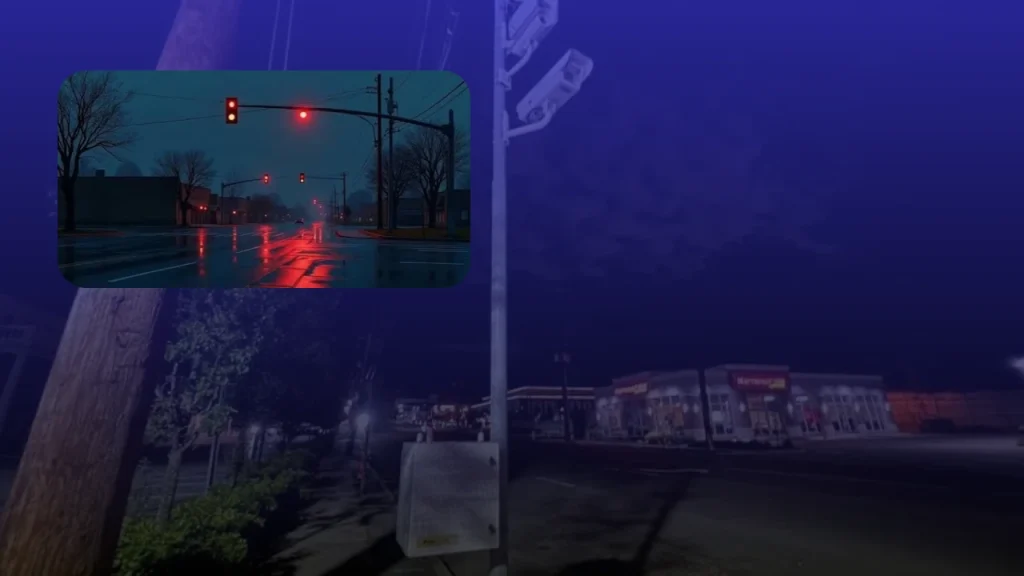
Are Speed Cameras Still Legal in Phoenix?
Yes. Phoenix’s existing Photo Safety Program has not been automatically canceled by the November 3 vote. The city uses 17 speed-monitoring cameras, approved in October 2024 as part of its Vision Zero Road Safety Action Plan. According to the city’s October 22, 2026 update, active monitoring areas include:
- Bell Road, between 35th Avenue and Interstate 17
- Greenway Parkway, between Cave Creek Road and 28th Street
- Shea Boulevard, between 36th and 40th Streets
- 27th Avenue, between Camelback and Bethany Home Roads
- 7th Street, between Indian School and Camelback Roads
- Northern Avenue, between 16th Street and State Route 51
- 19th Avenue, between Van Buren Street and Interstate 10
- 16th Street, between Broadway Road and Interstate 17
- Thunderbird Road, between 19th Avenue and Coral Gables
The city also uses cameras near school zones, with locations that change based on school schedules and safety needs. Whether Phoenix can keep particular cameras under Proposition 319 depends on its qualifying contracts, how the measure is implemented, and any required local election. A camera appearing on the city’s list does not by itself prove it satisfies the new contract requirement.
What About Mesa, Tempe, Chandler, Scottsdale, and Paradise Valley?
Several Phoenix-area cities run automated enforcement programs, and these are among the most directly affected.
| City or Town | Existing Program Confirmed by Municipal Sources |
| Phoenix | Photo Safety Program with 17 speed cameras |
| Mesa | Red-light, intersection-speed, and school-zone cameras |
| Tempe | Cameras at 14 intersections (operational since May 7, 2025, starting with a warning period) |
| Chandler | Cameras at 12 intersections |
| Paradise Valley | Mobile photo radar and fixed speed and red-light systems |
| Scottsdale | Established photo-enforcement program |
These are programs identified in government sources, not a verified list of cities that have already qualified to continue. A camera on an official city map does not guarantee a program will continue after December 31, 2026. Each city has to determine its position under Proposition 319. Mesa says police review alleged violations before citations are issued.
Related Reading on AllAboutLawyer.com
- Suffolk County $45 Million Red-Light Camera Settlement, Check If You Qualify: McGrath v. Suffolk County, Index No. 608155/2016
- GM $220 Million Settlement Over Alleged Sale of OnStar Smart Driver Data to Insurers, Will Drivers Get Money?
Will Red-Light Cameras Also Be Restricted?
Yes. Proposition 319 covers red-light camera systems as well as speed cameras, which matters because the debate often focused on speed. Under A.R.S. § 28-645(A)(3)(a), drivers ordinarily must stop for a steady red signal, subject to rules for permitted turns. Proposition 319 does not change that rule. It changes which agencies can keep using automated cameras to document violations. Police officers can still enforce red-light laws directly.
Does Proposition 319 Cancel Old Photo Radar Tickets?
No. The measure has no provision that automatically cancels citations issued before its restrictions apply. A ticket issued through a legally operating program does not disappear because Proposition 319 passed.
| Ticket Situation | Effect of Proposition 319 |
| Photo radar citation issued before November 3 | Not automatically dismissed |
| Ticket received in November or December 2026 | Existing legal requirements still apply |
| Unpaid court judgment | Not automatically erased |
| Pending hearing | Not automatically canceled |
| Citation issued after a program unlawfully continues | May support a legal challenge depending on the facts |
| Ordinary ticket from a police officer | Not affected |
The law does not create a statewide refund program for drivers who already paid.
Do You Have to Pay a Photo Radar Ticket?
It depends on whether you received a preliminary notice or a formally served court complaint.
Under A.R.S. § 28-1602, an initial notice of violation sent by mail is not necessarily a court-issued document. The statute says recipients of qualifying preliminary photo-enforcement notices are not required to identify the person in the photograph or respond to that notice.
That does not mean every photo radar document can safely be ignored. If the authority formally serves a court complaint, response and appearance requirements apply. Failing to respond to a properly served citation can lead to a default judgment, late fees, and other consequences.
- Preliminary notice: A letter from a city or its photo-enforcement provider that is not a uniform traffic ticket and complaint.
- Court complaint: An official legal document that starts or continues a traffic case, subject to valid service and court deadlines.
Arizona law allows specified forms of service, including personal service and qualifying alternative service (see A.R.S. § 28-1593 and the Arizona Rules of Civil Procedure). If a notice goes unanswered, authorities may try formal service, which can add costs. Don’t assume that because something arrived in the mail no enforceable case exists. Read the document and check the court record.
What To Do If You Receive a Photo Radar Document
- Check what it is: a preliminary notice or a court complaint with a hearing or response date.
- Look at the deadline and the court named on it.
- If it is a served complaint, respond on time. Your options generally include paying, asking about defensive driving school if you are eligible, or requesting a hearing to contest the violation or service.
- Keep the photos, envelope, and any proof of how and when you received it.
- Consider a traffic-defense attorney if the ticket is serious or complicated. Fees vary.
Can You Fight a Photo Radar Ticket in Arizona?
Yes. Arizona motorists can contest qualifying civil traffic citations. Relevant laws include:
- A.R.S. § 28-1602: Requires law-enforcement review of photo evidence before issuing citations and protects recipients of preliminary notices from having to identify the driver.
- A.R.S. § 28-1592: Sets time limits for starting civil traffic cases. Generally, citations must be issued or filed within 60 days, with additional service rules and exceptions for qualifying accident investigations.
- A.R.S. § 28-1593: Governs service of traffic tickets and complaints.
- A.R.S. § 28-1203: Generally prohibits placing photo-enforcement systems within 600 feet of a posted speed-limit change, subject to a school-crossing exception.
- A.R.S. § 28-1204: Requires specified warning signs and lets courts dismiss citations when statutory signage standards were not met.
A driver might challenge the driver’s identity, the evidence, service, signage, or the legality of the enforcement system. In a contested case, defense requests can include camera maintenance and calibration records and, for red-light cases, signal-timing information. Not every technical defect requires dismissal, and the outcome depends on the evidence and the judge’s findings.
What If Someone Else Was Driving?
The statute generally does not require the recipient of an initial notice to identify the person photographed. Local programs may offer an affidavit of nonresponsibility or similar procedures. Follow the instructions on the actual court document and don’t submit inaccurate declarations.
Are Highway Speed Cameras Already Illegal?
Arizona already restricts photo enforcement on state highways. Under A.R.S. § 28-1206, state and local authorities cannot use photo-enforcement systems on state highways to identify the specified violations. This predates Proposition 319. It doesn’t stop officers from using lawful speed-measurement equipment, and not every camera along an interstate is a ticketing camera. Some are used for traffic monitoring, incident response, or transportation management. Proposition 319 adds broader restrictions on qualifying state and local programs.
Why Did Voters Approve Proposition 319?
The measure reflects long-running disagreements over traffic enforcement. SCR 1004 states the Legislature’s intent to keep enforcement in the hands of trained officers, limit possible abuses of private enforcement contracting, and keep revenue from becoming the main purpose of traffic enforcement.
Supporters raised concerns about privacy, penalties, outside contractors, and whether camera programs prioritize revenue over safety.
Opponents argued that speed and red-light cameras can deter dangerous driving, reduce crashes, and provide enforcement without an officer at every intersection. The Secretary of State’s publicity pamphlet included arguments from safety organizations and others opposing the proposal.
The measure passed by a large margin in unofficial returns. That changes the legal framework but does not settle every factual debate about whether photo enforcement improves safety.
Effects on Cities and Vendors
Photo enforcement generates fine revenue for cities, and some programs pay private vendors under contracts. Cities that lose their programs may have to adjust budgets, and questions about whether specific contracts qualify could lead to disputes between municipalities and vendors. No such litigation has been identified in the sources reviewed.
Does Proposition 319 Protect Driving Privacy?
It restricts specified automated enforcement systems. It does not create a comprehensive privacy law for every form of vehicle data collection.
Is Speeding Still Illegal?
Yes. Proposition 319 changes how traffic laws may be enforced, not the duty to drive safely. Drivers remain subject to A.R.S. § 28-701 (reasonable and prudent speeds) and A.R.S. § 28-645 (traffic-control signals). Serious speeding can also implicate A.R.S. § 28-701.02, Arizona’s excessive-speed criminal statute, depending on the circumstances. Officers can still stop drivers and issue citations.
Frequently Asked Questions
Did Arizona ban photo radar in November 2026?
Voters approved restrictions on government photo enforcement. The measure does not immediately eliminate qualifying existing systems and requires further implementation.
Are speed cameras still operating in Phoenix?
Phoenix’s official Photo Safety Program lists active speed cameras. Whether they can continue depends on qualifying contracts and future legal requirements.
Will Mesa and Tempe red-light cameras disappear in 2027?
Not necessarily. Local governments with qualifying contracts may continue, subject to required local voter approval.
Are all Arizona cities voting in November 2027?
No universal November 2027 vote is set by Proposition 319. Each affected local government must hold the required vote at its next applicable general election.
What happens if voters reject a camera program?
The local government must stop operating it within 90 days.
Will existing camera tickets be dismissed?
No. Proposition 319 does not automatically cancel previously issued citations or judgments.
Can police still issue speeding tickets?
Yes. The measure does not change speeding laws, red-light requirements, or ordinary enforcement by officers.
Is there an Arizona photo radar settlement?
No statewide settlement or refund program is established by Proposition 319.
What Happens Next?
The next milestone is Arizona’s official statewide canvass and the governor’s proclamation, scheduled for November 23, 2026. Then comes the December 31, 2026 contract cutoff, which will determine whether an authority has the signed contract needed to continue. Local governments with qualifying contracts must then seek voter approval at their next applicable general elections. Watch municipal announcements instead of assuming every camera will stop on January 1, 2027.
Bottom line: Proposition 319 restricts new photo-enforcement programs and requires local voter approval for qualifying existing systems. It covers speed cameras and red-light cameras, but it does not automatically dismiss existing tickets or make speeding legal.
Disclaimer: AllAboutLawyer.com provides independent legal information, not legal advice. Ticket obligations, defenses, and enforcement procedures depend on individual circumstances and court rules.
Researched by AllAboutLawyer.com, Legal Content Research. Last updated: November 16, 2026.
Sources
- Arizona Legislature, SCR 1004 / Proposition 319 text: https://www.azleg.gov/legtext/57leg/2R/laws/scr1004.htm
- Arizona Secretary of State, 2026 General Election Publicity Pamphlet (Proposition 319, pp. 131-137): https://apps.azsos.gov/election/BallotMeasures/2026/2026-AZ-Publicity-Pamphlet.pdf
- Arizona official unofficial election results, Proposition 319: https://app.enhancedvoting.com/results/public/Arizona/elections/110326GeneralElection/ballot-items/248c0000-c0a3-7204-df39-08df11bc03d0
- Arizona Citizens Clean Elections Commission, certification timeline: https://www.azcleanelections.gov/state-general-results
- A.R.S. § 28-1602: https://www.azleg.gov/ars/28/01602.htm
- A.R.S. § 28-1592: https://www.azleg.gov/ars/28/01592.htm
- A.R.S. § 28-1593: https://www.azleg.gov/ars/28/01593.htm
- A.R.S. § 28-1203: https://www.azleg.gov/ars/28/01203.htm
- A.R.S. § 28-1204: https://www.azleg.gov/ars/28/01204.htm
- A.R.S. § 28-1206: https://www.azleg.gov/ars/28/01206.htm
- Phoenix Photo Safety Program: https://www.phoenix.gov/administration/departments/streets/safety-improvements/road-safety-action-plan/photo-safety.html
- Mesa Police, Photo Safety Program: https://www.mesaaz.gov/Public-Safety/Mesa-Police/About-Mesa-Police/Photo-Safety-Program
- Tempe Photo Enforcement Program: https://www.tempe.gov/government/police/traffic-section/photo-enforcement
- Chandler Red Light Photo Enforcement Program: https://www.chandleraz.gov/residents/transportation/traffic-engineering/red-light-photo-enforcement
- Paradise Valley Photo Enforcement Program: https://paradisevalleyaz.gov/153/Photo-Radar
- A.R.S. §§ 28-645, 28-701, 28-701.02, 28-1201, 28-1207; Arizona Rules of Civil Procedure
About the Author
Israr Ahmad is a legal content researcher with 4+ years of experience covering class action settlements and consumer rights cases. He has researched and published coverage of 2,500+ settlements using verified court records, settlement administrator filings, and government sources. Learn more about Israr.