
Amazon Fire TV Stick Lawsuit, Did Amazon Intentionally Break Your Fire TV Stick? A Lawsuit Says Yes
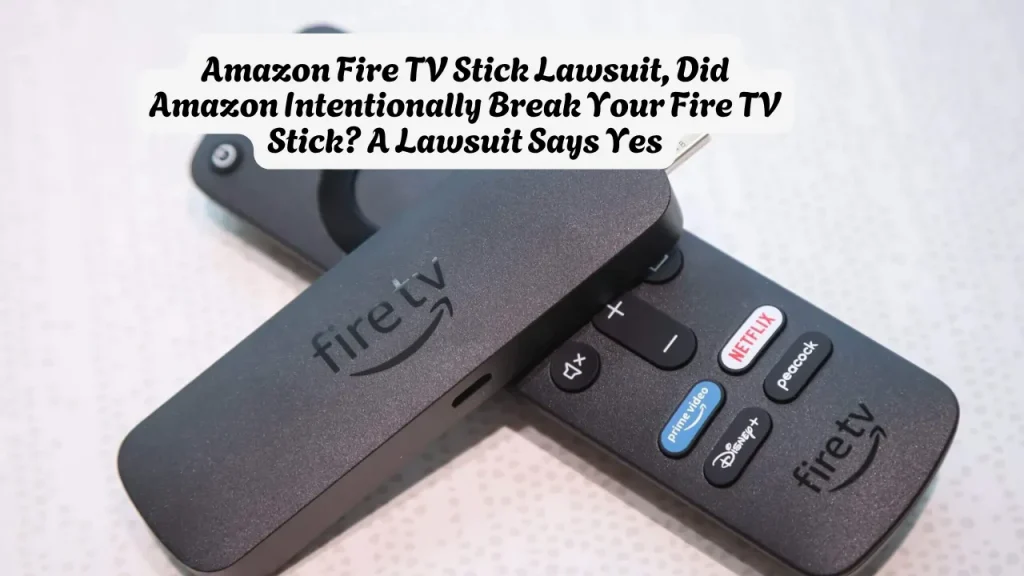
If your Fire TV Stick went from working fine to nearly unusable over the past few years — buffering constantly, apps crashing, streaming grinding to a halt — you are not alone. A new class action lawsuit filed in California claims Amazon deliberately cut off software support for older devices to push consumers into buying new ones. Amazon has not yet responded to the allegations.
Quick Facts
| Field | Detail |
| Devices Covered | 1st and 2nd generation Fire TV Stick |
| What Allegedly Happened | Amazon cut software support, making devices unusable |
| Support Cut for Gen 1 | December 2022 |
| Support Cut for Gen 2 | Shortly after December 2022 |
| Who Filed the Lawsuit | Plaintiff Bill Merewhuader |
| Where It Was Filed | Los Angeles County Superior Court, California |
| Settlement Available | No — case is in early litigation |
| Claim Deadline | TBD — no claims open yet |
What Happened to Your Fire TV Stick
You bought a Fire TV Stick. It worked. Then slowly — or suddenly — it did not.
Apps stopped loading. Streaming froze. The remote felt like it was responding through mud. Eventually, using the device became more frustrating than it was worth.
Amazon promoted its first- and second-generation Fire TV Stick devices as providing instant access to hundreds of thousands of movies and television shows across major streaming platforms. That promise is exactly what you paid for.
Plaintiff Bill Merewhuader alleges Amazon later removed or limited critical software functionality, causing the devices to become slow, difficult to use, or effectively inoperable. The lawsuit calls this “bricking” — a term that means a device becomes as useful as a brick even though the physical hardware still works.
Merewhuader says he purchased two second-generation Fire TV Stick devices in 2018 but began experiencing significant performance issues within a few years. He alleges the devices eventually became unusable, forcing him to purchase newer versions in 2024.
Sound familiar?
What Amazon Allegedly Did — And Why the Lawsuit Says It Was Wrong
This was not just a case of old technology wearing out naturally. That is the core of what makes this lawsuit significant.
The lawsuit claims Amazon stopped providing software updates for first-generation devices in December 2022 and discontinued support for second-generation devices shortly thereafter, despite allegedly representing that support would continue through 2024.
The problem is not simply that Amazon stopped updating old devices. Companies do that. The problem, according to the lawsuit, is that Amazon never told buyers this would happen — and kept marketing the devices as capable of doing exactly what they could no longer do.
Related article: Blizzard Shut Down Turtle WoW Here’s What the Lawsuit Actually Says Blizzard Turtlewow Copyright Infringement Lawsuit
According to the class action, Amazon maintained the ability to limit or discontinue features after purchase, effectively shortening the usable life of the devices and pushing consumers to upgrade.
The class action further alleges Amazon did not offer refunds or compensation to affected consumers and instead encouraged them to purchase newer models.
In short: the lawsuit argues Amazon knew the device would stop working, did not tell you, and then waited for you to buy a replacement.
Who Does This Lawsuit Cover?
Merewhuader seeks to represent nationwide classes of consumers who purchased first- or second-generation Fire TV Stick devices, along with California subclasses.
You may fall within the proposed class if:
- You purchased a first-generation Fire TV Stick before Amazon ended software support in December 2022
- You purchased a second-generation Fire TV Stick and experienced your device becoming slow or unusable after support ended
- You bought a replacement Fire TV Stick because your older device stopped functioning properly
- You never received a refund, credit, or any compensation from Amazon for the loss of functionality
These class definitions come from the complaint itself. A judge still needs to formally approve them.
What the Lawsuit Is Actually Asking For
The class action lawsuit seeks damages, restitution, injunctive relief, attorneys’ fees, and an order requiring Amazon to compensate affected consumers.
In plain terms, the lawsuit asks the court to make Amazon pay back consumers for devices that stopped working, reimburse people who had to buy replacements, and potentially force Amazon to change how it handles software support disclosures going forward.
No dollar amount and no settlement exists yet. This case is in its earliest stage.
What You Should Do Right Now
You cannot file a claim today — the case has not reached that stage. But there are practical steps you can take now that will matter later if a settlement is reached.
Step 1 — Pull up your Amazon order history and find your Fire TV Stick purchase. Take a screenshot and save it.
Step 2 — Write down approximately when your device started having problems and when it became unusable. A rough timeframe is enough.
Step 3 — If you bought a replacement Fire TV Stick because the old one stopped working, save proof of that purchase too.
Step 4 — Keep your old device if you still have it. You do not need to ship it anywhere right now — just do not throw it out.
Step 5 — Bookmark this page. When a settlement is reached, class members typically receive notice by email or mail with instructions to file a claim online for free.
Step 6 — Do not pay anyone to add your name to this lawsuit. Legitimate class action participation is always free.
Estimated time to do this today: 10 minutes
Frequently Asked Questions
Why did my Fire TV Stick suddenly get so slow?
The lawsuit alleges Amazon removed or limited critical software functionality after purchase, causing the devices to become slow, difficult to use, or effectively inoperable. Amazon has not publicly confirmed this. The lawsuit is ongoing.
Which Fire TV Stick models does this lawsuit cover?
The lawsuit targets consumers who purchased first- or second-generation Fire TV Stick devices. Newer models like the Fire TV Stick 4K or Lite are not part of this case.
Does Amazon owe me money for my broken Fire TV Stick?
That depends on how this case resolves. No settlement exists yet. If the case succeeds, affected consumers could receive compensation — but no amounts are confirmed at this stage.
Do I need a lawyer to participate?
No. If a settlement is reached, you file a claim directly through a free online portal. The attorneys who filed the lawsuit represent the class. You do not hire anyone or pay anything to take part.
Is this lawsuit legitimate?
The case is filed in the Superior Court of the State of California, County of Los Angeles, and was covered by Law360. The legal teams behind it — KalielGold PLLC and Tycko & Zavareei LLP — handle consumer protection cases regularly.
When will I receive a payment?
No payment timeline exists right now. Class action lawsuits typically take one to three years from filing to payment, depending on whether Amazon settles or the case goes to trial.
What if I already threw away my old Fire TV Stick?
You may still qualify. Many class action settlements allow consumers to file using purchase records alone. Your Amazon order history is likely enough. Exact requirements will be confirmed if a settlement is reached.
Will any settlement payment affect my taxes?
Compensation for a defective product you already paid for is generally not considered taxable income. However, amounts that exceed your original purchase price may be treated differently. A tax professional can give you advice specific to your situation.
Last Updated: April 14, 2026
Disclaimer: This article is for informational purposes only and does not constitute legal advice. Legal claims and outcomes depend on specific facts and applicable law. For advice regarding a particular situation, consult a qualified attorney.
About the Author
Israr Ahmad is a legal content researcher with 4+ years of experience covering class action settlements and consumer rights cases. He has researched and published coverage of 2,500+ settlements using verified court records, settlement administrator filings, and government sources. Learn more about Israr.