
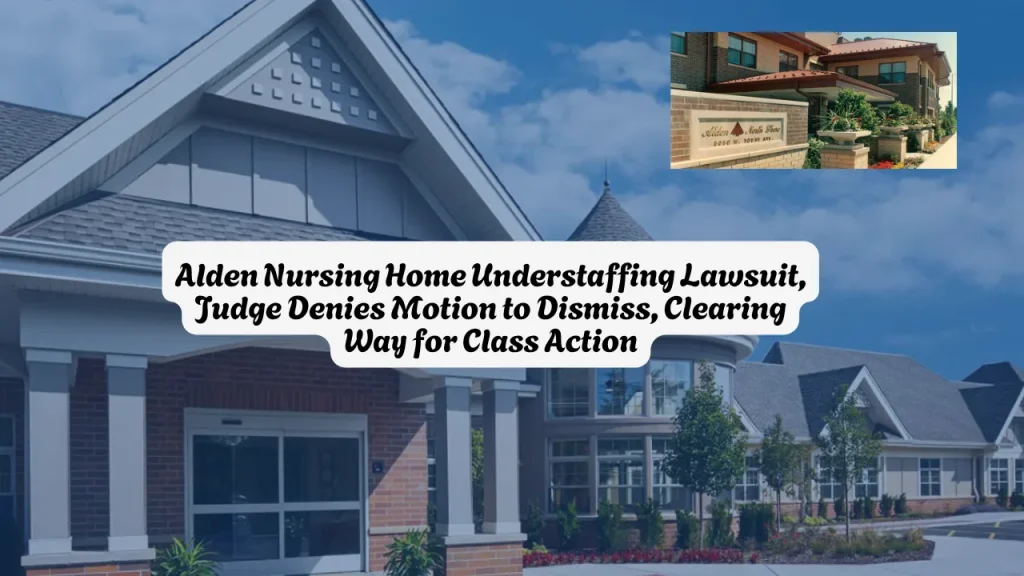
Alden Nursing Home Understaffing Lawsuit, Judge Denies Motion to Dismiss, Clearing Way for Class Action
In a significant victory for nursing home residents and their families, a judge has officially denied the Alden Group’s motion to dismiss a major class action lawsuit alleging chronic and intentional understaffing. This ruling allows the case to move forward into the “Discovery” phase, where plaintiffs’ attorneys can now demand internal payroll records and staffing logs to prove that the facility operator put profits over patient safety.
The lawsuit, spearheaded by the AARP Foundation and several prominent Illinois law firms, alleges that the Alden Group—one of the largest long-term care providers in the state—systematically provided fewer nursing hours than required by law. If you or a loved one resided at Alden Lakeland, Alden Terrace McHenry, Alden Town Manor, Alden Heather Healthcare Center, Alden Princeton, or Alden Village North, you may be eligible to participate in the class action and seek compensation for neglect or injuries resulting from these conditions.
Quick Case Snapshot
| Feature | Details |
| Plaintiffs | Current and Former Residents of 6 Alden Facilities |
| Defendant | Alden Group, Ltd. and related corporate entities |
| Court | Circuit Court of Cook County, Illinois |
| Case Number | 2022-CH-09380 (Related) |
| Filing Date | September 2022 (Ongoing) |
| Judge | [Not publicly disclosed in summary – Circuit Court Judge] |
| Claims Alleged | Illinois Nursing Home Care Act violations, Consumer Fraud, Negligence |
| Damages Sought | Monetary damages for injuries, property loss, and injunctive relief |
| Current Status | Proceeding to Discovery (Motion to Dismiss Denied) |
Are You Eligible for the Alden Group Lawsuit?
Eligibility for this class action is tied specifically to the staffing levels and care quality at six identified facilities. Unlike individual personal injury cases, this “Class Action” status means that if a settlement or verdict is reached, all eligible residents could receive a portion of the payout without having to file a separate lawsuit.
You are likely eligible if:
- You or a family member stayed at one of the six Alden facilities listed above.
- The residency occurred at any point from 2018 through 2026.
- You experienced neglect, unsanitary conditions, or injuries (such as falls or bedsores) that can be linked to a lack of available staff.
Even if your loved one has passed away, their estate may still be eligible to participate in the litigation to recover damages for the period they were in the facility.
Related article: BioLab Warehouse Fire Class Action, Georgia Supreme Court to Rule on Medical Monitoring for Residents
What the Lawsuit Alleges: “Ghost Staffing” and Neglect
The complaint filed against the Alden Group is not just about a few busy days; it alleges a calculated business model designed to save millions of dollars by refusing to hire enough nurses and aides.
The Core Allegations:
- Falsified Records: The plaintiffs claim Alden used “ghost staffing”—falsifying work schedules to include employees who were not actually in the building—to trick regulators into thinking they were meeting state minimums.
- Preventable Injuries: Due to the lack of staff, residents allegedly suffered from stage 4 bedsores (pressure ulcers), severe dehydration, and frequent falls because no one was available to assist with basic movements.
- Unsanitary Conditions: The lawsuit describes “grossly unsanitary” living areas, claiming that understaffing left facilities unable to maintain basic cleanliness, leading to widespread infections.
- Consumer Fraud: By marketing their facilities as “high-quality” and “safe” while intentionally providing substandard staffing, the plaintiffs argue Alden violated the Illinois Consumer Fraud and Deceptive Business Practices Act.
Discovery Insights: What Internal Records May Reveal
Now that the judge has allowed the case to proceed, the “Discovery” phase will begin. This is the “Missing Pillar” of many news reports. In this phase, the court can compel Alden to turn over:
- Payroll to Resident Ratios: Direct evidence comparing how much they spent on staff versus how many residents were billed for care.
- Internal Emails: Correspondence between facility administrators and corporate headquarters regarding budget cuts and staffing levels.
- Prior Complaints: A list of every internal grievance filed by families that may have been ignored.
These insights are expected to show whether the understaffing was a localized issue or a top-down mandate from the Alden Group corporate office.
Bellwether Context: Why This Case Matters for All Nursing Homes
This litigation is a Bellwether case for the entire long-term care industry in the United States. While the federal government has recently struggled to implement nationwide staffing mandates, this Illinois state-level lawsuit uses Consumer Fraud and Nursing Home Care statutes to hold operators accountable.
If the plaintiffs succeed in proving that “intentional understaffing” is a form of consumer fraud, it could open the door for similar class actions against large nursing home chains across the country. It signals to corporate owners that they cannot simply pay regulatory fines as a “cost of doing business” while neglecting residents.
Objector Status: Alden’s Defense and the “Labor Shortage” Argument
In their defense and previous motions to dismiss, the Alden Group has argued that the allegations are overstated and that they, like many healthcare providers, have faced a national nursing shortage.
Key “Objector” points include:
- Staffing Crisis: Alden maintains that any fluctuations in staffing were the result of a difficult labor market following the COVID-19 pandemic, rather than an “intentional” plot to save money.
- Arbitration Clauses: Like many providers, Alden has tried to argue that residents signed contracts requiring private arbitration, which would prevent them from joining a public class action. However, the Illinois Nursing Home Care Act has strong protections that often override these “forced arbitration” clauses.
Frequently Asked Questions
Q: Do I need to pay to join the Alden lawsuit?
No. Class actions are handled on a contingency basis. The lawyers only get paid if they win the case or secure a settlement.
Q: My loved one was at an Alden home not listed (like Alden Debes or Alden Des Plaines). Can I still sue?
This specific class action currently focuses on the six facilities named in the complaint. However, you can still file an individual lawsuit if you have evidence of neglect at any other Alden facility.
Q: How long will this case take to finish?
Now that the case is moving to discovery, it could take another 12 to 24 months before a trial date or a major settlement is reached. Class actions move slowly because of the large amount of data involved.
Q: What if I signed an agreement saying I wouldn’t sue?
Many of these “waivers” are legally unenforceable in Illinois. You should consult with the class counsel to see if your agreement is valid or if it can be bypassed.
Last Updated: April 17, 2026
This article is for informational purposes only and does not constitute legal advice. Allegations in a complaint are not findings of fact. All parties are presumed innocent unless and until proven otherwise in court.
About the Author
Israr Ahmad is a legal content researcher with 4+ years of experience covering class action settlements and consumer rights cases. He has researched and published coverage of 2,500+ settlements using verified court records, settlement administrator filings, and government sources. Learn more about Israr.