
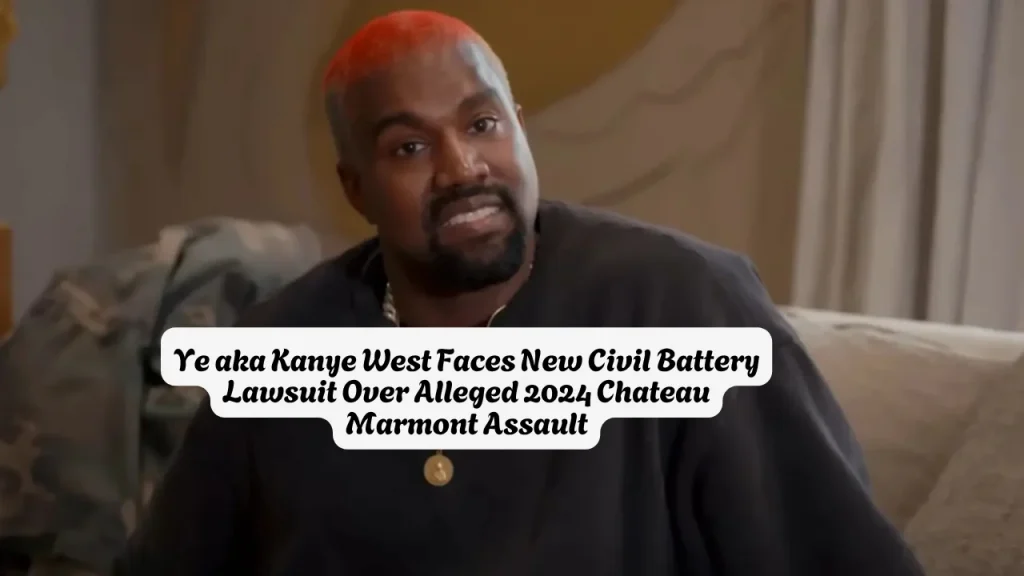
Ye aka Kanye West Faces New Civil Battery Lawsuit Over Alleged 2024 Chateau Marmont Assault
On April 14, 2026, a new civil lawsuit was filed against Ye (formerly known as Kanye West) in the Los Angeles Superior Court. The complaint alleges that the music mogul committed battery and intentional infliction of emotional distress during an unprovoked physical altercation at the Chateau Marmont hotel in April 2024. The plaintiff, identified as John Doe, is seeking unspecified monetary damages for physical injuries, loss of consciousness, and reputational harm stemming from what he describes as a “sucker-punch” followed by a public smear campaign.
This legal action follows a string of similar civil claims against the artist, marking a significant return to the courtroom for Ye regarding his public conduct. While no immediate trial date has been set, the filing officially enters the discovery phase, where hotel surveillance footage and witness depositions are expected to play a critical role in the proceedings.
Quick Case Snapshot
| Field | Details |
| Plaintiff | John Doe (Anonymous) |
| Defendant | Ye (f/k/a Kanye West) |
| Court | Los Angeles Superior Court, California |
| Case Number | TBD (Newly Filed) |
| Filing Date | April 14, 2026 |
| Judge | Not yet assigned |
| Claims Alleged | Battery, Intentional Infliction of Emotional Distress (IIED), Negligence |
| Damages Sought | Unspecified (Includes medical, lost earnings, and punitive damages) |
| Current Status | Newly Filed / Pleading Stage |
Detailed Allegations: The Chateau Marmont Incident
According to the complaint, the incident occurred in April 2024 while the plaintiff was seated at a table inside the iconic Hollywood hotel. The filing alleges that Ye approached the man without warning and struck him in the face with a “sucker punch.” The force of the blow allegedly knocked the plaintiff to the ground, causing him to strike his head and lose consciousness.
The lawsuit further claims that Ye did not stop after the initial blow, allegedly continuing to strike the man while he lay unconscious. Beyond the physical assault, the plaintiff asserts that Ye later engaged in a public smear campaign. In various media appearances and a widely viewed podcast, the defendant reportedly accused the plaintiff of behaving offensively or inappropriately toward a woman in Ye’s party. The plaintiff denies these claims entirely, stating that the public commentary has subjected him to “scorn, suspicion, and ridicule” within his community and professional circles.
Defendant’s Likely Response & Legal Defense
As of April 15, 2026, Ye’s legal representatives have not issued a formal response to the newly filed complaint. However, based on the artist’s history in similar litigation—such as the Justin Poplawski battery case settled in late 2024—the defense is likely to rely on several standard civil litigations strategies:
- Self-Defense or Defense of Others: In previous filings, Ye’s counsel has argued that his actions were “justified” to protect himself or his companions.
- Provocation: The defense may attempt to show that the plaintiff’s actions leading up to the incident instigated the response, potentially reducing liability or damages.
- Denial of Severity: Counsel may contest the extent of the “disfigurement” or “loss of consciousness” alleged by the plaintiff, requiring strict medical proof during the discovery phase.
Related article: American Oversight and Historians Sue Trump Administration Over Move to Nullify Presidential Records Act
Discovery Insights: The Role of Surveillance & Digital Footprint
In the coming months, the Discovery phase will be the most critical juncture of this case. Unlike street-side altercations involving paparazzi, the Chateau Marmont is a high-security environment.
- Surveillance Footage: Attorneys for “John Doe” will prioritize the preservation of all CCTV footage from the hotel’s dining and common areas. This footage will be the “silent witness” that confirms or refutes the “unprovoked” nature of the punch.
- Podcast Metadata: Because the plaintiff is also suing for emotional distress related to a smear campaign, his legal team will likely subpoena raw audio and metadata from the podcasts where Ye allegedly discussed the incident.
- Witness Depositions: High-profile guests and hotel staff present that evening will be called to testify. Given the celebrity nature of the venue, these depositions often lead to significant media leaks and procedural delays.
Bellwether Context: Celebrity Tort Trends in 2026
This case serves as a bellwether for how modern courts handle “celebrity-on-civilian” torts in an era of hyper-visibility. In the last three years, California courts have seen a 15% increase in battery filings involving high-profile figures.
The legal community is watching this case closely to see if the court allows the “John Doe” status to remain. Usually, plaintiffs in battery cases must reveal their identity unless they can prove a high risk of extreme physical harm or if the case involves sensitive sexual allegations. If the judge forces the plaintiff to reveal his name, it may alter the settlement leverage significantly.
Tax Implications of a Potential Settlement or Verdict
If the case reaches a settlement or a jury awards damages, the tax treatment of the payout is a critical consideration for both parties under Internal Revenue Code Section 104(a)(2):
- Physical Injury Damages: Payouts specifically for “physical sickness or physical injury” (e.g., medical bills for a concussion or facial trauma) are generally tax-free at the federal level.
- Emotional Distress: If the damages are purely for “emotional distress” not arising from a physical injury, the amount is typically taxable. However, because this case involves a physical battery that led to unconsciousness, the emotional distress damages may be bundled as tax-exempt.
- Punitive Damages: Any “punitive” damages intended to punish Ye for his conduct are 100% taxable as ordinary income to the plaintiff.
Attorney Fee Breakdown
In civil battery cases of this nature, plaintiffs almost exclusively hire counsel on a contingency fee basis.
- Standard Rates: Most California personal injury firms charge between 33.3% and 40% of the final recovery.
- Litigation Costs: In addition to the percentage fee, the plaintiff will likely be responsible for “costs” (filing fees, expert witness fees for neurologists, and court reporters), which can easily exceed $25,000–$50,000 in a high-profile case involving multiple depositions.
- Defendant Fees: Conversely, Ye likely pays his legal team on an hourly basis, with rates for top-tier Los Angeles litigators often ranging from $800 to $1,500 per hour.
Current Status & What Happens Next
The case is currently in the Pleading Stage. Ye has approximately 30 days from the date of service to file a formal “Answer” or a “Motion to Strike” portions of the complaint.
- Anticipated Timeline: If the case does not settle early, a trial is unlikely to occur before mid-2027.
- Settlement Prospects: Historically, Ye has opted to settle “battery” and “assault” claims privately (notably the 2024 settlement with Justin Poplawski). However, the added “smear campaign” allegation in this new suit may make the plaintiff less likely to accept a standard non-disclosure agreement (NDA) without a significant premium.
Frequently Asked Questions
1. Is this a class action lawsuit?
No. This is a single-party civil lawsuit filed by one individual (John Doe) against one defendant (Ye). It does not involve a group or class of people.
2. Can I join this lawsuit if I had a similar experience with the defendant?
You cannot “join” this specific case, but individuals with similar claims can file their own separate lawsuits. If multiple lawsuits are filed for the same incident, the court may consolidate them for discovery purposes.
3. What is the difference between “Battery” and “Assault” in this case?
In California, Assault is the threat or attempt to cause harm, while Battery is the actual physical contact. Because the plaintiff alleges he was actually struck and knocked unconscious, the claim is filed as Battery.
4. How much money could the plaintiff win?
There is no fixed amount. The plaintiff is seeking “unspecified damages,” which a jury would determine based on medical costs, lost wages, and the severity of the emotional suffering and reputational damage.
5. Has Kanye West been arrested for this?
Currently, this is a civil matter, not a criminal one. While battery can be a crime, this specific filing is a private lawsuit seeking money, not jail time.
Last Updated: April 15, 2026
Disclaimer: This article is for informational purposes only and does not constitute legal advice. Allegations in a complaint are not findings of fact. All parties are presumed innocent unless and until proven otherwise in court.
About the Author
Israr Ahmad is a legal content researcher with 4+ years of experience covering class action settlements and consumer rights cases. He has researched and published coverage of 2,500+ settlements using verified court records, settlement administrator filings, and government sources. Learn more about Israr.