
Family of Police Chaplain Antonio Seales Sues Alabama Police Over Fatal High-Speed Chase
The family of beloved Montgomery Police Chaplain Pastor Antonio L. Seales has filed a federal lawsuit against multiple Alabama police agencies, accusing them of conducting an “unnecessary” high-speed chase that ultimately killed the 51-year-old clergyman. The case is being led by national civil rights firm Grant & Eisenhofer.
Who Was Antonio Seales?
Seales had been affiliated with the Montgomery Police Department since 2013 and became the department’s chaplain in 2021. One of his signature contributions was helping pioneer Operation Good Shepherd — a community policing initiative that provided support and encouragement for families of loved ones affected by violence.
In the wake of his death, flags in Montgomery were lowered to half-staff. He was remembered as a “cherished and respected figure, known for his impeccable character and compassionate heart.”
What Happened on May 10, 2024
On May 10, 2024, Greenville Police said a man stole from a business then fled from officers onto Interstate 65. The multi-county pursuit ended in Montgomery when the driver crashed into Seales’ vehicle on Norman Bridge Road near East Delano Avenue.
The Alabama Law Enforcement Agency confirmed Seales was not involved in the chase and it is unclear whether he was on duty at the time. He died at the hospital on May 21, 2024, eleven days after the crash. He was 51 years old.
The suspect was later identified as Ashton Ford, 26, of Montgomery. Ford was indicted in January 2025 by a Montgomery County grand jury for reckless murder. He is being held in the Montgomery County Detention Facility under no bond.
Why the Family Is Suing the Police Agencies — Not Just the Driver
Ford’s criminal case addresses his individual actions. The Seales family’s federal lawsuit takes a different angle — it targets the police agencies that authorized and conducted the chase itself.
Grant & Eisenhofer attorney Elizabeth Bailey said the firm has spent a year trying, without success, to obtain police reports, dashcam videos, radio communications, and other public records that could shed light on how Greenville and other participating police departments conducted the high-speed pursuit along I-65 — a chase launched to apprehend someone the Greenville Police Chief himself described as a retail theft suspect.
Related article: IF Bancorp (IROQ) Iroq Servbanc Merger Proxy Class Action Lawsuit. Did the ServBanc Merger Proxy Cheat Shareholders Out of Their Full Payout?
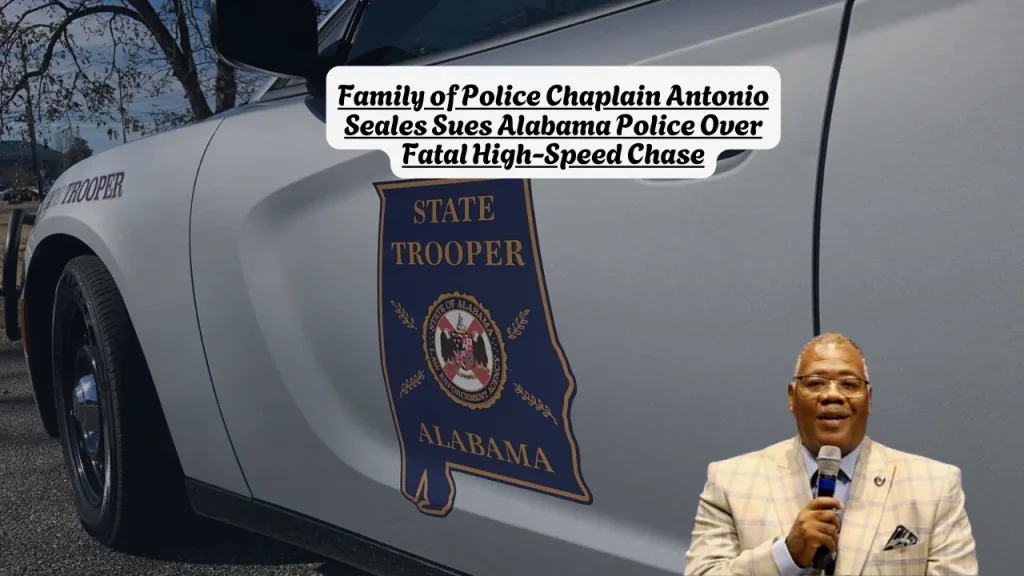
The lawsuit argues the chase was wholly preventable and that police agencies may have violated their own hot-pursuit policies by initiating and sustaining a dangerous high-speed chase over a minor property crime.
Bailey described the situation as “beyond ironic” — the Seales family, who believed for years they were part of greater Montgomery’s police family, had to hire legal counsel just to get answers to basic questions about the chase and whether hot-pursuit policies were violated.
The Cover-Up Allegation: One Year of Denied Records
One of the most significant aspects of this lawsuit is what the family says happened after the crash.
For nearly a year, Grant & Eisenhofer pressed for copies of police reports, dashcam footage, and radio communications — all of which are generally considered public records — and received nothing. The firm is now issuing a public appeal for any eyewitness accounts, photos, or videos of the chase that could support the investigation.
The refusal to hand over records, combined with the decision to pursue a retail theft suspect at high speed through multiple counties, forms the core of the family’s legal argument: that this death was not an accident — it was the result of reckless and policy-violating police conduct.
What the Lawsuit Is Seeking
The federal lawsuit names multiple Alabama police agencies as defendants. The family is seeking accountability, transparency, and damages for the wrongful death of Pastor Seales. The complaint challenges whether the decision to initiate and continue the high-speed pursuit of a retail theft suspect — across multiple counties and on a busy interstate — was legally justified under applicable police use-of-force and pursuit policies.
Under 42 U.S.C. § 1983, the federal civil rights statute, law enforcement agencies can face liability when their officers’ conduct — including chase policies — violates constitutional protections and causes civilian deaths.
High-Speed Chases and Police Liability: What the Law Says
Police pursuits that injure or kill bystanders have been the subject of federal lawsuits across the country. Courts have held that agencies can be held responsible when their pursuit policies are unreasonable or when officers ignore those policies entirely.
Grant & Eisenhofer has previously filed wrongful death and negligence civil actions on behalf of families whose loved ones were killed in vehicle collisions during high-speed police chases, including cases involving Philadelphia-area police departments. The firm’s track record in these cases gives the Seales family experienced legal counsel familiar with the specific challenges of suing police agencies over hot-pursuit deaths.
For more on how federal civil rights lawsuits against police agencies work, see our guide on wrongful death and police liability lawsuits.
What Comes Next
The lawsuit is now active in federal court. The police agencies named as defendants will have the opportunity to respond to the complaint. Key questions the court will examine include whether the pursuit was justified given the nature of the suspected offense, whether agencies followed their own written hot-pursuit policies, and whether the failure to produce records constitutes additional wrongdoing.
Grant & Eisenhofer continues to press for official records and is appealing publicly for any witnesses, photos, or videos related to the May 10, 2024 chase. Anyone with information can contact attorney Elizabeth Bailey at [email protected] or 302-622-7195.
Disclaimer: This article is for general informational and educational purposes only and does not constitute legal advice. Laws vary by state and jurisdiction. For advice about your specific situation, consult a qualified attorney.
Prepared by the AllAboutLawyer.com Editorial Team and reviewed for factual accuracy against Grant & Eisenhofer’s April 29, 2026 press release, WSFA-TV reporting, and court records. Last Updated: May 12, 2026.
About the Author
Israr Ahmad is a legal content researcher with 4+ years of experience covering class action settlements and consumer rights cases. He has researched and published coverage of 2,500+ settlements using verified court records, settlement administrator filings, and government sources. Learn more about Israr.