
Victoria Fire, Former Traveller’s Inn at 760 Queens Avenue Engulfed in Flames as B.C. Laws Come Into Focus
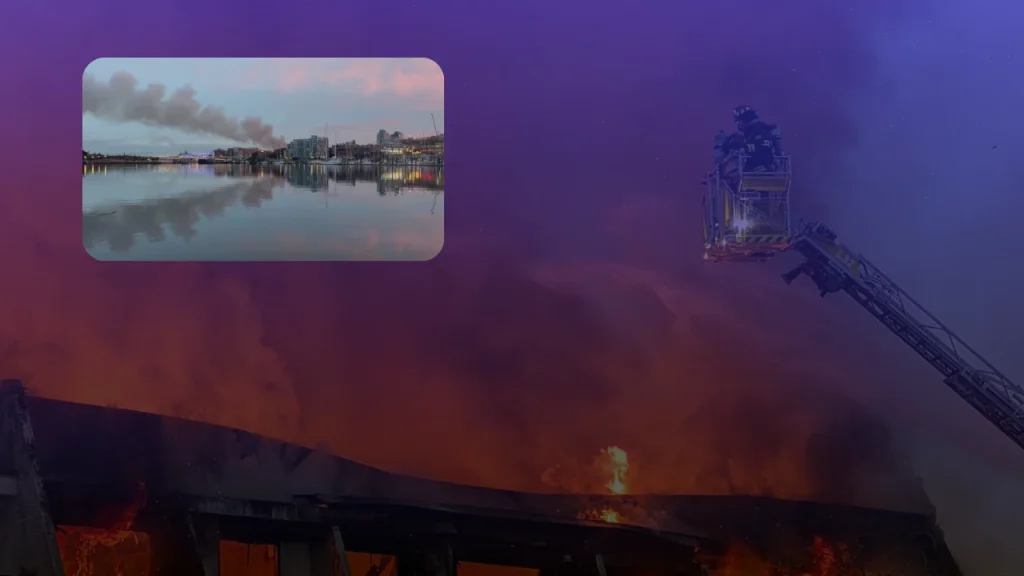
A major fire engulfed the former Traveller’s Inn property at 760 Queens Avenue in Victoria, British Columbia, early on Saturday, October 24, 2026. Flames were reported coming from the building’s balconies, and heavy smoke spread over the surrounding area.
Victoria firefighters responded with help from Saanich crews, and aerial equipment was used to fight the blaze. Police closed sections of nearby roads, including Blanshard Street and Douglas Street, and asked the public to avoid the area.
The fire renewed attention on a property that had been damaged by fire in 2016 and was reported to have been closed for years. However, the cause of Saturday’s fire had not been established in the reports reviewed, and no confirmed finding of arson, negligence or a building-safety violation had been announced.
The fire also raises questions about how British Columbia investigates fires, what duties property owners have under provincial fire-safety law, and what legal options may exist if an investigation links a person’s actions or a property hazard to injury or damage. As of October 25, 2026, no lawsuit or regulatory violation arising from this fire was identified.
Victoria Fire: Quick Facts
| Detail | What is known |
| Incident | Fire at the former Traveller’s Inn (also called Hotel 760 in local reporting) |
| Date | Saturday, October 24, 2026 |
| Location | 760 Queens Avenue, Victoria, British Columbia, near the Bay Street Armoury |
| Reported start time | Shortly before 4 a.m., per Times Colonist reporting |
| Emergency response | Victoria firefighters with Saanich crews; three aerial apparatus in use |
| Conditions reported | Flames from balconies and heavy smoke |
| Road closures | Sections of Blanshard Street and Douglas Street closed Saturday morning |
| Building status | Described in local reporting as an abandoned former hotel |
| Cause | Not established in the reports reviewed |
| Injuries | No confirmed injuries identified in the coverage reviewed |
| Arson | No official finding of arson identified |
| Lawsuit or safety citation | None identified as arising from this fire |
Sources are listed at the end of this article.
What Happened at the Former Traveller’s Inn?
Fire crews responded before sunrise
According to the Times Colonist, multiple callers reported flames coming from balconies at the former Traveller’s Inn. The report placed the start of the fire shortly before 4 a.m. local time. Three aerial apparatus were in use and Saanich crews were called in to assist.
Aerial equipment lets firefighters reach the upper parts of a multistorey building, and extra crews help with suppression and managing the area. The initial reporting did not say what ignited, where in the building the fire started, or whether any equipment or building system played a role. Those questions need evidence from the scene and a formal investigation.
Road closures affected downtown traffic
Police closed parts of Blanshard Street in both directions and, as of about 8:30 a.m. Saturday, Douglas Street between Bay Street and Princess Avenue, and asked drivers to use alternate routes. These details describe Saturday morning only and should not be treated as a live traffic report. Follow current directions from local authorities.
Timeline of the incident
| Time (local) | Event |
| Shortly before 4 a.m. | Callers report flames coming from balconies; fire crews respond |
| Early morning | Aerial firefighting equipment deployed; Saanich crews assist |
| About 8:30 a.m. | Douglas Street closed between Bay Street and Princess Avenue; Blanshard Street also closed |
Was anyone injured or displaced?
The coverage reviewed did not establish that anyone was injured. The Times Colonist described the building as an abandoned hotel, which matters because some headlines and social posts use language that suggests an apartment fire with displaced tenants. No reliable report reviewed confirms that people were living in the building or were displaced by this fire. Any effect on neighbouring homes or businesses should be treated as unconfirmed until authorities or reliable local outlets report it.
What Was the Former Traveller’s Inn?
The building at 760 Queens Avenue operated as a Traveller’s Inn motel and was later converted to a rental property with nearly 90 suites. A February 2019 report by the local real-estate publication Citified said the property was damaged by fire in 2016 and was formally closed in 2018, according to the sales records it cited. Local news at the time reported that the 2016 fire displaced dozens of tenants.
That history explains why the site draws attention, but the 2016 fire and the October 24, 2026 fire are separate incidents. The earlier damage does not establish the cause of the latest blaze, prove any safety rule was broken, or show who might be responsible.
What Happens Under B.C.’s Fire Safety Act?
British Columbia’s Fire Safety Act sets rules for fire prevention, inspections, investigations and enforcement. None of the points below means the owner of the former Traveller’s Inn broke the law. That would depend on facts investigators establish.
Section 25: Fire investigations
Section 25 covers investigation of fires that destroy or damage property or cause death or injury. It requires the local authority, within five days of learning of a qualifying fire, to ensure a fire investigator begins looking into its cause, origin and circumstances. A report must go to the fire commissioner within 30 days of the fire. Those are requirements about the investigation and reporting process, not a promise that a detailed report will be made public within 30 days.
Section 7: Property owners and fire hazards
Section 7 provides that an owner of premises must ensure no fire hazard exists on or in the premises. That matters for vacant or abandoned buildings, because a building does not stop raising fire-safety concerns when it stops operating. Questions could arise about combustible materials, access controls or other hazards. But a fire does not prove a hazard existed beforehand or that the owner failed to deal with one.
Sections 9 to 11: Inspections and enforcement orders
The Act gives fire inspectors powers to inspect in specified circumstances. Under Section 11, an inspector who is satisfied an owner has contravened the Act or its regulations can issue an order requiring compliance, which may include repairing or removing premises, altering their use, securing hazardous materials or taking other precautions. No order or violation linked to the October 24 fire was identified.
Does the B.C. Fire Code Apply to an Abandoned Building?
The B.C. Fire Code addresses fire safety in existing buildings and facilities, while the B.C. Building Code sets minimum requirements for building construction. Whether a particular provision applies to the former Traveller’s Inn depends on the provision and the building’s circumstances.
The fact that a building was abandoned is not, on its own, proof of a fire-code violation, and a major fire does not show that a required system was missing or defective. The question is what the evidence shows about the building’s condition before and during the fire.
Could the Victoria Fire Lead to an Arson Investigation?
That remains open. A fire can result from an accident, equipment failure, a natural event, deliberate action or another cause, and investigators need evidence on origin and circumstances before deciding. A building being vacant, previously damaged or discussed online does not show that a later fire was deliberately set.
What Canadian law says about arson
The federal Criminal Code contains several arson-related offences:
- Section 434: intentionally or recklessly causing damage by fire or explosion to property that is not wholly owned by the person responsible.
- Section 433: arson involving disregard for human life, including where the person knows or is reckless about whether the property is occupied, or where the fire causes bodily harm.
- Section 436: arson by negligence, involving a marked departure from the standard of care a reasonably prudent person would use to prevent or control a fire, where the statutory requirements for injury or damage are met.
These offences are not interchangeable, and any charge would depend on the evidence and the required legal elements, including the required mental element. The coverage reviewed identified no finding that this fire was deliberate.
Could the Property Owner Face Legal Liability?
That would depend on the cause of the fire and whether the evidence shows a breach of a legal duty. If investigators found that a preventable hazard or a failure to meet a requirement contributed to the fire, that could lead to regulatory or civil questions. Evidence of deliberate conduct would raise different legal issues. Neither is an established fact here.
An owner is not automatically liable for every fire on property they own. Civil negligence claims generally require a duty of care, a breach of it, a sufficient connection between the breach and the harm, and legally recoverable loss. The same applies to contractors, maintenance companies or others, whose responsibility must be shown by evidence rather than assumed.
Could Someone Sue for Personal Injury or Property Damage?
The reports reviewed did not establish an injury or property-damage claim from this fire. If someone later shows the fire injured them or damaged neighbouring property, civil-liability and insurance questions could follow, such as:
- Whether the injury or damage was caused by the fire.
- Whether a relevant safety obligation was breached.
- Whether the defendant’s conduct legally caused the loss.
- Whether insurance covers the damage and related costs.
- Whether a limitation period or other legal rule affects the claim.
For example, smoke damage at a neighbouring property could raise questions about cleanup costs, coverage and responsibility if the evidence supports a legally actionable cause. That is a hypothetical, not a confirmed result of this fire. A regulatory finding of a safety violation can be important evidence, but it does not automatically decide a separate civil lawsuit.
What If Residents Were Displaced?
No reliable report reviewed confirms that residents were living in the former Traveller’s Inn or were displaced from it. If later reporting shows a neighbouring residential building was evacuated or an occupied rental unit became uninhabitable, different rules could apply.
B.C.’s Residential Tenancy Act governs covered residential tenancies. Provincial guidance on unforeseen circumstances explains that a fire can make a rental unit uninhabitable and end (frustrate) a tenancy. In qualifying cases no notice to end the tenancy is required, the tenant need not pay rent after the event, and rent paid in advance may need to be refunded. These rules depend on whether a covered tenancy existed and whether the unit became uninhabitable, and they should not be assumed to apply to this building without evidence of eligible tenants.
What Happens Next?
The key next step is confirming the cause and circumstances. Investigators may need to examine the damaged structure and review records and physical evidence, and structural damage can delay safe access to some areas. Developments to watch:
- Official cause determination: distinguishes an accident from a fire involving a regulatory breach or criminal conduct.
- Fire-safety findings: conditions relevant to the Fire Safety Act or the Fire Code, reported only when supported by an official finding.
- The building’s condition and future: information on structural damage, site security and what happens to the property.
- Legal proceedings: regulatory enforcement, charges or civil claims only if the evidence and law support them.
- Effects on neighbours: confirmed information on evacuations or smoke damage.
As of October 25, 2026, the available information supports reporting a major fire at the former Traveller’s Inn and explaining the laws that govern fire investigations and property safety. It does not support calling the fire arson, alleging negligence or saying a lawsuit has been filed.
Frequently Asked Questions
Where was the Victoria fire?
At the former Traveller’s Inn property at 760 Queens Avenue in Victoria, British Columbia, near the Bay Street Armoury.
When did the Traveller’s Inn fire happen?
Early on Saturday, October 24, 2026. The Times Colonist reported it began shortly before 4 a.m.
What caused the fire at 760 Queens Avenue?
The cause had not been established as of October 25, 2026. No confirmed finding of arson or negligence was identified.
Were residents displaced by the Victoria fire?
This could not be verified. Local reporting described the building as abandoned. Any evacuation of another property would need separate confirmation.
Is the fire being investigated?
B.C.’s Fire Safety Act requires an investigation into the cause, origin and circumstances of qualifying fires. No final cause or enforcement finding had been reported.
What laws could apply to the former Traveller’s Inn fire?
British Columbia’s Fire Safety Act, the B.C. Fire Code and, if evidence supports the required elements, the Criminal Code’s arson provisions. Civil-liability and tenancy rules could apply if specific injuries, losses or affected tenancies are established.
Can the property owner be held responsible?
Potentially, but responsibility cannot be inferred from the fact that a fire occurred. Investigators would need to establish the conditions, and a civil claim would need evidence of each legal element.
Was the building damaged by fire before?
Yes. Citified reported fire damage in 2016 and a formal closure in 2018. That history does not establish the cause of the 2026 fire.
Has anyone filed a lawsuit over the October 24 fire?
No lawsuit from this incident was identified as of October 25, 2026.
Sources and Legal Authorities
- Times Colonist reporting, syndicated by Castanet, “Abandoned hotel engulfed by fire in Victoria”: https://www.castanetkamloops.net/news/BC/635566/Abandoned-hotel-engulfed-by-fire-in-Victoria
- Citified, history of the fire-damaged Traveller’s Inn property: https://victoria.citified.ca/news/760-queens-avenue-fire-damaged-traveller-s-inn-motel-turned-rental-complex-listed-for-sale-at-just-below-20m/
- CBC News, 2016 coverage of the Traveller’s Inn fire: https://amp.cbc.ca/news/canada/british-columbia/fire-at-victoria-s-traveller-s-inn-displaces-dozens-of-longterm-tenants-1.3500958
- City of Victoria, fire safety inspections and regulations: https://www.victoria.ca/community-culture/safety-emergencies/fire-department/safety-inspections-regulations
- British Columbia Fire Safety Act: https://www.bclaws.gov.bc.ca/civix/document/id/complete/statreg/16019
- Government of British Columbia, Fire Code: https://www2.gov.bc.ca/gov/content/industry/construction-industry/building-codes-standards/bc-codes/fire
- Criminal Code of Canada, s. 433: https://laws-lois.justice.gc.ca/eng/acts/c-46/section-433.html
- Criminal Code of Canada, s. 434: https://laws-lois.justice.gc.ca/eng/acts/c-46/section-434.html
- Criminal Code of Canada, s. 436: https://laws-lois.justice.gc.ca/eng/acts/c-46/section-436.html
- British Columbia Residential Tenancy Act: https://www.bclaws.gov.bc.ca/civix/document/id/complete/statreg/00_02078_01
- Government of British Columbia, special circumstances affecting a tenancy: https://www2.gov.bc.ca/gov/content/housing-tenancy/residential-tenancies/ending-a-tenancy/special-circumstances
Informational disclaimer: This article is for general informational purposes only and is not legal advice. AllAboutLawyer.com is a legal information website, not a law firm. It does not establish the cause of the fire or determine legal responsibility. Anyone affected by a fire should consult a licensed British Columbia lawyer.
About the Author
Israr Ahmad is a legal content researcher with 4+ years of experience covering class action settlements and consumer rights cases. He has researched and published coverage of 2,500+ settlements using verified court records, settlement administrator filings, and government sources. Learn more about Israr.