
Quaker Oats Cedar Rapids Explosion, What Happened, OSHA Rules and Potential Injury Claims
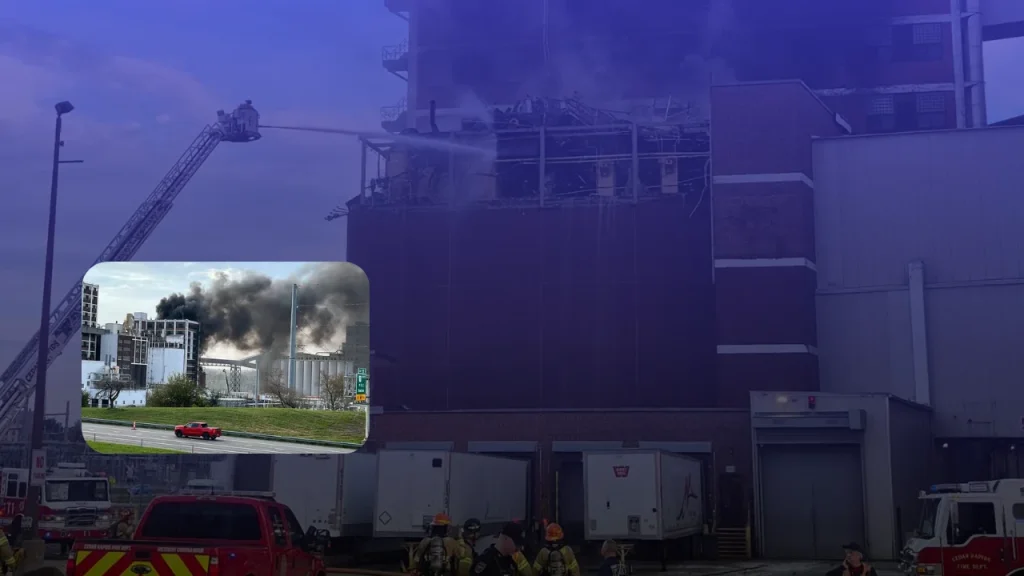
An apparent explosion sparked a fire at the Quaker Oats facility in downtown Cedar Rapids, Iowa, on Saturday, October 24, 2026. Firefighters responded at about 4:45 p.m. local time after reports of an explosion, followed by heavy smoke rising from a building attached to the plant.
The Cedar Rapids Fire Department accounted for all plant workers, and officials reported no injuries. The cause of the explosion has not been announced. PepsiCo, which owns Quaker Oats, said emergency crews responded and that the incident would be investigated.
The event raises questions about industrial fire prevention, combustible-dust hazards, workplace-safety enforcement in Iowa and the legal rights of workers or neighbors if someone is later found to have been hurt or to have suffered property damage. However, no confirmed cause, safety violation, injury claim or lawsuit tied to this fire was identified in the reports reviewed for this article.
Quaker Oats Cedar Rapids Fire: Quick Facts
| Detail | What is known |
| Incident date | Saturday, October 24, 2026 |
| Location | Building attached to the Quaker Oats facility, downtown Cedar Rapids, Iowa |
| Reported fire-call address | 418 2nd Ave SE, Cedar Rapids |
| First emergency response | About 4:44–4:45 p.m. local time |
| What happened | An apparent explosion followed by a fire |
| Injuries | None reported; all plant workers accounted for |
| Cause | Not established in the reporting reviewed |
| Company | Quaker Oats, owned by PepsiCo |
| Investigation | PepsiCo said the incident would be investigated; no findings reported |
| Lawsuit or OSHA citation tied to the fire | None identified as of October 25, 2026 |
| Product recall | None announced in connection with the fire |
These facts come from local and national news reports. Official cause findings, damage estimates and any regulatory action remain separate questions. Sources are listed at the end of this article.
What Happened at the Quaker Oats Plant in Cedar Rapids?
An explosion was reported before the fire
Local reporting says calls for a structure fire came in at about 4:44 p.m. Saturday, from an area at the rear of the Quaker Oats facility. Witnesses reported hearing or feeling an explosion before black smoke became visible, and photos and video showed smoke rising over the downtown area.
The early reports describe an apparent explosion. They do not establish what caused it, and an explosion can result from many kinds of industrial failure.
All workers were accounted for
The fire department said it had accounted for the plant’s workers by about 5:30 p.m., roughly 45 minutes after the first call. Cedar Rapids Mayor Tiffany O’Donnell said the fire was in a product-handling area where relatively few employees are normally present, and that everyone was evacuated safely.
The lack of reported injuries does not say anything about the condition of equipment, building systems, inventory or nearby property, and the full extent of damage has not been reported.
Timeline of the incident
| Time (local) | Event |
| About 4:44–4:45 p.m. | Emergency calls report an explosion and fire; smoke visible across downtown |
| Evening | Firefighters from Cedar Rapids and surrounding agencies respond |
| About 5:30 p.m. | Fire department reports all plant workers accounted for |
| After the fire | PepsiCo says the incident will be investigated |
What caused the explosion?
The cause has not been confirmed. At a grain-processing or food-manufacturing plant, investigators may look at electrical equipment, machinery, overheated bearings, ignition sources, ventilation, dust-collection systems and combustible materials.
OSHA explains that fine combustible dust can ignite or explode when the right conditions exist, and combustible dust is a recognized hazard in grain handling. But no public finding confirms that dust caused this incident, so it would be premature to call it a dust explosion or to blame any particular equipment failure.
Why the Quaker Oats Cedar Rapids Facility Matters
The Cedar Rapids operation is a major part of the Quaker Oats business. The company describes it as the world’s largest oat milling operation, processing more than 2 million pounds of oats a day. The plant sits along the Cedar River next to downtown and has a long history, including a destructive mill explosion and fire at the site in 1905 that led to the plant’s rebuilding.
That scale explains the attention an incident here draws, from plant operations and worker safety to production interruptions. Those are possible consequences, not confirmed outcomes: the reporting reviewed did not establish the duration of any shutdown or whether any retail product was affected.
A fire at a food plant also does not automatically mean products are contaminated. A recall or safety warning would need separate evidence and an official announcement.
Which Workplace Safety Laws Could Apply?
What applies depends on the cause of the explosion, the equipment involved and the work being done in the affected area. These laws and standards could become relevant only if investigators establish facts that bring them into play.
1. OSHA’s General Duty Clause
Section 5(a)(1) of the Occupational Safety and Health Act requires employers to provide a workplace free from recognized hazards likely to cause death or serious physical harm. It can apply when a serious, recognized hazard exists and no more specific OSHA standard covers it.
A violation is not established just because an accident happened. Investigators would ask whether a hazard existed, whether the employer knew or should have recognized it, and whether feasible measures were available. No such violation has been established here.
2. OSHA’s grain-handling and combustible-dust rules
OSHA’s grain-handling standard, 29 CFR § 1910.272, addresses fire and explosion hazards from grain dust. It covers specified operations, including certain flour mills, feed mills, grain elevators and other listed facilities, so whether it applies to the affected Quaker Oats area depends on the operations and equipment there. Where it applies, it addresses topics such as:
- Housekeeping and control of grain-dust accumulation.
- Employee training on hazards and safe procedures.
- Emergency action plans.
- Hot-work procedures and precautions.
- Preventive maintenance of specified equipment.
- Equipment-specific safeguards for certain grain-handling operations.
These rules exist to prevent incidents, not just to assign blame afterward. Investigators would first have to establish the cause and the workplace conditions before deciding whether any requirement applied or was violated.
3. Emergency planning, fire protection and equipment safety
OSHA’s general-industry standards also cover emergency action plans, exit routes, fire protection, electrical safety and machine hazards. If investigators found a problem with an electrical system, machinery, a dust collector, maintenance procedures or an emergency system, they would look at the matching requirements. The reports reviewed do not show that any of these systems failed.
4. Iowa OSHA’s role
Iowa runs an OSHA-approved state plan that covers most private-sector workplaces in the state, so Iowa OSHA is the usual workplace-safety agency for most covered private employers. Its compliance officers inspect workplaces and may issue citations if an investigation finds violations.
Inspections can start from a worker complaint, a referral or another qualifying event. Whether Iowa OSHA is inspecting this incident was not confirmed as of October 25, 2026. An inspection also does not guarantee a violation finding.
Could Workers Have Personal Injury Claims?
Officials said no one was injured, so no confirmed injury case arises from this fire. If an employee later reports an injury connected to it, Iowa workers’ compensation law may become relevant. Injuries that can occur in industrial explosions and fires include burns, smoke inhalation, hearing damage and injuries from falling materials. Those are general examples, not injuries reported at Quaker Oats.
Workers’ compensation under Iowa law
Iowa’s system generally gives covered employees benefits for qualifying work-related injuries without requiring proof that the employer was negligent. Depending on eligibility, benefits can include medical care, wage-replacement payments and compensation for qualifying permanent impairment.
Iowa Code § 85.20 generally makes workers’ compensation the exclusive remedy against an employer for covered workplace injuries. That means an injured employee ordinarily cannot bypass the system and file a standard negligence lawsuit against the employer. A workplace accident does not automatically give an employee the right to sue.
What if defective equipment or a contractor caused an injury?
Workers’ compensation does not necessarily rule out every other claim. Depending on the evidence, an injured employee could have a separate claim against a third party whose independent negligence or defective product caused the harm, such as an equipment manufacturer or an outside maintenance contractor.
These are hypothetical examples. No equipment defect, contractor negligence or other third-party fault has been established in this incident. Any third-party claim would require proof of responsibility, causation and legally recoverable damages.
Iowa workers’ compensation deadlines
Workers who find a possibly work-related injury should not wait indefinitely to report it.
- Notice: Under Iowa Code § 85.23, the employer generally must have actual knowledge of the injury or receive notice within 90 days, measured under the statute’s rules. The law also addresses when an employee knew or should have known the injury was work-related.
- Filing: Iowa Code § 85.26 generally provides a two-year period to start a benefits proceeding, with a three-year provision in specified situations involving weekly compensation payments.
These are different requirements and should not be treated as interchangeable. Exceptions and specific facts can change the analysis.
Could Nearby Residents Sue Over the Fire?
Potentially, but a visible fire or smoke cloud does not automatically create a valid lawsuit. A nearby resident who later suffers an actual injury or property damage could raise negligence or another legal theory, for example documented harm from smoke exposure or documented damage to a building caused by the incident.
A claim would need evidence connecting a defendant’s actionable conduct to the harm. A resident claiming smoke-related injury would likely need medical evidence linking the incident to the injury, and a property owner would need proof of the damage and its cause. The reporting reviewed identified no injured nearby resident and no confirmed off-site property damage.
Iowa’s personal injury and property damage deadlines
Iowa Code § 614.1 generally provides:
- Personal injury: a two-year limitations period, subject to exceptions.
- Property damage: a five-year limitations period for injuries to property, subject to exceptions.
These are general periods, not a guarantee that every claim has exactly that deadline. The date a claim accrues, the parties and the type of claim can all change the analysis.
Could Quaker Oats or PepsiCo Face OSHA Penalties?
A citation is possible only if the enforcement agency establishes a violation of an applicable requirement. Investigators may look at maintenance records, inspection logs, employee training, emergency procedures and equipment condition. Those are potential sources of evidence, not findings about this facility.
An accident alone does not prove negligence or an OSHA violation. Likewise, the absence of injuries does not prove that every safety requirement was met, and a violation does not require that anyone was hurt. As of this update, no OSHA violation or citation tied to the October 24 fire had been disclosed.
Will Quaker Oats Products Be Recalled After the Fire?
Not on the information currently available. An industrial fire is different from a food-safety incident. A recall would need a separate basis, such as evidence that affected products posed a safety or regulatory problem. No recall connected to this fire was announced in the reporting reviewed, and nothing reviewed shows that retail products were affected.
What Happens Next in the Investigation?
- Fire-cause findings: Investigators may determine whether the event started with equipment, an electrical issue, a combustible material or another cause. Until then these are possibilities, not findings.
- Workplace-safety review: Iowa OSHA could examine workplace conditions if the circumstances warrant an inspection. A specific inspection of this fire has not been confirmed.
- Damage and operations updates: Information on the building, equipment and production could clarify the practical impact.
- Potential claims: If injuries or property damage are later established, workers’ compensation, third-party liability or other questions may arise.
- Food-safety information: Any recall, contamination finding or product warning would need separate confirmation.
The key unresolved question is the cause. It will decide whether this was an accident with no legal violation, a workplace-safety failure, an equipment problem or something else.
Frequently Asked Questions
Did anyone get hurt in the Quaker Oats Cedar Rapids explosion?
Officials reported that all workers were accounted for and no one was injured.
What caused the Quaker Oats explosion?
The cause had not been established as of October 25, 2026. Combustible dust is a recognized hazard at certain grain-handling facilities, but no finding confirms it caused this incident.
Is Quaker Oats being sued over the Cedar Rapids fire?
No lawsuit arising from this fire was identified in the reporting reviewed. The cause and any liability remain unresolved.
Is OSHA investigating the Quaker Oats fire?
A specific OSHA investigation was not confirmed in the reports reviewed. Iowa OSHA is the relevant state agency for most covered private-sector workplaces in Iowa.
Can an employee sue Quaker Oats if the explosion caused an injury?
Iowa workers’ compensation is generally the exclusive remedy against an employer for covered workplace injuries. A separate third-party claim may be possible if evidence supports liability against another responsible party.
Can nearby residents file personal injury claims?
Potentially, if they suffer a legally recognized injury and can connect it to another party’s actionable conduct. No injuries to nearby residents were identified in the reports reviewed.
Was any Quaker Oats product recalled after the fire?
No recall connected to the fire was announced in the reporting reviewed.
Could Quaker Oats face OSHA penalties even if nobody was hurt?
Yes, a violation does not require an injury, but the agency must establish a violation of an applicable requirement. The fire alone does not prove one.
When will the cause of the fire be known?
No timetable for a final cause determination was identified. Watch for updates from local authorities and verified company or regulatory announcements.
Bottom Line
An apparent explosion and fire hit the Quaker Oats plant in downtown Cedar Rapids on October 24, 2026. Officials reported no injuries, the cause is unknown, and no violation, lawsuit or recall had been reported as of October 25, 2026. If the investigation finds a cause, the relevant law could include OSHA’s General Duty Clause, the grain-handling standard, Iowa workers’ compensation and, in some cases, third-party liability. Until then, these are possibilities, not findings.
Sources and Legal Authorities
- KCRG, “Fire and explosion reported at downtown Cedar Rapids factory,” October 24, 2026: https://www.kcrg.com/2026/10/24/fire-explosion-reported-downtown-cedar-rapids-factory/
- Associated Press, Quaker Oats plant fire coverage: https://apnews.com/article/cedar-rapids-fire-iowa-quaker-oats-205913f0edeac764a19bb2daabf3d911
- The Gazette / The History Center, “Remembering the 1905 cereal plant fire in Cedar Rapids”: https://www.thegazette.com/?p=112904
- OSHA, Grain Handling: https://www.osha.gov/grain-handling
- OSHA, 29 CFR § 1910.272, Grain Handling Facilities: https://www.osha.gov/laws-regs/regulations/standardnumber/1910/1910.272
- OSHA, Combustible Dust: https://www.osha.gov/combustible-dust
- OSHA, Occupational Safety and Health Act, Section 5, Duties: https://www.osha.gov/laws-regs/oshact/Section5-duties
- OSHA, Iowa State Plan: https://www.osha.gov/stateplans/IA
- Iowa Code § 85.20: https://www.legis.iowa.gov/docs/code/2025/85.20.pdf
- Iowa Code § 85.23: https://www.legis.iowa.gov/docs/code/2021/85.23.pdf
- Iowa Code § 85.26: https://www.legis.iowa.gov/docs/code/2025/85.26.pdf
- Iowa Department of Inspections, Appeals, and Licensing, Workers’ Compensation Time Limits: https://dial.iowa.gov/hearings/workers-comp/time-limits
- Iowa Code Chapter 614, Limitations of Actions: https://www.legis.iowa.gov/DOCS/ACO/IC/LINC/Chapter.614.html
Informational disclaimer: This article is for general informational purposes only and is not legal advice. AllAboutLawyer.com is a legal information website, not a law firm. Time limits and legal rights depend on specific facts; anyone affected by a workplace or property incident should consult a licensed Iowa attorney.
About the Author
Israr Ahmad is a legal content researcher with 4+ years of experience covering class action settlements and consumer rights cases. He has researched and published coverage of 2,500+ settlements using verified court records, settlement administrator filings, and government sources. Learn more about Israr.