
Family Dollar $63 Million Settlement, Who Could Receive Money From the $40 Million Refund Fund?
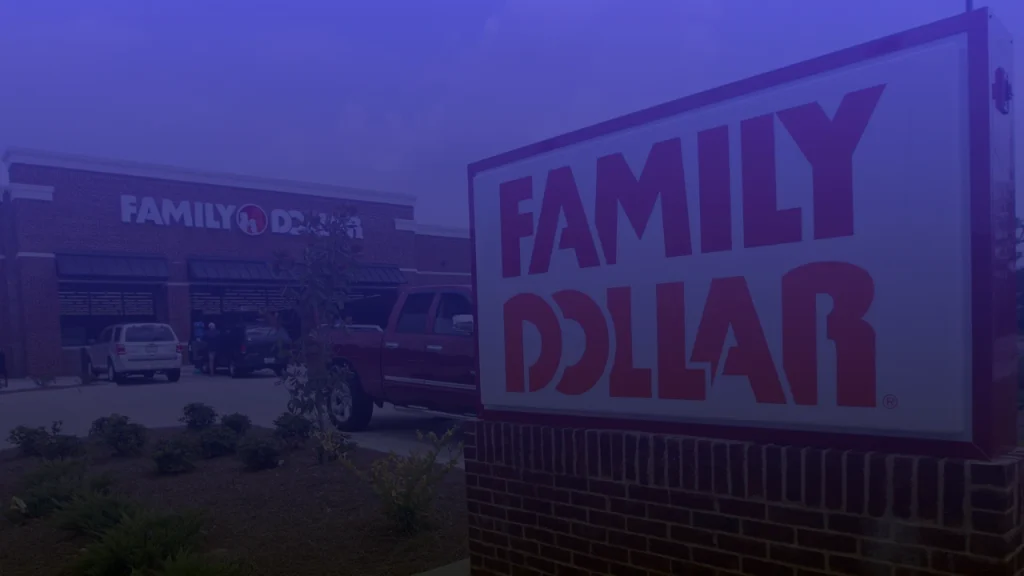
On November 12, 2026, the Federal Trade Commission (FTC) and 17 states announced a proposed $63 million settlement with Family Dollar Stores, LLC. The case resolves allegations that the retailer routinely charged customers more at the register than the prices shown on shelves, price tags, advertisements, its website and its mobile app.
The proposed settlement includes $40 million in consumer refunds, $20 million in shopping discounts and more than $3 million in payments to the participating states.
If you bought anything at Family Dollar between January 1, 2023, and October 1, 2026, you may be eligible for a refund. The proposed eligibility definition is based on making at least one qualifying purchase, not on proving that you personally were overcharged. Shoppers in all U.S. states may qualify, including those whose states did not join the case.
The settlement still needs federal court approval, and no claim form is open yet. Do not pay anyone to register, and do not give personal information to unofficial settlement websites. Family Dollar neither admitted nor denied the allegations.
Family Dollar Settlement 2026: Key Facts
| Detail | Information |
| Defendant | Family Dollar Stores, LLC |
| Announced | November 12, 2026 |
| Total proposed settlement | About $63 million |
| Consumer refund fund | $40 million |
| Shopping discount program | $20 million |
| Payments to states | More than $3 million |
| Government plaintiffs | FTC and 17 states |
| Eligible purchase period | January 1, 2023 to October 1, 2026 |
| Minimum qualifying purchases | One |
| Must prove an overcharge? | Not under the proposed eligibility definition |
| Receipt required? | Not specified in the proposed order |
| Claim form | Not yet available |
| Claims window | Up to 180 days once the form becomes available |
| Individual payment amount | Not announced |
| Court | U.S. District Court, Eastern District of Virginia |
| Case number | 2:26-cv-01267 |
| FTC matter number | X270003 |
| Admission of wrongdoing | None; the company neither admits nor denies the allegations |
| Status | Proposed; court approval pending |
Official source: FTC, Family Dollar $63 Million Settlement Announcement
Who Qualifies for the Family Dollar $40 Million Refund?
Under the proposed order, an eligible consumer is anyone who made at least one purchase at Family Dollar during the settlement period. You may qualify if you:
- bought groceries, cleaning supplies, toiletries or household items,
- purchased diapers, baby products or school supplies,
- used Smart Coupons or other advertised discounts,
- paid with cash, debit or credit,
- shopped at a store outside the 17 plaintiff states,
- no longer have your receipts, or
- never noticed an overcharge at the time.
The order does not set a minimum purchase amount.
Do You Have to Prove Family Dollar Overcharged You?
The proposed eligibility definition does not require proof of a specific overcharge. The claim form is expected to let you attest that you made qualifying purchases during the period. The FTC must approve the final form and the information the administrator requests, so do not assume you will need to reconstruct every shopping trip. Filing a claim does not guarantee payment, because the administrator must validate claims under the approved process.
What If You No Longer Have Receipts?
Do not rule yourself out. The proposed order calls for an attestation-based form and does not expressly require original receipts. The final form may add FTC-approved verification steps, so definitive documentation instructions are not available yet. Save any receipts, bank or card statements and app records you still have.
When Can You File a Family Dollar Settlement Claim?
As of November 14, 2026, there is no open claim form and no calendar deadline. The judge must approve and enter the stipulated order before the implementation deadlines start. After that, the proposed order sets these steps:
| Step | Deadline after the court enters the order |
| Fund the $40 million consumer redress account | Within 14 days |
| Post required settlement notices | Within 14 days |
| Set up the claims process | Within 30 days |
| Notify customers about the discount program | Within 30 days |
| Complete the discount program | Within 90 days |
| Administrator reviews a submitted claim | Up to 30 days |
| Consumer claim window | Up to 180 days after forms first become available |
One state announcement mentioned a link at familydollar.com within about 14 days of the order being signed.
Where Will the Official Claim Form Appear?
Family Dollar must publish links on FamilyDollar.com, in its mobile app, at store entrances and registers, and in digital weekly ads. The administrator must also provide a dedicated help line. No administrator name, settlement-specific website or phone number has been announced, and the FTC must approve the claim procedures first.
Related article: Overland, Missouri $80 Settlement, Who Qualifies and How to Claim Before November 24
How Much Money Will Each Family Dollar Customer Receive?
Individual refund amounts have not been set. The $40 million is the total for consumer cash redress, not a per-person amount. What each claimant gets will depend on the number of valid claims and the FTC-approved administration plan.
| Question | Current answer |
| Will everyone get a fixed amount? | Not announced |
| How is payment calculated? | Final method not published |
| Must you prove actual overcharges? | Not under the proposed eligibility definition |
| Is the refund fund capped? | Yes, at $40 million |
| Will payments be made as claims are approved? | The order provides for rolling payments |
| When will payments arrive? | No date announced |
The proposed order does not promise equal shares to every eligible claimant.
What Is Family Dollar’s Separate $20 Million Discount Program?
In addition to the cash fund, Family Dollar must provide $20 million in qualifying shopping discounts. The proposed order calls for a 15% discount on eligible purchases for two consecutive days, to be completed within 90 days after the court enters the order.
The proposed agreement excludes alcohol, tobacco products, gift cards and other prepaid cards. The FTC must approve the dates, locations, calculation method and notices before it begins. For example, a $40 qualifying purchase would cost $34 after a 15% discount. That example is illustrative only, because the program is not active.
Is the 15% Discount a Settlement Check?
No. It is a future price reduction during the discount period, and it is separate from the cash refund claims process. A customer could potentially benefit from both. Family Dollar cannot count its own planned promotions, manufacturer coupons or ordinary app discounts toward the $20 million.
Which 17 States Joined the Family Dollar Settlement?
Alabama, Arkansas, Colorado, Florida, Illinois, Iowa, Kansas, Louisiana, Mississippi, Nebraska, Ohio, Oklahoma, Pennsylvania, South Carolina, Tennessee, Utah and Wisconsin.
Can Shoppers in California, Texas, New York or Georgia Qualify?
Potentially, yes. The refund definition is tied to a qualifying purchase, not to living in a plaintiff state, so shoppers in California, Texas, New York, Georgia, North Carolina and other states are not excluded because their attorney general did not join. The refund program is national.
What Did Family Dollar Allegedly Do Wrong?
The FTC alleges that Family Dollar advertised one price and charged more at checkout. According to the complaint, the discrepancies showed up in:
- shelf labels that did not match register prices,
- weekly sale prices that employees allegedly would not honor,
- app discounts that failed to apply,
- Smart Coupons customers allegedly could not redeem, and
- website prices that differed from in-store checkout charges.
One example involved diapers advertised at two packages for $20 in January 2025, which customers in at least seven states reportedly could not get. The FTC alleges the problems continued despite prior inspections, complaints and state actions. Regulators also pointed to earlier, smaller state settlements totaling hundreds of thousands of dollars. The complaint alleges overcharges since 2023 totaled millions of dollars and fell heavily on communities that rely on the chain for everyday necessities.
Which Family Dollar Stores Had Pricing Violations?
The complaint cites inspection data from local regulators. These numbers describe particular stores and periods and do not prove every transaction in a state was overpriced.
| State or location | Findings alleged in the FTC complaint |
| Cuyahoga County, Ohio | 93 of 111 inspections failed, January 2023 to March 2026 |
| Kansas | 43 of 52 inspections failed, January 2023 to March 2026 |
| Utah | 165 of 350 inspections failed, January 2023 to April 2026 |
| New Mexico | 27 of 46 inspections failed, January to April 2026 |
| Missouri | 33 of 70 inspections failed, February 2023 to October 2025 |
| Vermont | 19 of 41 inspections failed, January 2023 to February 2026 |
| Florida | Seven of 36 inspections failed in early 2026 |
| Mississippi | 33 of 90 inspections failed, January to April 2026 |
Regulators identified 653 overcharges in Cuyahoga County inspections, and a Provo, Utah store had reportedly failed pricing inspections at least 29 times as of November 2025. New Mexico, Missouri and Vermont appear in the complaint even though they did not join the settlement, which shows how widely the problem was alleged to reach.
What Must Family Dollar Change Under the Settlement?
If the court approves the order, Family Dollar must put a pricing accuracy program in place within 90 days. The requirements include:
- charging the lowest properly displayed or advertised price,
- giving a price adjustment or refund when a customer is overcharged,
- posting notices explaining the policy at registers,
- preventing register prices from rising until updated shelf prices are confirmed,
- training employees and managers at least annually,
- conducting two unannounced pricing audits of every store each year,
- providing itemized, readable receipts, and
- obtaining independent assessments and annual compliance certifications.
The company is also barred from misrepresenting prices. If a shopper is charged more than the advertised price, the order requires a way to correct the transaction. These duties become enforceable once the order is entered.
What Federal Consumer Protection Laws Apply?
FTC Act Section 5 (15 U.S.C. § 45)
Section 5 bars unfair or deceptive acts or practices in commerce. The FTC alleges Family Dollar’s price representations were deceptive because customers were sometimes charged more than advertised. A price claim matters to a shopper who chooses a discount store because affordability is the whole point.
Gramm-Leach-Bliley Act Section 521 (15 U.S.C. § 6821)
The FTC also alleges a violation of this provision, which targets obtaining customer information of a financial institution through false pretenses. As the government describes it, false price representations led consumers to give payment-card or bank-account information when they paid. This theory is separate from the ordinary claim that a store charged the wrong price. A settlement without admission means no court has decided it.
Federal Court Enforcement of the Order
A stipulated order entered by the federal court is a binding court order. If Family Dollar violated it, the FTC or the states could ask the court to enforce it through civil contempt and other remedies. The order’s reporting, recordkeeping and compliance-certification terms let the agencies monitor compliance.
State Consumer Protection Laws
The participating states invoked their unfair and deceptive practices statutes. Examples include Ohio’s Consumer Sales Practices Act (Ohio Rev. Code Chapter 1345), Pennsylvania’s Unfair Trade Practices and Consumer Protection Law, the Illinois Consumer Fraud and Deceptive Business Practices Act (815 ILCS 505), Florida’s Deceptive and Unfair Trade Practices Act (Fla. Stat. § 501.201 et seq.) and the Colorado Consumer Protection Act. Penalties and enforcement powers differ by state.
State Price-Accuracy and Weights-and-Measures Laws
Many of the inspection results in the complaint come from state and local weights-and-measures inspectors, who test whether register prices match posted prices. Many states base their rules on the National Institute of Standards and Technology’s Handbook 130 model regulations on price verification. Retailers can face fines when their stores fail those inspections.
Does This Mean Family Dollar Admitted Wrongdoing?
No. The stipulated order says Family Dollar neither admits nor denies the allegations, except for facts needed to establish jurisdiction. Once approved, the settlement creates enforceable obligations. That is different from a trial judgment finding the company committed each alleged violation.
Is This a Family Dollar Class Action Settlement?
No. It is a government consumer protection action brought by the FTC and state authorities. There is no certified private class and no private class settlement administrator. The refund process comes from the proposed government order.
Family Dollar and Dollar General are separate companies with separate proceedings. The FTC’s related case is covered in FTC and 20 States Sue Dollar General Over Alleged Register Overcharges, What the Lawsuit Says and What Shoppers Can Do. That case remains pending and has not produced a comparable refund fund.
Can You Still Sue Family Dollar on Your Own?
Possibly, depending on the facts and your state’s law. Several state consumer protection statutes allow private suits by consumers who lose money to deceptive practices, and small claims courts handle low-dollar disputes. A person’s private rights are different from the FTC’s power to bring a government enforcement action. The reporting reviewed does not say that claiming the refund requires giving up any private claim, but you should read the final claim form for any release language before submitting it.
What Should Family Dollar Shoppers Do Right Now?
- Think about whether you bought anything at Family Dollar between January 1, 2023, and October 1, 2026.
- Save receipts, bank or card statements and app order history.
- Watch the FTC’s official case page for court approval.
- Check Family Dollar’s website, app and store notices for the approved claims portal.
- Submit a truthful claim when the FTC-approved form is available.
- Keep a copy of your confirmation and payment details.
What If You Are Overcharged Now?
Check the shelf tag or ad against your receipt before leaving the store, and ask for a correction at the register. Take a photo of the tag. If the store refuses, you can report it to your state attorney general, your local weights-and-measures office or the FTC at ReportFraud.ftc.gov.
Beware of Fake Family Dollar Settlement Websites
The FTC does not charge consumers to receive legitimate refunds. Be suspicious of anyone who promises a guaranteed payment, asks for a fee or asks for a bank password. Verify updates at FTC.gov and the official case page.
Other FTC settlements work differently. Progress Residential $49.75 Million Settlement, Which Renters Could Receive Refunds for Hidden Fees? involves a separate proposed agreement with no announced consumer claims process. The Family Dollar order, by contrast, sets out an attestation-based claims procedure.
Family Dollar Settlement Timeline
| Date | Development |
| January 1, 2023 | Start of the eligible purchase period |
| October 1, 2026 | End of the eligible purchase period |
| November 12, 2026 | FTC and 17 states announce the proposed $63 million settlement |
| After court entry | 14 days for the fund and notices; 30 days for the claims process |
| Within 90 days of entry | Discount program completed; pricing accuracy program in place |
| After claim forms open | Up to 180 days to file |
Frequently Asked Questions About the Family Dollar Settlement
Is the Family Dollar $63 million settlement real?
Yes. The FTC and 17 states announced it on November 12, 2026. Federal court approval is still needed.
Who qualifies for the Family Dollar settlement?
Anyone who made at least one Family Dollar purchase between January 1, 2023, and October 1, 2026 meets the proposed definition of an eligible consumer.
Do I need proof that Family Dollar overcharged me?
Not under the proposed eligibility definition. The final form is expected to ask you to attest that you made qualifying purchases and give identifying information.
Do I need a receipt?
The proposed order does not expressly require receipts. Final administrator instructions have not been issued.
Is the Family Dollar claim form open?
No. The claims process has not launched.
What is the Family Dollar settlement claim deadline?
The order allows a claims period of up to 180 days after forms become available. No calendar deadline has been announced.
How much money will I get?
The per-person amount is unknown. The $40 million will be distributed under the approved claims procedures.
Will Family Dollar send refund checks automatically?
The proposed order creates a claims process. It does not promise automatic checks for every purchaser.
Can shoppers outside the 17 states get money?
Yes, potentially. Eligibility is not limited to those states.
What is the Family Dollar 15% discount?
It is a separate $20 million program requiring a 15% discount on qualifying purchases for two consecutive days. The dates have not been announced.
Are Family Dollar and Dollar General in the same settlement?
No. They are separate companies in separate FTC proceedings.
Is all $63 million going to shoppers?
No. $40 million is for cash refunds, $20 million is for discounts and more than $3 million goes to the participating states.
When will settlement checks arrive?
No payment date has been announced. Timing depends on court approval, the launch of the claims program and review of claims.
Is a Family Dollar settlement refund taxable?
A refund of an overcharge generally returns your own money and is typically not treated as income, but tax treatment depends on your situation. Ask a tax professional if you are unsure.
Can I sue Family Dollar separately if I was overcharged?
Possibly, depending on the facts and state law. Your private rights differ from the government’s enforcement action.
Official Family Dollar Settlement Documents
Case: Federal Trade Commission et al. v. Family Dollar Stores, LLC Case number: 2:26-cv-01267 Court: U.S. District Court for the Eastern District of Virginia FTC matter number: X270003
Sources:
- FTC, November 12, 2026 Settlement Announcement
- FTC, Official Family Dollar Case Page
- FTC, Proposed 51-Page Settlement Order (PDF)
- FTC, 85-Page Federal Complaint (PDF)
- Ohio Attorney General, November 12 Settlement Announcement
- Pennsylvania Attorney General, November 13 Settlement Announcement
- FTC, Refund Programs
Bottom Line
Family Dollar’s proposed $63 million settlement could provide refunds to a broad group of shoppers nationwide. The key eligibility period runs from January 1, 2023, through October 1, 2026, and qualifying customers may not need to prove a specific overcharge. The agreement also includes a separate $20 million discount program and tougher pricing accuracy rules. But the settlement is not final, no claim form is open and individual payment amounts have not been set. Watch the FTC case page and Family Dollar’s official channels, and ignore unofficial sites.
This article provides general consumer protection and legal information, not legal advice. The settlement is proposed, the allegations have not been decided at trial, and benefits depend on court approval and the final claims process. Written by Israr Ahmad, a legal content researcher, not an attorney.
By Israr Ahmad, Legal Content Researcher | Updated: November 14, 2026 | Consumer Settlements and Refunds
About the Author
Israr Ahmad is a legal content researcher with 4+ years of experience covering class action settlements and consumer rights cases. He has researched and published coverage of 2,500+ settlements using verified court records, settlement administrator filings, and government sources. Learn more about Israr.