
FTC Sues to Block Covetrus Acquisition of MWI Veterinary Supply $3.5 Billion Veterinary Supply Merger, Could Pet Care Prices Rise?
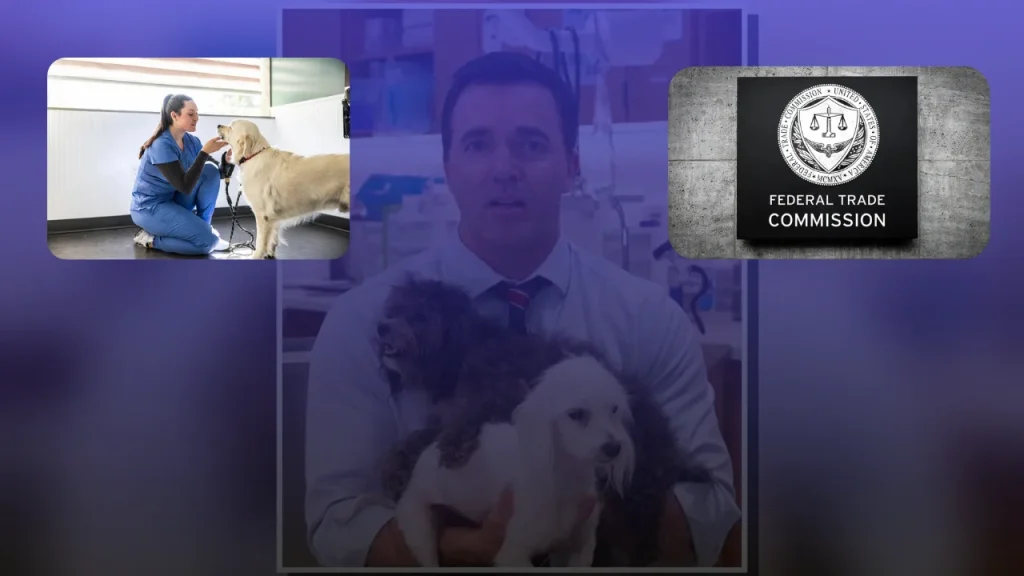
The Federal Trade Commission (FTC) has filed a federal lawsuit to block Covetrus’s proposed $3.5 billion acquisition of MWI Veterinary Supply from its parent company, Cencora Inc. The agency argues that combining two of the largest veterinary product distributors in the country could raise costs for animal hospitals and independent veterinarians and, ultimately, for pet owners.
The lawsuit was filed on November 13, 2026, in the U.S. District Court for the Southern District of New York. Attorneys general from 13 states joined the FTC.
For pet owners, the short answer is that no increase in veterinary bills has been shown to result from this proposed merger. The deal has not closed. The companies have agreed to a temporary restraining order that bars closing before December 4, 2026, while the court considers further relief. The FTC is asking the court to stop the deal because of the effects it predicts, not because prices have already risen.
Covetrus disputes the allegations and says it will defend the deal in court. These are allegations only. No court has found that the merger violates antitrust law.
Covetrus–MWI Veterinary Merger Lawsuit: Key Facts
| Detail | Information |
| Government plaintiffs | Federal Trade Commission and attorneys general from 13 states |
| Defendants | CVET Topco, Clayton, Dubilier & Rice (CD&R), TPG, Covetrus, Cencora and MWI |
| Transaction value | $3.5 billion |
| Merger announced | February 18, 2026 |
| Lawsuit filed | November 13, 2026 |
| Court | U.S. District Court, Southern District of New York |
| FTC matter number | 2610070 |
| Principal law | Clayton Act § 7, 15 U.S.C. § 18 |
| Additional law | FTC Act § 5, 15 U.S.C. § 45 |
| Relief requested | Permanent injunction blocking the acquisition |
| FTC vote to authorize | 2–0 |
| Agreed restraint | Temporary restraining order preventing closing before December 4, 2026 |
| Merger completed? | No |
| Ruling on the merits? | None |
| Consumer refunds or claim form? | No |
Official source: FTC’s November 13, 2026 lawsuit announcement
Why Is the FTC Trying to Block the Covetrus–MWI Merger?
The FTC says Covetrus and MWI are each other’s closest competitor in supplying veterinary products. They distribute items that animal hospitals and clinics need every day, including:
- prescription and nonprescription veterinary medications,
- vaccines and preventive treatments,
- syringes, gloves, gauze and other everyday supplies,
- surgical products and equipment, and
- diagnostic and other medical supplies.
According to the FTC, both companies run large national distribution networks, offer discounts and rebates to win business, and compete head to head for independent clinics and large corporate veterinary groups. The agency alleges that this rivalry keeps wholesale prices lower and service quality higher, and that a merger would:
- create highly concentrated markets,
- let the combined company raise prices, cut discounts and rebates, reduce service quality and limit product choice, and
- push higher clinic costs on to pet owners.
New York’s attorney general said the deal would give Covetrus control of more than half of the relevant veterinary markets.
What Does “Eliminating Competition” Mean Here?
Say a clinic buys a medication from Covetrus but gets a lower quote from MWI. The clinic can use that quote to negotiate with Covetrus or move its purchases. If the two companies merge, that direct rivalry disappears. The FTC says the result could be higher wholesale prices, fewer discounts, weaker service incentives and fewer choices. These are predictions about what could happen, not findings that prices have gone up.
Could the Merger Increase Your Dog’s or Cat’s Veterinary Bills?
Possibly, but no specific price increase has been established. Most pet owners never buy from Covetrus or MWI directly. Clinics buy the supplies and use them in treating animals. A clinic’s costs can affect what it charges, but a clinic might also absorb the cost, switch suppliers or renegotiate. Staffing, rent, equipment and local competition matter too.
| Pet care expense | Possible connection to distribution costs |
| Vaccinations | Wholesale vaccine prices and availability |
| Prescription medication | Clinic purchasing costs and terms |
| Flea, tick and heartworm prevention | Supply contracts, pricing and rebates |
| Surgery | Surgical supplies and medications |
| Routine exams | Indirect effect through operating costs |
| Emergency treatment | Medication and supply costs, among many other factors |
There is no verified evidence that this proposed merger has raised the price of any specific vaccine, prescription or appointment.
Who Are Covetrus and MWI Animal Health?
Covetrus is headquartered in Portland, Maine. It provides veterinary products, distribution, technology and practice-management services, and serves companion-animal, equine and production-animal markets. It is privately held and backed by Clayton, Dubilier & Rice (CD&R) and TPG.
MWI Animal Health is a veterinary distributor owned by Cencora, the pharmaceutical distributor formerly known as AmerisourceBergen. It supplies medications, medical products and services to veterinary practices.
Who Would Own the Combined Company?
Under the February 2026 announcement, the $3.5 billion figure is the enterprise value assigned to MWI, and Cencora would receive a mix of cash and equity:
| Consideration | Announced amount |
| Upfront cash | $1.25 billion |
| Preferred equity | $800 million |
| Common equity | $1.45 billion |
| Cencora’s resulting common equity stake | 34.3% |
Cencora would keep a noncontrolling ownership interest in the combined company, so this is not a simple all-cash purchase.
Why Does Vetcove Matter to the FTC’s Lawsuit?
Vetcove is an online purchasing platform that lets veterinary clinics compare products and prices across suppliers. According to the FTC, price-comparison technology intensified competition between Covetrus and MWI, because clinics could more easily see which distributor offered the better deal. The FTC alleges that Covetrus responded to MWI’s aggressive pricing by lowering prices and offering rebates through its VetSuite program, and it describes that rivalry as an especially important source of price competition.
Doesn’t Online Purchasing Also Give Clinics Alternatives?
That is a central disagreement. Covetrus argues that online marketplaces make the market more competitive by helping clinics choose among many manufacturers and distributors. The FTC argues that easier price comparison has made the rivalry between these two companies more important, so losing it would hurt more. The court will have to decide how much competitive pressure other suppliers can realistically provide.
What Does Covetrus Say About the FTC Lawsuit?
Covetrus issued a statement on November 13 defending the transaction. It argues that the FTC has adopted an outdated and overly narrow view of the market. According to Covetrus, clinics can already buy through:
- manufacturers that sell directly to clinics,
- national and regional distributors,
- online veterinary marketplaces, and
- other suppliers with competing products and services.
Covetrus says online marketplaces are used by more than 60% of U.S. veterinary practices and connect buyers with more than 40 distributors and thousands of manufacturers. It also argues the merger would improve supply-chain reliability, increase investment in innovation and lower the cost of serving veterinary practices. Cencora has not issued a detailed public response in the initial reporting reviewed.
These are the company’s arguments, not findings accepted by a court. Read Covetrus’s November 13 response.
Which 13 States Joined the FTC Lawsuit?
The announcement lists: Arizona, Arkansas, California, Colorado, Maine, Michigan, Minnesota, Nebraska, New York, North Carolina, Ohio, Oregon and Texas.
Does the Lawsuit Affect Pet Owners in Other States?
Potentially. The companies distribute products nationwide, so changes in national supply conditions could reach pet owners in states that are not plaintiffs. But joining the suit does not mean consumers in those 13 states will receive compensation. The case seeks to prevent a deal, not to pay money to pet owners.
What Laws Does the FTC Say the Merger Would Violate?
Clayton Act Section 7 (15 U.S.C. § 18)
This is the main federal merger law. It bars acquisitions whose effect “may be substantially to lessen competition, or to tend to create a monopoly” in any line of commerce in any section of the country. The test looks forward, so regulators do not have to wait for prices to rise before challenging a deal.
Courts generally analyze Section 7 cases in steps. The government first defines the relevant product and geographic markets and shows the merger would produce a significant increase in concentration. In United States v. Philadelphia National Bank, 374 U.S. 321 (1963), the Supreme Court held that a merger producing a firm with an undue market share in a concentrated market is presumed unlawful. Lower courts apply a burden-shifting approach, for example in United States v. Baker Hughes Inc., 908 F.2d 981 (D.C. Cir. 1990) and FTC v. H.J. Heinz Co., 246 F.3d 708 (D.C. Cir. 2001): once the government makes its case, the defendants can try to rebut the presumption, and the government keeps the ultimate burden. Market definition traces to Brown Shoe Co. v. United States, 370 U.S. 294 (1962).
Federal Trade Commission Act Section 5 (15 U.S.C. § 45)
Section 5 bars unfair methods of competition, and the FTC uses it alongside the Clayton Act to challenge mergers.
FTC Act Section 13(b) (15 U.S.C. § 53(b))
Section 13(b) lets the FTC seek injunctions in federal court. An injunction is a court order that stops a party from doing something. Filing a lawsuit is not itself an injunction.
Clayton Act Section 16 (15 U.S.C. § 26): State Attorneys General
Section 16 allows private parties, including state attorneys general suing in their own right, to seek injunctive relief against threatened antitrust violations. That is the kind of relief the participating states are seeking here. State antitrust laws may also be invoked, but the reporting reviewed does not specify which state statutes the states cite.
Hart-Scott-Rodino Act (15 U.S.C. § 18a)
The HSR Act requires parties to large deals to notify the FTC and the Department of Justice and to wait before closing, which gives regulators time to investigate. If an agency wants more information, it can issue a “second request.” Review, investigation and a court challenge are separate stages. Reports indicate the FTC sought information from customers and competitors in this deal using civil investigative demands during its review.
2023 DOJ–FTC Merger Guidelines
The agencies’ guidelines explain how they evaluate market concentration, lost competition and barriers to entry. One tool is the Herfindahl-Hirschman Index (HHI). Under the 2023 guidelines, a merger that produces an HHI above 1,800 and raises it by more than 100 points, or creates a firm with a share above 30% with an increase of more than 100 points, is presumed to substantially lessen competition. The guidelines are an analytical framework, not binding law, and courts decide cases on the statute and the evidence. This article does not state an HHI for the deal because none was verified. The FTC alleges the deal would produce highly concentrated markets for veterinary clinic distribution and for distribution to large corporate accounts.
Why Are Large Veterinary Hospital Chains Part of the Case?
The FTC alleges two relevant markets: (1) distribution to veterinary clinics and (2) distribution to large corporate veterinary accounts. Large veterinary groups can run hundreds of clinics and negotiate national contracts that require high volume, consistent delivery and specialized services. A small regional supplier may serve one clinic but struggle to supply hundreds of locations across states. The FTC argues that national networks and service capabilities make Covetrus and MWI especially important to large buyers. Covetrus disputes the significance of those barriers.
Could Smaller Veterinary Clinics Be Hurt More Than Large Chains?
The effects could differ. Independent clinics may have less buying power, so discounts and reliable access to competing suppliers could matter more to them. Large chains can negotiate national agreements but depend on distributors that can serve many sites. The FTC’s allegations cover both groups, and it has not shown that every clinic would face a particular price increase.
Has a Judge Already Blocked the $3.5 Billion Deal?
No court has issued a final order on the merits. The FTC voted 2–0 to authorize the case and filed on November 13. The parties have agreed to a temporary restraining order that keeps the deal from closing before December 4, 2026, while the court considers further injunctive relief. An agreed order of this kind is not a finding that the merger is illegal.
Possible outcomes include:
- a court order permanently blocking the acquisition,
- a negotiated resolution that changes the transaction, such as a divestiture,
- a ruling allowing the deal to proceed, or
- the companies abandoning or restructuring the deal.
No date for a final ruling has been confirmed. Courts that have recently blocked large mergers at the request of the FTC include the Southern District of New York in the Tapestry–Capri case in 2024, and the District of Oregon in the Kroger–Albertsons case, although each case turned on its own facts.
Is This an Antitrust Class Action or Consumer Settlement?
No. The FTC and the states brought a government enforcement action to challenge a proposed acquisition. There is currently:
- no consumer settlement fund,
- no claim form,
- no refund deadline,
- no court-approved compensation for pet owners, and
- no damages award against Covetrus or MWI in this action.
The $3.5 billion figure is the value of the proposed deal, not money available to consumers.
Could Pet Owners or Clinics Bring Their Own Antitrust Claims?
Private antitrust claims are possible in some cases. Clayton Act § 4 (15 U.S.C. § 15) lets a person injured in their business or property by an antitrust violation recover treble damages, but the plaintiff must show “antitrust injury” (Brunswick Corp. v. Pueblo Bowl-O-Mat, Inc., 429 U.S. 477 (1977)). Pet owners who pay higher clinic prices would be indirect purchasers, and under Illinois Brick Co. v. Illinois, 431 U.S. 720 (1977), indirect purchasers generally cannot recover damages under federal law, although many states allow them to sue under their own laws. Any such claim depends on facts that have not happened yet, because the deal has not closed and no price increase has been shown.
For comparison, see Paramount+ Subscribers vs. Paramount Skydance, The $110 Billion Warner Bros. Merger Antitrust Lawsuit, which involves private plaintiffs and different remedies.
How Does This Compare With Other FTC Merger Challenges?
Kroger–Albertsons is a recent example of a deal blocked after federal and state challenges. That outcome later led to a separate contract dispute, covered in Albertsons Seeks More Than $9 Billion From Kroger Over Failed $24.6 Billion Merger, Delaware Court of Chancery Trial Set for October 19, 2026. Another grocery deal drew calls for federal review in Warren Urges DOJ and FTC Antitrust Review of Kroger’s $1.65 Billion Giant Eagle Acquisition, What Shoppers and Workers Should Know. The difference here is that the FTC has already sued. That does not predict how the court will rule.
What Defenses Can Covetrus and Cencora Raise?
Merger defendants commonly argue that:
- The market is broader than the government says. Covetrus argues that manufacturers, regional distributors and online marketplaces constrain prices.
- New competitors would enter quickly enough to offset any harm.
- Efficiencies from the deal would lower costs. Courts have been skeptical of efficiencies claims and generally require them to be verified, merger-specific and passed on to customers.
- Remedies would fix any problem, such as selling off part of the business to an approved buyer.
The company’s public statement points mainly to the first and third arguments. Which ones it will press in court has not been reported.
What Should Pet Owners Do About Potential Veterinary Price Increases?
There is no refund application or filing for pet owners. If you are worried about costs, you can:
- Ask for an itemized estimate before non-emergency treatment.
- Ask your veterinarian which charges are for medication, supplies, diagnostics and professional services.
- Compare legitimate pharmacy options for prescribed medications when appropriate.
- Ask whether a medically suitable generic or alternative is available.
- Keep your invoices if prices change sharply.
- Remember that a higher bill is not automatically caused by this merger.
Do not delay emergency care or stop prescribed medication because of speculation about the deal.
Can Veterinarians Report Competitive Concerns?
Yes. Practice owners who think the merger could limit their purchasing options can share information with the FTC through its official channels. Useful details include supplier price comparisons, changes in rebates, loss of purchasing options and difficulty finding comparable distribution services.
Covetrus–MWI Merger Lawsuit Timeline
| Date | Development |
| February 18, 2026 | Covetrus and Cencora announce a definitive merger agreement |
| Summer 2026 | FTC reportedly sends information requests to customers and competitors |
| November 13, 2026 | FTC and 13 states file suit in the Southern District of New York |
| November 13, 2026 | Covetrus issues a statement disputing the allegations |
| November 13, 2026 | Parties agree to a temporary restraining order barring closing before December 4 |
| December 4, 2026 | Agreed restraint runs through this date unless the court orders otherwise |
| Future | Court proceedings and possible negotiated or judicial resolution |
Frequently Asked Questions About the Veterinary Merger Lawsuit
Why is the FTC suing Covetrus?
The FTC alleges that Covetrus’s acquisition of MWI would remove a major competitor and substantially reduce competition in U.S. veterinary product distribution.
How much is the Covetrus–MWI deal worth?
The deal values MWI at about $3.5 billion.
Could dog and cat medications become more expensive?
Possibly, if less wholesale competition raises clinic costs and clinics pass them on. No specific increase from this merger has been established.
Are Covetrus and MWI accused of price fixing?
No. The lawsuit challenges the proposed merger as likely to harm competition. It does not allege a separate price-fixing conspiracy.
Who owns Covetrus?
Covetrus is privately held and backed by investment firms including CD&R and TPG.
Who owns MWI Animal Health?
Cencora owns MWI. Under the deal, Cencora would keep a noncontrolling stake in the combined company.
Which states are suing?
Arizona, Arkansas, California, Colorado, Maine, Michigan, Minnesota, Nebraska, New York, North Carolina, Ohio, Oregon and Texas.
Can the merger close while the case is pending?
Not before December 4, 2026. The parties agreed to a temporary restraining order that prevents closing before that date while the court considers further relief.
Has the merger been canceled?
No cancellation has been confirmed. The deal is being challenged in federal court.
Can pet owners get settlement money?
No. There is no consumer settlement or payment program from the FTC’s lawsuit.
Can independent veterinary clinics sue for higher prices?
Private antitrust claims may be possible in some circumstances, but they depend on facts, standing and damages that have not been established. The FTC case does not automatically give any clinic a right to compensation.
What happens if the FTC wins?
The court could issue an injunction blocking the deal or order other relief.
What happens if Covetrus wins?
The deal could go forward, subject to any remaining regulatory and contractual conditions.
Official FTC Lawsuit, Company Statements and Legal Sources
FTC matter number: 2610070 Court: U.S. District Court for the Southern District of New York Status: Pending
Sources:
- FTC, November 13, 2026 Lawsuit Announcement
- FTC, Official CVET Topco/MWI Case Page
- Covetrus, Response to the FTC Lawsuit
- New York Attorney General, Lawsuit Announcement
- Cencora, February 2026 SEC Form 8-K and Merger Announcement (PDF)
- FTC and DOJ, 2023 Merger Guidelines
- FTC, Guide to Antitrust Laws: Mergers
- PACER, Federal Court Records
Bottom Line
The FTC and 13 states are trying to block Covetrus’s $3.5 billion acquisition of MWI because they say it would eliminate competition between two major veterinary distributors. The alleged harm could reach pet owners through higher clinic costs for medications, vaccines and surgery. But no court has found the merger unlawful, and no pet-care price increase has been linked to it. The parties have agreed that the deal will not close before December 4, 2026. The case is about preventing possible higher costs in the future, not refunding pet owners for bills already paid.
This article provides general legal information, not legal advice. The FTC’s allegations are contested, and the case is pending. Written by Israr Ahmad, a legal content researcher, not an attorney.
By Israr Ahmad, Legal Content Researcher | Updated: November 14, 2026 | Antitrust Law and Consumer Protection
About the Author
Israr Ahmad is a legal content researcher with 4+ years of experience covering class action settlements and consumer rights cases. He has researched and published coverage of 2,500+ settlements using verified court records, settlement administrator filings, and government sources. Learn more about Israr.