
Union Pacific Trucker Fingerprint Lawsuit, Judge Certifies 22,402-Driver Class Action — Fleury v. Union Pacific Railroad Company, No. 1:20-cv-00390
If you’re a truck driver who scanned your fingerprint to enter a Union Pacific rail yard in Illinois since December 2014, you were not imagining that gate reader taking more than it should have. A federal judge just certified a class action covering more than 22,000 drivers, ruling Union Pacific may have violated Illinois’ biometric privacy law by collecting those scans without proper consent. There’s no settlement yet — here’s where the case actually stands.
Union Pacific Fingerprint Class Action — Key Facts
| Lawsuit Filed | January 2020 |
| Defendant | Union Pacific Railroad Company |
| Alleged Harm | Fingerprint scans collected at Illinois rail yard gates without prior written consent or a public retention policy |
| Law Alleged | Illinois Biometric Information Privacy Act (740 ILCS 14/1 et seq.) |
| Who Is Affected | Approximately 22,402 truck drivers whose fingerprint images or templates Union Pacific collected in Illinois since December 11, 2014 |
| Court & Case Number | U.S. District Court, Northern District of Illinois — No. 1:20-cv-00390 |
| Current Stage | Class certified August 20, 2026; summary judgment denied; case proceeding toward trial |
| Lead Plaintiff Deadline | Not applicable — this is a certified class, not a claims-made settlement |
| Settlement Status | No settlement. There is no claim form to file at this time |
| Last Updated | August 25, 2026 |
Who Is Union Pacific and Why Are Truck Drivers Suing Over Fingerprints?
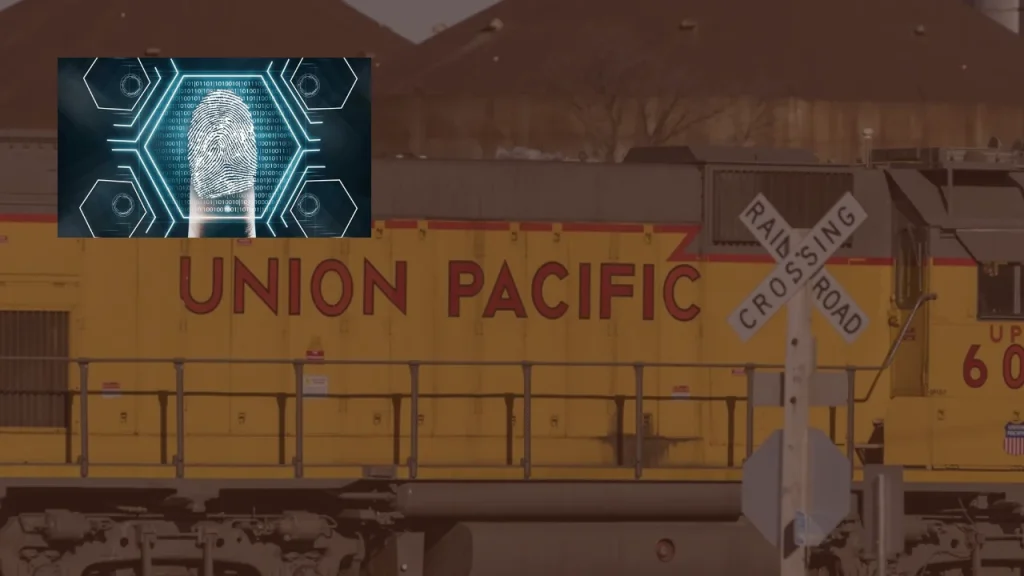
Union Pacific is one of the largest freight railroads in North America, and its Illinois intermodal yards are where truck drivers pick up and drop off shipping containers moving between rail and highway. In 2014, the railroad installed an automated gate system at those Illinois facilities that scans drivers’ fingerprints to verify identity before letting them in. That system is exactly what put Union Pacific in Illinois’ strictest-in-the-nation biometric privacy law — Illinois requires written consent and a public data-retention schedule before a company can collect something as permanent and personal as a fingerprint.
What Did Union Pacific Do Starting in 2014?
According to the lawsuit, Union Pacific began collecting composite fingerprint images and fingerprint templates from truck drivers entering its Illinois rail yards without first getting their written consent, and without publishing the data retention and destruction policy Illinois law requires for biometric information. Named plaintiffs David Fleury and Alvin Turner filed suit in January 2020, arguing this violated the Illinois Biometric Information Privacy Act, a law passed specifically because — unlike a password — you can’t change your fingerprint once it’s compromised.
Union Pacific spent years trying to get the case dismissed or narrowed. The company argued federal rail safety law preempted the state privacy statute, that Union Pacific counted as a government contractor exempt from BIPA, and — more recently — that its digital finger scans don’t legally count as “fingerprints” under the statute at all. Judge LaShonda A. Hunt rejected every one of those arguments in her August 20, 2026 ruling, following an Illinois appellate decision and a parallel federal ruling that had already addressed the same technology question.
That last point is worth sitting with: Union Pacific’s own defense was that the thing everyone calls a fingerprint scanner doesn’t produce fingerprints. The judge didn’t buy it.
Related reading: our coverage of the European Wax Center $5 million privacy settlement covers a different kind of privacy class action — tracking pixels rather than biometrics — if you’re trying to understand how these consumer data cases typically resolve.
Related article: Butterball $34 Million Turkey Price-Fixing Settlement, Why This Isn’t a Payout for Grocery Shoppers, In re Turkey Antitrust Litigation, No. 1:19-cv-08318
Who Is Covered by This Class Action?
- Truck drivers who had their composite fingerprint image or fingerprint template collected at a Union Pacific Illinois rail yard gate system since December 11, 2014
- Drivers whose fingerprints were collected before any written consent Union Pacific has on file for them
- The certified class includes separate subclasses tied to Union Pacific’s data retention policy and its consent practices specifically
Union Pacific did not dispute that the class was large enough to certify — court filings put the number at roughly 22,402 drivers.
Drivers Outside Illinois — Are You Still Covered?
No. This case is built entirely on Illinois’ Biometric Information Privacy Act, which only applies to biometric data collected within Illinois. If you scanned your fingerprint at a Union Pacific yard in another state, this particular lawsuit doesn’t cover you — though depending on the state, a similar biometric privacy law might.
Not sure if you qualify or want to understand your rights in this case? A free consultation with a data privacy attorney can help you evaluate your situation given the case’s early stage.
How Much Could Union Pacific Truck Drivers Get If This Case Resolves?
There’s no settlement, no claim form, and no payout amount yet — that’s the most important thing to understand about where this case stands. Illinois’ BIPA law does set statutory damage ranges: $1,000 per negligent violation and up to $5,000 per intentional or reckless violation, without requiring proof of actual harm beyond the privacy violation itself. With a certified class of over 22,000 drivers, that statutory framework is why news coverage has floated numbers in the tens of millions — but that’s a range built from the law’s own damages formula, not a number any court or settlement has actually set.
Judge Hunt ordered the parties to file a joint status report and appear in court next month, and the case is expected to get a trial date sometime between March and June 2027. Cases like this one also settle before trial fairly often, once a class is certified and a defendant is facing full class-wide exposure.
What Should Union Pacific Truck Drivers Do Right Now?
- Most class members are automatically included — you don’t need to sign up for anything at this stage, since there’s no settlement or claim process to opt into yet.
- Save any records tying you to Union Pacific’s Illinois yards — driver logs, gate entry records, or dispatch paperwork showing dates and locations.
- Hold onto any consent forms Union Pacific may have had you sign, or note if you were never asked to sign anything before scanning in.
- Monitor the docket — Case No. 1:20-cv-00390 in the Northern District of Illinois will show whether the case heads to trial or a settlement.
- Watch for a class notice — if the case settles or reaches a verdict, a court-approved administrator will typically mail or email notice to identified class members.
- If you believe you were harmed independently of the certified claims, a biometric privacy attorney can evaluate whether you have a separate, individual option.
Frequently Asked Questions About the Union Pacific Fingerprint Lawsuit
Is there a class action lawsuit against Union Pacific right now?
Yes. A federal judge certified a class of roughly 22,402 truck drivers on August 20, 2026, in Fleury v. Union Pacific Railroad Company, over fingerprint scans collected at Illinois rail yards.
Do I need to do anything right now to be part of the Union Pacific lawsuit?
No. Class certification means eligible drivers are automatically included unless they later choose to exclude themselves once a notice process begins; there’s nothing to file at this stage.
When will the Union Pacific fingerprint case settle or go to trial?
The court has indicated it expects to set a trial date sometime between March and June 2027. The case could still settle before then.
Can I file my own lawsuit against Union Pacific instead of joining the class?
Once a class is certified, class members generally participate through the class case unless they later opt out during a notice period, which typically comes with a settlement or before trial.
What specific law does Union Pacific allegedly violate?
The Illinois Biometric Information Privacy Act, which requires written consent and a public retention and destruction policy before a company can collect fingerprints or other biometric identifiers.
How much could Union Pacific truck drivers get if this case settles?
There’s no number yet. Illinois BIPA allows for $1,000 per negligent violation and up to $5,000 per intentional violation, which is why the case has been described as worth tens of millions across the full class — but no settlement or verdict has set an actual figure.
How will I find out if the Union Pacific lawsuit settles or a class notice goes out?
If a settlement or judgment is reached, a court-approved settlement administrator typically mails or emails notice to class members identified through Union Pacific’s own gate-entry records.
Sources Used in This Union Pacific Fingerprint Lawsuit Article
- Court filing — David Fleury v. Union Pacific Railroad Company, No. 1:20-cv-00390, U.S. District Court for the Northern District of Illinois: https://www.govinfo.gov/content/pkg/USCOURTS-ilnd-1_20-cv-00390/pdf/USCOURTS-ilnd-1_20-cv-00390-3.pdf
- Law360 — “Union Pacific Loses Bid To Block BIPA Class Claims,” August 21, 2026: https://www.law360.com/articles/2516294/union-pacific-loses-bid-to-block-bipa-class-claims
Researched and written by Israr Ahmad, legal content researcher and founder of AllAboutLawyer.com. All facts verified against the court’s docket filings and Law360’s reporting on August 25, 2026. Last Updated: August 25, 2026.
This article is for informational purposes only and does not constitute legal advice. Laws vary by state and individual circumstances differ. For advice about your specific situation, consult a qualified attorney.
About the Author
Israr Ahmad is a legal content researcher with 4+ years of experience covering class action settlements and consumer rights cases. He has researched and published coverage of 2,500+ settlements using verified court records, settlement administrator filings, and government sources. Learn more about Israr.