
Tom Cotton Opposes Permanent Daylight Saving Time, What the Sunshine Protection Act Would Change
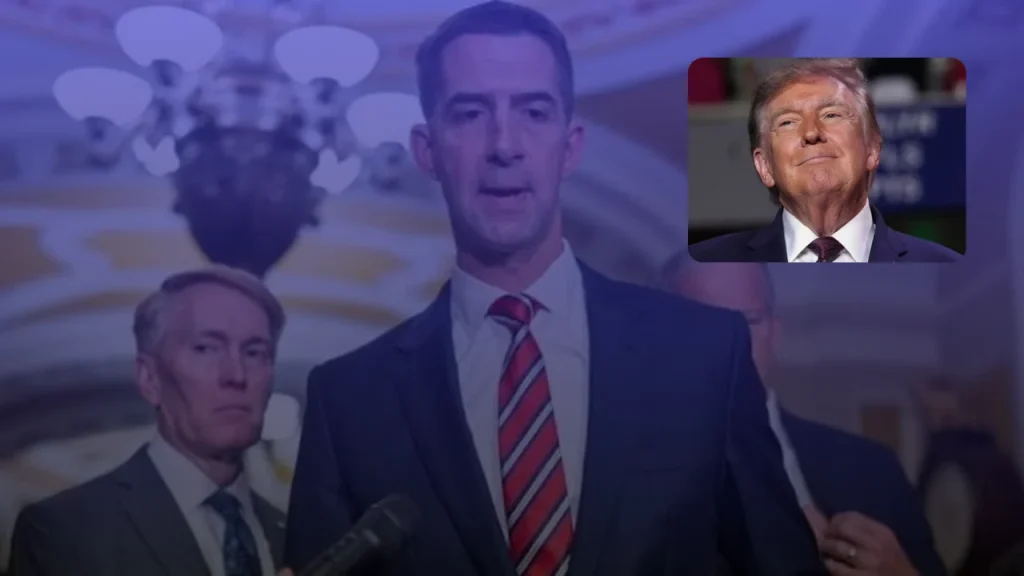
Sen. Tom Cotton (R-Ark.) is the most prominent Senate opponent of the Sunshine Protection Act of 2025, the bill that would make daylight saving time permanent. President Donald Trump has pushed publicly for the bill and, on October 3, 2026, criticized Cotton by name and posted what appeared to be the senator’s personal phone number. Cotton did not change his position.
The House passed the bill, H.R. 139, by a 308-117 vote on July 14, 2026. It has not passed the Senate, so it is not law.
What this means for your clocks: nothing has changed yet. Under current federal law, standard time returns on Sunday, November 1, 2026.
Quick Facts: Tom Cotton and the Sunshine Protection Act of 2025
| Detail | Information |
| Senator opposing the bill | Tom Cotton (R-Arkansas) |
| Bill | Sunshine Protection Act of 2025 |
| House bill number | H.R. 139 |
| Senate companion | S. 29 (Sens. Rick Scott and Tommy Tuberville) |
| House vote | 308-117, July 14, 2026 |
| Senate status | Referred to the Senate Committee on Commerce, Science, and Transportation on July 15, 2026 |
| Votes needed in the Senate | 60 to overcome a filibuster |
| Cotton’s position | Opposes permanent daylight saving time; prefers permanent standard time if clock changes end |
| Trump’s position | Supports permanent daylight saving time |
| Current law | Uniform Time Act of 1966 (seasonal daylight saving time) |
| Next clock change | November 1, 2026 (return to standard time) |
| Lawsuit, settlement or claim form | None |
Why Does Sen. Tom Cotton Oppose Permanent Daylight Saving Time?
Cotton’s argument is about winter mornings. Keeping daylight saving time all year would push sunrise one hour later on the clock from November through March. He says that would put children at bus stops and workers on early shifts in the dark.
In his October 2025 Senate floor speech, Cotton said parts of Arkansas could see winter sunrises after 8 a.m. under permanent daylight saving time. He has also said that locking clocks on daylight saving time is not good for health. Those are his arguments, and actual sunrise times vary by location and date.
Does Tom Cotton Want Americans to Keep Changing Their Clocks?
No. After Trump’s first post, Cotton wrote on X that “No one likes changing the clock, me included.” His objection is to which time becomes permanent.
| Option | What happens |
| Current system | Clocks go forward in March and back in November |
| Permanent daylight saving time | Clocks stay one hour ahead of standard time all year |
| Permanent standard time | Clocks stay on standard time all year |
Cotton opposes the second option and favors standard time if Congress ends the clock changes.
What Does the Sunshine Protection Act (H.R. 139) Actually Do?
H.R. 139 would repeal the part of federal law that limits daylight saving time to part of the year, making it permanent. Places that already stay on standard time year-round, such as Hawaii and most of Arizona, could keep doing so. Under current law, states can choose year-round standard time but cannot adopt permanent daylight saving time without Congress.
Sen. Rick Scott, a lead Senate sponsor, has said the bill gives states the option rather than forcing it on them. Because H.R. 139 is not law and could be amended, check the final text before describing how any individual state would be affected.
What Happened With Permanent Daylight Saving Time in 1974?
Cotton’s main historical point is that the country has tried this before. Congress put the nation on year-round daylight saving time in January 1974 during the energy crisis, then repealed the year-round requirement in October 1974 after public complaints about dark winter mornings.
That history is a fair talking point, but it does not predict the outcome of a 2026 law. The 1974 policy was adopted under different circumstances.
What Happened When the Senate Passed the Sunshine Protection Act in 2022?
On March 15, 2022, the Senate passed an earlier version of the Sunshine Protection Act by unanimous consent. The House did not act, and the bill died at the end of that Congress.
Cotton has said he did not stop the 2022 bill because of a communication mix-up. In October 2025 he objected when Sens. Scott and Tuberville asked the Senate to move the new bill by unanimous consent. That objection is the “blocking” Trump now criticizes.
What Did Donald Trump Say About Tom Cotton and the Daylight Saving Time Bill?
On October 2, 2026, Trump posted on Truth Social urging Senate Republicans to pass what he calls the “No More Changing of Clocks Act.” On October 3, he said Cotton was the one holding it up and urged Arkansans to call him. Trump also attached a letter from the PGA Tour CEO supporting the bill and wrote that Cotton, if he were putting Arkansas first, would give the state an extra hour of daylight.
Cotton, who is the third-ranking Senate Republican and chairs the Senate Intelligence Committee, kept his position. Sen. Roger Wicker (R-Miss.) defended him, calling his objection driven by “real safety concerns.”
This article does not reproduce the phone number. It is not needed to understand the legislation.
Is Tom Cotton the Only Senator Blocking the Sunshine Protection Act?
No. Cotton is a visible obstacle, but passage in the Senate would take 60 votes. Senate Majority Leader John Thune has said it “remains to be seen” whether the bill can reach that number. Wicker said Cotton speaks for a number of Republican senators, while Sen. Rick Scott is working to get a vote.
The Senate is out until mid-November, so any floor action would come after the November 1 clock change, likely in the lame-duck session.
Will the Clocks Change on November 1, 2026?
Yes, unless Congress changes the law first. The House vote did not cancel the clock change. For the date to move, the Senate would need to pass the bill, the two chambers would have to agree on identical text, and the president would have to sign it. With the Senate out of session, that is not expected before November 1.
What Happens Next to the Sunshine Protection Act in the Senate?
- The Senate could take up H.R. 139 when it returns in mid-November.
- Senators could amend it, including toward permanent standard time.
- Leadership could decline to bring it up, leaving the current seasonal system in place.
Until a bill becomes law, the existing system stays in place.
Tom Cotton Daylight Saving Time Timeline
| Date | Event |
| January 1974 | Year-round daylight saving time takes effect during the energy crisis |
| October 1974 | Congress repeals the year-round requirement |
| March 15, 2022 | Senate passes the earlier Sunshine Protection Act by unanimous consent |
| January 2025 | Sens. Scott and Tuberville reintroduce the bill as S. 29 |
| October 2025 | Cotton objects to a unanimous-consent request and gives a Senate floor speech against permanent daylight saving time |
| July 14, 2026 | House passes H.R. 139, 308-117 |
| July 15, 2026 | H.R. 139 referred to the Senate Commerce Committee |
| October 2-3, 2026 | Trump posts against Cotton; Cotton restates his opposition |
| November 1, 2026 | Scheduled return to standard time |
| Mid-November 2026 | Senate returns |
Frequently Asked Questions About Tom Cotton and the Sunshine Protection Act
Why does Tom Cotton oppose permanent daylight saving time?
He says it would mean dark winter mornings for schoolchildren and early-morning workers, citing Arkansas sunrises after 8 a.m., and he points to the 1974 repeal as proof the policy proves unpopular.
Has the Sunshine Protection Act become law?
No. H.R. 139 passed the House 308-117 on July 14, 2026, but the Senate has not passed it.
Will daylight saving time end on November 1, 2026?
Yes, under current law. Clocks go back one hour on Sunday, November 1, 2026.
What is the difference between permanent daylight saving time and permanent standard time?
Permanent daylight saving time keeps clocks one hour ahead all year, giving later sunsets and later winter sunrises. Permanent standard time keeps clocks on standard time all year, giving earlier sunrises and sunsets in winter.
Does permanent daylight saving time give Americans more daylight?
No. It shifts when daylight falls on the clock. The total amount of daylight does not change.
Why does Donald Trump support the Sunshine Protection Act?
He wants an end to twice-yearly clock changes and more daylight later in the day, and has cited support from the PGA Tour.
Can Arkansas adopt permanent daylight saving time on its own?
No. States can choose year-round standard time, but permanent daylight saving time requires an act of Congress.
What happens if the Senate does not pass the bill?
The seasonal system stays in place, and most states keep changing clocks twice a year.
What Tom Cotton’s Opposition Means for the Sunshine Protection Act
The legal picture is simple: the bill passed the House but is not law. Cotton’s disagreement with Trump is narrower than “stop changing the clocks.” Both say the twice-yearly change is a nuisance. They disagree on which time should be permanent, and the Senate would need 60 votes to settle it.
Until Congress acts, plan for clocks to go back on November 1, 2026.
Related AllAboutLawyer Coverage
For another report on a congressional dispute involving Sen. Tom Cotton, see Admiral Reveals Boat in Double-Tap Strike Was Meeting Vessel Headed to Suriname—What Lawmakers Learned That Changes Everything.
Sources
- Sen. Tom Cotton, floor speech opposing the Sunshine Protection Act, October 2025 (cotton.senate.gov).
- H.R. 139, Sunshine Protection Act of 2025 (GovInfo) and House Roll Call 238, July 14, 2026 (Clerk of the House).
- S. 29, Sunshine Protection Act of 2025 (Sens. Scott and Tuberville).
- CNN, October 3, 2026, on Trump’s posts about Cotton.
- NBC News, The Hill and Fox News, October 2026 reporting on the Trump-Cotton dispute and the Senate outlook.
- 15 U.S.C. §§ 260-260a (Uniform Time Act).
Disclaimer: AllAboutLawyer.com is a legal information site, not a law firm. This article describes pending legislation and public statements, and bills can change before becoming law.
Researched and written by Israr Ahmad, legal content researcher and founder of AllAboutLawyer.com. All facts verified against reporting by CNN, NBC News, The Hill and Fox News on the Trump-Cotton dispute and the Senate outlook, plus Cotton’s published floor-speech position, as of October 6, 2026. Last Updated: October 6, 2026.
About the Author
Israr Ahmad is a legal content researcher with 4+ years of experience covering class action settlements and consumer rights cases. He has researched and published coverage of 2,500+ settlements using verified court records, settlement administrator filings, and government sources. Learn more about Israr.