
Tim Hortons Boat Contest Lawsuit, Quebec Court of Appeal Denies Class Action Over Mistaken “You Won a Boat” Emails
This is a Canadian (Quebec) case, not a U.S. lawsuit. U.S. consumers have no claim, claim form or right to participate in it.
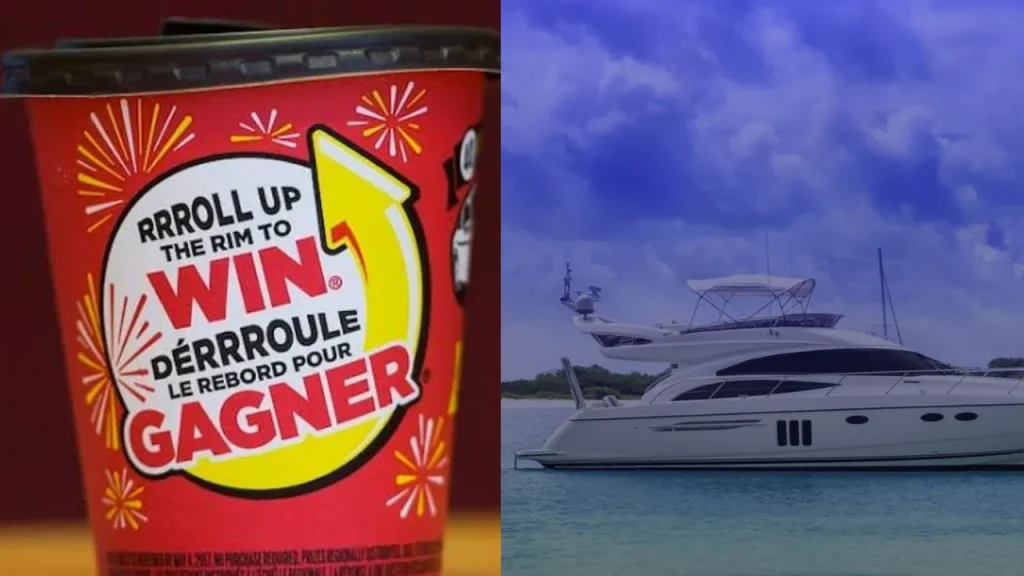
In April 2024, Tim Hortons mistakenly emailed about 500,000 Roll Up To Win participants telling them they had won a Tracker Targa 18 WT 2024 boat and trailer. The company retracted the message the same day and apologized. A Quebec class action followed, and in June 2025 the Superior Court of Quebec authorized it for Quebec consumers only. In October 2026, the Quebec Court of Appeal granted Tim Hortons’ appeal, set aside that judgment and denied authorization, ending the proposed class action at the authorization stage.
The Court of Appeal did not rule on any boat being owed to anyone. It decided that the plaintiff had not shown even an arguable case.
Quick Facts: Tim Hortons Boat Contest Lawsuit
| Detail | Information |
| Case | Deschâtelets v. Restaurant Brands International Inc. et al. |
| Court file number | 500-06-001306-246 |
| Courts | Superior Court of Quebec (authorization, 2025); Quebec Court of Appeal (appeal, 2026) |
| Lead plaintiff | Jonathan Deschâtelets |
| Defendants | Restaurant Brands International Inc.; Restaurant Brands International Limited Partnership; The TDL Group Corp.; Tim Hortons Advertising and Promotion Fund (Canada) Inc. |
| Plaintiff’s counsel | LPC Avocats (Joey Zukran) |
| Incorrect email sent | April 17, 2024, from [email protected] to about 500,000 mobile-app customers |
| Prize | Tracker Targa 18 WT 2024 boat and trailer, valued at roughly CAD $64,000 to $68,751 including taxes (figures vary by source) |
| Application filed | April 19, 2024 |
| Superior Court ruling | June 27, 2025 (Justice Donald Bisson): authorized for Quebec consumers only |
| Court of Appeal ruling | Reported October 9, 2026: appeal granted, authorization denied |
| Relief sought | Delivery of the boat (or its value), damages, and CAD $10,000 in punitive damages per class member |
| Settlement | None |
| Claim form or deadline | None |
| Compensation ordered | None |
| Who could have joined | Quebec consumers who received the erroneous boat email (while the class was authorized); no longer applicable |
What Happened in the Roll Up To Win Contest?
Tim Hortons runs an annual contest, historically “Roll Up the Rim” and now “Roll Up To Win,” in which customers use the mobile app or physical cups to reveal instant prizes such as free coffee, points or subscriptions. Grand prizes can include vehicles or other high-value items, subject to the official rules and limited quantities.
On April 17, 2024, after the contest’s rolling period had ended, Tim Hortons sent an email addressed to customers by name saying they had won a Tracker Targa 18 WT 2024 boat and trailer. Later the same day, the company sent a correction telling customers to disregard the message. It apologized and attributed the error to human error, and has said the emails were a technical or human mistake.
The lead plaintiff, Jonathan Deschâtelets, had played through the app and revealed only small instant prizes: three coffees, a three-month magazine subscription and two prizes totaling 160 Tims points. He never revealed a tab showing a boat win.
What Did the Lawsuit Argue?
LPC Avocats filed the proposed class action on April 19, 2024. The central theory relied on Quebec’s Consumer Protection Act:
- A merchant is bound by its statements and advertisements to consumers (s. 41).
- The “general impression” of a representation controls, as in the Supreme Court of Canada’s Richard v. Time Inc. decision. Plaintiffs said the email clearly gave the average consumer the impression that they had won the boat.
- That impression made the email a prohibited practice, and the merchant, not the consumer, should bear the cost of its own mistake.
The class action asked for specific performance (delivery of the boats) or their value, damages for disappointment and stress, and punitive damages of $10,000 per class member. Those figures are what the plaintiffs requested, not amounts any court awarded.
Tim Hortons said the lawsuit had no merit. It argued there was no binding contract for the boat, that the email was a post-contest error outside the official rules, and that recipients had not won the boat in the contest itself.
How the Case Reached the Court of Appeal
| Date | Event |
| April 17, 2024 | Erroneous email sent; same-day correction and apology |
| April 19, 2024 | Application for authorization of a class action filed in the Superior Court of Quebec |
| June 27, 2025 | Justice Donald Bisson authorizes the class action but limits it to Quebec residents, because the case relies on Quebec consumer protection law |
| October 9, 2026 (reported) | Quebec Court of Appeal grants Tim Hortons’ appeal, sets aside the authorization and denies the class action |
The Superior Court’s decision (June 2025)
The judge found the claims raised serious issues under Quebec consumer protection law and limited the class to Quebec because the law at issue is provincial. Authorization is a threshold step. It does not mean the defendant is liable.
The Court of Appeal’s decision (October 2026)
According to reports of the ruling, the Court of Appeal concluded that:
- The plaintiff never won the boat in the contest. He never peeled back a tab showing a boat win.
- The April 17 email was sent after the contest was over, so it was not a contractual or pre-contractual statement that could bind Tim Hortons under the Consumer Protection Act. A merchant is bound by statements made before or when a contract is formed, not by ones made afterward.
- Tim Hortons had met its contractual obligations by letting the plaintiff play and honoring the prizes he actually won.
- The plaintiff failed to show even the mere possibility of succeeding on the merits, and so could not meet the authorization threshold.
The court therefore set aside the Superior Court judgment and denied the motion to authorize the class action. Plaintiff’s counsel was reported to be reviewing the decision, and no further appeal or settlement had been reported as of the latest available information.
Related article: Christa Pike Discharged From Hospital After Surviving Tennessee Execution Attempt, What Happened and What Comes Next
What Laws Are Involved?
Quebec Consumer Protection Act, CQLR c. P-40.1
- Section 41: statements or advertisements made by a merchant are binding on the merchant. This was the plaintiffs’ main provision.
- Sections 218 and 219: prohibit false or misleading representations, assessed by the “general impression” the representation gives the average consumer.
- Section 272: allows consumers to seek remedies for violations, including damages and punitive damages, without needing proof of fault in some cases. This is the basis for the $10,000 punitive damages request.
Richard v. Time Inc., 2012 SCC 8
The Supreme Court of Canada case on the “general impression” test for consumer representations in Quebec and on when punitive damages can be awarded under the Consumer Protection Act. Plaintiffs relied on it. Its principles still require a consumer to show a representation made in connection with a contract.
Quebec Code of Civil Procedure, arts. 574 and 575
A class action in Quebec must first be authorized by the court. The plaintiff must show, among other things, that the facts alleged appear to justify the conclusions sought (an “arguable case”) and that the other criteria are met. The threshold is low, which is why the Court of Appeal’s finding that the plaintiff failed even that threshold was significant. Appeals from authorization judgments need leave, so the Court of Appeal’s decision shows how unusual an appeal at this stage is.
Civil Code of Québec
Contract formation and consent rules (including error as a defect of consent) and civil liability rules apply to arguments about mistaken communications. Tim Hortons’ “mistake” defense raised these themes, but the Court of Appeal’s reasoning turned on timing and on what the plaintiff had actually won.
Federal Competition Act, R.S.C. 1985, c. C-34
Prohibits false or misleading representations in promotion (s. 74.01) and regulates promotional contests. It was not the basis of this case, but regulators such as the Competition Bureau oversee contest practices nationwide.
Further review
A party may ask the Supreme Court of Canada for leave to appeal a final judgment of a provincial court of appeal, normally within 60 days (Supreme Court Act, R.S.C. 1985, c. S-26). Leave is granted rarely, and no such application had been reported.
What Does the Ruling Mean for Consumers?
- A mass email that arrives after a contest ended is not automatically a binding prize. Courts look at what the consumer actually won under the contest rules.
- Timing matters. Quebec’s Consumer Protection Act binds merchants to statements made before or when a contract is formed, not later ones.
- Rules and results govern. Official contest rules, prize quantities and actual game outcomes carry weight.
- Early rulings can be reversed. Strong consumer laws can support authorization at the first stage, but an appeal court can still find the claim insufficient.
The decision turned on this plaintiff’s facts. It does not mean every erroneous prize notice is unenforceable in every circumstance.
Can Anyone Still Claim a Boat or Money?
No. The class action was denied, no boats were delivered, and no settlement or compensation was ordered. There is no claims administrator, claim form or deadline. Individual claims would face the same hurdles the Court of Appeal identified. If you are a Quebec resident who received the email and want advice on your own situation, speak to a licensed Quebec lawyer.
Beware of scams. Any website, text or email offering a “Tim Hortons boat settlement” payment, or asking for a fee or personal information to access a claim form, should be treated as suspect.
What About U.S. Readers?
No U.S. court case, settlement or claim form arises from these emails. A similar mistake in a U.S. promotion would be analyzed under state sweepstakes and unfair-practices laws, the contest’s official rules, and the Federal Trade Commission’s advertising guidance, which differ from Quebec law. If you receive an erroneous prize notice, save the message and screenshots, read the official rules, contact the company in writing, and consult a licensed attorney in the relevant jurisdiction.
For another lawsuit involving Tim Hortons’ parent company, see AllAboutLawyer.com’s Burger King Restaurant Brands International Cookie Tracking Lawsuit, Were You Tracked After You Said No?. That case involves different allegations.
Frequently Asked Questions
Did Tim Hortons really tell customers they won a boat?
Yes. On April 17, 2024, about 500,000 app users received an email saying they had won a Tracker Targa 18 WT 2024 boat and trailer. Tim Hortons corrected it the same day and apologized, citing human error.
Did anyone get the boat?
No boats were delivered under the erroneous emails.
How much was the boat worth?
Roughly CAD $64,000 to $68,751 including taxes, depending on the source.
Was the class action successful?
No. The Superior Court authorized it in June 2025, but the Quebec Court of Appeal set that aside and denied authorization in October 2026.
Why did Tim Hortons win?
The court found the plaintiff never won the boat in the contest, and that an email sent after the contest ended was not a statement binding Tim Hortons under the Consumer Protection Act.
Who could have been in the class?
While authorized, Quebec consumers who received the erroneous boat email. The original proposal sought a Canada-wide class, but the Superior Court limited it to Quebec because the claims relied on Quebec law.
Can I claim CAD $10,000 from Tim Hortons?
No. That was the punitive damages amount the lawsuit requested. No court awarded it.
Is there a claim form or settlement?
No.
Can the decision be appealed further?
Possibly, by seeking leave to appeal to the Supreme Court of Canada. None had been reported.
Can U.S. customers claim anything?
No. This was a Quebec proceeding under Canadian provincial law.
What should I do if a company sends a mistaken prize notice?
Save the communication, read the official contest rules, document any reliance or harm, and consult a licensed lawyer in the relevant jurisdiction promptly.
Where can I check the case status?
The Quebec class action registry lists the file number, parties and court documents. Check it for any later filings.
Editorial Note and Disclaimer
This article is general information about Canadian litigation and is not legal advice. It does not establish that any person or company is liable. AllAboutLawyer.com is a U.S. consumer legal information site and is not a law firm. Canadian and U.S. consumer protection laws differ, so consult a qualified lawyer licensed in the appropriate jurisdiction about your own situation. AllAboutLawyer.com corrects errors promptly when they are identified.
Sources and References
- Quebec Class Action Registry, Deschâtelets v. Restaurant Brands International Inc., et al., file No. 500-06-001306-246. https://www.registredesactionscollectives.quebec/en/Consulter/ApercuDemande?NoDossier=500-06-001306-246
- CTV News, “Man’s hopes to owning boat sink after court tosses out Tim Hortons class-action lawsuit” (October 11, 2026). https://www.ctvnews.ca/montreal/article/mans-hopes-to-owning-boat-sink-after-court-tosses-out-tim-hortons-class-action-lawsuit/
- CP24 / The Canadian Press, same report (October 11, 2026). https://www.cp24.com/news/canada/2026/10/11/mans-hopes-to-owning-boat-sink-after-court-tosses-out-tim-hortons-class-action-lawsuit/
- CBC News / The Canadian Press, “Judge authorizes Tim Hortons Roll Up to Win class action, but only for Quebec customers” (June 29, 2025). https://ici.radio-canada.ca/rci/en/news/2176494/judge-authorizes-tim-hortons-roll-up-to-win-class-action-but-only-for-quebec-customers
- CBC News, “Tim Hortons says proposed Roll Up the Rim class-action suit has no merit” (April 2024). https://www.cbc.ca/news/canada/toronto/proposed-class-action-tim-hortons-1.7180238
- CTV News Kitchener, “Roll Up To Win customers seek $10,000 each from Tim Hortons after false boat win” (April 2024).
- LPC Avocats, “Tim Hortons, Where’s My Boat?” case page. https://lpclex.com/timhortons-boat/
- Superior Court of Quebec, authorization judgment (June 27, 2025) and Quebec Court of Appeal decision (October 2026), file No. 500-06-001306-246.
- Consumer Protection Act, CQLR c. P-40.1, ss. 41, 218, 219, 272; Code of Civil Procedure, CQLR c. C-25.01, arts. 574–575; Civil Code of Québec; Competition Act, R.S.C. 1985, c. C-34; Supreme Court Act, R.S.C. 1985, c. S-26.
- Richard v. Time Inc., 2012 SCC 8.
About the Author
Israr Ahmad is a legal content researcher with 4+ years of experience covering class action settlements and consumer rights cases. He has researched and published coverage of 2,500+ settlements using verified court records, settlement administrator filings, and government sources. Learn more about Israr.