
Texas Highway 31 Pursuit Crash, Custodial Death Reports Rule Deaths of Four Teens Accidental and Caused by Law Enforcement
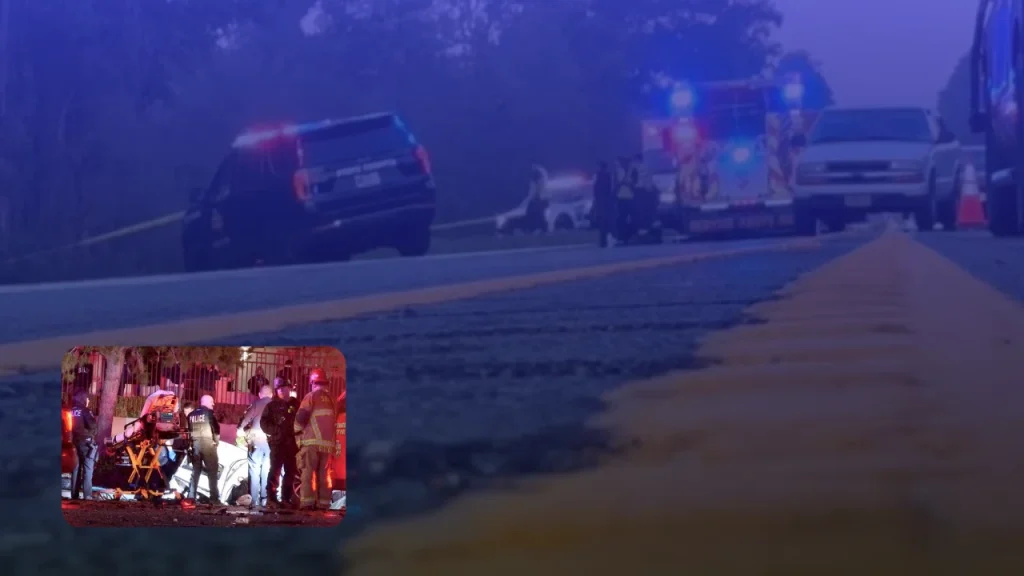
Custodial death reports filed with the Office of the Texas Attorney General say the deaths of four teenagers in a September 27, 2026 crash on State Highway 31 in Smith County were accidental and caused by law enforcement personnel. The crash followed a high-speed pursuit that ended when a Texas Department of Public Safety (DPS) trooper used a Precision Immobilization Technique (PIT) maneuver on the fleeing vehicle.
The medical cause of death is still pending for all four teens. The reports are an official state record under Texas law. They are not a court finding of civil or criminal liability, and no lawsuit over this crash has been verified.
Quick Facts: Highway 31 Pursuit Crash and Texas Custodial Death Reports
| Item | Details |
| Date of incident | Early morning, September 27, 2026 |
| Location | State Highway 31, Smith County, Texas (pursuit began in Tyler) |
| Deceased | Jaffet Cuarenta (17, Tyler), Adriel Vazquez (17, Tyler), Emigdio Gutierrez (17, Tyler), and Jaiden Rodriguez (15, Smith County) |
| Reports filed | October 12, 2026, with the Texas Office of the Attorney General |
| Manner of death (per reports) | Accidental; caused by law enforcement personnel |
| Medical cause of death | Pending for all four |
| Key event | A DPS trooper’s PIT maneuver; the vehicle left the road and struck a tree |
| Earlier incident | Tyler Police responded to gunshots; two people were wounded |
| Lawsuit, settlement or claim deadline | None verified |
What Happened in the Tyler to Highway 31 Pursuit on September 27, 2026?
According to the custodial death reports and agency accounts relayed by local news outlets:
- At about 3:43 a.m., Tyler Police Department officers responded to a call that turned out to involve gunshots in the 1500 block of Lake Placid Road.
- Two people were treated for gunshot wounds.
- Officers found a suspect vehicle, described as a 2009 Nissan, and tried to stop it. The driver fled, and the pursuit moved onto State Highway 31 East.
- Texas DPS troopers joined. One trooper used a PIT maneuver, citing the driver’s hazardous behavior and other information known at the time.
- The car over-steered, left the roadway and hit a tree.
- Three teens were pronounced dead at the scene. The fourth, Adriel Vazquez, was taken to a hospital and died shortly after.
The teens were reported as subject to potential charges of attempted murder, aggravated assault with a deadly weapon and evading arrest or detention with a motor vehicle in connection with the earlier shooting. Those are accusations only. No one has been convicted, and the teens cannot be tried now.
What Is a Custodial Death Report Under Texas Code of Criminal Procedure Article 49.18?
Article 49.18 of the Texas Code of Criminal Procedure requires a law enforcement agency to report to the Attorney General when a person dies in custody or during an arrest, generally within 30 days of the death. The report records the circumstances, the manner of death (such as accidental, natural, homicide, suicide or undetermined) and whether law enforcement personnel caused it.
Here the reports were filed 15 days after the crash. Reading them correctly matters:
- “Accidental” is an administrative label for reporting. It is not a finding that every officer acted lawfully.
- “Caused by law enforcement” is not a finding of crime, negligence or a civil-rights violation.
- Neither label stops a criminal investigation or a civil case, and neither decides one.
The official source is the Texas Attorney General’s Custodial Death Report database, with more records on the Attorney General’s Open Reports and Publications page.
Texas Laws That Apply to the Highway 31 PIT Maneuver Crash
Texas Transportation Code Chapter 546: Emergency Vehicle and Pursuit Rules
Section 546.001 lets an authorized emergency vehicle operator pursue a suspected violator, exceed speed limits and disregard certain traffic rules. Section 546.005 adds the limit: the driver must use due regard for the safety of all persons and is not relieved of the consequences of reckless disregard for the safety of others. Whether the trooper met that standard is likely to be the central question in any civil claim.
Texas Transportation Code Section 545.421 and Penal Code Section 38.04: Fleeing and Evading Arrest
Fleeing from a peace officer in a vehicle is an offense under Transportation Code Section 545.421. Evading arrest or detention with a vehicle is a third-degree felony under Penal Code Section 38.04. These laws explain the reported potential charges and may also be raised by defendants in any later civil case.
Texas Penal Code Sections 15.01 and 22.02: Attempted Murder and Aggravated Assault
Attempted murder (Penal Code Section 15.01 with Section 19.02) and aggravated assault with a deadly weapon (Section 22.02) were the other reported potential charges tied to the Lake Placid Road shooting. Those cases are separate from the custodial death reports and from any claim over the crash itself.
Texas Civil Practice and Remedies Code Chapter 71: Wrongful Death and Survival Claims
Chapter 71 lets certain family members sue when a death is caused by another’s wrongful act, neglect, carelessness, unskillfulness or default. Under Section 71.004, an action is generally brought by or for the benefit of the surviving spouse, children and parents. Section 71.021 separately preserves the deceased person’s own injury claim for the estate (a survival action). The two-year limitations period in Civil Practice and Remedies Code Section 16.003 generally applies, though claims against governments can carry shorter notice deadlines (see below).
Texas Tort Claims Act (Civil Practice and Remedies Code Chapter 101): Suing DPS or a City
The Texas Tort Claims Act is the main route around governmental immunity, and it is narrow:
- Section 101.021 waives immunity for death or injury caused by the operation or use of a motor-driven vehicle by a government employee acting within the scope of employment, if the employee would be personally liable under Texas law.
- Section 101.055(2) is the emergency exception. It removes the waiver when an employee responds to an emergency or reported emergency, if the employee complied with applicable laws or, where none apply, acted with due regard for others. The exception does not protect conduct that is reckless.
- Section 101.023 caps damages. For the State, the cap is $250,000 per person and $500,000 per occurrence. For a municipality, it is $250,000 per person and $500,000 per occurrence in general, and lower for smaller units. Section 101.024 bars exemplary damages against governmental units.
- Section 101.101 requires written notice of a claim to the governmental unit within six months of the incident, unless the unit had actual notice. A city charter may set a shorter period.
- Section 101.106 is the election-of-remedies rule. Suing a governmental unit can bar a claim against the employee in his or her individual capacity, so the choice of defendant matters.
The Texas Supreme Court has addressed police pursuits under these provisions, including City of San Antonio v. Hartman, 201 S.W.3d 667 (Tex. 2006), and City of Amarillo v. Martin, 971 S.W.2d 426 (Tex. 1998), which dealt with whether a pursuit is a legal cause of a crash and when conduct is reckless. These cases show how hard a pursuit claim against a government can be.
Texas Civil Practice and Remedies Code Chapter 33: Proportionate Responsibility
Chapter 33 allows a jury to assign percentages of responsibility. A claimant who is more than 50 percent responsible is barred from recovery (Section 33.001), and any recovery is reduced by the claimant’s percentage (Section 33.012). Defendants would likely point to the reported flight and the reported shooting. How that argument applies to each teen, and to the families’ own claims, is a fact question.
42 U.S.C. Section 1983 and the Fourth Amendment: Federal Civil-Rights Claims
A federal claim under Section 1983 can reach an officer acting under color of state law who violates constitutional rights. Two U.S. Supreme Court decisions frame this kind of case:
- Scott v. Harris, 550 U.S. 372 (2007): the Court held that a deputy’s decision to ram a fleeing driver’s car off the road was a reasonable Fourth Amendment seizure on the facts in that case, because the driver’s flight posed a serious danger to the public. A PIT maneuver is commonly analyzed under this Fourth Amendment framework.
- County of Sacramento v. Lewis, 523 U.S. 833 (1998): where a pursuit does not itself seize the person, a substantive due-process claim generally requires conduct that “shocks the conscience,” which in a pursuit usually means an intent to cause harm unrelated to arrest.
Passengers in a stopped or seized vehicle can be seized as well (Brendlin v. California, 551 U.S. 249 (2007)). Officers also raise qualified immunity, and the Supreme Court has applied it to pursuit cases such as Plumhoff v. Rickard, 572 U.S. 765 (2014), and Mullenix v. Luna, 577 U.S. 7 (2015). None of these cases decides what happens in the Highway 31 crash. They show that outcomes depend on the evidence, the pursuit conditions and the legal theory.
Texas Public Information Act (Government Code Chapter 552): Getting the Records
Families, reporters and the public can request pursuit, dispatch and incident records from agencies under Chapter 552. Agencies may withhold some records while an investigation is open, so requests can be partial.
What the Texas Custodial Death Reports Mean for the Families of Jaffet Cuarenta, Adriel Vazquez, Emigdio Gutierrez and Jaiden Rodriguez
- The reports give an official state record of the manner of death and who is attributed with causing it.
- They do not create a claim, a settlement fund or a compensation program.
- Final autopsy or medical examiner findings may add detail on the medical cause of death.
- They do not decide any officer’s or agency’s liability, and they do not prevent a lawsuit.
The questions a court would likely examine include what officers knew when the pursuit began and continued, what the speed, traffic and road conditions were, why the trooper chose a PIT maneuver at that point, whether the maneuver followed DPS policy and training, and what video, vehicle data, witness statements and crash reconstruction show.
Could Criminal Charges Follow Against the DPS Trooper?
Nothing verified shows that the trooper has been charged. A criminal case would turn on a separate charging decision and a different standard of proof from a civil case. The “accidental” label does not clear the trooper, and “caused by law enforcement” does not prove wrongdoing.
What Families and Readers Can Do After the Smith County Highway 31 Reports
- Get the reports. Start with the Texas Attorney General’s Custodial Death Report database and confirm the wording of each report’s manner-of-death and cause-of-death fields.
- Preserve records. Keep medical, hospital and funeral records, photographs and all communications with authorities.
- Watch the short deadlines. A written notice of claim under Texas Civil Practice and Remedies Code Section 101.101 can be due within six months of September 27, 2026, which is around March 27, 2027, and city charters may set shorter periods. Confirm the exact date with an attorney.
- Talk to a licensed Texas attorney experienced in wrongful-death and civil-rights cases about which agencies were involved and which claims fit.
- Track official updates from Tyler Police, Texas DPS, the Smith County medical examiner or justice of the peace, and the Attorney General’s Office on the medical cause of death.
- Check court dockets before relying on any claim that a lawsuit exists. No case name, court or case number is verified for this crash.
For another look at how families pursue civil claims after a fatal accident, see Dutton Estates vs. Greg Biffle Estate, The $30 Million Wrongful Death Lawsuits From the Statesville Plane Crash. The facts and law differ, so it is not a prediction for Texas.
Frequently Asked Questions About the Texas Custodial Death Reports on the Highway 31 Teen Deaths
What did the Texas Attorney General custodial death reports conclude about the four teens?
They classify the manner of death for each of the four teens as accidental and attribute the deaths to law enforcement personnel. The medical cause of death is pending.
Did the DPS trooper’s PIT maneuver cause the Highway 31 crash?
According to the reports, the PIT maneuver redirected the vehicle, which then left the roadway and struck a tree. That is the reported account, not a court finding of fault.
Who were the four teenagers killed in the Smith County pursuit crash?
Public reporting based on the reports and agency statements identifies Jaffet Cuarenta (17), Adriel Vazquez (17) and Emigdio Gutierrez (17), all of Tyler, and Jaiden Rodriguez (15) of Smith County.
Does the “accidental” ruling stop a Texas wrongful death lawsuit?
No. It is an administrative classification. A claim under Texas Civil Practice and Remedies Code Chapter 71 or 42 U.S.C. Section 1983 depends on the facts and the legal standards, and immunity rules can make a claim against DPS or a city difficult.
How long do families have to sue over the Highway 31 crash?
A wrongful-death claim generally carries a two-year limitations period under Civil Practice and Remedies Code Section 16.003, but a claim against a governmental unit can require written notice within six months under Section 101.101. A Texas attorney should confirm the dates.
Is there a class action or settlement for the Highway 31 deaths?
No class action, settlement fund or claim form has been verified. These are four individual deaths, which do not by themselves create a class action.
Has the DPS trooper been charged in the Highway 31 crash?
No charge has been verified. The custodial death reports do not decide criminal liability.
Sources and Legal References
- Texas Office of the Attorney General, Custodial Death Report database: https://oag.my.site.com/cdr/cdrreportdeaths
- Texas Office of the Attorney General, Open Reports and Publications: https://www.texasattorneygeneral.gov/open-government/open-reports-and-publications
- Texas Code of Criminal Procedure, Article 49.18 (custodial death reports)
- Texas Transportation Code, Sections 545.421, 546.001 and 546.005
- Texas Penal Code, Sections 15.01, 19.02, 22.02 and 38.04
- Texas Civil Practice and Remedies Code, Chapter 71 (Wrongful Death): https://statutes.capitol.texas.gov/Docs/CP/htm/CP.71.htm
- Texas Civil Practice and Remedies Code, Chapter 101 (Texas Tort Claims Act): https://statutes.capitol.texas.gov/Docs/CP/htm/CP.101.htm
- Texas Civil Practice and Remedies Code, Chapters 16 and 33
- Texas Government Code, Chapter 552 (Public Information Act)
- County of Sacramento v. Lewis, 523 U.S. 833 (1998): https://www.law.cornell.edu/supremecourt/text/523/833
- Scott v. Harris, 550 U.S. 372 (2007); Brendlin v. California, 551 U.S. 249 (2007); Plumhoff v. Rickard, 572 U.S. 765 (2014); Mullenix v. Luna, 577 U.S. 7 (2015)
- City of San Antonio v. Hartman, 201 S.W.3d 667 (Tex. 2006); City of Amarillo v. Martin, 971 S.W.2d 426 (Tex. 1998)
Disclaimer: This article is general legal information, not legal advice. A custodial death report is not a finding of civil or criminal liability. Consult a licensed Texas attorney about any specific situation.
Researched and written by Israr Ahmad, legal content researcher and founder of AllAboutLawyer.com. All facts verified against the Texas Attorney General’s custodial death report records and official agency accounts, as of October 13, 2026. Last Updated: October 13, 2026.
About the Author
Israr Ahmad is a legal content researcher with 4+ years of experience covering class action settlements and consumer rights cases. He has researched and published coverage of 2,500+ settlements using verified court records, settlement administrator filings, and government sources. Learn more about Israr.