
The Picklr Files Chapter 11 Bankruptcy, What It Means for Members, Franchise Owners, Landlords and Creditors
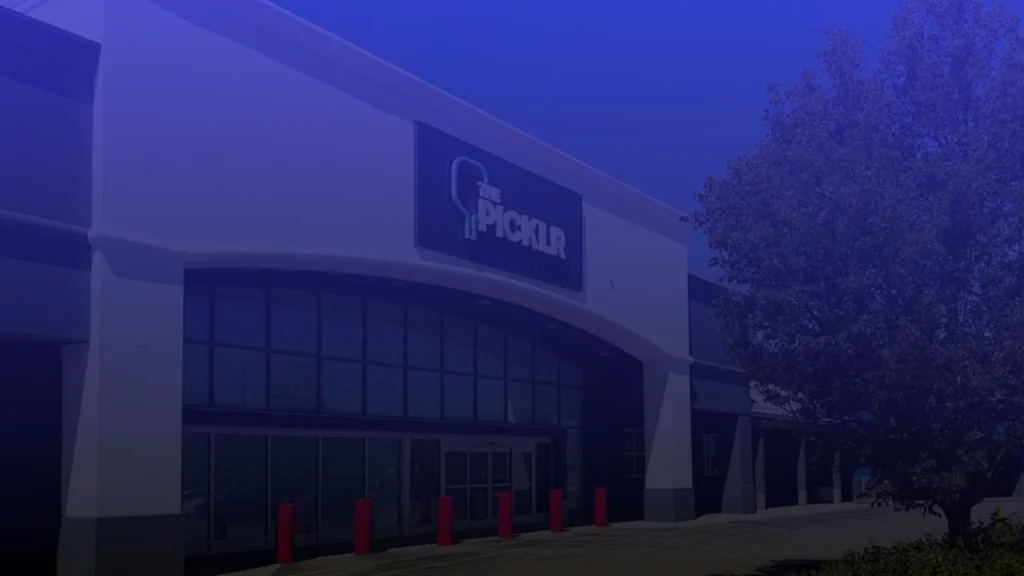
The Picklr, the indoor pickleball club franchisor, has entered Chapter 11 bankruptcy. Its parent company, Picklr, Inc., filed on October 9, 2026, and the related company Picklr Clubs, Inc. filed separately on October 10, 2026, both in the U.S. Bankruptcy Court for the Northern District of Texas under Subchapter V. The company has said clubs continue to operate, and the filings are aimed largely at lease guarantees tied to early franchise expansion.
This is a corporate reorganization. It is not a class action settlement, and no payout program for ordinary club members has been announced.
Quick Facts: The Picklr Bankruptcy
| Detail | Information |
| Business | The Picklr, an indoor pickleball club franchisor |
| Main debtor and case | Picklr, Inc., Case No. 26-34687 |
| Related debtor and case | Picklr Clubs, Inc., Case No. 26-34690 (also cited as 3:26-bk-34690) |
| Court | U.S. Bankruptcy Court, Northern District of Texas |
| Judge | Scott W. Everett (as listed on the case administrator’s site) |
| Petition dates | October 9, 2026 (Picklr, Inc.); October 10, 2026 (Picklr Clubs, Inc.) |
| Type of case | Chapter 11, Subchapter V (small business reorganization) |
| Main reason reported | Corporate guarantees on facility leases from the early franchise expansion |
| Reported financing | Reports cite roughly $4.5 to $4.8 million from an investor group led by a franchisee; figures vary and need court approval |
| Reported 2024 valuation | $59 million from a 2024 funding round. This is not the amount of debt or a fund for customers |
| Are all clubs closing? | No. A filing does not automatically close any club |
| Consumer settlement or payout | None announced |
| General member claim form | None announced |
| Plan deadlines listed | January 7, 2027 (Picklr, Inc.) and January 8, 2027 (Picklr Clubs, Inc.) |
| Official case information | Case administrator’s restructuring website (not the official court site); verify on PACER |
Why Did The Picklr File for Chapter 11?
The Picklr was founded in 2021 and began franchising in 2023. In June 2024 it closed a Series B round of about $9 million at a reported $59 million valuation, and it then sold hundreds of franchises as pickleball boomed. A valuation is what investors put on a company’s equity. It does not mean The Picklr owes $59 million and is not money available to members or franchisees.
According to company statements reported in the press, the filing stems largely from corporate guarantees on facility leases the company gave for roughly 40 early franchise locations. Reports quote CEO Jorge Barragan acknowledging that the company signed too many guarantees that landed on the holding company. A guarantee makes the parent responsible for a franchisee’s rent if the franchisee cannot pay. When several locations struggle, those guarantees can become a heavy liability for the franchisor.
Reports also point to financial strain, including limited cash relative to liabilities in the petition materials. Those figures vary between sources and should be checked against the filed schedules, which are the official record.
Bankruptcy gives the debtors a court-supervised way to renegotiate or reject burdensome leases while continuing to operate. The final treatment of leases, creditors and financing depends on court orders and the plan.
The Two Chapter 11 Cases
Picklr, Inc., Case No. 26-34687
Filed October 9, 2026, in the Northern District of Texas. The case administrator’s site lists Judge Scott W. Everett and shows the voluntary petition as the first docket entry.
Picklr Clubs, Inc., Case No. 26-34690
Filed October 10, 2026. It has its own docket and deadlines, so a document or deadline in one case does not automatically apply to the other. The case administrator’s overview page shows an inconsistent case number for this debtor in one place. Its documents list and docket use 26-34690, which is the number used here.
Separate franchisee bankruptcies
Reports say some franchisee-owned entities filed their own Chapter 11 cases earlier, in September 2026, in the Middle District of Florida. Those are separate cases from the Texas filings and are not part of Case Nos. 26-34687 or 26-34690. Confirm the details on PACER before relying on them.
Related article: Getty Images Plans Chapter 11 Bankruptcy in Up-to-$533 Million Deal With Koch and the Getty Family
What Is Subchapter V and How Does It Work?
Subchapter V is a faster, lower-cost track within Chapter 11 for eligible small-business debtors. Eligibility depends on statutory debt limits that are adjusted by Congress and over time, so the debtor must meet the limits in effect when it filed. Key features under 11 U.S.C. §§ 1181 to 1195:
| Feature | What it means (general summary) |
| Subchapter V trustee, § 1183 | A trustee is appointed to supervise the case and help the debtor and creditors reach a consensual plan. |
| Status conference, § 1188 | The court must hold a status conference within 60 days of filing. |
| Plan deadline, § 1189(b) | The debtor must file its plan within 90 days of filing. This is why plan deadlines are listed for January 2027. |
| Only the debtor files a plan, § 1189(a) | Creditors cannot propose a competing plan. |
| No creditors’ committee, § 1181(b) and § 1102 | A committee is generally not appointed unless the court orders it. |
| Consensual confirmation, § 1191(a) | If every impaired class accepts, the plan can be confirmed under the usual standards. |
| Nonconsensual confirmation, § 1191(b) | If a class rejects, the plan can still be confirmed if it does not discriminate unfairly and is fair and equitable, which requires the debtor to commit projected disposable income for 3 to 5 years. The absolute priority rule does not apply. |
| Discharge, § 1192 | For a nonconsensual plan, the discharge is generally delayed until plan payments are completed. |
| Small business duties, § 1116 | The debtor must file financial reports and attend an initial debtor interview and the creditors’ meeting (§ 341). |
The listed January 7 and 8, 2027 dates are plan filing deadlines. They are not claim deadlines, and they can be extended.
What Chapter 11 Means in Practice
- Debtor in possession (§ 1107). The company continues to run the business under court supervision.
- Automatic stay (§ 362). Most collection actions and lawsuits against the debtors are paused. The stay protects the debtors, not their non-debtor franchisees or other guarantors.
- Use of cash and financing (§§ 363, 364). Ordinary-course spending is allowed, but new borrowing, including any investor financing, generally needs court approval.
- Leases and contracts (§ 365). The debtor may assume or reject executory contracts and unexpired leases. Rejection is treated as a breach, and the other side generally holds an unsecured claim for resulting damages.
- Nonresidential real property leases (§ 365(d)(3) and (d)(4)). The debtor must timely perform post-petition lease obligations, and the time to assume or reject is limited (120 days, extendable once by 90 days).
- No termination just for filing (§ 365(e)). Clauses that terminate a contract solely because of the bankruptcy filing are generally unenforceable.
- Pre-filing payments (§ 547). Payments to creditors in the 90 days before filing (one year for insiders) can sometimes be challenged as preferences.
What It Means for Club Members
A Chapter 11 filing does not automatically cancel a membership, void a booking or create a refund right. The Picklr has said clubs continue to operate.
Prepaid memberships. If a club closes or a contract is rejected, a member’s claim for unused prepaid fees is generally a claim against whoever owes the money. In bankruptcy, deposits paid for consumer services that were never provided may receive limited priority under 11 U.S.C. § 507(a)(7), up to a dollar cap adjusted periodically (§ 104). Whether you qualify depends on who the contracting entity is and whether the debtor owes the obligation.
What to do:
- Check the specific club. Many locations are owned by independent franchisees, so your club’s finances may differ from the parent’s.
- Save records. Keep your membership agreement, receipts, booking confirmations and any unused credit balances.
- Read official notices from your club or the court about hours, terms or refunds.
- Do not assume a refund is guaranteed or that your club is closing.
- Pay attention to who your contract is with. The legal entity named in your agreement, and not the brand, determines who owes you.
- Pay by card? If a club stops providing services you prepaid for, you may have chargeback rights through your card issuer, which are separate from the bankruptcy. Check your issuer’s rules and deadlines.
What It Means for Franchise Owners
Franchisees are separate legal entities from the franchisor. A parent’s bankruptcy does not itself put a franchisee in bankruptcy and does not erase the franchisee’s own debts.
Points franchisees should understand:
- Franchise agreements can be assumed or rejected under § 365. If the debtor rejects a franchise agreement, the franchisee can generally still keep certain rights under trademark licenses. In Mission Product Holdings, Inc. v. Tempnology, LLC (2019), the U.S. Supreme Court held that rejection is a breach and does not by itself terminate the licensee’s rights. Section 365(n), which protects IP licensees, does not cover trademarks, so the outcome turns on contract terms and the case.
- Parent guarantees of your lease. The landlord’s rights against a guarantor and against the tenant are analyzed separately. The automatic stay protects the debtor guarantor, not the franchisee-tenant, so a landlord may still pursue the franchisee for rent.
- Personal guarantees. If you personally guaranteed a lease, bankruptcy of the franchisor does not release you. Under 11 U.S.C. § 524(e), a debtor’s discharge generally does not affect the liability of others.
- Fees and obligations. Royalties, technology fees and marketing fees continue to be governed by your franchise agreement unless changed by a court order.
Franchisees should review their franchise agreement and amendments, lease and any guarantee, notices from landlords or the franchisor, and any filing naming their location. Franchisees with large lease exposure should get advice from a lawyer experienced in commercial leasing, franchising and bankruptcy before changing rent payments or terminating anything.
What It Means for Landlords, Vendors and Other Creditors
Landlords and vendors first need to identify which entity owes them: Picklr, Inc., Picklr Clubs, Inc., a locally owned franchisee, or more than one through a guarantee.
Landlords
- Landlords with a direct lease or a guarantee from a debtor can file claims and may object to proposed assumption or rejection of leases.
- A landlord’s damages claim from lease rejection is capped under 11 U.S.C. § 502(b)(6): the greater of one year’s rent or 15% of the remaining term (not more than three years), plus unpaid pre-petition rent. Courts differ on how the cap applies to guarantors, so the guarantee wording and the case law of the jurisdiction matter.
- The debtor must perform post-petition lease obligations on time under § 365(d)(3).
Vendors and service providers
- Goods delivered within 20 days before filing can qualify for administrative priority under § 503(b)(9).
- Services and goods provided after filing may qualify as administrative expenses under § 503(b).
Employees
- Unpaid wages and benefits earned shortly before filing have priority under § 507(a)(4) and (a)(5), up to statutory caps.
How to check a potential claim
- Find the contract, invoice, lease or guarantee supporting the debt.
- Confirm which legal entity signed or guaranteed it.
- Review the correct docket and any notice you received.
- Check whether a proof of claim is required and by when.
- Keep payment records, delivery records and communications.
A proof of claim (Official Form 410, 11 U.S.C. § 501) is how a creditor asserts a right to payment. In Chapter 11, creditors generally must file one only if their claim is not listed in the debtor’s schedules or is listed as disputed, contingent or unliquidated (Federal Rule of Bankruptcy Procedure 3003(c)(2)). The court sets the bar date (Rule 3003(c)(3)). Notice requirements are in Rule 2002. The case administrator’s site includes a proof-of-claim section, but that does not mean every customer or vendor must file.
Is There a Picklr Bankruptcy Claim Form for Members?
No general consumer claim form or settlement has been announced. A bankruptcy proof of claim is different from a class action claim form: it only applies to people with a legal claim against a debtor, such as an unpaid refund, an unpaid invoice or lease damages. Having an unused membership balance does not automatically mean you will be paid. Check your contract and any official notice.
Timeline and Key Dates
| Date | Event |
| 2021 | The Picklr founded |
| 2023 | Franchising begins |
| June 2024 | Series B round of about $9 million at a reported $59 million valuation |
| September 2026 | Reports of a corporate restructuring and separate franchisee bankruptcies in the Middle District of Florida |
| October 9, 2026 | Picklr, Inc. files Chapter 11, Case No. 26-34687 |
| October 10, 2026 | Picklr Clubs, Inc. files Chapter 11, Case No. 26-34690 |
| About early December 2026 | Subchapter V status conference window (within 60 days of filing, § 1188) |
| January 7, 2027 | Plan deadline listed for Picklr, Inc. |
| January 8, 2027 | Plan deadline listed for Picklr Clubs, Inc. |
| To be set | Claims bar date, financing hearings, plan confirmation hearing |
Dates can change. Always rely on the current docket and official notices.
Frequently Asked Questions
Did The Picklr file for Chapter 11 bankruptcy?
Yes. Picklr, Inc. filed on October 9, 2026 (Case No. 26-34687) and Picklr Clubs, Inc. filed on October 10, 2026 (Case No. 26-34690), in the Northern District of Texas.
Does the $59 million valuation mean The Picklr owes $59 million?
No. It is the reported valuation from a 2024 investment round. It is not the debt in the case or a fund for customers.
Are all Picklr locations closing?
No. The filing does not close every location. Many clubs are independently owned, and the company has said clubs continue to operate. Confirm with your club.
Can members get their money back?
Not automatically. It depends on your agreement, which entity owes you and any court orders. No consumer settlement has been announced.
What is Subchapter V?
A streamlined Chapter 11 track for eligible small businesses, with a trustee, a 90-day plan deadline and no competing creditor plans.
Does the automatic stay protect franchisees?
Generally no. It protects the debtors that filed. A landlord may still pursue a non-debtor franchisee or a personal guarantor.
Can a landlord pursue a franchisee when the franchisor files?
Potentially, yes, depending on the lease and any guarantee. The franchisor’s filing does not erase the franchisee’s own obligations.
Do franchisees lose their trademark rights if the franchisor rejects the agreement?
Not automatically. Under the Supreme Court’s Tempnology decision, rejection is a breach, not a termination of the licensee’s rights, but the contract and the case facts matter.
What is a proof of claim and do I need to file one?
It is the form creditors use to assert a payment claim. Not everyone needs to file. Follow the notice you receive and the deadline the court sets.
Where can I find official updates?
Check the case administrator’s restructuring website and, for the official record, PACER for Case Nos. 26-34687 and 26-34690. The administrator’s site states it is not the official court website.
Is this a class action settlement?
No. It is a corporate Chapter 11 reorganization.
Sources
- Case administrator’s restructuring website for Picklr, Inc. (case overview and case numbers). https://cases.omniagentsolutions.com/?clientId=3812
- Picklr, Inc. docket and documents. https://cases.omniagentsolutions.com/documents?clientid=3812&tagid=1281
- Picklr Clubs, Inc. documents. https://cases.omniagentsolutions.com/documents/index?clientid=3812&tagid=1584
- U.S. Courts, Chapter 11 Bankruptcy Basics. https://www.uscourts.gov/court-programs/bankruptcy/bankruptcy-basics/chapter-11-bankruptcy-basics
- U.S. Courts, Subchapter V resources. https://www.uscourts.gov/court-programs/bankruptcy/bankruptcy-basics/chapter-11-bankruptcy-basics
- U.S. Bankruptcy Code, Title 11, including 11 U.S.C. §§ 104, 362, 363, 364, 365, 501, 502, 503, 507, 524, 547, 1102, 1107, 1116, 1181 to 1195. https://uscode.house.gov
- Federal Rules of Bankruptcy Procedure 2002 and 3003. https://www.uscourts.gov/forms-rules/current-rules-practice-procedure
- Mission Product Holdings, Inc. v. Tempnology, LLC, 587 U.S. 370 (2019). https://www.supremecourt.gov
- FinSMEs, “The Picklr Raises $9M, Valued at $59M,” June 2024. https://finder.techleap.nl/news/feed/the-picklr-raises-9m-valued-at-59m
- The Dink, “Indoor Pickleball Facility Franchise The Picklr Hits $59 Million Valuation,” 2024. https://thedinkpickleball.com/indoor-pickleball-franchise-the-picklr-hits-59-million-valuation
- Press reports of CEO Jorge Barragan’s statements, the corporate lease guarantees, the financing commitment and the Middle District of Florida franchisee cases (details vary by report and were not independently confirmed against court filings).
- Related AllAboutLawyer coverage: Rebel Creamery Bankruptcy, What the Van Leeuwen Lawsuit Means for the Brand (a separate company’s bankruptcy, included only as background on how Chapter 11 can affect an operating business). https://allaboutlawyer.com/rebel-creamery-bankruptcy-van-leeuwen-lawsuit/
Disclaimer: This article provides general legal information, not legal advice. AllAboutLawyer.com is an independent legal information website, not a law firm. Bankruptcy procedures, creditor rights and contract outcomes depend on the specific facts, the contracts involved and applicable court orders. Consult a licensed attorney about any particular membership, franchise, lease or claim.
About the author: Researched and written by Israr Ahmad, Legal Content Researcher at AllAboutLawyer.com.
About the Author
Israr Ahmad is a legal content researcher with 4+ years of experience covering class action settlements and consumer rights cases. He has researched and published coverage of 2,500+ settlements using verified court records, settlement administrator filings, and government sources. Learn more about Israr.