
Binance $1.1 Billion Crypto Forfeiture Lawsuit, What DOJ Says About the $6.34 Billion Hack, Recovered Funds and Customer Refunds
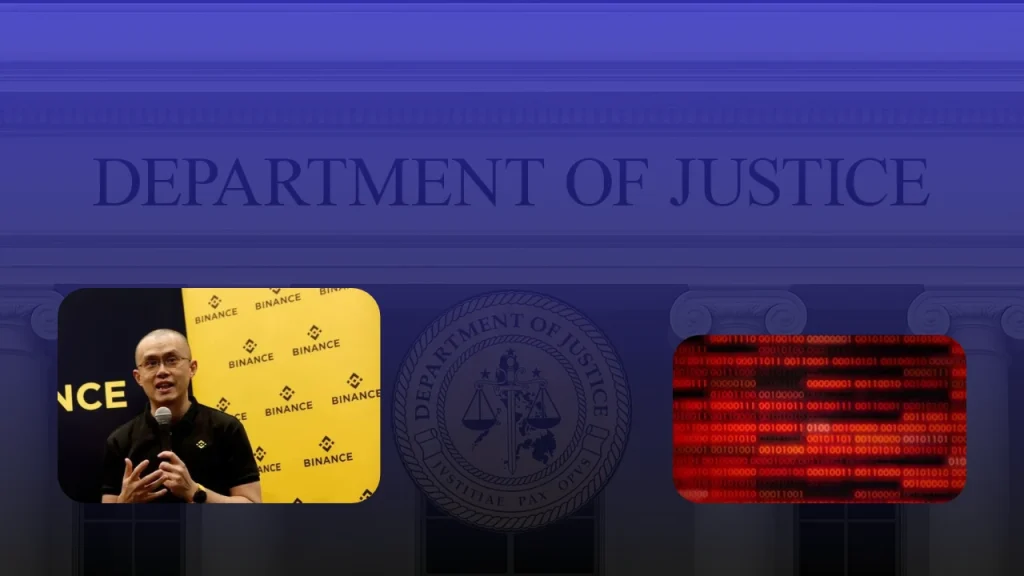
The U.S. Department of Justice filed a federal civil forfeiture lawsuit on November 23, 2026, seeking to recover more than $1.1 billion in cryptocurrency allegedly stolen by North Korean cyber actors in the October 29 Binance hack. The case, United States v. Approximately $1.1 Billion in USDC (No. 1:26-cv-04150), was filed in the U.S. District Court for the District of Columbia and targets USDC stablecoins held at 36 address entries across 18 blockchains.
It is part of a wider recovery effort over roughly $6.34 billion in assets Binance reported stolen. Authorities say nearly $3 billion has been frozen, seized or returned with U.S. assistance, and Binance says it has already replaced 100% of affected token assets from its own funds as of November 13.
Quick Answers: Binance Forfeiture Lawsuit
- Is this a class action settlement? No. It is a government civil forfeiture case against property, not a payout fund.
- Is there a claim form or refund for Binance users? No public customer claim form, payout, or deadline has been announced.
- Is Binance being fined another $1.1 billion? No. Binance is the alleged victim of the theft in this case.
- Who is blamed for the hack? The FBI attributes it to North Korean state-linked hackers tracked as TraderTraitor. North Korea has denied involvement.
- Do I need to do anything? Only if you hold a legal interest in the specific forfeited USDC or receive a direct court notice. Otherwise, watch official Binance notices and avoid refund scams.
Binance Cryptocurrency Forfeiture Lawsuit 2026: Quick Facts
| Case details | Verified information |
| Federal case number | 1:26-cv-04150 |
| Court | U.S. District Court for the District of Columbia |
| Complaint filed | November 23, 2026 |
| Plaintiff | United States of America |
| Defendants | Specified cryptocurrency assets (civil forfeiture in rem) |
| Affected exchange | Binance (global exchange) |
| Original hack date | October 29, 2026 |
| Total stolen assets reported by Binance | Approximately $6.34 billion |
| Cryptocurrency targeted | USDC (issued by Circle Internet Financial, LLC) |
| Amount sought | More than $1.1 billion (listed balances reported at roughly $1.17 billion) |
| Address entries / blockchains | 36 / 18 |
| Frozen, seized or returned with U.S. assistance | Nearly $3 billion |
| Alleged responsible actors | North Korean state-linked groups (TraderTraitor; Lazarus Group / APT38 named in the complaint) |
| Investigating agencies | FBI, U.S. Secret Service, IRS Criminal Investigation |
| Initial court restraint | November 12, 2026 |
| Customer asset replenishment | 100% as of November 13, according to Binance |
| Class action settlement | No |
| Official settlement website | None exists |
| Public customer claim form | None announced |
| Final forfeiture order | Not independently verified |
| Current status | Pending federal civil forfeiture litigation |
Beware of scams: There is no official Binance or DOJ “forfeiture refund” website or claim form. Never enter your seed phrase, password, or 2FA code anywhere to “claim” a payout.
Why Did the DOJ File a $1.1 Billion Binance Lawsuit?
Freezing cryptocurrency does not automatically transfer legal ownership to the government or the victim. The DOJ is asking the court to rule that the targeted USDC is subject to forfeiture so it can be permanently controlled and, eventually, disposed of under law.
The complaint is directed at the cryptocurrency itself. It does not accuse Binance of committing the theft. The FBI, Secret Service, and IRS Criminal Investigation are participating, and the Justice Department’s National Security Division has said it will use every tool to seize and return North Korea’s stolen funds.
What Happened in the Binance Hack on October 29, 2026?
Binance suffered a major security incident involving unauthorized transfers from wallets operated by the exchange, with approximately $6.34 billion in digital assets affected, according to Binance. Federal investigators allege unauthorized actors accessed protected systems and moved the assets without permission. The theft is widely described as the largest crypto heist in history.
This incident is distinct from individual account takeovers, phishing scams, or unauthorized withdrawals affecting particular customers, which may have different causes and remedies.
Who Was Behind the Binance Hack?
The FBI attributes the attack to North Korean military hackers tracked as TraderTraitor. The forfeiture complaint also identifies groups known as Lazarus Group and Advanced Persistent Threat 38 (APT38). These are official investigative assessments and government allegations, not criminal convictions of any individual. North Korea has publicly denied involvement and criticized the FBI investigation.
Blockchain analytics firm Elliptic has reported that hackers moved about $247 million through Bitcoin mixers, according to media reports. Separately, the DOJ announced it seized cloud infrastructure tied to a North Korean campaign the FBI calls FaceStealer, which it says used fake video calls and led to more than $400 million in crypto theft over 18 months. That is a different scheme from the Binance hack.
How Much Cryptocurrency Has Been Recovered?
Different figures describe different stages and overlap, so they should not be added together:
| Amount | What it represents |
| Approximately $6.34 billion | Total affected assets reported by Binance |
| More than $2.7 billion | Assets frozen through government and private-sector efforts as of November 12 |
| More than $1.2 billion | Portion court-authorized for seizure or restraint as of November 12 |
| Approximately $2.85 billion | Assets Binance reported frozen or intercepted |
| Nearly $3 billion | Assets frozen, seized or returned with U.S. assistance as of November 23 |
| More than $1.1 billion | USDC targeted by the November 23 forfeiture complaint |
| 100% of affected token assets | Amount Binance says it replaced with its own resources |
The $1.1 billion was already restrained before the lawsuit, so it should not be added to the nearly $3 billion. Likewise, Binance replenishing its reserves does not mean the original $6.34 billion has been recovered from the hackers. The DOJ has not published a full breakdown separating funds already returned from those still frozen or seized.
Frozen, Seized, Forfeited, Returned: What’s the Difference?
| Status | Meaning |
| Frozen | Transfers or access to specified assets are restricted |
| Seized | Authorities have taken possession or legally recognized control |
| Restrained | A legal order preserves property or bars its movement |
| Subject to forfeiture | The government asserts a legal basis to permanently take the property |
| Forfeited | Ownership transferred under a final forfeiture process |
| Returned | Assets actually delivered to an authorized recipient |
| Replenished | Replacement assets supplied to cover the original loss |
For example, $100 million may be frozen while investigators trace it, and a forfeiture suit could target that same $100 million. The filing would not be an additional $100 million recovery.
What Cryptocurrency Is the DOJ Seeking to Recover?
The complaint principally concerns USDC, a dollar-pegged stablecoin issued by Circle. It identifies 36 address entries across 18 blockchain networks and describes the government’s asserted link between that property and the theft. The action does not seek forfeiture of every token Binance customers hold or every USDC in circulation.
Why Is Circle Involved?
Circle can block specified addresses from moving USDC, and authorities say it restricted the Binance-linked addresses before the court order. According to reporting on the complaint, Circle told prosecutors it cannot transfer the original tokens out of the blocked addresses. Instead, it has agreed to voluntarily issue new USDC equal to the forfeited amount and transfer it to the United States once the court enters a forfeiture order.
Circle is not accused of conducting the hack. Because not every cryptocurrency has an issuer that can block transfers, recovery options differ by asset type, which is why USDC and similar stablecoins were easier to freeze than Bitcoin.
What Did the November 12 Restraining Order Do?
Prosecutors requested emergency relief on November 6, 2026, and a temporary restraining order was issued on November 12 in the related proceeding, No. 26-mc-186. It was meant to keep the targeted cryptocurrency from moving while the government pursued forfeiture.
On November 23, prosecutors filed an eight-page application asking the court to keep the assets restrained. The government said Binance and Circle consented to the initial restraint and the extension. The forfeiture complaint covers a subset of the originally restrained property, because one address was excluded after Binance was expected to be able to obtain the release of its assets. A restraint is not a final judgment transferring ownership.
Which Federal Laws Are Involved?
| Federal law | Relevance to the case |
| 18 U.S.C. § 981(a)(1)(C) | Forfeiture of property derived from specified unlawful activity (count one) |
| 18 U.S.C. § 981(a)(1)(A) | Forfeiture of property involved in money laundering (count two) |
| 18 U.S.C. § 984 | Forfeiture rules for fungible property, relevant where funds are commingled |
| 18 U.S.C. § 1030 | Computer Fraud and Abuse Act |
| 18 U.S.C. §§ 1343, 1349 | Wire fraud and conspiracy |
| 18 U.S.C. § 1956 | Money laundering and conspiracy |
| 18 U.S.C. § 371 | General conspiracy statute referenced in the restraint application |
| 18 U.S.C. § 983 | Civil forfeiture procedures and protections |
| 28 U.S.C. §§ 1345, 1355 | Jurisdiction over the forfeiture action |
| Supplemental Rule G | Procedural rules for actions against property |
| IEEPA (50 U.S.C. § 1701 et seq.) | Sanctions and national-security authority against North Korean illicit revenue |
Count One: Proceeds of Crime
The government alleges the targeted USDC constitutes or derives from proceeds traceable to computer fraud, wire fraud, and conspiracy.
Count Two: Property Involved in Money Laundering
The government alleges the assets were involved in, or traceable to, qualifying money laundering transactions.
Both counts target the same defined property. They do not create two separate compensation funds.
What Is Civil Forfeiture In Rem?
It is a proceeding against property rather than a person. The United States is the plaintiff and the cryptocurrency is the defendant, which is why the caption names USDC rather than Binance. It does not require a prior criminal conviction, but the government must prove statutory grounds, generally by a preponderance of the evidence under 18 U.S.C. § 983(c), a lower standard than the proof beyond a reasonable doubt required in criminal cases.
How Does the Forfeiture Process Work?
- Investigation and tracing: Investigators identify property linked to the offense, often using blockchain forensics, which matters because stolen crypto is frequently split, swapped, and bridged across chains.
- Preservation: Seizure warrants, restraining orders, or issuer blocklisting keep assets from moving.
- Complaint: The government files its forfeiture complaint (the stage reached on November 23).
- Notice: Interested parties receive notice and a chance to assert claims.
- Judicial determination: The court reviews the allegations, evidence, and any competing claims, or the case resolves by agreement or default.
- Final forfeiture and disposition: After a final order, the government disposes of the property under law, which can include returning value to eligible victims.
The outcome and distribution plan are still undetermined.
Can Innocent Owners Challenge the Forfeiture?
Yes, if they have a legally recognized interest in the specific property and meet procedural requirements. Section 983(d) provides an innocent-owner defense, which the claimant generally must prove by a preponderance of the evidence. Issues include the claimant’s ownership interest, when it was acquired, what they knew, and whether they are a bona fide purchaser for value. Holding tokens does not automatically defeat a forfeiture claim, and a person’s interest does not vanish merely because a complaint is filed. Anyone who receives a direct forfeiture notice should seek a qualified attorney promptly.
Is the $1.1 Billion Lawsuit a Class Action Settlement?
No:
| Government forfeiture proceeding | Consumer class action settlement |
| Filed by the United States | Generally brought by private plaintiffs |
| Targets specified property | Seeks relief from a defendant |
| Governed by federal forfeiture statutes | Governed by class action rules |
| May involve competing ownership claims | Involves certified or settlement classes |
| No general Binance customer claim form announced | Usually has an administrator and claims process |
Owning crypto, having a Binance account, or trading USDC does not entitle anyone to a share of the targeted funds.
Will Binance Customers Get Refunds From the Forfeiture?
No new customer payment program has been announced. Binance says it replaced all affected token assets by November 13, so customers with their full balances should not assume they are owed the same value again from government recovery. Eventual distribution of forfeited property will depend on legal procedures and recognized interests. Customers with actual missing balances or unauthorized transactions should contact Binance through verified support channels. There is no announced blanket payment to all users.
How Did Binance Cover the Loss?
According to Binance, it used three sources: its corporate treasury, the Secure Asset Fund for Users (SAFU), and a futures insurance fund. Binance reports roughly $2.85 billion of stolen assets frozen or intercepted and says it will keep pursuing recovery. Binance says it intends to replenish SAFU to about $1 billion. These are Binance’s own representations, not independent certification of its financial condition. SAFU is a private fund, not federal deposit insurance, and the FDIC does not generally insure crypto against theft, market loss, or exchange failure.
Binance also says its November 12 proof-of-reserves snapshot showed full backing across 198 tokens. Proof of reserves offers a point-in-time view and does not by itself show all liabilities, liquidity, or future security, and it is not a substitute for a full audit.
Is Binance.US Affected?
The complaint concerns the global Binance exchange. Binance.US is a separate U.S. platform, and the complaint does not establish that Binance.US accounts were compromised. U.S. customers should confirm which company runs their account and follow that platform’s notices. No separate Binance.US compensation program tied to this case was identified.
| Account or asset type | What to check |
| Binance.com account | Global Binance security and recovery notices |
| Binance.US account | Binance.US official announcements and account records |
| Self-custodied crypto | Your own wallet transaction history |
| Assets at another exchange | That exchange’s security notices |
Binance’s Separate Recovery Efforts in Abu Dhabi
On November 18, 2026, Binance announced a court order from the Abu Dhabi Global Market Courts to support recovery, because some service providers require formal judicial authorization before releasing frozen assets. This is a separate legal mechanism from the U.S. case, and both may involve assets from the same theft, so recovery amounts should not be double-counted.
Is This Related to Binance’s $4.3 Billion DOJ Settlement?
No. In November 2023, Binance pleaded guilty to federal offenses involving anti-money-laundering requirements, money transmitter registration, and sanctions, and agreed to penalties totaling $4,316,126,163.
| 2023 Binance resolution | November 2026 forfeiture | |
| Amount | $4.316 billion | More than $1.1 billion |
| Binance’s role | Corporate criminal defendant | Alleged victim of theft |
| Main issue | Regulatory and sanctions violations | Recovery of allegedly stolen assets |
| Public customer claim fund | None | None announced |
The new complaint does not establish that Binance breached its plea agreement or owes another penalty.
Can the DOJ Return Forfeited Crypto to Victims?
Federal law allows forfeited assets to compensate qualifying victims through two routes:
- Remission: A discretionary process under 28 C.F.R. Part 9 in which qualifying victims who can show losses tied to the offense may receive compensation. Prior reimbursement and other recoveries can affect eligibility.
- Restoration: Use of forfeited assets to satisfy criminal restitution orders. The Binance case is civil, and the filing does not establish a criminal restitution order.
An example of an actual remission program is the Western Union victim refund process, which has a real petition process. The Binance case has not announced an equivalent program.
Can Binance Customers File a Claim in the Forfeiture Case?
Only people with a legitimate legal interest in the specific targeted cryptocurrency may assert it under Supplemental Rule G. That is different from a consumer complaint, an FBI report, or a class settlement claim. A judicial claimant generally must identify the property, identify themselves and their interest, sign under penalty of perjury, and file and serve the documents on time. Direct notices usually allow at least 35 days to file a claim, and an answer or motion is generally due within 21 days after a judicial claim. Follow the actual court notice and get legal advice. No general Binance customer refund deadline has been verified.
What Should Binance Customers Do If Crypto Is Missing?
- Review your history. Check balances, deposits, withdrawals, and trades. A market-price drop is not a theft loss.
- Preserve evidence. Keep statements, transaction IDs, deposit and withdrawal confirmations, wallet addresses, security alerts, support emails, and records of any reimbursement. Never share private keys, passwords, or authentication codes.
- Contact the right platform. Use official support for Binance or Binance.US, and ask for written confirmation of your asset status.
- Secure your account. Review devices, API keys, withdrawal allowlists, and active sessions; change compromised passwords; and enable app- or hardware-based two-factor authentication.
- Report theft. U.S. consumers can file with the FBI’s Internet Crime Complaint Center (IC3). A report helps investigators but is not a compensation application.
- Get legal advice for significant unreimbursed losses, disputed ownership, or a direct forfeiture notice.
Can You Sue Binance After the Hack?
Possibly, depending on the facts. A private suit could raise breach of contract, negligence, consumer protection, unauthorized transfer, or privacy theories. A security incident alone does not prove negligence or breach, and a claimant would need a valid legal basis, causation, and a compensable injury. User agreements, arbitration clauses, jurisdiction, any reimbursement already received, and limitation periods can all affect remedies. The November 23 government action does not establish that Binance is liable to customers.
How to Avoid Fake Binance Refund and Settlement Scams
Big crypto headlines attract impersonators. Watch for:
- Requests to pay a fee, tax, or “verification” charge to release a refund
- Fake government or settlement websites
- Requests for your recovery phrase or private key
- Claims that every Binance user qualifies for thousands of dollars
- Unsolicited messages asking you to connect your wallet to an unknown site
- Guaranteed-recovery promises from “recovery specialists”
Safe habits:
- Don’t look for a DOJ refund form. None exists, and any “Binance DOJ payout form” is a red flag.
- Verify notices only inside official channels, such as your logged-in account notifications or the official support portal, not links in emails, Telegram, Discord, or DMs.
- Never share passwords, seed phrases, or 2FA codes. Law enforcement, regulators, and legitimate platforms do not ask for them.
- Check account security and activity regularly.
Government agencies do not require you to send crypto to an unfamiliar wallet to unlock recovered assets.
Binance Hack and Forfeiture Timeline
| Date | Development |
| October 29, 2026 | Approximately $6.34 billion theft from Binance |
| October 30–November 3 | Binance reports covering affected assets in stages (about 90% by October 31, about 98% by November 3) |
| November 6 | Government requests temporary judicial restraint |
| November 12 | Court issues temporary restraining order; DOJ reports more than $2.7 billion frozen and over $1.2 billion authorized for seizure or restraint |
| November 13 | Binance says all affected token assets are replaced |
| November 18 | Binance announces Abu Dhabi court order supporting recovery |
| November 20 | Binance publishes its recovery explanation |
| November 23 | DOJ files $1.1 billion-plus civil forfeiture complaint and asks for continued restraint |
| Final forfeiture judgment | Not independently verified |
| Public consumer distribution date | Not announced |
What Happens Next?
The immediate issue is keeping the targeted crypto restrained while the case proceeds. The government must follow notice procedures and address any competing property claims, after which the court may decide whether to enter a forfeiture judgment. Separate steps would govern how recovered assets are disposed of, and, given Circle’s agreement, replacement USDC would be issued only after a forfeiture order. Meanwhile, the FBI and Binance continue pursuing other assets tied to the theft. No deadline for the broader recovery has been announced.
Frequently Asked Questions
Is the Binance $1.1 billion settlement real?
The federal forfeiture lawsuit is real, but calling it an approved customer class action settlement is inaccurate.
Can I apply for a Binance $1.1 billion refund?
No public customer refund application tied to the November 23 complaint has been announced.
Has Binance recovered the entire $6.34 billion?
No complete recovery from the alleged perpetrators has been confirmed. Binance says it separately replaced affected assets using its own resources.
Who was responsible for the Binance hack?
The FBI attributes it to North Korean state-linked actors tracked as TraderTraitor, and the complaint names Lazarus Group and APT38. North Korea denies involvement.
Is Binance being fined another $1.1 billion?
No. The suit targets crypto allegedly stolen from Binance and imposes no new penalty on the exchange.
Is Circle being sued for the hack?
No. Circle is assisting by restricting specified USDC.
Will every Binance account holder get compensation?
No. Having an account does not create a right to a government payment.
Does the lawsuit affect all USDC holders?
No. The complaint targets only specified USDC connected to the alleged theft.
Is Binance.US part of the case?
The complaint identifies the global Binance exchange as the victim and does not establish that Binance.US accounts were compromised.
Can the government permanently keep stolen crypto?
Yes, if statutory requirements are met and the forfeiture process is completed.
If my account was already made whole, can I still claim compensation?
Replacement may eliminate any remaining compensable loss, and government victim compensation generally does not duplicate recovery for the same reimbursed loss.
When will the case end?
No final judgment or distribution date has been announced.
Bottom Line
The DOJ’s November 23, 2026 complaint is a major step in recovering crypto stolen in the roughly $6.34 billion Binance hack. The government seeks more than $1.1 billion in USDC tied to North Korean cyber actors and the laundering that followed. Nearly $3 billion has been frozen, seized, or returned, but the wider recovery continues, and Binance says it has replaced all affected assets with its own funds.
This is not a consumer class action settlement. Binance customers should follow official announcements, preserve evidence of any actual loss, and avoid sites promising access to a compensation fund that does not exist.
Related Reading
- DOJ Reviews Binance’s $4,316,126,163 Plea Agreement: What the 2026 Compliance Review Means for Binance Users
- Western Union Phase 3 Refunds: Fraud Victims Can File Claims Until December 31, 2026
- Backward Hat Capital $600 Million Ponzi Scheme: Two Men Charged, What Investors Should Do
Official Sources and Court Documents
- U.S. Department of Justice, November 23, 2026 Binance cryptocurrency forfeiture announcement
- Verified complaint for forfeiture in rem, Case 1:26-cv-04150, Document 1
- Government application for continued restraint, Document 2
- DOJ, November 12, 2026 coordinated cryptocurrency recovery announcement
- FBI, attribution of the Binance cryptocurrency attack
- Binance, October 29 security incident investigation and response
- Binance, November 20 asset replenishment and recovery update
- Binance, November 18 Abu Dhabi court order announcement
- The Block, DOJ seeks $1.17 billion in USDC tied to Binance hack
- Cointelegraph, US seeks $1.1B in crypto stolen in North Korea-linked Binance hack
- 18 U.S.C. § 981, Civil forfeiture
- 18 U.S.C. § 983, General rules for civil forfeiture proceedings
- Federal Rules of Civil Procedure, Supplemental Rule G
- 28 C.F.R. Part 9, Remission and mitigation regulations
- DOJ, Compensating victims with forfeited assets
- FBI, cryptocurrency recovery scam warning
Legal disclaimer: AllAboutLawyer.com is an independent legal information website, not a law firm or investment advisory service. This article provides general legal information and is not legal, financial, tax, or investment advice. Allegations in pending proceedings are not final judicial findings.
About the Author
Israr Ahmad is a legal content researcher with 4+ years of experience covering class action settlements and consumer rights cases. He has researched and published coverage of 2,500+ settlements using verified court records, settlement administrator filings, and government sources. Learn more about Israr.