
Smile More Lawsuit Against American Eagle, Federal Trademark Infringement Case Explained (2026)
Smile More Intellectual Holdings, LLC filed a federal trademark lawsuit against American Eagle Outfitters, Inc. and The Smiley Company on September 25, 2026, in the U.S. District Court for the Middle District of Florida. The case, Smile More Intellectual Holdings, LLC v. American Eagle Outfitters, Inc. et al., is docketed as No. 6:26-cv-02240. The docket identifies the claim as trademark infringement and unauthorized use under 15 U.S.C. § 1125, part of the Lanham Act, and the plaintiff has demanded a jury trial.
This is a business-to-business intellectual property dispute, not a consumer class action. As of October 17, 2026, no settlement, court finding of infringement or consumer compensation program has been verified. The complaint contains the plaintiff’s allegations, not a ruling by the court.
One detail matters for understanding the case: a federal registration for the SMILE MORE mark that was once held by the plaintiff was cancelled on June 5, 2024, after a required maintenance filing was not made. That does not automatically end the plaintiff’s case, but it makes the question of what rights the plaintiff actually asserts a central one.
Quick Facts: Smile More Intellectual Holdings v. American Eagle Outfitters
| Case detail | Information |
| Case name | Smile More Intellectual Holdings, LLC v. American Eagle Outfitters, Inc. et al. |
| Plaintiff | Smile More Intellectual Holdings, LLC |
| Defendants | American Eagle Outfitters, Inc. and The Smiley Company (identified in the docket under names including Smileyworld Limited) |
| Court | U.S. District Court for the Middle District of Florida (Orlando Division) |
| Case number | 6:26-cv-02240 (the suffix PGB-CAB reportedly corresponds to District Judge Paul G. Byron and Magistrate Judge Chauncey A. Bratt) |
| Filing date | September 25, 2026 |
| Main legal issue | Trademark infringement and unauthorized use |
| Federal statute listed | 15 U.S.C. § 1125, Lanham Act |
| Jury demand | Yes, by the plaintiff |
| Class action? | No class action is identified in the public docket |
| Settlement status | None verified |
| Consumer claim form | None identified |
| Current status | Early-stage federal litigation; no merits decision verified in the records reviewed |
Source: the federal case docket on Justia.
Why Did Smile More Intellectual Holdings Sue American Eagle?
The public docket identifies the filing as a complaint for trademark infringement and unauthorized use and lists American Eagle Outfitters and The Smiley Company as defendants. One summary of the complaint says the plaintiff alleges American Eagle and The Smiley Company produced and sold apparel bearing the phrase “Smile More” alongside smiley-face graphics. The publicly indexed docket does not reproduce enough of the complaint to confirm which products, designs or dates are at issue, and I could not verify that description against the complaint itself.
It would therefore be premature to say that any specific shirt, logo or collection has been shown to infringe. The complaint is the plaintiff’s account, and the defendants have not been found liable for anything.
Some public commentary links the SMILE MORE brand to YouTube creator Roman Atwood. The docket summary reviewed does not confirm who is behind the plaintiff entity or how the brand is structured, so treat that link as unverified until you see the complaint.
Who Is Smile More Intellectual Holdings, and What Happened to the SMILE MORE Registration?
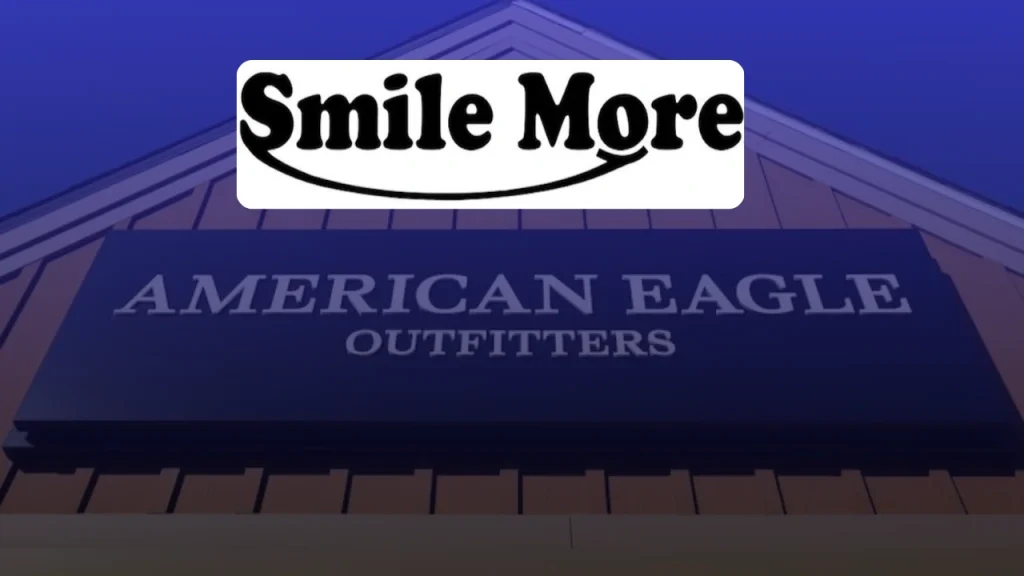
Smile More Intellectual Holdings, LLC is the plaintiff. USPTO-derived records identify the company as the former owner of a federal registration for the mark SMILE MORE, shown as the words with a curved line beneath them intended to depict a smile. The record lists registration number 5,340,817 and serial number 87/482,017, and the registration covered toy fidget spinners and toy animals. It issued in November 2017.
The registration was cancelled on June 5, 2024, because the required declaration of continued use, filed under Section 8 of the Lanham Act, was not submitted. See the USPTO record for SMILE MORE and the USPTO’s guidance on trademark status.
What Does 15 U.S.C. § 1058 Require to Keep a Trademark Registration Alive?
Under 15 U.S.C. § 1058, a registrant must file a declaration of continued use or excusable nonuse between the fifth and sixth year after registration, with a six-month grace period available for an additional fee. Failing to file leads to cancellation of the registration.
Cancellation for a missed filing is not the same thing as abandonment. Under 15 U.S.C. § 1127, a mark is abandoned when use is discontinued with intent not to resume, and three consecutive years of nonuse is prima facie evidence of abandonment. A cancelled registration can therefore be relevant evidence on abandonment, but it does not by itself prove it.
Does a Cancelled Registration Mean Smile More Has No Trademark Rights?
Not necessarily, and the cancellation does not prove that American Eagle did nothing wrong. The two questions are separate.
A cancelled registration no longer carries the benefits of an active one, such as the evidentiary presumptions in 15 U.S.C. §§ 1057(b) and 1115(a) and the nationwide priority that registration provides. A plaintiff in that position can still sue under 15 U.S.C. § 1125(a) for infringement of an unregistered mark, but it must prove each element itself instead of relying on a registration certificate.
What the docket does not show is whether the complaint relies on this historical registration, on a different mark, on common-law rights from actual use, or on all of these. That has to be checked against the complaint and its exhibits.
Who Are the Defendants in the Smile More Lawsuit?
American Eagle Outfitters, Inc.
American Eagle Outfitters is the apparel retailer named as a defendant. A retailer can be accused of selling goods that bear a disputed mark, of distributing products supplied by others, or of using branding allegedly tied to another rights holder. The docket confirms American Eagle was named. It does not establish that the company infringed or knowingly sold unauthorized goods.
The Smiley Company
The second defendant is The Smiley Company, identified in the docket under corporate names including The Smiley Company SPRL and Smileyworld Limited. It develops and licenses Smiley-branded logos and designs, and its brand-protection page says commercial use of its protected logos and designs may require permission.
That general policy explains why the company is a relevant party to a dispute over branding. It does not show what happened in this case. Whether any licensing relationship exists between the defendants, and what it covers, is something the court would examine.
Trademark Laws That Apply to the Smile More Lawsuit
15 U.S.C. § 1125(a): False Designation of Origin Under the Lanham Act
Section 1125(a) provides a federal claim against anyone who uses a word, term, name, symbol or device in commerce in a way likely to cause confusion about the source, affiliation, sponsorship or approval of goods or services. Section 1125(a)(1)(A) covers confusion of that kind, while § 1125(a)(1)(B) covers false advertising. A plaintiff relying on an unregistered mark must show two things in the Eleventh Circuit, which covers Florida: that it has a valid, protectable mark, and that the defendant’s use is likely to cause confusion. See Tana v. Dantanna’s, 611 F.3d 767 (11th Cir. 2010).
15 U.S.C. § 1114(1): Infringement of a Registered Mark
Section 1114(1) is the infringement provision for registered marks. Because the registration at issue was cancelled, a claim built on this section would require an active registration, which makes the docket’s reference to § 1125 the more natural fit for the unregistered-rights route. Whether the complaint also pleads § 1114 is something only the complaint can confirm.
How Do Courts in Florida Decide Whether Two Marks Are Confusingly Similar?
Courts in the Eleventh Circuit weigh a set of factors, including the type of mark, the similarity of the marks, the similarity of the products, the similarity of retail outlets and customers, the similarity of advertising, the defendant’s intent and any actual confusion. See Frehling Enterprises, Inc. v. International Select Group, Inc., 192 F.3d 1330 (11th Cir. 1999). Trademark disputes do not require identical logos, but there is also no rule that two designs infringe just because both include a smile.
How Strong Is an Unregistered Mark? Distinctiveness and Two Pesos
For an unregistered mark, courts look at whether it is inherently distinctive or has acquired distinctiveness through use. The Supreme Court held in Two Pesos, Inc. v. Taco Cabana, Inc., 505 U.S. 763 (1992), that inherently distinctive unregistered marks and trade dress can be protected under § 43(a). A phrase that is descriptive or commonly used may need proof that consumers associate it with a single source.
Dilution Under 15 U.S.C. § 1125(c)
Some summaries of this case mention “dilution.” A federal dilution claim under § 1125(c) requires a mark that is famous, meaning widely recognized by the general consuming public of the United States. The docket does not show that this claim is pleaded, and it should not be assumed.
Florida Trademark and Unfair Competition Law
Plaintiffs in Florida federal court often add state-law claims alongside the Lanham Act. Possible examples include Florida’s trademark statute, Chapter 495 of the Florida Statutes, the Florida Deceptive and Unfair Trade Practices Act, Fla. Stat. § 501.201 et seq., and common-law unfair competition. The docket summary reviewed does not show whether any of these are pleaded.
What Remedies Can a Court Order in a Lanham Act Case?
The complaint’s requested relief has not been verified from the complaint itself. The remedies that federal trademark law generally makes available include:
- Injunctions: 15 U.S.C. § 1116(a) lets courts enjoin trademark violations, and the Trademark Modernization Act of 2020 restored a rebuttable presumption of irreparable harm once a plaintiff shows likely success on the merits.
- Profits, damages and costs: 15 U.S.C. § 1117(a) allows an award of the defendant’s profits, the plaintiff’s damages and costs, and the court can adjust the profits award. Attorney’s fees are reserved for exceptional cases. In Romag Fasteners, Inc. v. Fossil, Inc., 140 S. Ct. 1492 (2020), the Supreme Court held that willfulness is not a prerequisite to a profits award, though it remains an important consideration.
- Destruction of infringing articles: 15 U.S.C. § 1118.
- Statutory damages: 15 U.S.C. § 1117(c) provides statutory damages, but only for counterfeiting of a registered mark. Because the SMILE MORE registration was cancelled, claims of statutory damages in this case should be treated with caution until the complaint is reviewed.
The docket does not show that any injunction, damages award or product-removal order has been entered.
What Defenses Could American Eagle and The Smiley Company Raise?
Which defenses will be raised is not known, because no answer or motion has been verified. The defenses and arguments commonly seen in trademark cases include:
- No protectable mark: that the plaintiff does not own enforceable rights in “Smile More,” whether because the registration was cancelled, the phrase is descriptive or the mark was abandoned under 15 U.S.C. § 1127.
- No likelihood of confusion: that the marks, products or marketing differ enough that consumers would not be confused.
- Descriptive fair use: 15 U.S.C. § 1115(b)(4) protects use of a descriptive term in good faith, other than as a mark, to describe goods.
- Expressive use: Jack Daniel’s Properties, Inc. v. VIP Products LLC, 599 U.S. 140 (2023), limits the use of certain First Amendment-based arguments when the accused use functions as a source identifier.
- Licensing and authorization: that the use was authorized by a valid license.
- Laches or delay: the Lanham Act has no fixed limitations period, so courts look at unreasonable delay and prejudice, often by reference to an analogous state limitations period.
- Lack of personal jurisdiction or improper service: a defendant organized abroad could challenge jurisdiction or the manner of service. Service abroad can involve the Hague Service Convention.
Retailers and licensors can also face secondary-liability theories. The Supreme Court recognized contributory trademark infringement in Inwood Laboratories, Inc. v. Ives Laboratories, Inc., 456 U.S. 844 (1982). Whether any such claim is pleaded here is not known.
What Could Happen Next in the Smile More American Eagle Lawsuit?
The lawsuit is at an early stage. The initial docket shows the complaint and administrative filings, including a standing order and filings designating counsel, and none of those resolves the merits. Federal courts hear Lanham Act claims under 28 U.S.C. §§ 1331 and 1338(a) and 15 U.S.C. § 1121, and venue is governed by 28 U.S.C. § 1391.
The usual sequence under the Federal Rules of Civil Procedure is:
- Service of process (Rule 4): the defendants must be served, or waive service, generally within 90 days of filing under Rule 4(m).
- Response (Rule 12(a)): a defendant generally has 21 days after service to answer or move, or 60 days after a request for waiver of service is sent under Rule 4(d)(3).
- Motion to dismiss (Rule 12(b)(6)): a defendant may argue that the complaint fails to state a claim, including on ownership of the claimed mark.
- Discovery, expert disclosures and summary judgment: if the case continues.
- Trial: the plaintiff has demanded a jury under Rule 38.
Could American Eagle Ask the Court to Dismiss the Smile More Lawsuit?
Yes. Whether a motion has been filed, and whether it would succeed, depends on the docket and the complaint’s wording. No dismissal or merits ruling was verified in the records reviewed.
Could the Smile More Lawsuit Settle?
The parties could settle at any point. A trademark settlement can address product sales, branding changes, licensing and payment, but any such terms would be speculative here. No settlement was verified as of October 17, 2026.
Could the Lawsuit Affect American Eagle Products?
Possibly, if the court orders relief or the parties agree to changes. The current docket does not show any order requiring American Eagle to remove products, stop sales or pay damages, so any suggestion of a mandatory product withdrawal is premature.
Is the Smile More Lawsuit a Class Action? Can American Eagle Shoppers File a Claim?
No class action or consumer compensation program has been identified in this case. Smile More Intellectual Holdings is the named plaintiff, and the docket describes a trademark dispute between businesses. No class has been certified, and there is no verified settlement administrator, claim form, payment amount or filing deadline. Shoppers who bought American Eagle clothing should not assume they are owed money simply because the retailer has been sued.
For another business-to-business trademark dispute, see our article Little French Bakery Lawsuit Explained, What You Need To Know, which discusses alleged infringement and unauthorized use of business branding.
How to Check the Smile More Lawsuit’s Status on the Federal Docket
Check the court record rather than social media summaries. The case is Smile More Intellectual Holdings, LLC v. American Eagle Outfitters, Inc. et al., No. 6:26-cv-02240, U.S. District Court for the Middle District of Florida. You can view the publicly indexed Justia docket or search the case in PACER, the federal judiciary’s electronic records system.
Look for an answer, a motion to dismiss, a scheduling order, a preliminary-injunction request and any substantive ruling. The public index may lag behind new filings. Before describing specific products, registration rights, damages requested or court-ordered restrictions, review the complaint and its exhibits directly.
Key Dates in the Smile More v. American Eagle Trademark Case
| Date | Event |
| November 2017 | Federal registration for SMILE MORE (No. 5,340,817) issued for toy fidget spinners and toy animals. |
| June 5, 2024 | That registration was cancelled for failure to file the required Section 8 declaration. |
| September 25, 2026 | Smile More Intellectual Holdings filed No. 6:26-cv-02240 in the Middle District of Florida. |
| October 17, 2026 | Research date for this article; no settlement or merits ruling verified. |
Frequently Asked Questions About the Smile More Lawsuit Against American Eagle
What Is the Smile More American Eagle Lawsuit About?
Smile More Intellectual Holdings sued American Eagle Outfitters and The Smiley Company on September 25, 2026, alleging trademark infringement and unauthorized use. The docket identifies a cause of action under 15 U.S.C. § 1125. The challenged products and detailed allegations require review of the full complaint.
When Was the Smile More Lawsuit Filed?
September 25, 2026, in the U.S. District Court for the Middle District of Florida.
What Is the Case Number for the Smile More v. American Eagle Lawsuit?
No. 6:26-cv-02240.
Why Is The Smiley Company Named in the Smile More Lawsuit?
It is a separate defendant named in the caption. It develops and licenses Smiley-branded designs. Being named does not establish that it infringed or acted without authorization.
Does the Lawsuit Mean American Eagle Copied a Trademark?
No. A complaint is an allegation. The plaintiff must establish a protectable interest and the legal elements of its claims.
Was the SMILE MORE Trademark Registration Cancelled?
Yes. Registration No. 5,340,817 was cancelled on June 5, 2024, because the required Section 8 declaration was not filed. Whether the lawsuit relies on that registration, other rights or both must be confirmed from the complaint.
Can a Company Sue Over an Unregistered Trademark Under the Lanham Act?
Yes, in appropriate circumstances. Section 1125(a) can protect unregistered marks, but the plaintiff must prove a valid, protectable mark and a likelihood of confusion.
Can Smile More Recover Statutory Damages From American Eagle?
Statutory damages under 15 U.S.C. § 1117(c) apply only to counterfeiting of a registered mark. Because the registration was cancelled, that remedy should not be assumed. The complaint’s requested relief has not been verified.
Has American Eagle Been Ordered to Stop Selling the Disputed Products?
No such order was verified in the records reviewed. The case is at an early stage.
Is There a Settlement in the Smile More Lawsuit?
No settlement was verified as of October 17, 2026.
Can American Eagle Shoppers Receive Compensation From the Smile More Lawsuit?
No consumer compensation program or class settlement was identified. This is a trademark dispute between businesses.
Has the Court Ruled Who Owns the SMILE MORE Trademark?
No merits ruling on ownership or infringement was verified. Those questions remain subject to the litigation.
Conclusion: The Smile More Trademark Lawsuit Against American Eagle Remains Pending
Smile More Intellectual Holdings filed a federal trademark lawsuit against American Eagle Outfitters and The Smiley Company on September 25, 2026, alleging trademark infringement and unauthorized use under the Lanham Act. The plaintiff’s earlier federal registration for SMILE MORE was cancelled in 2024, which does not automatically defeat an unregistered-rights claim but makes the exact rights asserted a key issue.
As of October 17, 2026, no settlement, finding of infringement or consumer compensation program has been verified. The case should be described as a pending business-to-business trademark dispute, not a class action and not a finding that American Eagle broke the law. The next meaningful developments will be the defendants’ responses, any motions on the claims and later court decisions.
Sources and Official Records for the Smile More Lawsuit
- Federal court docket: Smile More Intellectual Holdings, LLC v. American Eagle Outfitters, Inc. et al., No. 6:26-cv-02240 (Justia).
- PACER: federal court records.
- 15 U.S.C. § 1125: False Designations of Origin and Other Violations; also 15 U.S.C. §§ 1057, 1058, 1114, 1115, 1116, 1117, 1118, 1121 and 1127.
- USPTO status record: SMILE MORE, Serial No. 87/482,017.
- USPTO: Checking Trademark Status and Viewing Documents.
- The Smiley Company: Brand Protection.
- Cases: Tana v. Dantanna’s, 611 F.3d 767 (11th Cir. 2010); Frehling Enterprises v. International Select Group, 192 F.3d 1330 (11th Cir. 1999); Two Pesos v. Taco Cabana, 505 U.S. 763 (1992); Romag Fasteners v. Fossil, 140 S. Ct. 1492 (2020); Jack Daniel’s Properties v. VIP Products, 599 U.S. 140 (2023); Inwood Laboratories v. Ives Laboratories, 456 U.S. 844 (1982).
- Other: Federal Rules of Civil Procedure 4, 12 and 38; 28 U.S.C. §§ 1331, 1338 and 1391; Fla. Stat. Chapter 495 and § 501.201 et seq.
- AllAboutLawyer.com: Little French Bakery Lawsuit Explained, What You Need To Know.
This article is for general information only and is not legal advice. Trademark allegations remain unproven unless established through the legal process. The precise products and rights challenged should be confirmed from the complete complaint and its exhibits. AllAboutLawyer.com is a legal information website, not a law firm.
Researched and written by Israr Ahmad, legal content researcher and founder of AllAboutLawyer.com. All facts verified against the federal court docket for No. 6:26-cv-02240, the USPTO record for SMILE MORE (Serial No. 87/482,017), the Lanham Act and The Smiley Company’s brand-protection page, as of October 17, 2026. Last Updated: October 17, 2026.
About the Author
Israr Ahmad is a legal content researcher with 4+ years of experience covering class action settlements and consumer rights cases. He has researched and published coverage of 2,500+ settlements using verified court records, settlement administrator filings, and government sources. Learn more about Israr.