
PSLF Lawsuit 2026, AFT, Randi Weingarten and Borrowers Sue Education Secretary Linda McMahon Over Delayed Buyback Applications, Lost Payment Credits and Withheld Forgiveness
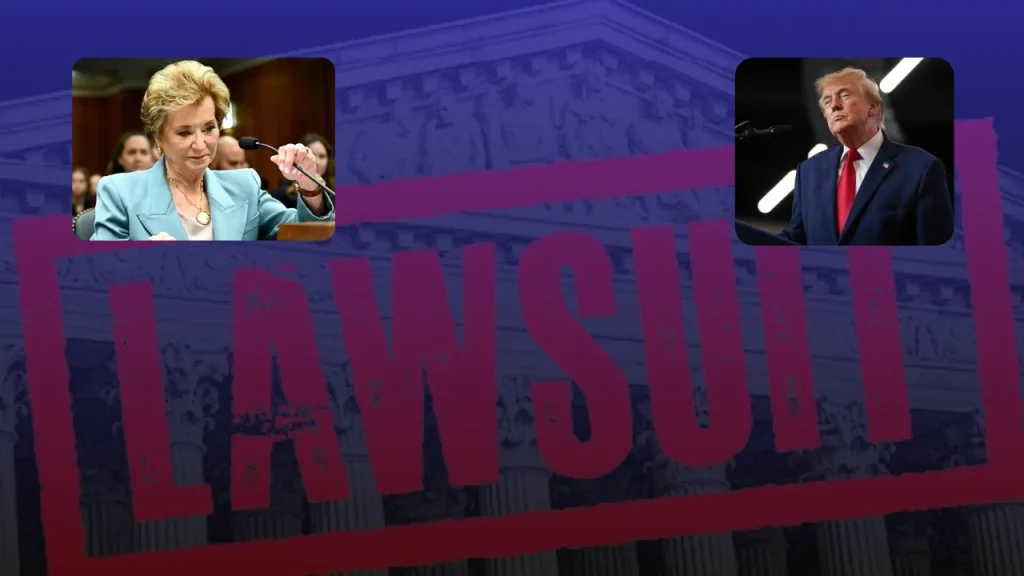
Yes, there is a new Public Service Loan Forgiveness (PSLF) lawsuit. On October 30, 2026, the American Federation of Teachers (AFT), its president Randi Weingarten and nine public-service workers filed a nationwide putative class action against the U.S. Department of Education and Education Secretary Linda McMahon.
The case is Weingarten v. McMahon, No. 1:26-cv-03826, in the U.S. District Court for the District of Columbia. The plaintiffs accuse the Department of unlawfully delaying PSLF Buyback applications, removing payment credits that had already been counted on borrowers’ records, and failing to post recent qualifying payments. The complaint cites Department reports showing about 88,000 Buyback applications still pending as of April 30, 2026. Some headlines round that up to 90,000.
This matters most to teachers, nurses, hospital workers, government employees and nonprofit workers who have spent years making student loan payments in the expectation that PSLF would cancel what remains.
What this lawsuit is not: it is a newly filed case asking a federal court to order the Department to administer PSLF correctly. There is no settlement, no compensation fund, no claim form and no automatic loan cancellation. The court has not certified any class and has not decided that the Department broke the law. The allegations are unproven.
Weingarten v. McMahon: Quick Facts
| Case detail | Information |
| Case name | Weingarten v. McMahon |
| Case number | 1:26-cv-03826 |
| Court | U.S. District Court for the District of Columbia |
| Complaint filed | October 30, 2026 (Document 1, 47 pages) |
| Plaintiffs | American Federation of Teachers, Randi Weingarten and nine individual borrowers |
| Defendants | U.S. Department of Education and Linda McMahon, Secretary of Education |
| Plaintiffs’ counsel | Protect Borrowers and Berger Montague |
| Main issues | Delayed PSLF Buyback decisions, removed payment credits, unposted qualifying payments |
| Proposed classes | Three nationwide classes (complaint pp. 39–40) |
| Legal claims | Three claims under the Administrative Procedure Act (complaint pp. 41–44) |
| Main federal law | Higher Education Act, 20 U.S.C. § 1087e(m) |
| Class certification | Requested, not granted |
| Money damages for borrowers | None requested in the complaint |
| Settlement / claim form | None |
| Department’s formal answer | None identified as of October 31, 2026 |
| Next hearing | Not verified |
Why Was a New PSLF Lawsuit Filed Against the Department of Education?
Congress created PSLF in 2007. The basic promise is that a borrower who works full time for a qualifying government or nonprofit employer and makes 120 qualifying monthly payments on eligible federal Direct Loans can have the remaining balance canceled. For teachers, nurses, firefighters, public health workers and nonprofit employees, that can mean being debt-free after ten years instead of decades.
The lawsuit alleges that some borrowers who have put in those years are being left in limbo. It describes three connected problems:
- Delayed Buyback decisions. Borrowers who asked to Buy Back eligible months have waited from roughly seven months to nearly two years, with little or no status information.
- “Clawed-back” credits. Beginning in recent months, including August 2026, some borrowers saw previously credited qualifying payments drop, in some cases by 15 months or more, with no clear explanation. According to reporting, the Department later acknowledged that certain earlier waiver or account-adjustment credits were being rolled back.
- Unposted payments. Recent payments that should count toward the 120-payment requirement are not being posted or counted on time.
The plaintiffs say public-service workers are being forced to keep paying on loans that should already be canceled.
How Does PSLF Buyback Work Under 34 CFR § 685.219?
PSLF Buyback lets a borrower who has already completed 120 months of qualifying employment ask to pay for certain past months spent in deferment or forbearance, so those months count toward the 120-payment requirement. Many borrowers used it to recover time lost during periods such as the SAVE plan forbearance.
PSLF is governed by 20 U.S.C. § 1087e(m) and by the Department’s regulation at 34 CFR § 685.219, which includes the Buyback provisions (the Department added Buyback through regulations that took effect July 1, 2023). Federal Student Aid publishes current Buyback eligibility rules at StudentAid.gov.
Two numbers are easy to confuse. The lawsuit’s proposed Buyback class refers to requests not processed within a reasonable time, with 90 days given as an example of that threshold. That is separate from any payment deadline a borrower faces after the Department approves and bills a Buyback request.
How Many Borrowers Does the PSLF Lawsuit Cover? 88,000 vs. 90,000
The complaint cites Department backlog reports showing approximately 88,000 Buyback applications pending as of April 30, 2026. That figure counts applications, not necessarily 88,000 unique people. The Department has previously indicated that some requests may be duplicates. Some coverage describes the backlog as roughly 88,000–90,000.
Not everyone enrolled in PSLF falls into one of the three proposed classes. The classes are limited to borrowers whose circumstances match the definitions below.
The Three Proposed Classes in Weingarten v. McMahon
The plaintiffs ask the court to certify three nationwide classes:
| Proposed class | Who it would include |
| PSLF Buyback Class | Borrowers who met the public-service employment requirement and filed a Buyback request that has not been processed within a reasonable time (for example, 90 days) |
| PSLF Clawback Class | Borrowers who lost previously credited months and would have reached 120 qualifying payments without the reduction |
| Withheld Payments Class | Borrowers whose unposted or uncounted payments would complete their 120th payment or make them eligible for Buyback |
A proposed class is not an approved class. Until a judge certifies a class, no one is automatically a member, and the case remains a putative class action.
Who Are the Named Plaintiffs in the AFT PSLF Lawsuit?
The plaintiffs are the AFT, AFT President Randi Weingarten and nine individual borrowers. The named borrowers include public-service workers such as a speech-language pathologist and a nurse whose Buyback requests or payment counts have been affected. Some say they waited more than a year for decisions, and others say their payment counts dropped by more than a year of previously credited progress.
What Laws Does the Weingarten v. McMahon Complaint Rely On?
Higher Education Act, 20 U.S.C. § 1087e(m): the PSLF entitlement
The statute directs the Secretary of Education to cancel the remaining balance of principal and interest on eligible Direct Loans after a borrower makes 120 qualifying payments while employed full time in a public service job. The plaintiffs argue the Department is withholding relief that borrowers have already earned under this provision.
Administrative Procedure Act, 5 U.S.C. §§ 701–706
The complaint pleads three claims under the Administrative Procedure Act (APA). As general background, the APA lets courts review federal agency action. Under 5 U.S.C. § 706(1), a court can compel agency action that has been unlawfully withheld or unreasonably delayed. Under § 706(2)(A), a court can set aside agency action that is arbitrary, capricious, an abuse of discretion or otherwise not in accordance with law. Readers should consult the complaint, pages 41–44, for the exact counts as pleaded.
How courts judge unreasonable delay
In the D.C. Circuit, delay claims are commonly analyzed under Telecommunications Research & Action Center v. FCC, 750 F.2d 70 (D.C. Cir. 1984) (the “TRAC” factors), which weigh factors such as whether a statute supplies a timetable, the harm from delay and competing agency priorities. Under Norton v. Southern Utah Wilderness Alliance, 542 U.S. 55 (2004), a § 706(1) claim must generally target a discrete action the agency is legally required to take. These precedents frame the questions the court may have to answer. The court has not ruled on any of them here.
Class action rules: Federal Rule of Civil Procedure 23
To certify a class, plaintiffs must meet Rule 23(a), which requires numerosity, commonality, typicality and adequacy of representation, and fit one type of class under Rule 23(b). Because the plaintiffs seek court orders rather than money, a Rule 23(b)(2) class is the likely vehicle. Commonality is analyzed under Wal-Mart Stores, Inc. v. Dukes, 564 U.S. 338 (2011). Plaintiffs also invoke the court’s federal-question jurisdiction under 28 U.S.C. § 1331.
What Relief Do the Plaintiffs Want?
The plaintiffs ask the court to order the Department to:
- process eligible Buyback applications promptly,
- restore qualifying payment credits that were removed,
- post qualifying payments that were not counted, and
- cancel loans for every borrower who has met the statutory PSLF requirements.
The complaint does not seek individual cash awards.
What Has the Department of Education Said in Response?
A Department spokesperson told reporters that Buyback processing requires manual review of borrower records and that the agency is working with loan servicers to streamline the process. As of October 31, 2026, no formal answer to the complaint had been identified. The Department’s public comments are not a court filing and do not address the legal claims.
Related Development: PSLF Employer Eligibility Rule
Separately, according to reporting, the Department withdrew its appeals in late October 2026 in earlier cases that had blocked a 2025 rule allowing the government to disqualify certain employers from PSLF based on a “substantial illegal purpose” standard. The lower-court rulings vacating that rule remain in place. That issue concerns employer eligibility. The Weingarten case concerns processing delays and payment counts.
Is the PSLF Lawsuit a Class Action? Can Borrowers Join or Get a Payment?
It is a putative class action. That means the plaintiffs have asked for class treatment, but no judge has granted it. For borrowers right now:
- There is no claim form and no registration deadline for this lawsuit.
- There is no settlement fund or cash payment.
- There is no automatic loan cancellation from the filing.
- Whether you are covered depends on whether a class is eventually certified and how it is defined.
What PSLF Borrowers Should Do Right Now
- Keep making required payments unless your servicer or a court order says otherwise. Missed payments can hurt your credit and your eligibility.
- Check StudentAid.gov regularly for your PSLF payment count, employment certifications and application status, and take dated screenshots of any changes.
- Keep records of Buyback requests, correspondence, employment certification forms and servicer messages, especially if your payment count dropped without explanation.
- Submit or update your PSLF employment certification if it is out of date.
- Talk to a student-loan attorney or nonprofit counselor if your situation is complicated.
What Happens Next in Weingarten v. McMahon?
The case is at its earliest stage. The next steps typically include the Department’s response to the complaint, any motion for class certification and briefing on the APA claims. No hearing date has been verified, and no merits ruling, class certification, settlement or compensation program has been announced as of October 31, 2026.
More Federal Court Lawsuits on AllAboutLawyer
These cases involve different parties and legal questions and are not part of the PSLF lawsuit:
- Alaska Election Lawsuit 2026, DOJ Amends Complaint After Report on Peltola Campaign and Second Dan Sullivan
- Texas Mail-In Voting Lawsuit, 5th Circuit Restores SB 1’s ID and Assistance Requirements
Frequently Asked Questions About the PSLF Lawsuit Weingarten v. McMahon
Is there a new PSLF lawsuit against the Department of Education?
Yes. Weingarten v. McMahon, No. 1:26-cv-03826, was filed October 30, 2026, in the U.S. District Court for the District of Columbia.
Who filed the lawsuit?
The American Federation of Teachers, its president Randi Weingarten and nine individual public-service borrowers, represented by Protect Borrowers and Berger Montague.
Who is being sued?
The U.S. Department of Education and Education Secretary Linda McMahon.
What does the PSLF lawsuit allege?
That the Department unlawfully delayed PSLF Buyback applications, removed previously credited qualifying payments, and failed to post recent qualifying payments.
How many Buyback applications are pending?
The complaint cites about 88,000 applications pending as of April 30, 2026. That counts applications, not necessarily unique borrowers, and some may be duplicates.
What are the three proposed classes?
A PSLF Buyback Class, a PSLF Clawback Class and a Withheld Payments Class. None has been certified.
Can I get my loans forgiven through this lawsuit?
Not automatically. The filing does not cancel any loans. The plaintiffs ask the court to order cancellation for borrowers who have met all PSLF requirements, but no court has ruled.
Is there a claim form or deadline to join?
No. There is no claim form, settlement fund or registration deadline.
Has a judge ruled on the PSLF lawsuit?
No merits ruling has been verified. The case is newly filed and no class has been certified.
Should I keep making payments?
Generally yes, unless your servicer or a court order tells you otherwise.
What has the Department of Education said?
A spokesperson said Buyback requires manual review of borrower records and that the agency is working with servicers to streamline processing. No formal court answer had been identified as of October 31, 2026.
Sources and Legal References
Primary court record
- Complaint, Weingarten v. McMahon, No. 1:26-cv-03826, Document 1 (D.D.C. filed Oct. 30, 2026)
- American Federation of Teachers announcement, October 30, 2026
Federal law and regulations
- 20 U.S.C. § 1087e(m) (Public Service Loan Forgiveness)
- 34 CFR § 685.219 (PSLF regulations, including Buyback)
- 5 U.S.C. §§ 701–706 (Administrative Procedure Act); 28 U.S.C. § 1331; Fed. R. Civ. P. 23
- Federal Student Aid: Public Service Loan Forgiveness
Cases
- Telecommunications Research & Action Center v. FCC, 750 F.2d 70 (D.C. Cir. 1984)
- Norton v. Southern Utah Wilderness Alliance, 542 U.S. 55 (2004)
- Wal-Mart Stores, Inc. v. Dukes, 564 U.S. 338 (2011)
Reporting
- Washington Post, CNBC, Bloomberg Law, The College Investor and related coverage, October 30, 2026
Disclaimer: AllAboutLawyer.com is an independent legal information website, not a law firm. This article is general information, not legal advice. Allegations in pending litigation have not been proven in court.
Researched and written by Israr Ahmad, legal content researcher and founder of AllAboutLawyer.com. All facts verified against the complaint in Weingarten v. McMahon (Document 1, filed October 30, 2026), the American Federation of Teachers’ October 30 announcement, 20 U.S.C. § 1087e(m), 34 CFR § 685.219 and Federal Student Aid guidance, as of October 31, 2026. Last Updated: October 31, 2026.
About the Author
Israr Ahmad is a legal content researcher with 4+ years of experience covering class action settlements and consumer rights cases. He has researched and published coverage of 2,500+ settlements using verified court records, settlement administrator filings, and government sources. Learn more about Israr.