
NYPD Strategic Response Group Disbanded, Why Jessica Tisch Says “a Cold Day in Hell” Before She Compromises Public Safety
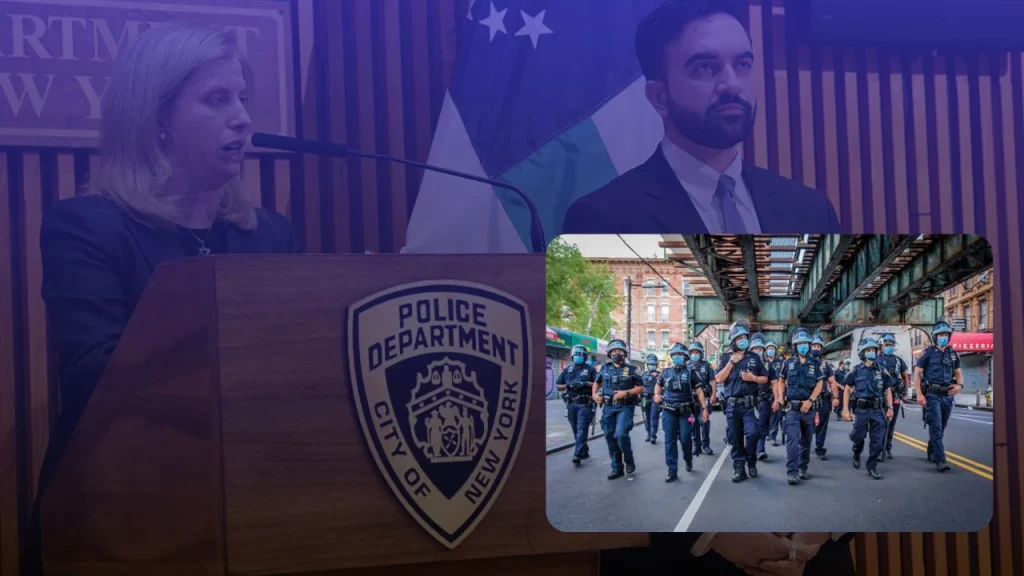
New York City Police Commissioner Jessica Tisch said it would be “a cold day in hell” before she makes changes that weaken the NYPD’s ability to stop a terrorist attack, confront an active shooter or manage a disorderly crowd. She spoke at a nonprofit luncheon on Thursday, November 19, 2026, her first public appearance since Mayor Zohran Mamdani and Tisch announced on November 16, 2026 that the NYPD’s Strategic Response Group (SRG) would be disbanded.
The NYPD is not ending counterterrorism or police response to protests. The SRG’s duties are being split among a civilian-led dialogue division, a 30-officer First Amendment Support Team, a Patrol Support Division and the NYPD’s Intelligence and Counterterrorism Bureau. The city says the plan adds no cost and does not change headcount.
Tisch’s remark was a public-safety assurance, not a confirmed break with the mayor. NBC New York reported that a source familiar with her comments said they were not meant as criticism of Mamdani, and Tisch had endorsed the restructuring on November 16.
NYPD Strategic Response Group Disbandment Quick Facts
| Detail | Verified information |
| Police department | New York City Police Department |
| Mayor | Zohran Mamdani |
| Police commissioner | Jessica S. Tisch |
| Unit being eliminated | Strategic Response Group (SRG), created in 2015 |
| Announcement date | November 16, 2026 |
| Tisch’s “cold day in hell” remarks | Thursday, November 19, 2026 |
| Approximate SRG personnel | Hundreds; reports estimate roughly 500 to 600 |
| New civilian division | Community Dialogue and De-escalation Division (CDDD), in the Mayor’s Office of Community Safety |
| New police dialogue team | First Amendment Support Team (FAST), 30 uniformed officers |
| New crowd-management unit | Patrol Support Division (PSD) |
| Counterterrorism duties | Move to the Intelligence and Counterterrorism Bureau |
| Kettling | Prohibited |
| Tear gas and long guns | Prohibited during First Amendment activities |
| Pepper spray | Not permitted as a general crowd-management tool |
| Long-range acoustic devices (LRADs) | Capped at 90 decibels |
| Headcount and cost | No increase or reduction; no additional cost, per City Hall |
| Implementation | Phased, starting in early 2027; reports cite January, with completion expected by spring 2027 |
| Related legislation | CURB Act, Int. 0796-2026 (still in committee) |
| New settlement or claim form | None |
Official source: NYC Mayor’s Office, Mamdani and Tisch Disband NYPD’s Strategic Response Group (Nov. 16, 2026)
What Did NYPD Commissioner Jessica Tisch Say About the SRG Disbandment?
Tisch defended her duty to protect both the public and officers. In the line that drew applause, she said it would be “a cold day in hell” before she made changes that diminish officers’ ability to stop a terrorist attack, confront an active shooter or manage a disorderly crowd. Her comments came amid criticism from police unions, including Police Benevolent Association (PBA) President Patrick Hendry, and from former NYPD officials.
Was Tisch Criticizing Mayor Mamdani?
There is no verified evidence that she was. She publicly backed the restructuring on November 16, saying it would strengthen counterterrorism operations and support patrol officers. Describing the speech as a confirmed split would go beyond the available evidence.
Why Is the NYPD Disbanding the Strategic Response Group?
The SRG handled counterterrorism and heavy-weapons deployments, major emergencies, large events and parades, and crowd management at demonstrations. Critics argued that a counterterrorism-oriented unit should not be the default response to protests. Criticism grew after the 2020 George Floyd protests, when protesters and journalists alleged excessive force and wrongful arrests. The City Department of Investigation had also recommended that the NYPD reevaluate using such a unit at routine demonstrations.
According to NYPD testimony cited in reporting, the department facilitated 4,255 protests in 2025 and the SRG was deployed to about 245 of them, roughly 6 percent.
Mamdani campaigned on disbanding the SRG and separating counterterrorism from protest policing. Some critics on the left have argued that the plan keeps protest policing under a new name, while police unions warn it could weaken safety. Neither side’s predictions have been tested by post-reorganization data.
What Replaces the NYPD Strategic Response Group?
| Unit | Role | Arrest powers |
| Community Dialogue and De-escalation Division (CDDD) | Civilian-led; advance planning, organizer communication and de-escalation at demonstrations; no weapons | No |
| First Amendment Support Team (FAST) | 30 uniformed officers in the Community Affairs Bureau; communication and de-escalation training; liaison role while CDDD is built | Yes, as sworn officers |
| Patrol Support Division (PSD) | Vetted officers with crowd-management training who mainly work patrol-support duties such as missing-person searches, major events and severe-weather traffic | Yes |
| Intelligence and Counterterrorism Bureau | Takes over counterterrorism and heavy-weapons deployments at critical sites | Yes |
Counterterrorism stays with sworn NYPD personnel. It is not being handed to civilians. Mamdani said on November 17 that FAST is expected to keep a liaison role after CDDD is operating.
Which Protest Tactics Will the NYPD Ban or Restrict?
| Tactic | Announced rule |
| Kettling | Prohibited |
| Tear gas | Prohibited during First Amendment activities |
| Long guns | Prohibited for protest crowd management |
| Pepper spray | Not permitted as a general crowd-management tool |
| LRADs | Limited to 90 decibels |
| Bicycles used as weapons | Prohibited except when necessary to prevent death or physical injury |
| Targeted arrests | Still permitted when lawful |
Kettling means surrounding demonstrators and blocking them from leaving, a tactic at the center of 2020 mass-arrest complaints. The earlier settlement already restricted it, and the new policy reinforces that. Officers may still use lawful, objectively reasonable force. The limits apply to the listed tactics during First Amendment activity.
Related article: TSA Shutdown December 2026, Will Christmas Flights Be Canceled? Airport Security Lines, FAA Delays and DOT Refund Rights
How Does the 2023 NYPD Protest Settlement Connect to the SRG Disbandment?
In September 2023, the New York Attorney General, the Legal Aid Society, the NYCLU and other plaintiffs reached a settlement with the city over police conduct during the 2020 protests. It covered consolidated federal cases in the Southern District of New York:
- Payne v. de Blasio, No. 20-cv-8924
- People of New York v. City of New York, No. 21-cv-322
- Gray v. City of New York, No. 21-cv-6610
- Rolon v. City of New York, No. 21-cv-2548
The court authorized the settlement in February 2024. It created a four-tier response system and changed arrest practices, use-of-force policies, treatment of journalists and oversight.
| Tier | General purpose |
| Tier One | Communication, de-escalation and facilitating protests |
| Tier Two | More officers nearby when specified risks rise |
| Tier Three | Targeted enforcement based on individualized probable cause |
| Tier Four | Broader intervention or dispersal when specified serious conditions are met |
The Attorney General’s 2025 annual report says the NYPD entered Phase II of implementation in October 2025. The November 2026 restructuring adds an organizational overhaul to reforms already imposed through the settlement. The settlement resolved specified claims without an admission of liability and was not a finding that every allegation was proven.
Official source: New York Attorney General, NYPD Protest Policing Settlement
Is the CURB Act (Int. 0796-2026) Already Law in New York City?
No. Councilmember Chi Ossé introduced Int. 0796-2026 on March 26, 2026, and it remains in committee as of November 22, 2026. It would regulate NYPD responses to First Amendment activity, including limits on specialized protest deployments and certain crowd-control methods, with reporting requirements. Mamdani supports it and says his administration has built major elements into the restructuring.
A mayoral announcement or departmental policy is not an ordinance. Enacted legislation can be harder for a future administration to reverse through internal orders.
Official legislation: New York City Council, CURB Act, Int. 0796-2026
Will Disbanding the SRG Make New York City Less Safe?
Police unions say the SRG’s training and experience matter in emergencies. PBA President Patrick Hendry criticized the plan, and the Detectives Endowment Association raised concerns about changing a functioning specialized unit. Critics have also pointed to the March 2026 pipe-bomb plot outside Gracie Mansion during a protest as a reason to keep specialized capacity. Supporters say separating counterterrorism from protest response will reduce confrontations without losing capability. The NYCLU welcomed the move, while advocates warn that a new unit could repeat old practices without strong training and oversight.
Tisch maintains the reorganization will preserve operational effectiveness. The real test will be response times, officer injuries, complaints, enforcement decisions and compliance with the settlement.
What Are Your Rights at a Protest in New York City?
- First Amendment and New York Constitution, Article I, Section 8: protect peaceful speech and assembly.
- New York Civil Rights Law § 79-p: protects the right to record police activity in public as long as you do not interfere.
- Fourth Amendment: protects against unreasonable seizures and arrests without probable cause.
- 42 U.S.C. § 1983: allows a federal civil-rights claim for violations of constitutional rights by officials acting under state authority.
You can generally ask whether you are free to leave, ask for a lawyer if arrested, and challenge unlawful arrests or force through proper channels. Violence, threats and obstruction can still lead to enforcement, and some events, street closures or amplified sound need permits. Disbanding the SRG does not repeal New York’s general laws.
Official rights resource: NYCLU, Your Rights to Protesting in New York
How to File a Civilian Complaint Review Board (CCRB) Complaint Over NYPD Conduct at a Protest
- Preserve video, photos and witness contact details.
- Write down the time, location and what happened.
- Record the officer’s name, badge number or any identifying details. You can still file without them.
- File with the CCRB, which handles excessive force, abuse of authority, discourtesy and offensive language. It accepts complaints regardless of immigration status.
- Keep medical and financial records for any injuries.
Official complaint form: NYC Civilian Complaint Review Board | Phone: 1-800-341-2272 | Address: 100 Church Street, 10th Floor, New York, NY 10007
A CCRB complaint is administrative and does not award compensation. A civil claim for an unlawful arrest or injury is separate and has strict deadlines. Claims against New York City generally require a notice of claim within 90 days (General Municipal Law § 50-e), and suits are generally limited to one year and 90 days (General Municipal Law § 50-i). Speak with a civil-rights attorney promptly.
Other New York City cases do not give SRG-related rights. See NYC Central Booking Settlement Increased to $35.475M, Claim Up to $475 Per Detention by January 7, 2027 and City of New York Strip Search Settlement, Check If You Qualify Lewis, et al. v. City of New York, et al., No. 23 Civ 2600 (CM). Neither is affected by the SRG announcement.
When Will the NYPD Strategic Response Group Be Fully Dissolved?
The announcement was November 16, 2026, but implementation is phased. Reports say the rollout starts in early 2027 (January in some accounts) with completion expected by spring 2027. The civilian division will take longer to build. The city has not published a full timetable for staffing, training and reassignment, so the announcement does not mean every officer has been reassigned or every new unit is operating.
Timeline of the NYPD Strategic Response Group Disbandment
| Date | Development |
| 2015 | SRG established |
| Summer 2020 | George Floyd protests; excessive-force and wrongful-arrest allegations |
| September 2023 | Protest policing settlement reached |
| February 2024 | Court authorizes settlement reforms |
| October 2025 | NYPD enters Phase II of settlement implementation |
| March 26, 2026 | CURB Act, Int. 0796-2026, introduced |
| November 16, 2026 | Mamdani and Tisch announce SRG disbandment |
| November 19, 2026 | Tisch’s “cold day in hell” remarks |
| Early 2027 | Phased rollout expected to begin |
| Spring 2027 | Expected completion |
Frequently Asked Questions About the NYPD Strategic Response Group Disbandment
Did Mayor Mamdani eliminate the NYPD Strategic Response Group?
He and Commissioner Tisch announced its disbandment on November 16, 2026. The transition is phased.
Did Jessica Tisch threaten to resign?
No verified resignation threat accompanied her November 19 remarks.
Can NYPD officers still arrest protesters?
Yes. Lawful targeted arrests remain possible.
Is counterterrorism being handled by civilians?
No. It moves to the Intelligence and Counterterrorism Bureau.
Are tear gas and kettling banned?
Both are prohibited during First Amendment activities under the announced reforms.
Will 500 to 600 officers lose their jobs?
City Hall says headcount will not change. Officers are being reassigned.
Is there an SRG lawsuit settlement I can claim?
No. The announcement creates no new fund or claim form.
The Bottom Line
Mamdani and Tisch are dismantling the Strategic Response Group and changing how the NYPD responds to protests, while keeping counterterrorism inside the department. Tisch’s November 19 warning should be read alongside her support for the plan. The key legal question is whether the new structure complies with the existing court-approved settlement while preserving emergency response. Watch for the first Patrol Support Division guidance, SRG reassignments and Council action on the CURB Act.
Official Sources for the NYPD Strategic Response Group Disbandment
- NYC Mayor’s Office, SRG disbandment announcement (Nov. 16, 2026)
- NYC Mayor’s Office, Nov. 17 press conference transcript
- NBC New York, Tisch “cold day in hell” report (Nov. 20, 2026)
- New York Attorney General, 2023 protest policing settlement
- New York Attorney General, Feb. 2024 court authorization
- New York Attorney General, 2025 Law Enforcement Misconduct Annual Report
- New York City Council, CURB Act, Int. 0796-2026
- NYC Civilian Complaint Review Board, File a Complaint
- NYCLU, Protest Rights in New York
- U.S. Const. amends. I and IV; N.Y. Const. art. I, § 8; 42 U.S.C. § 1983; N.Y. Civil Rights Law § 79-p; N.Y. Gen. Mun. Law §§ 50-e, 50-i
Disclaimer: General legal information, not legal advice. Policies, legislation and timelines may change.
Researched and written by Israr Ahmad, legal content researcher and founder of AllAboutLawyer.com. All facts verified against the NYC Mayor’s Office announcement, the New York Attorney General’s settlement materials, the City Council’s legislative record and NBC New York’s reporting, as of November 22, 2026. Last Updated: November 22, 2026.
About the Author
Israr Ahmad is a legal content researcher with 4+ years of experience covering class action settlements and consumer rights cases. He has researched and published coverage of 2,500+ settlements using verified court records, settlement administrator filings, and government sources. Learn more about Israr.