
Miguel Salguero-Olivares Found Guilty in Faith Hedgepeth Murder, Sentence, DNA Evidence and North Carolina Laws Explained
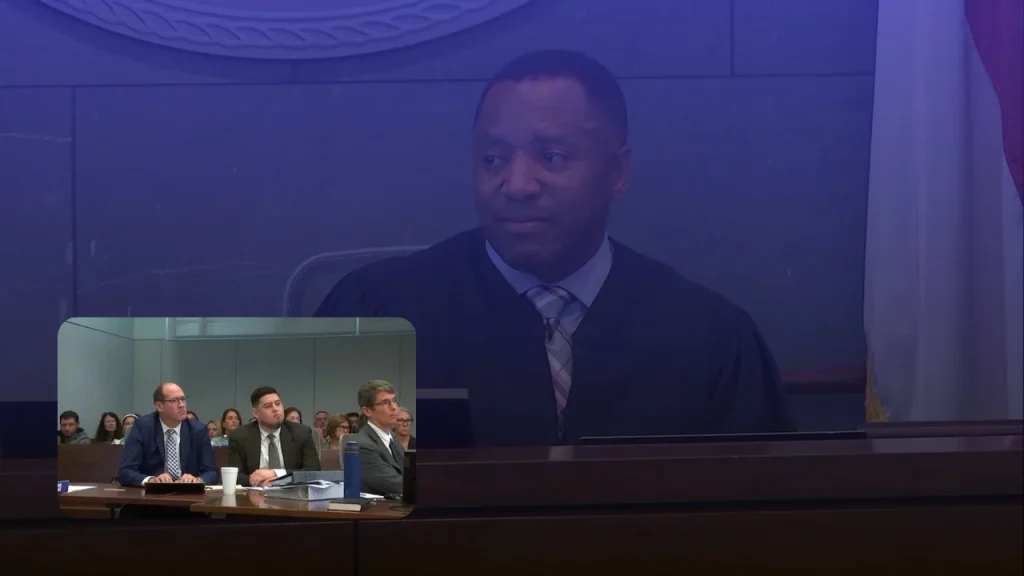
Miguel Salguero-Olivares was found guilty on all four charges on Friday, October 23, 2026, in the 2012 killing of UNC-Chapel Hill student Faith Hedgepeth. A Durham County jury convicted him of first-degree murder, first-degree rape, first-degree sexual offense and first-degree burglary. Judge Keith Gregory sentenced him to life in prison without the possibility of parole for the murder and imposed additional consecutive prison terms on the other three counts. The defense announced that it will appeal.
Quick Facts: Miguel Salguero-Olivares Verdict
| Case detail | Verified information |
| Defendant | Miguel Enrique Salguero-Olivares (also spelled Salguero Olivares), 28 at the time of his 2021 arrest |
| Victim | Faith Danielle Hedgepeth, 19, University of North Carolina at Chapel Hill sophomore |
| Crime date | September 7, 2012 (body discovered that morning) |
| Location | Hedgepeth’s off-campus apartment, Chapel Hill, North Carolina |
| Arrest | September 16, 2021, about nine years after the killing |
| Court | Durham County Superior Court, North Carolina |
| Presiding judge | Superior Court Judge Keith Gregory |
| Prosecution | Durham County District Attorney Satana Deberry’s office; Assistant District Attorney Angela Garcia-Lamarca delivered the opening statement |
| Trial dates | Jury selection began September 28, 2026; opening statements October 7, 2026 |
| Verdict | Guilty on all four counts, October 23, 2026 |
| Convictions | First-degree murder, first-degree rape, first-degree sexual offense, first-degree burglary |
| Murder sentence | Life imprisonment without the possibility of parole |
| Additional sentences | Consecutive terms: 64-89 months (burglary); 240-348 months each (rape and sexual offense) |
| Combined additional terms | About 45 years 4 months to 65 years 5 months, on top of life without parole |
| Appeal | Defense announced its intention to appeal |
| Class action or settlement | None. This is a criminal prosecution, not a consumer settlement, and there is no claim form |
The verdict came 14 years, one month and 16 days after Hedgepeth was found dead. The case went unsolved for roughly nine years, until a 2021 DNA match led to an arrest, and then took another five years to reach trial because of pretrial litigation over evidence.
This article explains the verdict, the forensic evidence, the legal issues the judge decided before trial, the North Carolina statutes behind each conviction, the sentence, and what happens on appeal. It separates what was proven at trial from what was argued, and what the jury found from what remains open.
1. Who Was Faith Hedgepeth?
Faith Danielle Hedgepeth was a 19-year-old sophomore at the University of North Carolina at Chapel Hill. She grew up in Hollister, North Carolina, and was a member of the Haliwa-Saponi tribal community. Prosecutors described her as a caring friend who was on track to become the first person in her family to graduate from college. She attended UNC on a Gates Millennium Scholarship and hoped to become a pediatrician and serve her community.
She lived in an off-campus apartment with her friend and roommate, Karena Rosario. Her death became one of North Carolina’s most closely followed unsolved homicides, in part because police kept details of the case sealed under court orders for years.
2. Case Timeline: 2012 to 2026
Public reporting describes the following sequence. Where sources differ on minor details, this article uses only what the sources agree on.
| Date | Event |
| Night of Sept. 6-7, 2012 | Hedgepeth and Rosario spend the evening at a popular Durham club. Hedgepeth, the designated driver, drives them home at about 2 a.m. |
| Sept. 7, 2012 | Rosario returns to the apartment hours later and finds Hedgepeth dead. A friend who picked Rosario up told police he saw what looked like blood on her hands; the defense later used such testimony to attack the investigation’s assumptions |
| 2012-2021 | Investigators interview witnesses and compare hundreds of DNA samples; no suspect is charged |
| 2021 | DNA from a sample connected to a driving-while-impaired stop is matched to male DNA from the crime scene |
| Sept. 16, 2021 | Chapel Hill police announce the arrest of Salguero-Olivares, about nine years after the killing |
| 2021-2026 | Pretrial litigation over evidence, including a missing bloodstain, genetic-genealogy evidence and forensic testimony |
| August 2026 | Pretrial evidentiary hearings; the judge denies the defense motion to dismiss |
| Sept. 28, 2026 | Jury selection begins in Durham County Superior Court |
| Oct. 7, 2026 | Opening statements |
| Oct. 23, 2026 | Guilty verdicts on all four counts; life without parole imposed |
Why “nine years” and “14 years” both appear in coverage: the case went unsolved for about nine years until the 2021 arrest. The 14 years measures the time from the 2012 killing to the 2026 verdict.
3. What Happened on September 7, 2012?
Hedgepeth was found beaten to death in her bedroom. Investigators determined she had suffered fatal blunt-force injuries and concluded she had been sexually assaulted.
Prosecutors told the jury that a bottle of rum found covered in blood was the murder weapon. A separate wine bottle, biological evidence from the investigation and a handwritten note on a white fast-food bag were also central to the state’s case. Prosecutors argued the killing was committed “in a fit of rage” by a stranger, not by someone who knew Hedgepeth.
4. Why Did the Case Stay Unsolved for Nine Years?
The biological evidence pointed to an unknown male, but investigators could not match it to anyone. Police conducted thousands of interviews and compared hundreds of DNA samples from people in Hedgepeth’s circle (North Carolina Attorney General Josh Stein said 229 DNA samples had been analyzed to rule out suspects, according to The News & Observer). Salguero-Olivares was not initially a person of interest and, according to police, had no known connection to Hedgepeth.
Investigators also used investigative genetic genealogy, a technique that identifies biological relatives of an unknown profile and builds family trees to narrow the search. The legal importance of that technique is covered in Section 8.
5. How Was Salguero-Olivares Identified and Arrested?
According to reporting by WUNC and The News & Observer, authorities matched DNA from the crime scene to a sample taken from a man facing a DWI-related traffic stop in 2021. That sample was compared by the North Carolina State Crime Lab to the 2012 evidence. Chapel Hill police announced his arrest on September 16, 2021. He was held without bond. Police also searched his Durham apartment and seized electronic devices, and the defense challenged the seizure of certain evidence on constitutional grounds.
The prosecution’s office designated the case non-capital, meaning prosecutors would not seek the death penalty.
A lead is not proof. Finding a suspect through DNA matching or genealogy is an investigative step. At trial the state still had to prove every element of every charge with evidence the rules allow the jury to consider.
6. What Evidence Did the Jury Hear?
The state called about 23 witnesses over roughly nine days of testimony, according to trial reporting, including forensic experts from the North Carolina State Crime Lab.
DNA on the rum bottle and the note
In opening statements, prosecutors said the defendant’s DNA was on the bottle they identified as the murder weapon, inside Hedgepeth’s body, and on the note written on the fast-food bag. The defense emphasized that DNA on a bottle neck or top does not show how or when it got there.
DNA from the sexual-assault investigation
Prosecutors argued the biological evidence showed the defendant sexually assaulted Hedgepeth before killing her. The defense argued that DNA does not prove when it was deposited, pointing to expert testimony that biological material can remain detectable for days, and suggested an earlier consensual encounter. The state disputed that reading.
Fingerprint and palm-print evidence
A State Crime Lab examiner testified that a palm print on a blue wine bottle matched the defendant’s left palm. Two fingerprints from the bottle were first found inconclusive; after investigators obtained updated inked prints, one was matched to him. The wine bottle (palm and fingerprint evidence) and the rum bottle (DNA evidence) are different items and should not be confused.
The handwritten note and pen
The judge allowed prosecutors to argue that a pen found at the scene was connected to the writing on the bag.
7. The Missing Bloodstain: What the Law Says About Lost Evidence
One major defense issue was a bloodstain collected from a bathroom door frame that could not later be found for testing. At a pretrial hearing in August 2026, a former Chapel Hill police forensic evidence specialist testified that her team collected the stain but she did not know what happened to it, and that her report was never updated to record the loss.
The defense argued the loss prejudiced the case. Prosecutors characterized it as an investigative mistake, not deliberate destruction. The judge denied the motion to dismiss, so the case went to trial and the defense was free to argue the gap to the jury.
The governing constitutional framework:
- California v. Trombetta, 467 U.S. 479 (1984): The government’s failure to preserve evidence violates due process only where the exculpatory value was apparent before the evidence was lost and comparable evidence was not reasonably available.
- Arizona v. Youngblood, 488 U.S. 51 (1988): When evidence is only “potentially useful,” the defendant must show the police acted in bad faith to establish a federal due-process violation.
- North Carolina law: Defendants may also invoke the state’s discovery statutes (N.C. Gen. Stat. § 15A-903), the court’s authority to sanction discovery violations (§ 15A-910), and motions to dismiss for constitutional violations (§ 15A-954), plus the state constitution’s due-process guarantees.
Missing evidence does not automatically end a prosecution. It typically becomes an argument about the weight of the state’s proof, which is how it was used here.
8. Why Genetic Genealogy Evidence Was Excluded
Before trial, Judge Gregory ruled that evidence tied to the investigative genetic genealogy process would be excluded, and barred testimony and argument about the underlying data behind certain inconclusive DNA results. This did not exclude DNA generally; jurors still heard forensic DNA testimony and exhibits.
The distinction is between how police found a suspect and what the state may prove at trial. Genealogy can generate a lead, but trial evidence is governed by the rules of evidence:
- N.C. R. Evid. 702: Expert testimony must be based on sufficient facts or data, be the product of reliable principles and methods, and reflect a reliable application of those methods to the case. North Carolina amended Rule 702 in 2011 to follow the federal Daubert reliability standard.
- N.C. R. Evid. 401 and 403: Evidence must be relevant, and may be excluded if its probative value is substantially outweighed by unfair prejudice, confusion or misleading the jury.
- N.C. R. Evid. 104(a): The judge decides preliminary questions about admissibility.
The exact grounds for each exclusion come from the court’s written rulings, which readers should consult rather than assume.
9. The Confrontation Clause and Forensic Experts
The Sixth Amendment gives criminal defendants the right to confront witnesses against them. In forensic cases this controls who must testify about lab results:
- Melendez-Diaz v. Massachusetts, 557 U.S. 305 (2009): Forensic lab reports are testimonial, so the analyst who prepared them generally must be available for cross-examination.
- Bullcoming v. New Mexico, 564 U.S. 647 (2011): A different analyst cannot simply read another analyst’s report into evidence.
- Smith v. Arizona, 602 U.S. 779 (2024): A substitute expert cannot relay an absent analyst’s out-of-court statements as the basis for an opinion when those statements are offered for their truth.
These cases frame any appellate argument about how the state’s DNA and fingerprint experts testified. Whether any such objection was preserved is a matter for the trial record.
10. What Prosecutors Argued
Prosecutors told the jury the case was not complicated: the forensic evidence, they said, was “louder than the noise around it.” They argued the defendant entered an occupied apartment with intent to commit serious offenses, sexually assaulted Hedgepeth, and killed her by striking her with the rum bottle. They tied the DNA, fingerprint and palm-print findings together with the timeline and the physical evidence.
The state also offered a theory of motive: an encounter around the time the two roommates returned home that ended in a rebuff and a rage-driven attack. That was a prosecution theory, not an independent finding. The jury had to decide only whether the state proved the elements of the charged crimes beyond a reasonable doubt.
11. What the Defense Argued
The defense argued the evidence “doesn’t add up” and that investigators developed tunnel vision on the defendant. Its main points were:
- DNA presence does not show when or how it was deposited, and could reflect an earlier consensual encounter.
- DNA on the top or neck of the bottle does not show he used it as a weapon.
- The missing bloodstain was never tested.
- Investigators made assumptions about people connected to the scene, including testimony about the roommate who discovered the body.
These were defense arguments in an adversarial trial, not findings that anyone other than the defendant committed a crime. The defendant told the judge he would not testify, and the defense called no witnesses. A defendant has a constitutional right not to testify, the jury may not treat that silence as evidence of guilt, and the state always carries the burden of proof.
12. The Four Convictions and the North Carolina Statutes
Because the offenses occurred in 2012, the law in effect on that date controls. North Carolina later recodified its sex-offense statutes for offenses committed on or after December 1, 2015, so current section numbers do not identify the provisions that governed this case.
| Conviction | Statute for 2012 conduct | Punishment class |
| First-degree murder | N.C. Gen. Stat. § 14-17 | Class A felony: death or life without parole |
| First-degree rape | Former N.C. Gen. Stat. § 14-27.2 (now § 14-27.21) | Class B1 felony |
| First-degree sexual offense | Former N.C. Gen. Stat. § 14-27.4 (now § 14-27.26) | Class B1 felony |
| First-degree burglary | N.C. Gen. Stat. §§ 14-51 and 14-52 | Class D felony |
First-degree murder, § 14-17
North Carolina recognizes first-degree murder under several theories. The two at issue are:
- Premeditation and deliberation: a willful, deliberate and premeditated killing. The intent to kill need not exist for any particular length of time before the act, but it must be formed before the killing and carried out in a cool state of blood, not under legally adequate provocation.
- Felony murder: a killing committed in the perpetration or attempted perpetration of an enumerated felony, including rape, a sex offense or burglary. The state does not have to prove a separate premeditated intent to kill; proving the underlying felony supplies the required mental state.
Courtroom reporting indicated the murder verdict rested on both premeditation and felony murder. Because first-degree murder is a Class A felony, the only lawful punishments are death or life without parole. Prosecutors had designated the case non-capital, so life without parole was the sentence on conviction.
First-degree rape, former § 14-27.2
Under the 2012 statute, first-degree rape involves vaginal intercourse by force and against the victim’s will together with a statutory aggravator, such as employing or displaying a dangerous or deadly weapon or inflicting serious personal injury on the victim or another person.
First-degree sexual offense, former § 14-27.4
The parallel statute covers a qualifying sexual act (other than vaginal intercourse) by force and against the victim’s will with the same kinds of aggravating circumstances. It is a separate offense from rape and carried its own sentence.
First-degree burglary, §§ 14-51 and 14-52
First-degree burglary is the nighttime breaking and entering of an occupied dwelling or sleeping apartment with intent to commit a felony or larceny inside. Section 14-52 classifies it as a Class D felony.
Because rape, sexual offense and burglary are all felonies that can support felony murder, convictions on those counts also fit the state’s independent theory for the murder charge.
No statute of limitations
North Carolina has no statute of limitations for felonies. That is why the state could prosecute in 2021 and try the case in 2026 for a 2012 killing.
13. How Salguero-Olivares Was Sentenced
Judge Gregory imposed life imprisonment without parole for first-degree murder. He ordered consecutive sentences on the other three counts, under North Carolina’s structured sentencing framework (N.C. Gen. Stat. § 15A-1340.10 and following), which sets a minimum and maximum term for each felony class. A court may run multiple sentences consecutively (§ 15A-1354(a)).
| Offense | Reported minimum | Reported maximum |
| First-degree burglary | 64 months (5 years 4 months) | 89 months (7 years 5 months) |
| First-degree rape | 240 months (20 years) | 348 months (29 years) |
| First-degree sexual offense | 240 months (20 years) | 348 months (29 years) |
| Combined additional terms | 544 months (45 years 4 months) | 785 months (65 years 5 months) |
Because the murder sentence is life without parole, these terms have no practical effect on a release date unless the murder conviction were later overturned. In North Carolina a life-without-parole sentence cannot be shortened by parole.
14. What Hedgepeth’s Family Said
Hedgepeth’s mother, Connie Hedgepeth, told the court the verdict brought peace and closure after years of grief, and said she had forgiven the person convicted of killing her daughter. Her father, Roland Hedgepeth, spoke about his daughter’s life and the devastation of losing her, and also expressed forgiveness. Judge Gregory spoke emotionally about the case, noting that his own son had been close in age to Faith when she died. These statements were part of sentencing and do not change the legal elements of the convictions.
15. Will There Be an Appeal?
Yes. Defense attorneys announced they intend to appeal. An appeal is a review of the trial record for legal error, not a second trial.
Which court hears it: Under N.C. Gen. Stat. § 7A-27(b), appeals from final Superior Court criminal judgments generally go to the North Carolina Court of Appeals. (Cases involving a death sentence take a different route directly to the state Supreme Court; that does not apply to a life-without-parole sentence.) Procedure is governed by the North Carolina Rules of Appellate Procedure, and the statutory grounds for appeal appear in N.C. Gen. Stat. § 15A-1444.
Issues commonly raised in a case like this:
- Admission or exclusion of expert testimony under Rule 702
- Rulings on the genetic-genealogy evidence and the inconclusive DNA data
- The missing bloodstain and the denial of the motion to dismiss
- Confrontation Clause objections to forensic testimony
- The suppression ruling on evidence seized from his apartment
- Jury instructions and sufficiency of the evidence
The conviction and sentence stay in place unless an appellate court reverses or modifies them. Possible outcomes include affirming all convictions, reversing one or more counts, or ordering a new trial. Which arguments will be raised and how courts will rule cannot be predicted until briefs are filed.
16. What Happens Next
The defense will file notice of appeal and assemble the trial record. The state will respond, and the Court of Appeals will decide only the issues properly preserved and presented. Appeals of this kind typically take a year or more. Public attention does not alter the legal standards, and the right to appeal does not weaken the verdict. Readers should check the North Carolina Court of Appeals docket for the actual filings as they become public.
17. Frequently Asked Questions
Was Miguel Salguero-Olivares found guilty?
Yes. On October 23, 2026, a Durham County jury convicted him of first-degree murder, first-degree rape, first-degree sexual offense and first-degree burglary.
What is Miguel Olivares’ sentence?
Life in prison without the possibility of parole for first-degree murder, plus consecutive terms on the other counts totaling about 45 years 4 months to 65 years 5 months.
When was Faith Hedgepeth killed and when was the arrest made?
She was found dead on September 7, 2012. Salguero-Olivares was arrested on September 16, 2021, about nine years later.
How long did the case take overall?
The case went unsolved for about nine years until the arrest, and 14 years passed from the killing to the verdict.
How was he identified?
Authorities matched crime-scene DNA to a sample connected to a 2021 DWI-related stop. Investigators also used investigative genetic genealogy during the long investigation, but the judge excluded evidence tied to that process from trial.
What evidence did the jury hear?
Prosecutors presented DNA on the rum bottle, inside the victim’s body and on a handwritten note; a palm-print and fingerprint match from a wine bottle; and testimony from 23 witnesses, including State Crime Lab experts.
Was the death penalty an option?
No. The District Attorney’s office designated the case non-capital before trial.
What was the missing bloodstain issue?
A bloodstain collected from a bathroom door frame was never located for testing. The judge denied a motion to dismiss, and the defense argued the gap to the jury.
Did the defendant testify?
No. He told the judge he would not testify, and the defense called no witnesses. The state kept the burden of proof beyond a reasonable doubt.
Is the case over?
The trial is over, but the defense plans to appeal. The convictions stand unless changed by an appellate court.
Can the public file a claim or get money from this case?
No. This is a criminal prosecution, not a class action or settlement. There is no claim form or compensation program.
The Bottom Line
Miguel Salguero-Olivares was convicted on October 23, 2026, of first-degree murder, first-degree rape, first-degree sexual offense and first-degree burglary in the 2012 death of Faith Hedgepeth, and sentenced to life without parole plus consecutive terms. The verdict followed a forensic case built on DNA, fingerprint and palm-print evidence, tested by defense challenges over missing evidence, the timing of DNA deposits and the scope of genetic-genealogy proof. The appeal is a separate stage that will examine preserved legal questions under North Carolina law.
Legal disclaimer: This article is for general informational purposes only and is not legal advice. AllAboutLawyer.com is a legal information website, not a law firm. The status of the case may change as appellate filings and decisions become public. Verify current information with the court record.
Related Legal Coverage on AllAboutLawyer.com
- Amanda Plasse Mother Lawsuit: $110,000 Settlement for Crime Scene Photo Misconduct
- Chicago Backs $9.5M Settlement in Carl Reed Wrongful Conviction Case
- Sandra Birchmore Case: Matthew Farwell’s Federal Murder Trial
Sources
- WRAL, “Guilty: Faith Hedgepeth’s Killer Sentenced to Life in Prison Without Parole” (verdict, sentence, appeal announcement)
- ABC11, coverage of closing arguments, jury deliberations and verdict
- ABC11, pretrial hearings and missing bloodstain evidence
- WRAL, palm-print testimony on wine bottle
- Associated Press, “Trial begins for a man accused of killing UNC student Faith Hedgepeth 14 years ago” (October 7, 2026)
- WUNC, pretrial hearings coverage (August 2026)
- Chapelboro, arrest and non-capital designation (2021)
- The News & Observer, warrants and DNA background
- North Carolina General Statutes: § 14-17; former §§ 14-27.2 and 14-27.4; §§ 14-51 and 14-52; §§ 15A-903, 15A-910, 15A-954; §§ 15A-1340.10 et seq.; § 15A-1354; § 15A-1444; § 7A-27 (ncleg.gov)
- North Carolina Rules of Evidence 104, 401, 403 and 702; North Carolina Rules of Appellate Procedure
- California v. Trombetta, 467 U.S. 479 (1984); Arizona v. Youngblood, 488 U.S. 51 (1988)
- Melendez-Diaz v. Massachusetts, 557 U.S. 305 (2009); Bullcoming v. New Mexico, 564 U.S. 647 (2011); Smith v. Arizona, 602 U.S. 779 (2024)
About the Author
Israr Ahmad is a legal content researcher with 4+ years of experience covering class action settlements and consumer rights cases. He has researched and published coverage of 2,500+ settlements using verified court records, settlement administrator filings, and government sources. Learn more about Israr.