
Merril Hoge Roundup Lawsuit, Judge Allows Two Claims to Proceed, but Medicare Could Reduce a Settlement
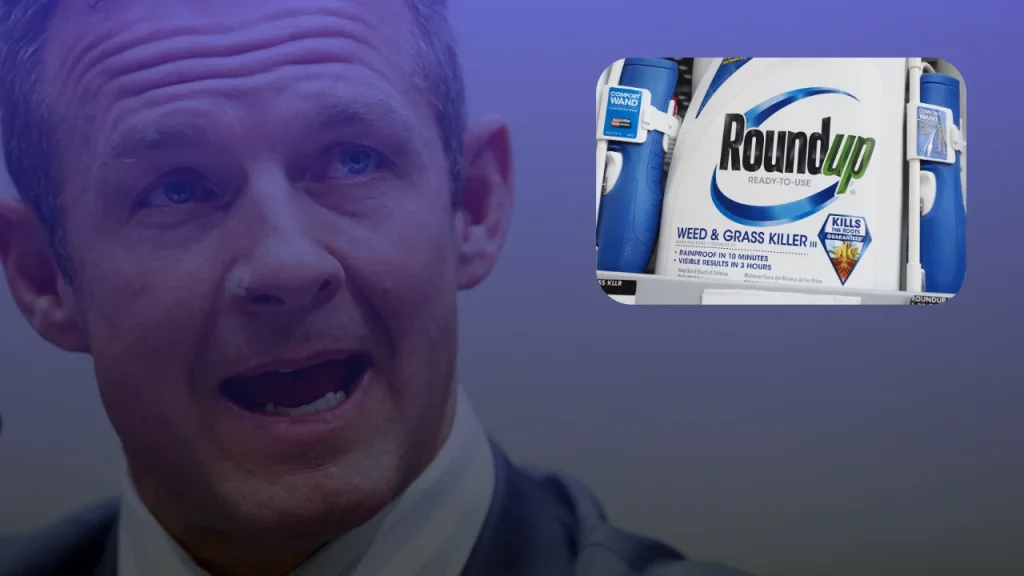
Former NFL running back Merril Hoge can keep pursuing two claims against Monsanto over his alleged Roundup exposure, but a federal judge has thrown out his failure-to-warn claim. In an October 1, 2026 decision, U.S. District Judge David C. Nye of the District of Idaho let Hoge’s negligence and strict-liability design-defect claims move toward trial. The same order ruled that federal pesticide law bars the failure-to-warn claim, which depends on what Roundup’s label said.
Hoge alleges that years of Roundup exposure caused his non-Hodgkin lymphoma. He says he began mixing and spraying the herbicide on Idaho farms in 1977, when he was 12, and was diagnosed in 2003. He first sued Monsanto in 2019. Monsanto disputes the allegations, and nothing has been decided at trial.
The ruling follows the U.S. Supreme Court’s June 25, 2026 decision in Monsanto Co. v. Durnell, which held that the Federal Insecticide, Fungicide, and Rodenticide Act (FIFRA) preempts state-law failure-to-warn claims that would require a cancer warning on Roundup’s EPA-approved label. Monsanto argued that Durnell also wiped out Hoge’s remaining claims. Judge Nye disagreed.
The Medicare issue that appears in headlines about this case is a general concern, not a finding about Hoge. Nothing reported shows that Hoge has settled or that he owes Medicare anything. Still, Medicare can seek repayment from injury settlements, and that can shrink what a beneficiary actually keeps. This article covers both the ruling and those repayment rules.
Quick Facts: Hoge v. Monsanto Company
| Detail | Verified information |
| Case name | Hoge v. Monsanto Company |
| Court | U.S. District Court for the District of Idaho |
| Case number | 4:25-cv-00277-DCN |
| Judge | David C. Nye |
| Plaintiff | Merril Hoge, former NFL running back |
| Defendant | Monsanto Company (owned by Bayer) |
| Product | Roundup herbicide |
| Alleged injury | Non-Hodgkin lymphoma, diagnosed 2003 |
| Original filing | 2019 |
| Latest ruling | October 1, 2026 (summary judgment granted in part, denied in part) |
| Negligence claim | Allowed to proceed |
| Strict-liability design-defect claim | Allowed to proceed |
| Failure-to-warn claim | Dismissed on summary judgment |
| Trial timing | Reset for February 2027, per the court’s October 1 order; no exact date confirmed |
| Settlement | None announced |
| Public claim form | None. This is an individual lawsuit, not a class action |
Hoge’s case went through the federal Roundup multidistrict litigation and was later returned to Idaho for trial. In July 2026 the court granted Monsanto’s renewed motion to continue the trial, and the October 1 order then ruled on summary judgment.
What Happened in Merril Hoge’s Roundup Cancer Lawsuit?
Hoge played running back for the Pittsburgh Steelers and later worked as a football analyst. His lawsuit centers on alleged exposure to Roundup while he worked on farms in Idaho as a boy. According to the court’s order, he repeatedly mixed and sprayed the herbicide starting in 1977, and he was diagnosed with non-Hodgkin lymphoma in 2003.
The case is one piece of the wider litigation against Monsanto, which Bayer bought in 2018, over claims that glyphosate-based Roundup causes non-Hodgkin lymphoma. Monsanto denies this. Judge Nye’s order says the evidence is still contested on Roundup’s risks, whether Monsanto acted negligently, whether the product was defectively designed, and whether Roundup caused Hoge’s cancer. A jury will have to sort those questions out.
Why Hoge’s Roundup Lawsuit Survived in Part After Monsanto v. Durnell
Monsanto asked the court to apply Durnell broadly and dismiss everything. Judge Nye declined. He found the negligence and design-defect claims are not automatically barred because Hoge can pursue them with evidence that has nothing to do with the label or a missing cancer warning. He also found real factual disputes on both claims, which rules out summary judgment.
In practical terms, Hoge can go to trial, but only on the theories the court left standing.
Why the Judge Dismissed Hoge’s Roundup Failure-to-Warn Claim
In Monsanto Co. v. Durnell, No. 24-1068, the Supreme Court ruled 7-2 that FIFRA preempts a state failure-to-warn claim when it would force Monsanto to put a cancer warning on a Roundup label that EPA did not require. The Court reasoned that EPA’s decision that the label needs no cancer warning counts as a federal labeling requirement, and state tort law cannot add to or change it.
What FIFRA preemption means for Roundup lawsuits
FIFRA is the federal law governing pesticide registration, sale, and labeling. Its preemption provision, 7 U.S.C. § 136v(b), bars states from imposing labeling requirements “in addition to or different from” the federal ones. Judge Nye applied that rule to Hoge’s failure-to-warn claim and granted summary judgment to Monsanto on it.
Does the ruling mean Roundup is safe?
No. Durnell decided a question of federal law, preemption. It did not find that glyphosate-based products cannot cause cancer. Judge Nye’s order also left the causation and risk disputes in Hoge’s case for trial.
The split matters for other plaintiffs. A claim that depends on a different label may hit the same wall, while other theories are judged under the applicable state law and the evidence in each case. A Missouri state-court trial that began in September 2026 is expected to give an early read on how juries treat design-defect and similar claims after Durnell. Bayer argues those claims are foreclosed too, and plaintiffs argue otherwise.
For more on how the Supreme Court’s decision reshaped the wider litigation, read Monsanto Roundup Ruling, Supreme Court Blocks Warning Suits.
Which Claims Remain in Hoge v. Monsanto?
Two claims survived: negligence and strict-liability design defect. They are different legal theories even though both involve the same product and the same alleged illness.
Negligence claim against Monsanto
Under Idaho law, negligence generally requires a legal duty, a breach of that duty, a causal link between the conduct and the injury, and actual damages. Hoge’s theory goes beyond the label. Judge Nye said Hoge may offer evidence of negligence that does not rely on the label or the absence of a cancer warning. Because the court found disputed facts, the claim goes forward. That is not a finding that Monsanto was negligent.
Strict-liability design-defect claim against Monsanto
A design-defect claim asks whether the product itself was defectively designed or formulated, not whether the label was adequate. Hoge alleges that Roundup’s formulation was unsafe, that it caused his lymphoma, and that Monsanto should not have sold it that way. The court held this theory is not automatically preempted by Durnell and found disputed facts that a jury must resolve.
Surviving summary judgment does not mean Roundup was defective. It means the court could not decide the claim against Hoge on the grounds Monsanto raised.
What Happens Next in the Merril Hoge Roundup Lawsuit?
The October 1 order says trial was reset for February 2027. The text reviewed does not give an exact date, so check the docket for any later scheduling order. Before trial, the parties must deal with outstanding evidentiary motions and how the remaining claims should be handled after Durnell. The court told them to confer and file a notice listing which pretrial motions are still live and whether supplemental briefing is needed.
The case could still end earlier in a settlement. Otherwise, the two remaining claims go to a jury. If Hoge loses on any claim or the failure-to-warn dismissal is appealed, an appellate court could eventually weigh in, but no appeal has been reported.
A separate proposed class settlement with Bayer/Monsanto, announced in February 2026 and reported at up to $7.25 billion, is pending in Missouri state court. It is a different proceeding. Hoge’s lawsuit is not part of it, and the ruling does not affect it.
For a wider look at where the Roundup litigation stands, see Roundup Cancer Lawsuit, August 2026 Update.
Why a Roundup Settlement Could Leave a Medicare Beneficiary Owing Money
This section is general information. It is not a finding about Hoge.
Under the Medicare Secondary Payer law, 42 U.S.C. § 1395y(b), Medicare is generally not supposed to pay medical costs that another payer, such as liability insurance, is responsible for. When that other payer hasn’t paid promptly, Medicare can pay conditionally so the patient still gets care. If a settlement or judgment later establishes someone else’s payment obligation, Medicare can seek repayment of the related conditional payments. The Centers for Medicare & Medicaid Services (CMS) runs this process for Original Medicare through the Benefits Coordination & Recovery Center (BCRC).
Why a gross settlement is not take-home money
Injury settlements are usually quoted as gross amounts. Attorney fees, case costs, and any Medicare recovery demand can come out before the plaintiff sees a dollar. Someone treated for cancer while a lawsuit was pending might find that Medicare paid bills tied to the claim and now wants them back.
Medicare does not automatically take a fixed percentage. The demand depends on which payments are related to the injury, the applicable rules, and any reductions or disputes resolved through CMS.
Can Medicare recover treatment costs in a Roundup cancer claim?
Potentially, yes, if Medicare made conditional payments for services related to the illness at issue. For exposure-type claims, CMS uses the date of first exposure as the incident date for its recovery review, then looks at related claims paid through the settlement, judgment, or award date. A beneficiary should not assume every service Medicare paid for over many years belongs in the demand. Each listed charge should be checked against the illness in the lawsuit.
What about Medicare Advantage and Part D plans?
Medicare Advantage and Medicare drug plans can have their own recovery rights and procedures. Someone enrolled in one should not assume the BCRC process is the only repayment issue.
What Medicare Beneficiaries Should Do Before Settling an Injury Lawsuit
- Report the claim early. Contact the BCRC while the liability claim is pending. CMS lists 1-855-798-2627 for conditional-payment questions.
- Get the payment summary. CMS can issue a conditional payment letter and payment summary form listing services it considers related to the claim.
- Challenge unrelated charges. If a listed service has nothing to do with the injury or illness in the lawsuit, send supporting records through the CMS dispute process.
- Build recovery into the net-recovery math. Ask your lawyer to account for the possible demand, legal fees, and case costs before you accept terms. CMS allows certain attorney fees and procurement costs to be considered when it calculates its claim.
- Respond to notices on time. A conditional payment notice carries a 30-day response window. That is a deadline for responding to the notice, not a deadline for filing a lawsuit. CMS also generally charges interest on a demand that isn’t repaid within 60 days of the demand letter.
The goal is to know the likely net amount before committing to final settlement terms. A settlement that looks large on paper can pay out much less once these items are subtracted.
Does Medicare Repayment Apply to Every Roundup Lawsuit?
No. It depends on whether the plaintiff is a Medicare beneficiary, whether Medicare paid related medical costs, whether another payer is responsible, and which program or plan paid.
The rule is not specific to Roundup. It can apply to car-accident settlements, workplace injuries, other product-liability claims, and any injury where Medicare paid related expenses. It is also separate from liability: a plaintiff can win against Monsanto and still owe Medicare, and Medicare payments say nothing about whether a Roundup claim succeeds.
For background on the broader litigation and the money involved, read Monsanto’s Lawsuit, $11 Billion Roundup Catastrophe, 170,000 Cancer Victims, Supreme Court Showdown, and Why Your Lawn Could Be Next.
Frequently Asked Questions About the Merril Hoge Roundup Lawsuit and Medicare Repayment
Did Merril Hoge win his Roundup lawsuit against Monsanto?
No. There is no verdict. The court let his negligence and design-defect claims proceed and dismissed failure to warn. The remaining claims still have to be resolved at trial or by settlement.
Which Roundup claims survived in Hoge v. Monsanto?
Negligence and strict-liability design defect. The strict-liability failure-to-warn claim was dismissed.
What is the Merril Hoge Roundup lawsuit case number?
Hoge v. Monsanto Company, No. 4:25-cv-00277-DCN, U.S. District Court for the District of Idaho.
When is the Merril Hoge Roundup trial?
The October 1 order says February 2027. An exact date was not confirmed in the order reviewed, so check the current federal docket.
Has Merril Hoge settled with Monsanto?
No settlement has been reported. The case remains on a trial track for the surviving claims.
Is there a claim form for the Merril Hoge Roundup case?
No. It is an individual product-liability lawsuit, not a class action or public claims program. Anyone considering their own Roundup claim should look at the applicable court, deadlines, and settlement terms separately.
Does the Durnell decision end all Roundup cancer lawsuits?
No. It preempts state failure-to-warn claims that would require a different or added cancer warning on the EPA-approved label. Courts are still working out how it applies to negligence and design-defect theories, as Judge Nye’s ruling shows.
Does Medicare automatically take money from a Roundup settlement?
No. Medicare may recover related conditional payments when another payer is responsible. The amount depends on the actual payments and the recovery rules.
Can I dispute charges in a Medicare recovery demand?
Yes. CMS has a process for disputing services unrelated to the injury or illness at issue. Submit supporting documents through the BCRC or the Medicare Secondary Payer Recovery Portal.
Is the Hoge case part of the proposed $7.25 billion Roundup settlement?
No. The proposed class settlement is a separate proceeding in Missouri state court.
Sources and Legal References
- U.S. District Court, District of Idaho, Hoge v. Monsanto Company, No. 4:25-cv-00277-DCN, Memorandum Decision and Order, October 1, 2026 (summary judgment granted on failure to warn, denied on negligence and design defect); and Memorandum Decision and Order, July 16, 2026 (trial continuance).
- Supreme Court of the United States, Monsanto Co. v. Durnell, No. 24-1068, decided June 25, 2026.
- 7 U.S.C. § 136v, Authority of States (FIFRA preemption).
- 42 U.S.C. § 1395y(b), Medicare Secondary Payer provisions.
- CMS, Medicare’s Recovery Process; Conditional Payment Information; Demand Calculation Options (cms.gov).
About This Article
Researched and written by Israr Ahmad, legal content researcher and founder of AllAboutLawyer.com. All facts verified against the District of Idaho orders in Hoge v. Monsanto Company, the Supreme Court’s decision in Monsanto Co. v. Durnell, FIFRA, the Medicare Secondary Payer statute, and CMS recovery guidance, as of October 26, 2026. Last Updated: October 26, 2026.
This article is for informational purposes only and does not constitute legal advice. Laws vary by state and individual circumstances differ. For advice about your specific situation, consult a qualified attorney.
About the Author
Israr Ahmad is a legal content researcher with 4+ years of experience covering class action settlements and consumer rights cases. He has researched and published coverage of 2,500+ settlements using verified court records, settlement administrator filings, and government sources. Learn more about Israr.