
Roundup Cancer Lawsuit, August 2026 Update
Key Facts
| Federal MDL | In re: Roundup Products Liability Litigation, MDL No. 2741, N.D. California, Judge Vince Chhabria |
| Pending federal cases | Approximately 3,932 as of early August 2026 |
| Proposed nationwide class settlement | $7.25 billion — King v. Monsanto, 22nd Judicial Circuit Court, St. Louis, MO, Judge Timothy Boyer |
| Class settlement status | Preliminarily approved March 4, 2026; final fairness hearing rescheduled to September 14, 2026 |
| Major recent ruling | Monsanto Co. v. Durnell, U.S. Supreme Court, decided 7-2 on June 25, 2026 — FIFRA preempts state failure-to-warn claims tied to EPA-approved labeling |
| Bayer’s pending motion | Asking Judge Chhabria to dismiss ~3,900 federal MDL cases based on the Durnell ruling; plaintiffs oppose |
| Total historical Bayer payouts | More than $10 billion paid in prior verdicts and settlements since 2020 |
| Total claims (state + federal, historical) | Roughly 100,000+ filed since litigation began; tens of thousands remain unresolved |
The Big Development: The Supreme Court’s Durnell Ruling
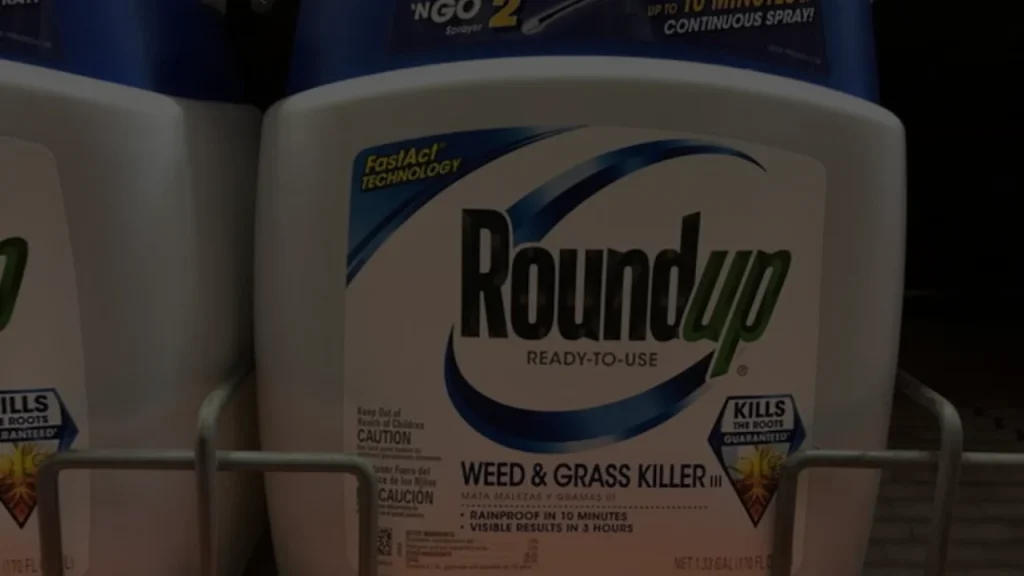
The most significant event in Roundup litigation this year came on June 25, 2026, when the U.S. Supreme Court ruled 7-2 in Monsanto Co. v. Durnell that the Federal Insecticide, Fungicide, and Rodenticide Act (FIFRA) preempts state-law failure-to-warn claims when a plaintiff’s theory would require a cancer warning the EPA has not required on the product label. Justice Brett Kavanaugh wrote the majority opinion; Justice Ketanji Brown Jackson dissented, joined by Justice Neil Gorsuch, arguing the majority “misunderstands FIFRA’s requirements” and “ultimately leaves Durnell without a remedy.”
The case arose from a Missouri gardener, John Durnell, who developed non-Hodgkin lymphoma after roughly 20 years of Roundup use and won a $1.25 million jury verdict in 2023 on the theory that Monsanto should have warned him the product could cause cancer. The Supreme Court reversed that verdict, holding that because the EPA has repeatedly determined glyphosate is “not likely to be carcinogenic to humans” and has never required a cancer warning on Roundup’s label, a state-law claim demanding such a warning conflicts with — and is preempted by — federal law.
Related article: Nationwide Lunchmeat Recall, City Foods Pastrami and Corned Beef Products Recalled Over Listeria Risk
What this ruling does and doesn’t do:
- It blocks failure-to-warn claims specifically — the theory that Monsanto should have put a cancer warning on the label.
- It does not rule on whether glyphosate actually causes cancer, and does not address other legal theories like design defect or negligence, which plaintiffs’ attorneys argue survive the ruling.
- It applies nationwide, not just to Missouri cases.
What’s Happening in the Federal MDL
Following the Durnell decision, Bayer asked Judge Vince Chhabria, who oversees the consolidated federal MDL in the Northern District of California, to dismiss the roughly 3,900–4,000 pending federal cases, arguing the ruling “eliminates the core legal theory underlying the MDL and leaves no basis for the consolidated litigation to continue.”
Plaintiffs’ attorneys, including Robin Greenwald, have opposed the motion, arguing the Supreme Court addressed only labeling-based failure-to-warn claims, and that design-defect, negligence, and other theories remain viable. Judge Chhabria has reportedly pushed back on both sides’ initial briefing as insufficiently precise about the ruling’s actual scope and has not yet issued a final decision on the dismissal motion as of this writing.
Separately, a Massachusetts federal judge, Margaret Guzman, ruled in a related case that Durnell’s holding is “relatively narrow” and may leave room for claims based on warnings Monsanto could have given through channels other than the product label itself — a signal that not every court is reading Durnell as broadly as Bayer is arguing.
The $7.25 Billion Class Settlement: Where It Stands
Separately from the federal MDL, Bayer proposed a $7.25 billion nationwide class settlement on February 17, 2026, filed in Missouri state court (King v. Monsanto), intended to resolve both current and certain future non-Hodgkin lymphoma claims tied to Roundup exposure. Key developments:
- March 4, 2026 — Judge Timothy Boyer granted preliminary approval.
- May 22, 2026 — A group of 10 objecting plaintiffs attempted to move the case to federal court, arguing Missouri state court lacked authority to bind claimants nationwide.
- June 17, 2026 — U.S. District Judge Henry Autrey remanded the case back to Missouri state court, rejecting the attempted transfer.
- July 9, 2026 — Originally scheduled date for the final fairness hearing; postponed.
- August 5–6, 2026 — Bayer and supporting plaintiffs’ counsel jointly requested another delay, to give the settlement administrator more time to process opt-out revocation requests following the Durnell ruling. The court granted the request.
- September 14, 2026 — The final approval (fairness) hearing is now scheduled for this date, per Bayer’s own August 2026 statement.
If approved, the settlement would pay qualifying claimants — those diagnosed with non-Hodgkin lymphoma before the settlement’s cutoff date — estimated amounts generally in the range of roughly $10,000 to $165,000+ depending on individual claim factors, paid out over a structured schedule rather than as a single lump sum. The settlement is not yet final, and registration and claims are not yet open as of this writing.
Frequently Asked Questions
Can I still file a new Roundup lawsuit?
Yes, new cases continue to be filed and the federal MDL is still accepting claims as of August 2026, though the Durnell ruling significantly narrows the legal theories available, particularly for failure-to-warn claims.
Does the Supreme Court ruling mean my Roundup claim is dead?
Not necessarily. Durnell blocks failure-to-warn claims tied to product labeling specifically. Design-defect, negligence, and other claim types may still be viable, and courts have not uniformly agreed on how broadly the ruling applies — this is actively being litigated in the federal MDL right now.
Is the $7.25 billion settlement final?
No. It has preliminary approval only. The final fairness hearing — where the court decides whether to grant final approval — is currently scheduled for September 14, 2026, after being postponed twice.
Can I still opt out of the class settlement if I already opted in, or opt out if I haven’t decided?
The August 2026 delay was specifically requested to give the settlement administrator time to process opt-out revocation requests, indicating some claimants who initially opted out or in have been trying to change that decision. Anyone with pending questions about their own opt-in/opt-out status should consult their own attorney or the official settlement administrator, since deadlines and mechanics are case-specific.
How much has Bayer paid out in Roundup litigation total?
More than $10 billion in prior verdicts and settlements since Bayer began resolving claims at scale in 2020, not counting the pending $7.25 billion class settlement, which has not yet received final approval or begun paying out.
Where can I check the current status for myself?
The federal MDL docket is public via the U.S. District Court for the Northern District of California; Bayer also maintains its own litigation-status updates at bayer.com/en/managing-the-roundup-litigation.
Sources
- Supreme Court of the United States — Monsanto Co. v. Durnell, No. 24-1068, opinion (PDF), decided June 25, 2026
- NPR — “Supreme Court backs Monsanto in its fight against liability from popular weed killer”, June 25, 2026
- Bayer Global — “Managing the Roundup™ Litigation” (official litigation status page)
- Bayer Global — “Rescheduled final approval hearing” (official statement), August 2026
- Bloomberg Law — “Bayer Seeks to Move Roundup Settlement Hearing to September”, August 5, 2026
Update Log
- August 18, 2026 — Initial publication of the August 2026 update, incorporating the Durnell ruling, the pending federal MDL dismissal motion, and the rescheduled September 14 fairness hearing.
Researched and written by Israr Ahmad, legal content researcher and founder of AllAboutLawyer.com. All facts verified against the U.S. Supreme Court’s opinion in Monsanto Co. v. Durnell, official Bayer litigation-status statements, and legal industry reporting on the coordinated California MDL and Missouri class proceedings, as of August 18, 2026. Last Updated: August 18, 2026.
This article is for informational purposes only and does not constitute legal advice. Laws vary by state and individual circumstances differ. For advice about your specific situation, consult a qualified attorney.
About the Author
Israr Ahmad is a legal content researcher with 4+ years of experience covering class action settlements and consumer rights cases. He has researched and published coverage of 2,500+ settlements using verified court records, settlement administrator filings, and government sources. Learn more about Israr.