
Trump Meets Imelda Marcos After 2026 Acquittal, What Happens to the $2 Billion U.S. Judgment?
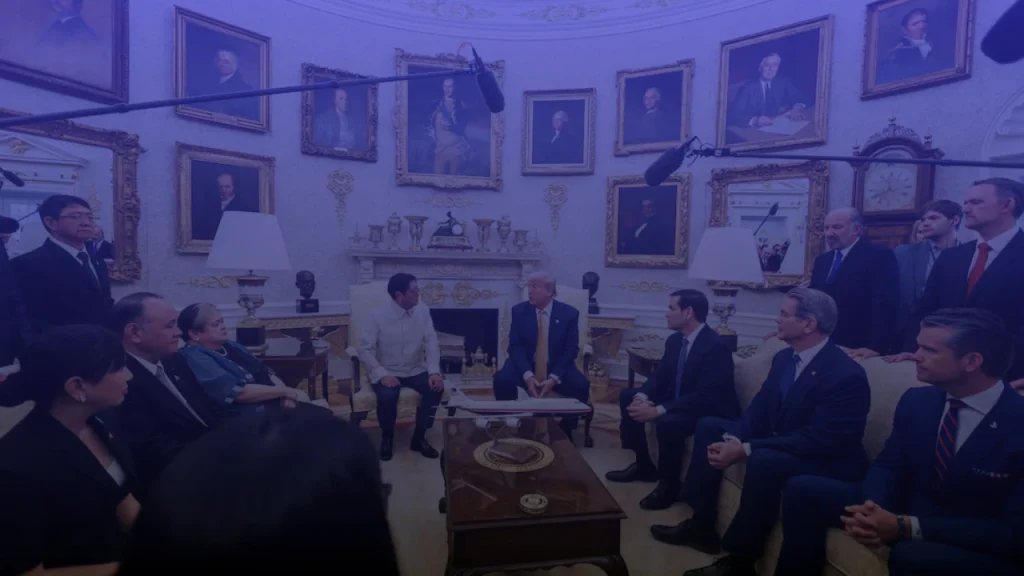
President Donald Trump briefly reunited with 97-year-old former Philippine first lady Imelda Marcos at Malacañang Palace in Manila on November 18, 2026, while visiting her son, Philippine President Ferdinand Marcos Jr. The moment went viral, mostly as a story about an old friendship.
The legal story underneath it is bigger. Two months ago, the Philippine Supreme Court made public a ruling that overturned Imelda Marcos’s seven graft convictions from 2018. Meanwhile, human rights victims of her late husband’s rule still hold a judgment of roughly $2 billion from a U.S. federal court, and a separate fight over more than $40 million in Marcos-linked New York assets has run through the U.S. courts.
None of that is automatically changed by the acquittal or by a diplomatic photo op. A Philippine criminal acquittal does not erase a U.S. civil judgment, reverse a forfeiture order or create a new payout for victims. No verified report shows that the November 18 meeting touched any of those cases.
Trump and Imelda Marcos: Quick Facts
| Detail | Verified information |
| Meeting date | November 18, 2026 |
| Location | Malacañang Palace, Manila |
| Context | Trump’s official visit with President Marcos Jr. during his Asia trip |
| Imelda Marcos | Former first lady, age 97 |
| Philippine Supreme Court ruling | Dated June 10, 2026; made public September 9, 2026 |
| What it did | Overturned seven 2018 graft convictions |
| Philippine case | People v. Imelda Romualdez Marcos, G.R. Nos. 243402–08 |
| U.S. human rights judgment | About $1.96 billion for a class of roughly 9,539 victims |
| Separate New York assets | More than $40 million (Arelma S.A.) |
| Second Circuit ruling | August 18, 2025 |
| U.S. Supreme Court | Review reportedly denied June 29, 2026 (Duran v. United States, No. 25-744) |
| New settlement or claim form | None announced |
What Happened When Trump Met Imelda Marcos?
The meeting was short. Philippine Ambassador to Washington Jose Manuel Romualdez confirmed it to the Associated Press, and White House staff shared video of Trump greeting the former first lady warmly. Romualdez has said Trump often asks Philippine officials, “How’s Imelda?” The two have known each other since the 1980s, when she lived in exile in the United States after her husband, Ferdinand Marcos Sr., was removed from power in 1986.
Nothing announced about the meeting links it to litigation, recovered assets or any legal agreement.
Was Imelda Marcos Acquitted of Graft in 2026?
Yes, on seven counts. The Philippine Supreme Court’s First Division, in a decision dated June 10, 2026, set aside the November 2018 Sandiganbayan ruling that found her guilty of seven counts of graft tied to her alleged interests in Swiss foundations while she held public office. The court released the decision on September 9, 2026. The 2018 sentences ranged from six to 11 years per count.
Why Did the Court Reverse the Convictions?
Philippine press coverage describes a ruling built on technical legal grounds: whether foreign financial records were properly authenticated, and whether prosecutors met the graft law’s statutory requirements. The court found the prosecution failed to prove guilt beyond a reasonable doubt. Martial law survivors’ groups publicly condemned the ruling.
Did the Acquittal End Every Marcos Case?
No. The ruling decided criminal guilt on those seven counts. It did not declare that all Marcos family wealth was lawfully acquired, and whether particular assets are ill-gotten is a separate question for separate proceedings.
Why Does the $2 Billion U.S. Judgment Still Matter?
After Marcos Sr. fled to Hawaii in 1986, victims of the martial law period sued in U.S. federal court, in what became In re Estate of Ferdinand E. Marcos Human Rights Litigation. They alleged torture, summary execution and disappearance. A federal court in Hawaii ultimately entered a judgment of about $1.96 billion for a class of roughly 9,539 victims.
Did Victims Receive $2 Billion?
No. Winning a judgment and collecting on it are different things. Assets tied to the family were moved through offshore structures, and the class has spent decades trying to enforce. The Second Circuit noted in 2025 that the class held a judgment of about $2 billion that it had not been able to fully collect. It is a court award, not a settlement fund and not money available to every claimant now.
What Happened to the $40 Million in New York Assets?
This is a separate dispute over assets tied to Arelma S.A., a Panamanian company. Court records say Arelma put about $2 million into a New York Merrill Lynch account in 1972, and it grew to more than $40 million. The Philippine government says the money came from assets unlawfully acquired under the Marcos regime. It won a forfeiture judgment in the Philippines and asked the U.S. government to help enforce it.
The human rights class objected, arguing its own judgment gave it rights to those same assets.
What Did the Second Circuit Decide?
On August 18, 2025, the U.S. Court of Appeals for the Second Circuit affirmed a ruling in favor of enforcing the Philippine forfeiture judgment. It rejected the class’s defenses in that proceeding and held that a separate claimant, the Roxas estate, had not shown the property interest needed to take part. The court did not erase the victims’ $2 billion judgment. It resolved competing claims to the Arelma assets.
Did the U.S. Supreme Court Step In?
Judgment creditors asked the U.S. Supreme Court to review the ruling in Duran v. United States, No. 25-744. The petition was reportedly denied on June 29, 2026. A denial leaves the lower court’s decision in place without the Court endorsing all of its reasoning. It is not a finding about the underlying abuses.
Can Trump Cancel the Marcos Judgment?
No. A president meeting a foreign figure does not cancel a federal court judgment. The executive branch does play a role in some foreign forfeiture cases, because 28 U.S.C. § 2467 lets the U.S. government help enforce certain foreign forfeiture judgments on request. But a judgment’s status is decided by statute and court rulings, not by a friendly meeting. No public evidence shows Trump offered to interfere with the Arelma case or change victims’ rights.
For another example of cross-border asset recovery, see 1MDB Deutsche Bank $1.1 Billion Settlement Talks, Case Background, Legal Framework, Who Can Claim and What Happens Next. Different parties and law, but the same problem of recovering allegedly misappropriated money across several countries.
Why Doesn’t an Acquittal Stop Civil Liability or Forfeiture?
| Proceeding | Main question |
| Criminal graft case | Did prosecutors prove a specific offense beyond a reasonable doubt? |
| Civil human rights suit | Are the defendants legally responsible for compensable harm? |
| Forfeiture | Is identified property subject to forfeiture under the applicable law? |
| Judgment enforcement | Can a creditor legally collect from particular assets? |
Each has its own standard of proof, parties and remedies. Someone can be acquitted of a criminal charge and still face a civil judgment, and property can be forfeited without a new conviction against the person linked to it.
Have Marcos-Era Victims Received Reparations?
Some have, through a separate Philippine program. Republic Act No. 10368, the Human Rights Victims Reparation and Recognition Act of 2013, created a reparations framework and named recovered Marcos-linked Swiss funds as a source. It is separate from the Hawaii judgment.
Is There a New Claim Form in 2026?
No. The Philippine claims board’s original application window ran from May 12 to November 10, 2014. Neither the 2026 acquittal nor the November meeting reopened it, and the U.S. class judgment is not a settlement with an open sign-up. If you think you may be affected, contact the legal representatives in the existing case and avoid unofficial “compensation” websites that ask for personal information.
What About the Trade Deal Announced the Same Day?
On the same visit, Trump said the U.S. had concluded a “very big trade deal” with the Philippines. According to Reuters, no details were provided and Manila had not confirmed an agreement. The trade announcement is a separate matter from the Marcos litigation, and no link between the two has been shown. Readers should wait for a published text before drawing legal conclusions about it.
Does the Friendship Create a Legal Conflict?
Friendship with a foreign political figure is not by itself an illegal conflict of interest. A legal problem would require specific action, such as improper interference in litigation or unlawful benefits. The November 18 meeting has not been shown to involve either. Praise for the Marcos family is a political and diplomatic statement, not a court finding or an order affecting any case.
The limits on presidential action in international legal matters are covered in Judge Blocks Trump Administration’s Sanctions on Two Groups Helping the International Criminal Court, What the Ruling Does and Does Not Cover. That case is unrelated to the Marcos proceedings.
Why Does This Matter for U.S.–Philippines Relations?
The two countries have a long-standing defense alliance, and the Philippines is central to U.S. strategy in the South China Sea. Washington wants a stable relationship with the Marcos Jr. government. At the same time, decades-old accountability claims from the dictatorship era remain on the record in U.S. courts and the Philippines. Both can be true at once, and a diplomatic meeting does not decide any pending asset dispute.
Imelda Marcos Legal Timeline
| Date | Development |
| February 1986 | People Power uprising ends Marcos Sr.’s rule; family goes into U.S. exile |
| 1986 | Victims file human rights suit in federal court in Hawaii |
| 1989 | Marcos Sr. dies in Hawaii |
| 1995 | U.S. human rights judgment of about $1.96 billion entered |
| 2013 | Philippines enacts Republic Act No. 10368 |
| November 9, 2018 | Imelda convicted on seven graft counts |
| May 2022 | Marcos Jr. wins the presidency |
| August 18, 2025 | Second Circuit rules in the Arelma dispute |
| June 10, 2026 | Philippine Supreme Court decision acquitting Imelda (dated) |
| June 29, 2026 | U.S. Supreme Court reportedly denies review in the Arelma case |
| September 9, 2026 | Philippine decision made public |
| November 18, 2026 | Trump meets Imelda Marcos in Manila |
Imelda Marcos FAQ
Why is Imelda Marcos trending?
Trump briefly met her at Malacañang Palace on November 18, 2026.
Was she convicted of corruption?
A Philippine anti-graft court convicted her on seven counts in 2018. The Supreme Court reversed those convictions in a June 10, 2026 decision that became public on September 9.
Was she cleared of every allegation?
No. The ruling covered specific criminal charges and did not decide whether all disputed assets were lawfully acquired.
Did a U.S. court award victims $2 billion?
A federal court in Hawaii entered a judgment of about $1.96 billion for human rights victims. Collecting it has been difficult, and the full amount has not been paid out.
What happened to the $40 million in New York?
The Second Circuit upheld enforcement of a Philippine forfeiture judgment over the Arelma assets in August 2025. The Supreme Court reportedly declined review in June 2026.
Can Trump pardon Imelda Marcos?
No. A U.S. presidential pardon covers federal offenses, not convictions under Philippine law.
Did Trump agree to return Marcos assets?
No such agreement has been verified.
Is there a new Marcos settlement or claim deadline?
No new U.S. settlement, fund or claim deadline was announced with Trump’s visit.
Bottom Line
Trump’s November 18 meeting with Imelda Marcos was a brief diplomatic reunion. It did not wipe out the U.S. human rights judgment, undo the forfeiture ruling or open a new payout for victims. Her acquittal answers one question, whether prosecutors proved seven graft counts. The questions about civil liability and where the money ends up are still handled by other courts.
Researched and written by Israr Ahmad, legal content researcher and founder of AllAboutLawyer.com. All facts verified against Philippine Supreme Court records, Second Circuit and U.S. Supreme Court dockets, 28 U.S.C. § 2467, Republic Act No. 10368, and reporting from the Associated Press, Reuters, GMA News, Philstar and the Daily Tribune, as of November 18, 2026. Last Updated: November 18, 2026.
This article is for informational purposes only and does not constitute legal advice. Laws vary by state and individual circumstances differ. For advice about your specific situation, consult a qualified attorney.
Sources
- Philippine Supreme Court: People v. Imelda Romualdez Marcos, G.R. Nos. 243402–08
- Second Circuit: In re Enforcement of Philippine Forfeiture Judgment, Nos. 24-185 and 24-186, August 18, 2025
- U.S. Supreme Court docket No. 25-744, Duran v. United States
- Republic Act No. 10368 (Philippine Supreme Court E-Library)
- 28 U.S.C. § 2467
- Associated Press: Trump reunites with Imelda Marcos, November 18, 2026
- Reuters via Arab News: Trump says US has concluded ‘very big trade deal’ with Philippines
- GMA News: SC acquits Imelda Marcos in graft case over Swiss foundations
- Philstar: SC reverses Imelda’s conviction for graft
About the Author
Israr Ahmad is a legal content researcher with 4+ years of experience covering class action settlements and consumer rights cases. He has researched and published coverage of 2,500+ settlements using verified court records, settlement administrator filings, and government sources. Learn more about Israr.