
Delta Window Seat Putative Class Action Lawsuit 2026, Judge Refuses to Dismiss Claims Over Windowless Seats
Delta Air Lines Inc. must keep defending a putative class action brought by passengers who say they paid extra for window seats but ended up beside blank aircraft walls. On November 4, 2026, U.S. District Judge Ramón E. Reyes Jr. of the Eastern District of New York denied Delta’s motion to dismiss, finding that federal airline deregulation law does not automatically block passengers from suing over promises the airline allegedly made when selling particular seats.
The case is Meyer, et al. v. Delta Air Lines Inc., No. 1:25-cv-04608. All three surviving claims (breach of contract, breach of the implied covenant of good faith and fair dealing, and promissory estoppel) move forward into discovery.
No class has been certified, no settlement has been reached, and there is no claim form or guaranteed refund. The ruling lets the case continue. It does not establish that Delta broke the law.
Delta Window Seat Lawsuit: Quick Facts
| Detail | Verified information |
| Lawsuit | Meyer, et al. v. Delta Air Lines Inc. |
| Case number | 1:25-cv-04608-RER-SDE |
| Court | U.S. District Court, Eastern District of New York |
| Judge | Ramón E. Reyes Jr. |
| Original filing | August 19, 2025 |
| Amended complaint | October 3, 2025 |
| Motion to dismiss denied | November 4, 2026 |
| Remaining plaintiffs | Justin Valentine, Anthony Bernardo, Leah Roberts |
| Plaintiffs’ counsel | Carter Greenbaum and Casey Olbrantz (Greenbaum Olbrantz LLP); Stewart Weltman (Hart McLaughlin & Eldridge LLC) |
| Defendant | Delta Air Lines Inc. |
| Alleged misconduct | Charging extra for “window” seats that have no window |
| Aircraft mentioned | Certain Boeing 737, Boeing 757 and Airbus A321 aircraft |
| Surviving claims | Breach of contract, implied covenant of good faith and fair dealing, promissory estoppel |
| Main federal law | Airline Deregulation Act, 49 U.S.C. § 41713 |
| Proposed class | Qualifying U.S. purchasers who paid extra for a window seat but got a windowless one |
| Class certified? | No |
| Settlement or claim form | None |
| Damages awarded | None |
Court decision: November 4, 2026 Memorandum and Order, Document 51. Docket: Meyer v. Delta Air Lines (Justia) and PacerMonitor.
Why Are Delta Air Lines Passengers Suing Over Window Seats Without Windows?
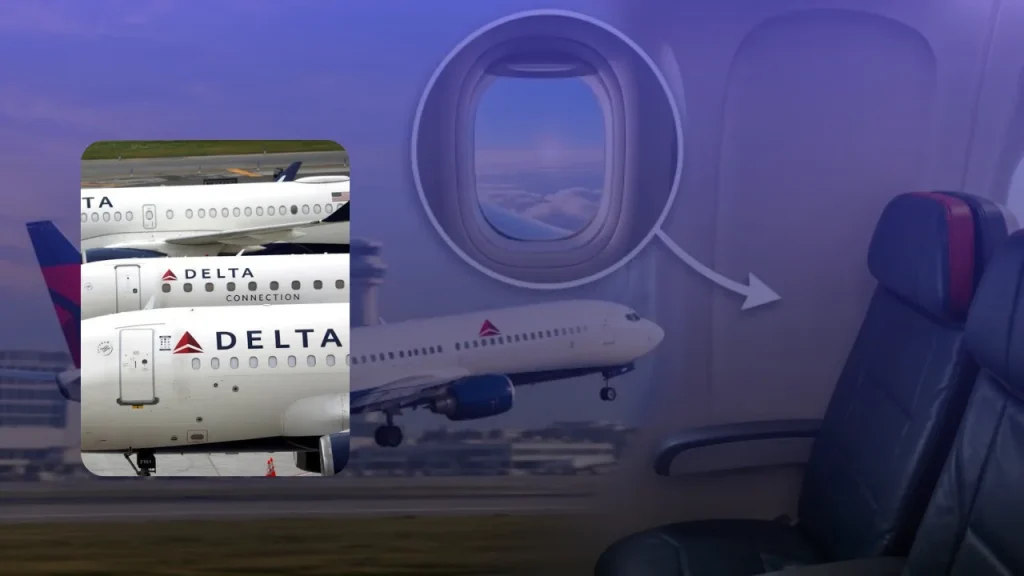
The lawsuit rests on a simple expectation: someone who pays more for a window seat expects an actual window. The plaintiffs say Delta’s booking system labels seats as window, middle or aisle, but some wall-side seats have no window, and Delta does not adequately warn buyers even though they may pay money or use valuable benefits to pick them.
Why Do Some Delta Boeing and Airbus Window Seats Have No Window?
Cabin layouts do not always line up with the aircraft’s window positions. Window openings can be absent because of air-conditioning ducts, electrical conduits or other components. The complaint points to certain configurations of Boeing 737, Boeing 757 and Airbus A321 aircraft. That does not mean every window seat on those aircraft lacks a window, since the seat position, aircraft variant and cabin configuration all matter.
Why Would Delta Passengers Pay Extra for a Window?
The complaint says passengers value window seats to watch takeoff or scenery, to cope with motion sickness, anxiety or enclosed spaces, or to entertain children. The alleged harm is paying for a benefit that was not delivered. The case is not about flight safety or being denied transportation.
Who Are the Plaintiffs in Meyer v. Delta Air Lines?
The case began with Nicholas Meyer, a Brooklyn resident who bought Delta tickets from New York to California in August 2025. He alleged that seat 23F on Delta Flight 826, a Boeing 757-200, had no window, and that he spent about four and a half hours beside a blank wall. Meyer voluntarily dismissed his individual claims on May 15, 2026, and three plaintiffs remain: Justin Valentine, Anthony Bernardo and Leah Roberts.
What Did the Three Remaining Delta Plaintiffs Allegedly Pay?
Valentine and Bernardo paid extra fees to choose window seats. Roberts alleges she incurred costs tied to a Delta-affiliated credit card in exchange for benefits that included choosing her preferred seat, and says Delta represented her seat as having a window when it did not. Delta argued Roberts gave no payment or other consideration to support a contract claim. Judge Reyes declined to dismiss on that basis, explaining that under the applicable Georgia contract law, consideration does not necessarily have to be paid directly to the party making the promise. The court has not decided what any plaintiff is owed.
What Did Judge Reyes Decide in Meyer v. Delta Air Lines on November 4, 2026?
The judge denied Delta’s motion to dismiss under Federal Rule of Civil Procedure 12(b)(6). Delta had argued the Airline Deregulation Act barred the claims and that its Conditions of Carriage say seat assignments are not guaranteed. The court found neither argument justified dismissal at this stage.
1. The Airline Deregulation Act Does Not Automatically Bar the Delta Claims
The Act generally prevents states from imposing laws that affect airline prices, routes or services. But the Supreme Court has recognized that passengers can bring ordinary contract claims to enforce an airline’s own voluntary promises. Judge Reyes found the plaintiffs’ claims concern obligations Delta allegedly took on when selling seat-selection benefits, so they are not preempted.
2. Delta’s “Seat Assignments Are Not Guaranteed” Clause Is Open to Interpretation
Delta says its Conditions of Carriage let it change seat assignments and do not guarantee a specific window. The plaintiffs argue the clause allows operational changes, not selling a seat as having a window when it never had one. The judge found both readings reasonable enough to need further examination. The court did not decide that Delta guaranteed an actual window. It found the contract language not clear enough to dismiss the claims at the pleading stage.
3. All Three Claims Against Delta Survived
| Claim | What the passengers allege |
| Breach of contract | Delta failed to provide the window-seat benefit allegedly promised |
| Implied covenant of good faith and fair dealing | Delta allegedly undermined the value of its own contractual commitments |
| Promissory estoppel | Passengers relied on an alleged promise and provided something of value |
Promissory estoppel is an alternative theory and does not mean passengers can collect three separate awards for one injury. The ruling does not decide whether the plaintiffs can prove their allegations at trial.
What Does Delta’s Contract of Carriage Say About Seat Assignments?
Delta’s domestic Conditions of Carriage include Rule 2: Schedules and Operations, which says seat assignments, aircraft types and certain other details are not guaranteed and reserves Delta’s right to change seats or substitute aircraft for operational reasons. The plaintiffs distinguish an operational seat change from the original sale of a seat allegedly represented as having a window, and argue the general disclaimer should not wipe out Delta’s obligations if it knew the seat had no window. Delta disputes that. The court also considered Rule 24, which defines the complete agreement between Delta and passengers, and found the arguments about it did not justify dismissing the implied-covenant or promissory-estoppel claims now.
Which Federal Laws and Supreme Court Cases Apply to the Delta Window Seat Lawsuit?
Airline Deregulation Act, 49 U.S.C. § 41713, and American Airlines v. Wolens
The Act restricts state laws on airline prices, routes and services, but American Airlines Inc. v. Wolens, 513 U.S. 219 (1995), allows certain breach-of-contract claims based on commitments an airline voluntarily made. Judge Reyes relied on Wolens in letting the Delta case continue. See 49 U.S.C. § 41713 and Wolens.
Northwest v. Ginsberg and Limits on Implied Covenant Claims Against Delta
In Northwest Inc. v. Ginsberg, 572 U.S. 273 (2014), the Supreme Court held that federal law can preempt an implied-covenant claim that tries to enlarge obligations beyond what the airline voluntarily undertook. The court here looked to Georgia law, which lets parties disclaim certain implied obligations, and concluded the claim concerns Delta’s purported self-imposed commitments, so it is not barred now. That distinction may matter again later. See Ginsberg.
Unfair or Deceptive Practices, 49 U.S.C. § 41712
The Department of Transportation can investigate unfair or deceptive practices in air transportation under § 41712. That authority is separate from this lawsuit, and a DOT complaint does not create a private damages claim.
Can Delta Passengers Get Refunds for Windowless Window Seats?
You can request a refund, but the lawsuit has not established that every windowless seat creates a legal right to compensation. The DOT requires airlines to refund fees for certain optional services that were not provided, and advance seat selection can qualify. The open question is whether getting the chosen seat but without a physical window counts as the service not being provided, which is part of what this case is about. See the DOT refund rights.
Does the DOT Refund Rule Guarantee a Full Delta Ticket Refund?
No. Disliking a seat or view does not by itself entitle you to a refund of the whole fare. A qualifying refund would generally be the amount paid for the service not provided, and calculating that is harder when seat choice came bundled in a fare or credit card benefit.
Who Could Qualify for the Delta Window Seat Putative Class Action?
The original complaint proposed a nationwide class of U.S. people and entities that bought Delta airfare, gave extra money or other consideration to get a window seat, and received a seat with no window. Payments mentioned include seat-selection fees, upgrades, rewards credits and certain program benefits. These are proposed criteria, not a court-approved class.
| Passenger situation | Potential relevance |
| Paid extra for a window seat but got a blank wall | Closely matches the allegations |
| Used miles, benefits or credits to get a window seat | Could be relevant |
| Got a windowless seat without paying anything extra | Not clearly within the original class definition |
| Paid for a window seat and got a window | Not the alleged harm |
| Was moved because of an aircraft change | Needs separate analysis |
| Flew United instead of Delta | Separate lawsuit |
The court still has to decide under Federal Rule of Civil Procedure 23 whether common issues can be resolved for the whole class and whether the named plaintiffs adequately represent it.
How Much Money Could Delta Passengers Receive?
No settlement amount or payment has been set. The plaintiffs seek compensatory damages, potential exemplary damages and other relief for the extra consideration they say was improperly charged. The original complaint estimated Delta may have sold more than one million windowless seats in the class period, but that is the plaintiffs’ allegation, not a verified count of class members or claims. Any recovery would depend on whether Delta is found liable, the value of individual seat payments or benefits, the size of any certified class and the terms of a settlement or judgment. There is no reliable average payout.
What Should You Do if You Paid for a Delta Window Seat Without a Window?
- Save your booking confirmation. Keep your receipt, itinerary, flight number, date and seat number, plus proof of any separate selection or upgrade fee.
- Preserve proof of the windowless seat. Keep any photo of the blank wall and note the aircraft type, since layouts differ by variant.
- Request a refund from Delta. Use Delta’s customer support, explain that you paid for a window seat but got none, and give your booking and payment details. A refund is not guaranteed.
- File a DOT complaint if it stays unresolved. Use the DOT Aviation Consumer Protection portal. It helps regulators spot problems but does not enroll you in the lawsuit.
- Keep records for any future class notice. If a class is certified or a settlement reached, the court may set up an official notice and claim process. Do not pay anyone who promises to guarantee you a Delta window-seat payout.
Is Delta Facing a Similar Lawsuit to the United Airlines Window Seat Case?
Yes. Brenman v. United Airlines Inc., No. 3:25-cv-06995, raises similar allegations about windowless seats sold as window seats. On July 6, 2026, U.S. District Judge James Donato in the Northern District of California denied United’s motion to dismiss, and Judge Reyes cited that ruling on preemption. The two cases are separate, and neither ruling means every airline with wall-side seats owes automatic compensation.
How Is the Delta Window Seat Case Different From Other Airline Lawsuits?
The Delta window-seat case is about the value of a seating feature. It is separate from Delta Airlines Is Being Sued for Hiding Your Cash Refund Behind an Expiring eCredit Here Is What Passengers Need to Know, which concerns allegedly misleading refund choices. Another seat-selection dispute is JetBlue Putative Class Action Claims Blue Fares Promised Free Seat Selection That Passengers Never Got, Kohanof v. JetBlue, Claims, Who May Qualify and Case Status, over whether customers could select seats advertised as included in their fares. The case is also unrelated to the alleged fare coordination in Airline Price-Fixing Putative Class Action Lawsuits 2026, Can American, Delta, United and Southwest Passengers Get Refunds?. Each has its own legal theories and class definition.
Delta Window Seat Lawsuit Timeline
| Date | Development |
| August 19, 2025 | Nicholas Meyer files the original class action complaint |
| October 3, 2025 | Amended complaint filed |
| May 15, 2026 | Meyer voluntarily withdraws his individual claims |
| July 6, 2026 | Judge denies dismissal in the similar United Airlines lawsuit |
| November 4, 2026 | Judge Reyes denies Delta’s motion to dismiss |
| November 18, 2026 | No class certification or settlement |
Delta Window Seat Lawsuit: Frequently Asked Questions
Did Delta lose the window seat lawsuit?
No. Delta lost its motion to dismiss on November 4, 2026. The case continues, but the court has not found that Delta breached a contract or owes damages.
Is Delta legally required to provide a window if I pay for a window seat?
That is disputed. Delta relies on contract language about seat assignments, while passengers say Delta made a separate promise by selling a seat as having a window.
Which Delta airplanes have windowless seats?
The complaint identifies certain Boeing 737, Boeing 757 and Airbus A321 configurations. Whether a seat has a window depends on the specific aircraft layout and seat, not just the aircraft family.
Is the Delta window seat lawsuit a nationwide class action?
It is a putative nationwide class action. The plaintiffs seek to represent qualifying passengers across the United States, but no class has been certified.
Can I join the Delta window seat lawsuit today?
There is no court-approved claim or registration process. You can preserve evidence, ask Delta directly for a refund, or contact the plaintiffs’ attorneys. Contacting counsel does not guarantee inclusion or compensation.
Who represents the Delta passengers?
Carter Greenbaum and Casey Olbrantz of Greenbaum Olbrantz LLP, and Stewart Weltman of Hart McLaughlin & Eldridge LLC.
Is there a Delta window seat settlement claim form?
No. As of November 18, 2026, there is no settlement, administrator, claim form or payment deadline.
What Happens Next in Meyer v. Delta Air Lines?
The contract claims move into discovery on seat-selection practices, what was represented during booking, aircraft configurations and customer payments. Later stages may include class certification and further motions. The court will also have to decide whether the alleged promises were part of Delta’s contractual obligations and whether the plaintiffs can show compensable injury. There is no class-certification ruling, settlement or payment date.
Bottom line: Delta passengers won an important procedural ruling in a lawsuit over paid window seats without windows. The case is unresolved. You can ask for a refund and preserve your purchase records, while any classwide compensation depends on future proceedings.
Primary Sources and Legal References
- Meyer v. Delta Air Lines, November 4, 2026 Memorandum and Order, Document 51
- Meyer v. Delta Air Lines, Original Complaint, August 19, 2025
- Meyer v. Delta Air Lines, Federal Docket (Justia)
- PacerMonitor Docket for Meyer v. Delta Air Lines
- Delta Domestic Conditions of Carriage
- 49 U.S.C. § 41713
- 49 U.S.C. § 41712
- American Airlines Inc. v. Wolens, 513 U.S. 219 (1995)
- Northwest Inc. v. Ginsberg, 572 U.S. 273 (2014)
- DOT Airline Refund Rights
- DOT File an Aviation Consumer Complaint
- Delta Customer Help Center
Disclaimer: This is general legal information, not legal advice. AllAboutLawyer.com is not affiliated with Delta Air Lines, the plaintiffs, their attorneys or the court. The allegations are disputed, no class has been certified, and no settlement payments have been approved.
Researched and written by Israr Ahmad, legal content researcher and founder of AllAboutLawyer.com. All facts verified against the court’s November 4, 2026 Memorandum and Order, the original complaint, the federal docket, Delta’s published Conditions of Carriage and U.S. Department of Transportation guidance, as of November 18, 2026. Last Updated: November 18, 2026.
About the Author
Israr Ahmad is a legal content researcher with 4+ years of experience covering class action settlements and consumer rights cases. He has researched and published coverage of 2,500+ settlements using verified court records, settlement administrator filings, and government sources. Learn more about Israr.