
Mercedes-Benz of Massapequa Lawsuit Sexual Harassment Allegations, Laws Involved and Case Status (October 2026)
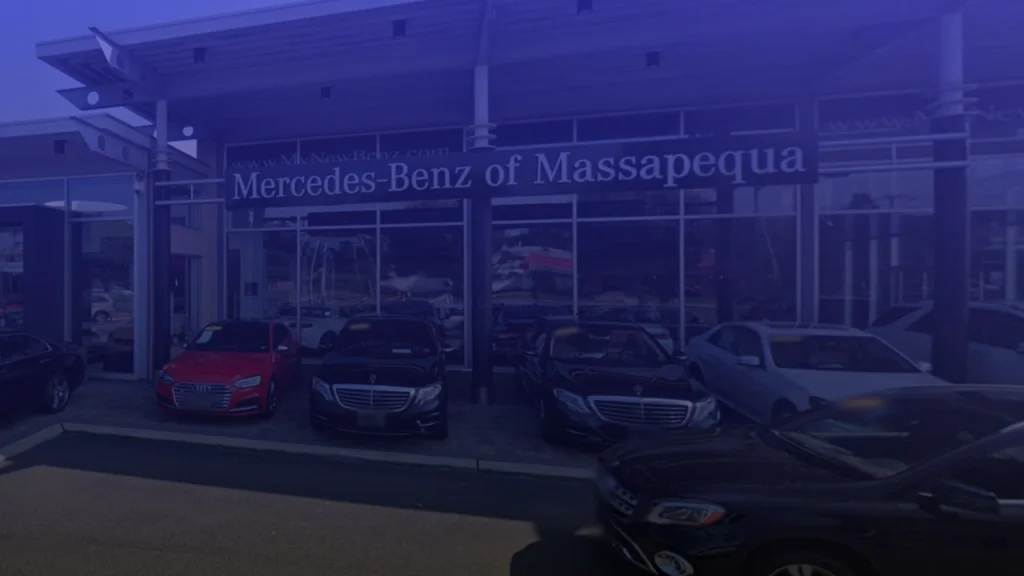
The Mercedes-Benz of Massapequa lawsuit is a federal employment case filed by former sales consultant Talita Paulino. It was reported on March 24, 2025, and it became national news the next day. Paulino alleges that a sales manager at the Long Island dealership pressured her to tolerate unwanted physical contact in order to get the sales quotes she needed, and that she was forced to resign in October 2024. She also alleges that dealership personnel offered some female customers discounts in exchange for sexual favors.
The dealership’s attorney called the allegations “baseless and without merit,” said no evidence supported the customer-discount claims, and said the dealership would defend the case vigorously. These are allegations in a complaint. No court finding that they are true has been identified. [1]
This is an individual employment lawsuit. It is not a class action, and there is no claim form for customers.
Mercedes-Benz of Massapequa Lawsuit: Quick Facts
| Detail | Information |
| Plaintiff | Talita Paulino, former sales consultant |
| Case name | Paulino v. Mercedes-Benz USA, LLC et al. |
| Federal case number | 2:25-cv-01602 |
| Court | U.S. District Court, Eastern District of New York (E.D.N.Y.) |
| Docket-listed judge | James M. Wicks [2] |
| Type of case | Employment discrimination / civil rights |
| Reported filing date | March 24, 2025 |
| Employment dates | April 26, 2024 to October 2024 (per the complaint, as reported) |
| Main allegations | Sexual harassment, unequal access to sales support, hostile work environment, constructive discharge |
| Dealership’s position | Denied the allegations; said it will defend vigorously |
| Relief requested | Lost sales opportunities, back pay, front pay, lost benefits, emotional-distress damages, punitive damages, attorney fees |
| Class action? | No. Individual action |
| Settlement or claim form? | None identified |
| Status | As of October 22, 2026, no settlement, judgment or dismissal was found in the public material reviewed. Confirm on the live federal docket (PACER) |
What Is the Paulino v. Mercedes-Benz USA Lawsuit About?
Paulino joined Mercedes-Benz of Massapequa, a dealership in Nassau County, New York, as a sales consultant on April 26, 2024. According to the complaint as reported by The Independent, management’s conduct toward female employees went beyond inappropriate comments. She alleges that the help she needed to make sales depended, at least in part, on how she responded to a manager’s unwanted physical contact. [1]
The complaint also describes alleged sexualized conduct involving customers and dealership vehicles. Paulino says a product concierge who later worked as a sales assistant talked about sexual encounters with customers and showed coworkers videos of them.
What Did Talita Paulino Allege Happened During Her First Weeks at Mercedes-Benz of Massapequa?
During her second week, she says, a sales manager took her on a demonstration drive in a new Mercedes-Benz GLE 350. He allegedly stopped at a 7-Eleven and made a romantic or sexual advance. She says she told him she was in a committed relationship and wanted to go back to the dealership.
She further alleges that she saw the manager touch female employees inappropriately and make sexual remarks, and that employees who rejected the attention received less support while others who went along received better treatment.
Why Does the Paulino Complaint Mention a Withheld Sales Quote and a Back Scratch?
The most legally important allegation is about control over sales information. Paulino says the manager began demanding hugs, then asked her to scratch his back. In one instance, she says, he withheld a sales quote for a potential customer until she complied. She alleges the demands continued whenever she needed quotes and that he became hostile or unhelpful when she refused.
This matters because a salesperson’s income depends on pricing, approvals and manager support. If a supervisor withholds that support because an employee refuses unwanted physical contact, the conduct can affect her pay and her ability to do the job. The complaint says she reluctantly complied at times because she needed to earn a living. Whether any of this happened is for the court to decide.
What Did Paulino Allege About Female Customers at Mercedes-Benz of Massapequa?
Paulino claims that a sales manager and the product concierge offered selected women discounts in exchange for sexual favors, and that she saw the sales manager touch a female customer inappropriately while discussing a special deal.
These allegations are part of her account of the workplace. They do not establish that any customer was coerced or that customers have a right to compensation. No customer lawsuit or consumer settlement arising from them was identified.
How Did Talita Paulino’s Employment at Mercedes-Benz of Massapequa End?
Paulino resigned in October 2024. The complaint describes the resignation as forced, saying conditions had become intolerable. According to the reported account, she emailed management saying she could no longer tolerate the alleged harassment and did not get a response. [1]
Her legal theory is constructive discharge: a resignation that the law treats as a firing because the employer made working conditions so intolerable that a reasonable person would have felt compelled to quit. The U.S. Supreme Court set out that standard in Pennsylvania State Police v. Suders, 542 U.S. 129 (2004). Being unhappy at work is not enough, and quitting does not by itself bar a claim. The outcome depends on the evidence.
How Did Mercedes-Benz of Massapequa Respond to the Paulino Lawsuit?
The dealership’s attorney told The Independent in March 2025 that the allegations were “baseless and without merit,” that the dealership found no evidence of the alleged sex-for-discounts arrangements, and that it would defend the case. The attorney declined further comment because of the active litigation. Messages to Automotive Management Services, Inc. (AMSI), which oversees the dealership, went unanswered, according to the report. [1]
- Paulino’s position: Harassment and unequal treatment affected her work and income and forced her out.
- The dealership’s position: The allegations are meritless and its investigation found no support for the customer-discount claims.
- The court’s role: A complaint is not proof of liability, and a denial does not end the case. No admission of wrongdoing and no final court finding has been identified.
Who Is Being Sued in Paulino v. Mercedes-Benz USA, LLC?
The federal case is captioned Paulino v. Mercedes-Benz USA, LLC et al., No. 2:25-cv-01602 (E.D.N.Y.). The “et al.” means other defendants are included. Reporting linked the dispute to Mercedes-Benz of Massapequa and Automotive Management Services, Inc., while the federal case index names Mercedes-Benz USA, LLC in the caption. [1][2]
A manufacturer, a dealership operator and a management company are not automatically responsible for one another’s conduct. Liability depends on the claims pleaded, each entity’s relationship to the people involved, who controlled Paulino’s work and what each defendant knew. The current complaint and docket should be checked before attributing any specific act to a specific defendant.
Which Federal and New York Laws Apply to the Mercedes-Benz of Massapequa Sexual Harassment Allegations?
The facts alleged raise issues under federal and New York law. The claims actually pleaded against each defendant should be confirmed from the complaint. The explanations below describe why the allegations matter. They are not a prediction that Paulino will win.
Title VII of the Civil Rights Act of 1964 (42 U.S.C. § 2000e-2)
Title VII bars covered employers from discriminating because of sex. It covers employers with 15 or more employees. Sexual harassment is a form of sex discrimination, and the Supreme Court recognized both quid pro quo and hostile-environment theories in Meritor Savings Bank v. Vinson, 477 U.S. 57 (1986). Under Harris v. Forklift Systems, 510 U.S. 17 (1993), a hostile-environment claim looks at the totality of the circumstances: frequency, severity, whether the conduct was physically threatening or humiliating, and whether it interfered with work. [3][4]
New York State Human Rights Law (N.Y. Executive Law § 296)
The New York State Human Rights Law covers employers of every size. Since the 2019 amendments, harassment is unlawful when it rises above “petty slights or trivial inconveniences,” so a plaintiff does not have to show the harassment was “severe or pervasive.” (N.Y. Exec. Law § 296(1)(h).) The 2019 amendments also removed the old requirement to prove that the employer’s conduct was “egregious” before punitive damages could be awarded against a private employer, and they made attorney fees available. [5]
Quid Pro Quo Harassment
“Quid pro quo” means “this for that.” It applies when a supervisor ties a job benefit to a sexual or physical demand. Paulino’s allegation that a manager withheld a sales quote unless she complied is the kind of conduct this theory addresses, but it has not been established by a court.
Hostile Work Environment
This claim focuses on unwelcome, sex-based conduct that changes the conditions of work. The allegations here include unwanted touching, sexual comments, pressure to accommodate a manager and unequal access to sales support.
Constructive Discharge
Under Suders, Paulino would need to show conditions so intolerable that a reasonable person would have felt compelled to resign. Where the harassment is by a supervisor, the Court also addressed how the employer’s defenses interact with that claim.
Employer Liability and the Faragher/Ellerth Defense
In Burlington Industries v. Ellerth, 524 U.S. 742 (1998), and Faragher v. City of Boca Raton, 524 U.S. 775 (1998), the Supreme Court held that when a supervisor’s harassment does not result in a tangible employment action, an employer can avoid liability by proving two things. First, it exercised reasonable care to prevent and promptly correct harassment. Second, the employee unreasonably failed to use the complaint procedures offered. If harassment results in a tangible employment action, that defense is not available. The EEOC explains these rules on its employer-liability page. [3]
Here, the key questions would be who supervised Paulino, whether she reported the conduct, how the dealership responded and whether she says she was effectively fired. Her reported email to management bears on that. Whether it was received, and what followed, is a matter for the evidence.
Retaliation (Title VII § 704(a); N.Y. Executive Law § 296(7))
Both laws bar retaliation against employees who oppose or report discrimination. No retaliation claim has been confirmed from the reporting, so check the complaint for the claims actually pleaded.
Mandatory Sexual Harassment Prevention Policy and Training (N.Y. Labor Law § 201-g)
New York requires every employer to adopt a sexual harassment prevention policy that meets state minimum standards and to give employees interactive training every year. The existence and quality of the dealership’s policy and training could be relevant to the employer-defense questions above, but nothing about them has been reported.
Arbitration: The Ending Forced Arbitration Act (9 U.S.C. §§ 401–402)
Many employers use mandatory arbitration agreements. Under the federal Ending Forced Arbitration of Sexual Assault and Sexual Harassment Act of 2021, a person who alleges sexual harassment can choose to keep the case in court despite a pre-dispute arbitration agreement. No arbitration motion has been reported in Paulino’s case.
Customer-Facing Conduct
The reporting does not identify any customer plaintiff. Anyone who believes they personally experienced unlawful conduct at a dealership should speak to an attorney. New York also has criminal laws on unwanted sexual contact, such as forcible touching under N.Y. Penal Law § 130.52. The Paulino lawsuit is a civil case and does not involve criminal charges.
What Are the Filing Deadlines for Sexual Harassment Claims Against a New York Employer?
Deadlines are strict, and missing one can end a claim. The rules below are general. A lawyer should confirm the deadline for any specific situation.
| Route | General deadline |
| EEOC charge under Title VII (New York is a “deferral” state) | 300 days from the discriminatory act |
| Lawsuit after an EEOC Notice of Right to Sue | 90 days from receiving the notice |
| New York State Human Rights Law (court or State Division of Human Rights) | 3 years from the act |
New York requires an election of remedies under Executive Law § 297(9): a person who files with the State Division of Human Rights generally cannot also sue in court on the same claim, with limited exceptions. [4][5]
What Damages Is Talita Paulino Seeking From Mercedes-Benz of Massapequa and Its Co-Defendants?
According to reporting based on the complaint, Paulino seeks the following. No award has been identified. A demand is not a settlement offer or a verdict.
| Relief requested | What it means |
| Lost sales opportunities | Income from sales she says she lost |
| Back pay | Wages and compensation lost before judgment |
| Front pay | Future lost earnings when reinstatement is not feasible |
| Lost benefits | Benefits allegedly lost |
| Emotional-distress damages | Compensation for emotional harm, if proven |
| Pain and suffering / mental anguish | Compensation for personal impact |
| Punitive damages | Damages to punish and deter, available only in limited circumstances |
| Attorney fees and costs | Legal expenses a court may award |
Do Title VII Damages Caps Apply?
Under 42 U.S.C. § 1981a(b)(3), combined compensatory and punitive damages under Title VII are capped by employer size: $50,000 for 15 to 100 employees, $100,000 for 101 to 200, $200,000 for 201 to 500, and $300,000 for more than 500. Back pay and front pay are not part of those capped amounts. The New York State Human Rights Law has no comparable cap for private employers. The number of employees at each defendant has not been reported.
Mercedes-Benz of Massapequa Lawsuit Timeline
| Date | Event |
| April 26, 2024 | Paulino begins work as a sales consultant (per complaint, as reported) |
| May 2024 | Alleged demonstration-drive incident and early unwanted conduct (per complaint) |
| October 2024 | Paulino resigns, calling it a forced departure |
| March 24, 2025 | Federal lawsuit reported filed, No. 2:25-cv-01602 (E.D.N.Y.) |
| March 25, 2025 | The Independent publishes its report, including the dealership’s denial |
| September 9, 2026 | Separate personal-injury suit listed in Nassau County Supreme Court (see below) |
| October 22, 2026 | No final resolution of Paulino’s case identified in public material reviewed |
Is There a Second Lawsuit Involving Mercedes-Benz of Massapequa in 2026?
Yes, but it is unrelated. A court index lists Myron Wecker and Wendy St. Wecker v. Philip Rao and TT of Massapequa, Inc. d/b/a Mercedes-Benz of Massapequa, filed September 9, 2026, in Nassau County Supreme Court. It is categorized as a motor-vehicle tort case, and the summary refers to an incident alleged to have occurred on or about May 4, 2026. [6]
It involves different plaintiffs, different claims and different alleged events from Paulino’s employment case. Public information is too limited to describe the incident, the injuries or the defendants’ response, and a filing is not a finding of fault.
Is the Mercedes-Benz of Massapequa Lawsuit a Class Action?
No. Paulino v. Mercedes-Benz USA, LLC is an individual employment case. There is no class certification, settlement administrator, claim form or payout program for dealership customers. The customer-discount allegation is part of Paulino’s account of the workplace and does not create a class of customers.
By contrast, an EEOC enforcement action can end in a settlement fund for many workers. For an example, see Nevada Restaurant Services $1.2M Settlement: How To Claim.
What Are the Tax and Settlement Rules If Paulino’s Case Settles?
If the case ever settles or ends in a judgment, these general rules would be relevant. A tax professional should confirm how they apply.
- Back pay and lost wages are generally taxable wages subject to withholding.
- Emotional-distress damages are generally taxable unless they stem from a physical injury or physical sickness (26 U.S.C. § 104(a)(2)).
- Attorney fees: Plaintiffs in discrimination cases can generally deduct attorney fees above the line (26 U.S.C. § 62(a)(20)).
- Confidential settlements: Under 26 U.S.C. § 162(q), an employer cannot deduct a sexual-harassment settlement or its related attorney fees if the settlement includes a nondisclosure provision.
- New York nondisclosure limits: N.Y. General Obligations Law § 5-336 restricts confidentiality terms in discrimination settlements and gives the complainant time to consider and revoke the agreement.
How Does the Paulino Case Compare With Other Workplace Harassment Lawsuits?
The legal questions resemble those in other harassment cases, but the facts and outcomes of other cases say nothing about what happened at Mercedes-Benz of Massapequa. Each case turns on its own record.
For comparison, see DLA Piper Partner Accused Of Rape, DLA Piper Partner Faces $10.6M Lawsuit After Former Associate Alleges Rape and JPMorgan’s Lorna Hajdini Lawsuit Complaint Withdrawn, Plaintiff Identified, and What Happens Next.
What Should Workers Do If They Experience Sexual Harassment at a New York Dealership or Employer?
This is general information, not legal advice for a specific situation.
- Document everything. Keep dates, places, witnesses, messages and emails.
- Report in writing using the employer’s complaint procedure and keep a copy. This can matter under the Faragher/Ellerth framework.
- Watch the deadlines. 300 days for an EEOC charge and 3 years under the New York State Human Rights Law are general guides.
- Do not assume you must arbitrate. The Ending Forced Arbitration Act may let you keep a sexual-harassment case in court.
- Speak to a licensed New York employment attorney before signing a resignation letter, severance agreement or nondisclosure agreement.
The EEOC (eeoc.gov) and the New York Attorney General’s Civil Rights Bureau both accept complaints. [4][7]
Frequently Asked Questions About the Mercedes-Benz of Massapequa Lawsuit
What is the Mercedes-Benz of Massapequa lawsuit about?
It is a federal employment lawsuit by former sales consultant Talita Paulino alleging sexual harassment, unequal access to sales support, a hostile work environment and a forced resignation. The dealership denied the allegations.
What is the case number in Paulino v. Mercedes-Benz USA, LLC?
No. 2:25-cv-01602, in the U.S. District Court for the Eastern District of New York. Check the current docket for the full caption and history.
Who filed the lawsuit against Mercedes-Benz of Massapequa?
Talita Paulino, who began working at the dealership on April 26, 2024. The lawsuit was reported on March 24, 2025.
Did Mercedes-Benz of Massapequa admit to offering discounts for sexual favors?
No admission was identified. The dealership’s attorney denied the allegations and said its review found no supporting evidence. [1]
Did a court find that sexual harassment occurred at Mercedes-Benz of Massapequa?
No court finding that the allegations are true has been identified. They should not be described as proven.
Is Talita Paulino seeking money damages from Mercedes-Benz of Massapequa?
Yes. She seeks lost sales opportunities, back pay, front pay, lost benefits, emotional-distress damages, punitive damages and attorney fees. No award has been verified.
Is Mercedes-Benz USA, LLC liable for what happened at Mercedes-Benz of Massapequa?
That has not been decided. Mercedes-Benz USA, LLC appears in the federal caption, but liability depends on its relationship to the dealership and the people involved.
Can customers of Mercedes-Benz of Massapequa file a claim for a refund or discount?
No customer claim process arising from Paulino’s allegations was identified. Customers should not assume they qualify for compensation.
Has the Paulino case against Mercedes-Benz of Massapequa settled?
No settlement or final judgment was found in the public material reviewed as of October 22, 2026. Check the live PACER docket before describing the case as pending, settled or dismissed.
Is the September 2026 Wecker lawsuit the same as the Paulino lawsuit?
No. The Wecker case in Nassau County Supreme Court is a separate motor-vehicle tort matter naming Philip Rao and TT of Massapequa, Inc. [6]
What is the deadline to file a sexual harassment claim in New York?
Generally, 300 days for an EEOC charge, 90 days to sue after a Right to Sue notice, and 3 years under the New York State Human Rights Law. Confirm the deadline for your situation with an attorney.
Can a New York employer force a sexual harassment claim into arbitration?
Under the federal Ending Forced Arbitration of Sexual Assault and Sexual Harassment Act of 2021 (9 U.S.C. §§ 401–402), the person alleging harassment can choose to bring the case in court despite a pre-dispute arbitration agreement.
Where can I check the status of Paulino v. Mercedes-Benz USA, LLC?
Search case No. 2:25-cv-01602 through PACER or the Eastern District of New York’s official resources. For the Wecker case, use the New York State Unified Court System’s case-search tools.
Sources and References
- The Independent, Mercedes-Benz dealers traded sex for discounts, former saleswoman claims, March 25, 2025.
- Law360, Paulino v. Mercedes-Benz USA, LLC et al., docket listing, No. 2:25-cv-01602 (E.D.N.Y.).
- U.S. Equal Employment Opportunity Commission, Harassment and employer liability.
- U.S. Equal Employment Opportunity Commission, Sexual Harassment.
- New York State, Combating Sexual Harassment in the Workplace: Frequently Asked Questions.
- Trellis, Myron Wecker and Wendy St. Wecker v. Philip Rao and TT of Massapequa, Inc., filed September 9, 2026.
- New York Attorney General, Workplace discrimination and harassment.
Statutes and cases cited: 42 U.S.C. § 2000e-2; 42 U.S.C. § 1981a(b)(3); N.Y. Exec. Law §§ 296, 297; N.Y. Labor Law § 201-g; N.Y. Gen. Oblig. Law § 5-336; 9 U.S.C. §§ 401–402; 26 U.S.C. §§ 62(a)(20), 104(a)(2), 162(q); Meritor Savings Bank v. Vinson, 477 U.S. 57 (1986); Harris v. Forklift Systems, 510 U.S. 17 (1993); Burlington Industries v. Ellerth, 524 U.S. 742 (1998); Faragher v. City of Boca Raton, 524 U.S. 775 (1998); Pennsylvania State Police v. Suders, 542 U.S. 129 (2004).
Disclaimer: This article is general information, not legal advice. Allegations in a complaint are not findings of fact. For a specific employment dispute, consult a licensed employment attorney.
Researched and written by Israr Ahmad, legal content researcher and founder of AllAboutLawyer.com. All facts verified against the reporting in The Independent, the federal docket listing for No. 2:25-cv-01602, the EEOC and New York State guidance, and the cited statutes and Supreme Court decisions, as of October 22, 2026. Last Updated: October 22, 2026.
About the Author
Israr Ahmad is a legal content researcher with 4+ years of experience covering class action settlements and consumer rights cases. He has researched and published coverage of 2,500+ settlements using verified court records, settlement administrator filings, and government sources. Learn more about Israr.