
Jeffrey Epstein Zorro Ranch Lawsuit, New Mexico Seeks to Block $75 Million in Estate Payments to Darren Indyke and Richard Kahn
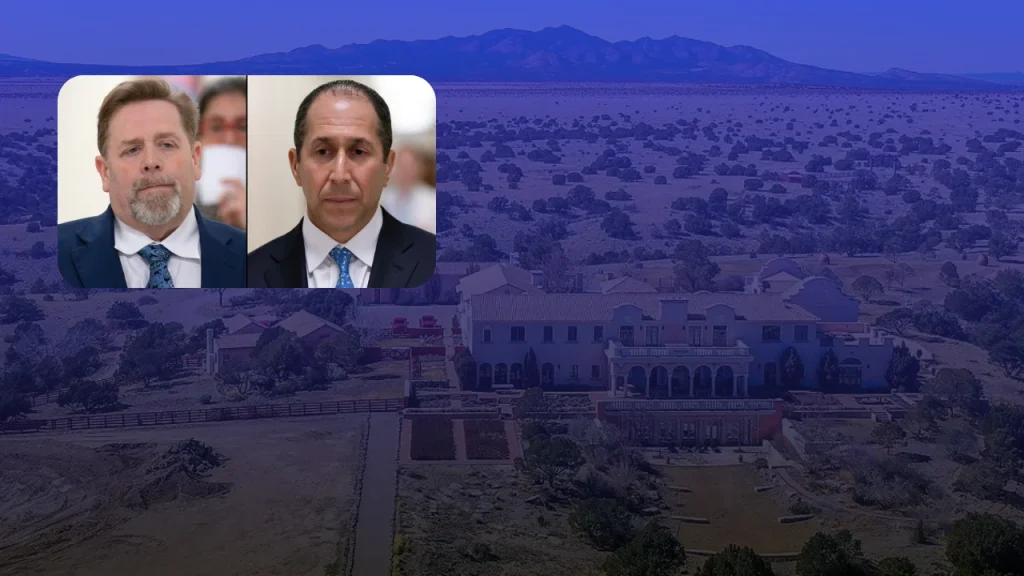
On October 21, 2026, New Mexico Attorney General Raúl Torrez filed a federal civil lawsuit against Jeffrey Epstein’s longtime attorney, Darren K. Indyke, and longtime accountant, Richard D. Kahn. The complaint alleges they helped finance and conceal Epstein’s alleged sex-trafficking operation, including abuse at his former Zorro Ranch near Stanley, New Mexico. The state asks the court to stop up to $75 million in bequests ($50 million to Indyke and $25 million to Kahn) from being paid out of Epstein’s estate and the 1953 Trust, and to award damages and restitution. [1][2]
Indyke and Kahn deny knowing about or taking part in Epstein’s abuse, through their attorney. Everything below is an allegation in a complaint, not a court finding. [5]
The key distinction: New Mexico has asked the court to block the payments. The filing does not show that a judge has frozen any money, that either defendant has been found liable, or that a survivor claim fund exists. The $75 million is not a settlement.
Jeffrey Epstein Zorro Ranch Lawsuit: Quick Facts
| Detail | Information |
| Case name | State of New Mexico ex rel. Raúl Torrez v. Darren K. Indyke et al. |
| Federal case number | 1:26-cv-03543 |
| Court | U.S. District Court for the District of New Mexico |
| Filing date | October 21, 2026 |
| Plaintiff | State of New Mexico, through Attorney General Raúl Torrez |
| Defendants | Darren K. Indyke, Richard D. Kahn, the Estate of Jeffrey E. Epstein and the 1953 Trust |
| Main allegations | Facilitating, financing and concealing an alleged sex-trafficking venture, including abuse at Zorro Ranch |
| Bequests at issue | $50 million (Indyke) and $25 million (Kahn), subject to available funds |
| Estate value cited | More than $107 million as of June 30, 2026 |
| Federal law invoked | Trafficking Victims Protection Act, 18 U.S.C. §§ 1591 and 1595 |
| State law invoked | New Mexico Racketeering Act |
| Relief sought | Stop estate distributions, damages, treble damages, restitution, disgorgement and other equitable relief |
| Criminal charges? | None filed in the state investigation as of October 22, 2026, according to Reuters [6] |
| Class action? | No. State enforcement action |
| Claim form or deadline | None announced |
What Is the New Mexico v. Indyke and Kahn Lawsuit About?
The state’s theory is that Epstein’s alleged trafficking operation depended on money, companies and administrators, not on Epstein alone. The complaint names Indyke and Kahn individually and as co-executors of Epstein’s estate and administrators of the 1953 Trust. The estate and the trust are also defendants. [1][2]
According to the complaint, Indyke and Kahn managed accounts, authorized transactions, held officer or director roles in Epstein-related entities and handled payments connected to women and girls Epstein abused. The state argues this went beyond ordinary legal and accounting services.
This is a civil case. It seeks court orders and money remedies. It is not a criminal charge.
Why Did New Mexico File This Lawsuit in October 2026?
The lawsuit follows a series of 2026 developments:
- February 19, 2026: The New Mexico Department of Justice reopened its criminal investigation into Zorro Ranch, saying newly released federal materials warranted a new look at allegations that had previously been investigated and set aside. [3]
- March 9, 2026: State investigators began searching the former ranch property. [4]
- August 5, 2026: New Mexico sued the U.S. Department of Justice and acting Attorney General Todd Blanche in federal court in Washington, D.C., saying they withheld unredacted records the state needs for its criminal investigation. [7][11]
- October 21, 2026: The state filed this civil case against Indyke, Kahn, the estate and the trust.
Each action has a different purpose. The August case seeks federal records. The October case targets alleged financial enablers and the estate’s money.
Who Are Darren K. Indyke and Richard D. Kahn?
What Does the Complaint Allege About Darren K. Indyke, Epstein’s Attorney?
The complaint says Indyke was Epstein’s personal attorney from about 1995 or 1996 until Epstein died in August 2019. It alleges he:
- held officer or director positions in Epstein-related entities;
- had authority over bank accounts;
- handled the December 2011 transfer of Zorro Ranch’s title to Cypress Inc., an Epstein-controlled company; and
- received more than $16 million from Epstein and related entities between 2011 and 2019, plus a $7 million loan that was never repaid. [1][2]
The complaint also says Epstein helped finance home purchases and paid expenses tied to in-vitro fertilization for Indyke. These are allegations. A lawyer’s professional relationship with a client does not by itself prove knowledge of the client’s crimes.
What Does the Complaint Allege About Richard D. Kahn, Epstein’s Accountant?
The complaint says Kahn became Epstein’s accountant around 2005 or 2006, served as treasurer and director of relevant entities, and handled expenses tied to women Epstein abused. It alleges Kahn received more than $10 million from Epstein and related entities between 2011 and 2019, and that about $4.9 million went from Epstein’s JPMorgan Chase accounts to Kahn’s company, HBRK Associates, in an earlier period. It also alleges he processed payments for medical bills, housing and tuition. [1][2]
Kahn denies knowledge of or participation in the abuse. His role will be decided on the evidence.
Why Is New Mexico Trying to Block $75 Million From the Epstein Estate and 1953 Trust?
| Person | Potential bequest cited in the complaint |
| Darren K. Indyke | $50 million |
| Richard D. Kahn | $25 million |
| Combined | $75 million |
These are possible payments under the estate and trust arrangements, subject to available funds. They are not a damages award or a settlement.
The state argues the two men should not receive Epstein’s money while the court decides whether they knowingly helped sustain the alleged operation. CNN reported in September 2026 that Kahn told Congress earlier this year he doubts he will ever be paid from the trust, given the estate’s unresolved assets and liabilities. [10]
Has a Judge Frozen the $75 Million in Epstein Estate Payments?
Not as far as public reporting shows. As of October 22, 2026, no order granting the requested freeze was identified. Check the live docket (No. 1:26-cv-03543) before describing the money as frozen.
How Much Is Left in the Epstein Estate?
The complaint states that the estate was worth approximately $577.7 million following Epstein’s death in August 2019, with more than $107 million remaining as of June 30, 2026. While CNN reported a higher starting figure of $655 million alongside the same $107 million remaining balance, reports differ on the initial valuation; therefore, this article uses the figures provided in the complaint.
What Financial Allegations Does the Zorro Ranch Complaint Make?
A large part of the complaint is about money:
- 140+ accounts: By 2005, Indyke and Kahn allegedly held or managed at least 140 bank accounts tied to Epstein and his businesses.
- $6 million in cash: The complaint cites more than $6 million in cash withdrawals from 2002 to 2013.
- Deutsche Bank withdrawals: It alleges Indyke withdrew more than $200,000 per year from Epstein’s Deutsche Bank accounts between 2013 and 2017, after Epstein pleaded guilty in Florida and registered as a sex offender.
- Structuring: It alleges some withdrawals were kept under $10,000 to avoid federal currency transaction reporting, including a $100,000 cash withdrawal in 2018.
- Payments to women: It alleges more than $3 million was paid directly to girls or women from 2003 to 2013 with no discernible business purpose, plus a 2012 payment of more than $30,000 through the C.O.U.Q. Foundation, an Epstein-linked nonprofit. [1][2]
What these numbers do and do not prove: A withdrawal, payment or job title is not proof of criminal intent. The state must prove each element of its claims, and the defendants can contest the state’s reading of the transactions.
What Does Zorro Ranch Have to Do With the Lawsuit?
According to the complaint, Epstein bought about 7,600 acres near Stanley in Santa Fe County in 1993, roughly 30 miles south of Santa Fe. The property included a main residence of more than 28,000 square feet, guest houses, a private airstrip and a helicopter landing area. Some earlier coverage rounds the acreage to 7,500, so check the complaint for the exact figure. [2]
The state alleges girls and young women were brought to the ranch, isolated, groomed and abused over many years, and that its remote location and controlled access made it hard to seek help.
The estate sold the ranch in 2023 to the family of Don Huffines, according to the Associated Press. The lawsuit does not accuse the buyers of any wrongdoing. [11]
What Do the Survivor Accounts in the Complaint Say?
The complaint draws on FBI interviews, earlier testimony and survivor accounts. In general terms:
- Jane Doe 1 told the FBI in 2006 she was a high school student when Epstein and Ghislaine Maxwell arranged her 1996 visit to the ranch, presented as help with college and international volunteer work.
- Jane Doe 2 worked as a professional massage therapist at the ranch beginning in 1999 and says the massages became sexual.
- Jane Doe 3 testified in New York in August 2019 that Epstein sexually assaulted her at the ranch in 2004, when she was 15. [2]
The state says these accounts show a pattern of recruiting vulnerable people with promises of money, education or career help. This article describes them in general terms and does not repeat graphic details.
Which Federal and New Mexico Laws Does the State Rely On?
The complaint pleads five counts. Citations below follow the complaint as reported. [1][2]
Count 1: Trafficking Victims Protection Act (18 U.S.C. §§ 1591 and 1595)
Section 1591 criminalizes sex trafficking by force, fraud or coercion, or of a minor, and reaches anyone who knowingly benefits from participating in a venture that engages in it. Section 1595 gives civil remedies. [8]
Two points matter here:
- State attorneys general can sue. Section 1595(d) lets a state attorney general bring a civil action as parens patriae when residents’ interests are harmed by a violation of § 1591. That is the basis for a state, rather than individual survivors, to be the plaintiff.
- Knowledge is the battleground. Civil liability under § 1595 requires that a defendant knew or should have known the venture violated the law. Whether Indyke and Kahn met that standard is the central factual question.
Under § 1595(c), a private civil claim generally must be filed within 10 years of the violation, or within 10 years after the victim turns 18, whichever is later. Whether and how that limit applies to a state action brought as parens patriae is a legal question defendants may raise.
Counts 2 to 4: New Mexico Racketeering Act (NMSA 1978, Chapter 30, Article 42)
The state pleads racketeering counts built on alleged kidnapping (§ 30-4-1), alleged criminal solicitation (§ 30-28-3) and a conspiracy to engage in racketeering (§ 30-42-4(D)). [9]
In plain terms, the state must show a pattern of qualifying criminal acts connected to an “enterprise,” and that each defendant took part. The Act allows civil remedies that can include treble damages. Merely associating with someone who committed crimes is not enough to prove conspiracy.
Count 5: Restitution and Unjust Enrichment
The fifth count asks the court to make the defendants give up benefits that, the state says, came from an enterprise built on trafficking. This is an equitable remedy that does not depend on first proving a specific damages figure.
How Do Courts Decide Whether to Block Estate Payments?
Preliminary injunctions in federal court are governed by Rule 65 of the Federal Rules of Civil Procedure and the four-factor test in Winter v. Natural Resources Defense Council, 555 U.S. 7 (2008): likelihood of success on the merits, likelihood of irreparable harm without relief, balance of equities, and the public interest.
Asset freezes get special scrutiny. In Grupo Mexicano de Desarrollo v. Alliance Bond Fund, 527 U.S. 308 (1999), the Supreme Court held that federal courts generally cannot freeze a defendant’s assets before judgment in a suit seeking only money damages. Courts treat requests tied to equitable claims, such as the state’s restitution and disgorgement count, differently. This is likely to be a contested issue.
Could Probate Rules Complicate the Case?
Epstein’s estate has been administered in probate in the U.S. Virgin Islands. Under the “probate exception,” federal courts will not probate a will or administer an estate, but they can hear claims against people (Marshall v. Marshall, 547 U.S. 293 (2006)). Expect arguments about where this dispute belongs and how it fits with the probate proceedings. No such ruling has been reported.
What About the Structuring Allegations?
Federal law requires banks to report cash transactions above $10,000 (31 U.S.C. § 5313; 31 C.F.R. § 1010.311), and deliberately breaking up transactions to avoid that report is a federal offense (31 U.S.C. § 5324). The complaint cites the structuring allegations as evidence of knowledge and concealment. They are not a standalone count in this case.
Do Attorney-Client and Accountant Privileges Protect Indyke and Kahn?
Attorney-client privilege does not protect communications used to further a crime or fraud. Under the crime-fraud exception (United States v. Zolin, 491 U.S. 554 (1989)), a court can order disclosure if the challenger makes the required showing. There is no federal accountant-client privilege (Couch v. United States, 409 U.S. 322 (1973)). These rules may shape discovery. No ruling has been reported, and the defendants may assert whatever protections apply.
What Standard of Proof Applies?
Civil cases are decided by a preponderance of the evidence, a lower bar than the “beyond a reasonable doubt” standard in a criminal trial. That is why a civil case can proceed even though no criminal charges have been filed.
What Relief Is New Mexico Asking the Court to Order?
- Stop estate distributions to Indyke and Kahn while the case is pending.
- Limit the defendants’ authority to authorize or receive payments from the estate and trust.
- Racketeering relief, including declarations and divestment of certain interests.
- Treble damages under the Racketeering Act, if the statutory requirements are met.
- Compensatory and punitive damages allowed under federal and state law.
- Restitution and disgorgement of improperly obtained benefits.
- Other equitable relief to protect injured people and preserve the court’s ability to grant relief.
These are requests. No judge has awarded any of them. [1][2]
How Did Indyke and Kahn Respond to the New Mexico Lawsuit?
Their attorney told the Associated Press the two men “emphatically reject” the allegations and criticized the state for suing without interviewing them. The attorney said no woman has accused either man of committing or witnessing sexual abuse, or said she reported Epstein’s abuse to them. The defendants have previously testified they did not know about the abuse. [5]
The state’s position is that their roles in company management, accounts, payments and estate arrangements show involvement beyond ordinary professional services. The court will weigh both positions on the pleadings, motions and evidence.
How Is the Zorro Ranch Civil Lawsuit Different From the Criminal Investigation and the DOJ Lawsuit?
| Proceeding | Case or date | Purpose |
| New Mexico criminal investigation | Reopened February 19, 2026 | Investigate alleged illegal activity connected to Zorro Ranch |
| Search of the former ranch | March 9, 2026 | Evidence gathering for the state probe |
| State of New Mexico v. U.S. Department of Justice | No. 1:26-cv-02762, D.D.C., filed August 5, 2026 | Seek unredacted federal investigative records |
| State of New Mexico ex rel. Torrez v. Indyke et al. | No. 1:26-cv-03543, D.N.M., filed October 21, 2026 | Block estate payments; seek damages, restitution and other civil relief |
New Mexico first investigated the ranch in 2019, and that probe closed within a year without charges, according to reporting on the August lawsuit. [11] As of October 22, 2026, no criminal charges had been filed in the reopened investigation. [6]
Are There Other Lawsuits Against Darren Indyke and Richard Kahn?
Yes. CNN reported on September 21, 2026 that several Epstein survivors have separately sued Indyke and Kahn, alleging they provided the legal and financial support Epstein’s trafficking operation needed. That is a private lawsuit by survivors and is separate from the State of New Mexico’s case. This article did not independently review that complaint, so check its docket before relying on its details. [10]
The new state case also follows suits against financial institutions. For example, see $72.5M Bank of America Epstein Sex Trafficking Settlement, Are You Eligible to Participate?, which concerns a bank’s alleged role and is a different case with its own eligibility rules.
For background on how document releases can lead to separate disputes, see Ramsey Elkholy Epstein Lawsuit & Cease-Desist, What We Know.
Is There a Claim Form or Class Action for Zorro Ranch Survivors?
No claim form, administrator or deadline has been announced for the October 21 lawsuit.
The plaintiff is the State of New Mexico, acting through its attorney general. This is not a private class action, and no class has been certified. The state seeks damages and restitution for survivors, but nothing in the filing sets up an application process or guarantees a payout.
Do not confuse this case with the Bank of America settlement, other estate-related claims or the closed Epstein Victims’ Compensation Program. Eligibility under those does not decide eligibility here. Survivors and witnesses should rely on official New Mexico Department of Justice communications, not unofficial claim websites or social media.
Viral claims in Epstein-related cases should always be checked against actual filings. See Katie Johnson Lawsuit, Separating Fact From Fiction In Viral Claims, a separate matter.
What Happens Next in State of New Mexico v. Indyke et al.?
The case is at an early stage. Likely next steps include service of the complaint, appearances by defense counsel, motions to dismiss or challenge jurisdiction, and briefing on the state’s request to stop estate distributions. If the claims survive, the parties would move to discovery: documents, financial records and depositions. No trial date or damages award has been identified as of October 22, 2026.
Can Survivors Receive Money From This Lawsuit?
The state seeks relief intended to benefit people allegedly harmed. Any payment would depend on court orders, a settlement or another legal process. None has been announced.
Will This Lawsuit Release the Full Epstein Files?
No. The records fight is in the separate case against the U.S. Department of Justice (No. 1:26-cv-02762). The outcome of that case or this one could affect what evidence becomes available, but this complaint does not unseal anything by itself.
Does the Lawsuit Prove Everyone Linked to Epstein Knew About the Abuse?
No. The complaint makes allegations against specific defendants based on their alleged roles and transactions. Appearing in photos, contact books or released documents does not by itself establish liability.
Could the $75 Million Be Permanently Blocked?
That depends on the court’s rulings. The money should not be described as “recovered” or “frozen” unless a court order says so.
Timeline: Zorro Ranch and the 2026 New Mexico Lawsuits
| Date | Development |
| 1993 | Epstein buys about 7,600 acres near Stanley, New Mexico (per complaint) |
| December 2011 | Indyke allegedly handles transfer of the ranch’s title to Cypress Inc. |
| 2019 | New Mexico’s first investigation of the ranch opens; it closes within a year without charges |
| August 10, 2019 | Epstein dies in federal custody awaiting trial on sex-trafficking charges |
| 2023 | The estate sells Zorro Ranch |
| February 19, 2026 | New Mexico reopens its criminal investigation |
| March 9, 2026 | State investigators search the former ranch |
| August 5, 2026 | New Mexico sues the U.S. Department of Justice for unredacted records |
| September 21, 2026 | CNN reports a separate survivor lawsuit against Indyke and Kahn |
| October 21, 2026 | New Mexico files its civil suit against Indyke, Kahn, the estate and the 1953 Trust |
| October 22, 2026 | No ruling on the requested payment block identified |
Frequently Asked Questions About the Jeffrey Epstein Zorro Ranch Lawsuit
What is the New Mexico Zorro Ranch lawsuit about?
New Mexico alleges Darren Indyke and Richard Kahn helped finance and conceal Epstein’s alleged trafficking operation, and it asks a federal court to block $75 million in estate bequests to them.
What is the case number?
No. 1:26-cv-03543, U.S. District Court for the District of New Mexico, filed October 21, 2026.
Who is being sued?
Darren K. Indyke, Richard D. Kahn, the Estate of Jeffrey E. Epstein and the 1953 Trust.
Is the $75 million a settlement?
No. It is the combined amount of potential bequests ($50 million to Indyke, $25 million to Kahn) that the state wants blocked.
Has a court frozen the money?
No such order was identified as of October 22, 2026.
Does Jeffrey Epstein still own Zorro Ranch?
No. The estate sold the ranch in 2023.
Have Indyke and Kahn been criminally charged?
No criminal charges had been filed in the state investigation as of October 22, 2026, according to Reuters. [6]
What laws does New Mexico rely on?
The federal Trafficking Victims Protection Act (18 U.S.C. §§ 1591 and 1595) and the New Mexico Racketeering Act, plus restitution and unjust enrichment.
Can a state attorney general sue under the federal trafficking law?
Yes. 18 U.S.C. § 1595(d) lets a state attorney general sue as parens patriae when residents’ interests are harmed by a violation of § 1591.
Is there a claim form for survivors?
No claim form, administrator or deadline has been announced for this lawsuit.
Have the defendants responded?
Yes. Their attorney said they “emphatically reject” the allegations. [5]
How can I check the case status?
Search No. 1:26-cv-03543 on PACER or the District of New Mexico’s official resources, and read the New Mexico Department of Justice’s announcements. [1]
Official Sources and Reporting
- New Mexico Department of Justice, official October 21, 2026 announcement.
- Federal complaint, 49-page complaint, State of New Mexico ex rel. Raúl Torrez v. Darren K. Indyke et al., No. 1:26-cv-03543 (D.N.M. Oct. 21, 2026).
- New Mexico Department of Justice, February 19, 2026 statement on the reopened Zorro Ranch investigation.
- New Mexico Department of Justice, March 9, 2026 statement on the search of the former Zorro Ranch.
- Associated Press, New Mexico attorney general accuses Epstein attorney, accountant of abuse cover-up at ranch, October 21, 2026.
- Reuters, New Mexico sues to stop payouts to Jeffrey Epstein’s lawyer, accountant, October 21, 2026.
- New Mexico Department of Justice, August 5, 2026 lawsuit seeking unredacted Epstein investigative files.
- U.S. Code, 18 U.S.C. § 1595, civil remedy for victims of human trafficking.
- New Mexico Statutes, New Mexico Racketeering Act, Chapter 30, Article 42.
- CNN, New lawsuit and shrinking funds threaten Epstein advisers’ payouts from his estate, September 21, 2026.
- Associated Press, State of New Mexico sues Justice Department and Todd Blanche, saying they blocked its Epstein probe, August 5, 2026.
Cases and statutes cited: 18 U.S.C. §§ 1591, 1595; 31 U.S.C. §§ 5313, 5324; 31 C.F.R. § 1010.311; Fed. R. Civ. P. 65; NMSA 1978, ch. 30, art. 42; Winter v. NRDC, 555 U.S. 7 (2008); Grupo Mexicano de Desarrollo v. Alliance Bond Fund, 527 U.S. 308 (1999); Marshall v. Marshall, 547 U.S. 293 (2006); United States v. Zolin, 491 U.S. 554 (1989); Couch v. United States, 409 U.S. 322 (1973).
Disclaimer: This article is general information, not legal advice. The lawsuit contains allegations that have not been established as findings of fact. The $75 million in estate bequests is not a settlement fund or an award to survivors. Check the official complaint and current docket for later developments.
Researched and written by Israr Ahmad, legal content researcher and founder of AllAboutLawyer.com. All facts verified against the New Mexico Department of Justice announcement and complaint, Associated Press, Reuters and CNN reporting, and the cited statutes and Supreme Court decisions, as of October 22, 2026. Last Updated: October 22, 2026.
About the Author
Israr Ahmad is a legal content researcher with 4+ years of experience covering class action settlements and consumer rights cases. He has researched and published coverage of 2,500+ settlements using verified court records, settlement administrator filings, and government sources. Learn more about Israr.