
Mark Hotel Lawsuit, Why the Luxury NYC Hotel Sued Theodore Weintraub Over Holocaust Denial and Epstein Accusations
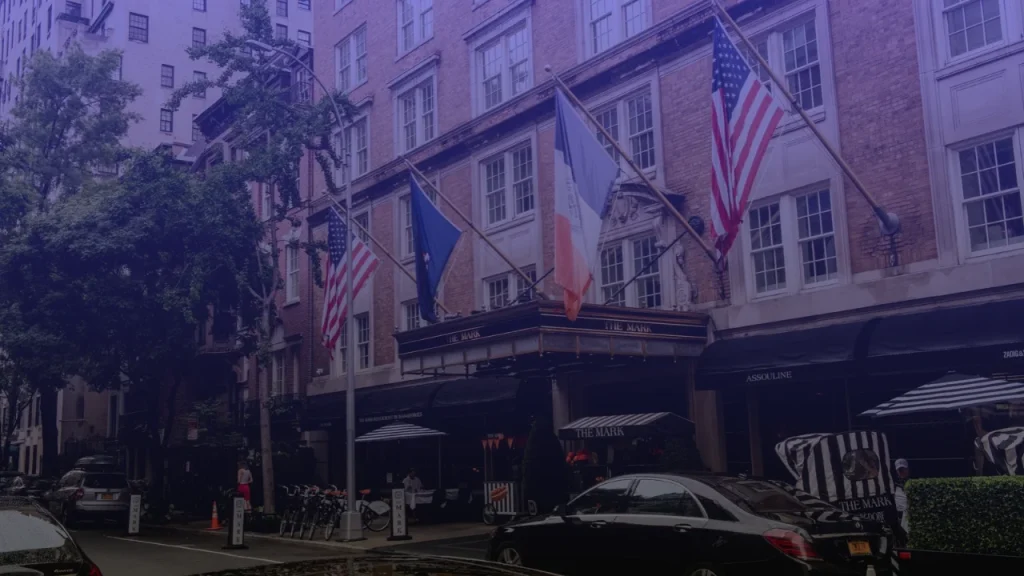
The Mark Hotel lawsuit is a New York defamation case between one of Manhattan’s best-known luxury hotels and Theodore Weintraub. The hotel says Weintraub, who it banned in 2021 after he repeatedly tried to buy alcohol while underage, later organized protests outside the building with signs accusing it of Holocaust denial, supporting Jeffrey Epstein, spreading disease and having mice. The hotel sued in July 2023.
Weintraub disputes the hotel’s version of events. He denied the allegations in court and filed counterclaims accusing the hotel of knowingly serving alcohol to minors. According to the hotel’s lawyers, those counterclaims have since been dismissed. The hotel’s original claims have not been resolved by any public judgment or settlement that I could verify as of October 30, 2026.
The case raises a question that reaches well past this one hotel: when does a heated public protest against a business stop being protected speech and become defamation?
Mark Hotel Lawsuit: Quick Facts
| Case detail | What the records show |
| Case name | Mark Opco LP d/b/a The Mark Hotel v. Theodore Weintraub and John Doe |
| Plaintiff | Mark Opco LP, doing business as The Mark Hotel |
| Defendants | Theodore Weintraub and an unnamed “John Doe” |
| Court | Supreme Court of the State of New York, New York County |
| Index number | 157515/2023 |
| Filed | July 27, 2023 |
| Claims in the original complaint | Libel, slander, tortious interference with prospective business relations, private nuisance |
| Relief sought | Money damages and a restraining order against picketing and specific statements |
| Assigned justice (2026 calendars) | Hon. Arlene P. Bluth |
| Hotel’s counsel | Barket Epstein (Alexander R. Klein) |
| Weintraub’s counsel | Leo L. Esses |
| Weintraub’s counterclaims | Reported dismissed by the hotel’s counsel |
| Class action? | No |
| Settlement fund or claim form? | None. This is a private dispute |
| Latest verified status | Amended complaint filed March 2, 2026; answer filed March 23, 2026; no final judgment or settlement located |
The Mark is on Manhattan’s Upper East Side, on East 77th Street near Madison Avenue. The case is in a New York state trial court, not federal court.
How the Dispute Started in 2021
According to the hotel’s complaint, the trouble began in 2021, when Weintraub was 17. He allegedly tried several times to order drinks at The Mark Bar using a fake ID. Staff refused, and the complaint says he grew more aggressive with each refusal. The hotel says it eventually banned him from the property.
The complaint describes a second incident about a month later. Weintraub allegedly showed up with his parents for a dinner reservation and was stopped by security. The hotel says he first asked for forgiveness, then accused the hotel of antisemitism and claimed employees spat in diners’ food. It says his father calmed things down and told staff he understood the ban.
These are the hotel’s allegations, not findings of fact. Weintraub later denied that he had been banned and said he could not recall whether the family dinner took place.
Reporting on this stage of the dispute comes from Patch’s original story and the Jewish Telegraphic Agency’s account.
What Happened Outside the Hotel in 2023
The complaint says two years passed without contact. Then, in June 2023, Weintraub allegedly returned with other demonstrators. The hotel named a second defendant, identified only as John Doe, who it says protested alongside him. Signs and chants reportedly said:
- “The Mark Denies the Holocaust”
- “The Mark Supports Epstein”
- “The Mark Spreads Disease”
The hotel also cited accusations about mice. Hotel employees told Patch that some protesters said they were being paid about $25 an hour. That figure comes from the hotel’s side and employee accounts and has not been independently established.
The complaint says protesters approached outdoor dining tables, shouted at staff and waited for high-profile guests. The hotel reportedly hired extra security and cut back outdoor dining hours. Workers also said they saw Weintraub nearby during demonstrations, sometimes in a vehicle across the street.
Patch reported that the NYPD confirmed at least three police complaints tied to the demonstrations, and that no injuries were reported. A complaint to police is not a charge or a conviction, and this lawsuit is a civil case, not a criminal one.
Peaceful criticism of a business is generally protected. Threats, obstruction, trespass and physical confrontation are treated differently, and the court would need to sort out which of those, if any, actually happened.
Why Drake Is Part of the Story
Drake stayed at the hotel in July 2023. A video taken as he left on July 17 caught a protester shouting an Epstein-related accusation at the hotel, and the clip helped the dispute spread. According to the lawsuit as relayed in press coverage, a protester also got into a fight with a fan of a departing guest on July 18.
Drake is not a party to the case, and the lawsuit makes no claim about him. His connection matters only because the hotel says the protests disrupted guests and operations.
The Holocaust Denial and Epstein Accusations
The hotel’s general manager, Etienne Haro, filed an affidavit rejecting the Holocaust accusation. As reported by the Times of Israel, he said the hotel recognizes the murder of six million Jews. The hotel’s court papers also say its ownership has Jewish heritage. An affidavit is evidence offered by a party. It is not a ruling.
The Epstein accusation had a slightly different hook. The Mark’s name appeared in Epstein’s address book, which lists many people and businesses. A listing alone does not show that anyone supported or helped him. The hotel’s manager said that, after checking records, Epstein appears never to have been a guest. The Jewish Chronicle covered the hotel’s response.
The hotel says all of these statements were false and were made to hurt its reputation, not to contribute to any public debate.
What the Hotel Asked For and the Restraining Order
The complaint was filed on July 27, 2023, and the hotel sought damages plus an injunction. Shortly afterward, press outlets reported that a temporary restraining order had been granted. Business Insider’s coverage said it barred Weintraub, or anyone acting for him, from picketing within 150 feet of the hotel. The New York Times, as carried by the Seattle Times, reported that the request also covered specific statements: that the hotel denied the Holocaust, supported Epstein, supported sexual assault or was a known source of infectious disease.
I have not seen the signed order, so I cannot say what its terms are today, whether it was modified or extended, or whether a protective order is in place now. It would be wrong to tell readers that a current court order bans all protest at The Mark.
There is also no verified damages award.
Weintraub’s Defense
Weintraub did not simply accept the hotel’s account. In a filing reported in November 2023, he denied the allegations and asked the court to dismiss the case. The filing argued that even if the conduct occurred, it amounted to what it called “petty slights and trivial inconveniences” and not actionable harassment. That was a legal argument, not a finding. His lawyer, Leo Esses, told Patch he was confident in the defenses (Patch, Nov. 1, 2023).
The counterclaims
Weintraub also went on offense. As Patch described them in December 2023, his counterclaims alleged that the hotel knowingly served alcohol to underage teenagers to recover revenue after COVID-19, and that it feared he or others would report the practice to the State Liquor Authority. He said the lawsuit was meant to intimidate him into silence. Court papers show his counterclaims included defamation, based on statements by a hotel worker, and tortious interference.
These were allegations. No liquor authority finding against the hotel has been verified.
The hotel moved to dismiss, and a decision on that motion is posted on the New York courts’ e-filing system. The hotel’s counsel, Barket Epstein, states on Alexander R. Klein’s profile that the counterclaims against the hotel were completely dismissed. Dismissing the counterclaims does not mean the hotel won its own case. The two sets of claims are legally separate.
Latest Mark Hotel Lawsuit Update (October 30, 2026)
The docket moved in early 2026. According to case trackers that mirror the court record (UniCourt and Trellis):
- A decision and order on Motion #006 was entered on March 2, 2026.
- The hotel filed an amended complaint on March 2, 2026.
- Weintraub’s counsel filed an answer on March 23, 2026.
- Settlement conferences were calendared before Justice Bluth for March 9 and April 27, 2026.
A scheduled conference is not a settlement. I could not verify the subject of Motion #006, the contents of the amended complaint, a trial date, a note of issue, a settlement, a verdict or a final judgment. Anyone who needs the current status should search index number 157515/2023 on the New York State Courts Electronic Filing system or check the eCourts portal, since this page can fall behind the docket.
What can be said accurately:
- The hotel sued in July 2023 and later amended its complaint.
- Weintraub denied the allegations.
- His counterclaims were reportedly dismissed.
- The hotel’s original claims have no public final resolution as of this update.
The Laws Behind the Mark Hotel Lawsuit
Not every rule below is necessarily pleaded in the case. Together they explain why it is contested.
Defamation: libel and slander
In New York, a plaintiff generally must show a false statement of fact, published to a third party without privilege, made with the required fault, that either causes special harm or falls into a category treated as defamation per se. Statements that injure a business in its trade can qualify as per se. On fault, New York requires at least negligence, and when a private plaintiff is suing over a matter of legitimate public concern, the Chapadeau standard asks whether the defendant acted in a grossly irresponsible manner.
The label depends on the medium. Signs and printed material are usually libel, and spoken chants are usually slander. The hotel has pleaded both.
CPLR 3016(a): the exact words
Under CPLR § 3016(a), a libel or slander complaint must set out the particular words complained of. That is why the wording of each sign and chant, and where and to whom it was said, matters so much here.
Fact versus opinion
Calling a business terrible is opinion. Saying it did something specific and provable is a factual claim. Courts look at the precise language, whether it can be proven true or false, and the context in which it appeared.
A decision from this month shows the approach. In Shapiro v. Kushnick-Carr, 2026 NY Slip Op 05822 (App. Div. 2d Dept. Oct. 7, 2026), the court held that a public Google review of a lawyer was nonactionable opinion, pointing to its hyperbolic tone and the consumer-review setting. It also applied New York’s anti-SLAPP framework. It has nothing to do with The Mark, but it shows how New York courts are drawing the line now. Read the decision.
A protest sign that says a hotel “denies the Holocaust” is closer to a factual accusation than a one-star review is, which is part of why the hotel thinks it has a claim.
Tortious interference and private nuisance
The hotel also sued for tortious interference with prospective business relations. New York courts generally require wrongful means, such as a crime or an independent tort, or conduct motivated solely by malice (Carvel Corp. v. Noonan, 3 N.Y.3d 182 (2004)). Private nuisance covers an intentional and unreasonable interference with someone’s use and enjoyment of their property. Both claims turn on facts about what the protesters actually did.
New York’s anti-SLAPP law
A SLAPP is a strategic lawsuit against public participation. New York widened its protections in 2020. Under Civil Rights Law § 76-a, a claim can qualify when it is based on a communication in a public forum about an issue of public interest. If it does, a plaintiff seeking damages must prove by clear and convincing evidence that the speaker knew the statement was false or recklessly disregarded the truth. On a motion to dismiss, the plaintiff must also show a substantial basis in law. Under Civil Rights Law § 70-a, a defendant can recover attorney fees when the suit lacked a substantial basis in fact and law.
Could it apply here? Weintraub could argue that picketing on a public sidewalk about alleged liquor-law violations was public participation. The hotel could answer that the signs were false factual statements fueled by a private grievance. I did not find a ruling applying the anti-SLAPP statute to this case, or any fee award.
The First Amendment and the right to protest
Peaceful protest on a public sidewalk is protected, including harsh criticism of a business. In Organization for a Better Austin v. Keefe, 402 U.S. 415 (1971), the Supreme Court struck down an injunction against peaceful leafleting aimed at a businessman, reasoning that prior restraints carry a heavy presumption of invalidity. That principle bears on the hotel’s request to restrict future statements. Read the opinion.
Protection has limits. The First Amendment does not cover trespass, threats, assault, blocking entrances or knowingly false factual statements. A hotel can control access to its private property, but that does not give it the power to silence criticism from a public sidewalk.
New York alcohol laws
The underage-drinking allegations are the root of the whole dispute. New York’s Alcoholic Beverage Control Law covers them in three places:
- ABC Law § 65 bars selling or delivering alcohol to people under 21.
- ABC Law § 65-b makes it an offense for a person under 21 to use false identification to buy or try to buy alcohol.
- ABC Law § 65-c generally prohibits under-21 possession with intent to consume, subject to exceptions.
The hotel says it caught a fake ID and refused service. Weintraub says it overlooked fake IDs for other teenagers. Neither claim is established.
The one-year deadline
CPLR § 215(3) generally gives a plaintiff one year to sue for libel or slander. Protests starting in June 2023 and a complaint filed July 27, 2023 fit comfortably inside that window. Exact accrual dates and republication questions depend on the particular statements.
Mark Hotel Lawsuit Timeline
| Date | Event |
| Summer 2021 | The hotel says Weintraub, then 17, repeatedly tried to buy alcohol with a fake ID and was banned. |
| About one month later | The hotel says he arrived for a family dinner and was turned away. |
| June 2023 | The hotel alleges protests began outside the property. |
| July 17–18, 2023 | Drake’s stay brings attention to the protests and a reported scuffle. |
| July 27, 2023 | The hotel files its lawsuit (Index No. 157515/2023). |
| Late July–August 2023 | Press reports a restraining order, including a 150-foot picketing limit. |
| November 2023 | Weintraub denies the allegations and asks the court to dismiss. |
| December 2023 | Counterclaims alleging underage alcohol service are reported. |
| After the motion to dismiss | The hotel’s counsel reports complete dismissal of the counterclaims. |
| March 2, 2026 | Decision on Motion #006 and amended complaint filed. |
| March 23, 2026 | Weintraub’s answer filed. |
| March 9 and April 27, 2026 | Settlement conferences calendared before Justice Bluth. |
| October 30, 2026 | No final judgment or settlement verified. |
Is This a Class Action? Is There a Settlement?
No. This is a private civil lawsuit between a hotel and one individual. There is no class, no settlement fund, no administrator and no claim form, so people searching for a “Mark Hotel lawsuit settlement” will not find any money to claim.
Can You Be Sued for Criticizing a Business?
Yes, you can be sued. Whether the business wins is a different matter. The questions a New York court asks are fairly consistent:
- Was the statement a provably false fact, or opinion?
- Was it communicated to someone other than the business?
- Did the speaker meet the required level of fault?
- Did the business suffer recognized harm?
- Does anti-SLAPP protection apply?
- Would an injunction amount to an unconstitutional prior restraint?
For people who post reviews or join protests, the practical lesson is to stick to what you personally experienced and to avoid asserting unprovable criminal or morally loaded claims as fact. Businesses weighing a suit face a different lesson: in New York, a weak claim over public criticism can invite an anti-SLAPP motion and a fee award.
Similar disputes we have covered include Tanya Zuckerbrot and F-Factor’s Defamation Lawsuit Against Emily Gellis Lande Reportedly Ends With a $240,000 Settlement and Public Apology, where a business and a critic settled publicly. Another is Fitness Company Sues YouTuber for $75K Over “Worst Product” Review, The Vulcan Strength Lawsuit, which turns on the same line between review and defamation. For a case at the motion-to-dismiss stage, see Marciano Brunette v. Demi Engemann Lawsuit, Mormon Wives Star Files Motion to Dismiss Defamation Lawsuit.
Sources and Legal References
- Patch, Aug. 1, 2023: original lawsuit report
- Patch, Nov. 1, 2023: Weintraub’s answer
- Patch, Dec. 1, 2023: counterclaims
- Jewish Telegraphic Agency / New York Jewish Week
- Times of Israel and The Jewish Chronicle
- Business Insider via Yahoo and New York Times via Seattle Times: restraining order reports
- UniCourt docket and Trellis docket
- Barket Epstein: Alexander R. Klein profile
- CPLR § 3016 and CPLR § 215
- Civil Rights Law § 76-a and § 70-a
- ABC Law § 65, § 65-b, § 65-c
- Shapiro v. Kushnick-Carr, 2026 NY Slip Op 05822
- Organization for a Better Austin v. Keefe, 402 U.S. 415 (1971)
Research note: Allegations in complaints, counterclaims and affidavits are attributed to the party making them. Docket entries come from third-party trackers that mirror the court record, and a law firm’s description of its own result is labeled as such. This article does not claim that a court found the hotel violated liquor laws, that Weintraub committed a crime, or that either side has won the hotel’s original claims.
Disclaimer: This article is for general information only. I am a legal content researcher, not an attorney, and nothing here is legal advice or creates an attorney-client relationship. Case details can change, so confirm the current status on the court docket.
About the Author
Israr Ahmad is a legal content researcher with 4+ years of experience covering class action settlements and consumer rights cases. He has researched and published coverage of 2,500+ settlements using verified court records, settlement administrator filings, and government sources. Learn more about Israr.