
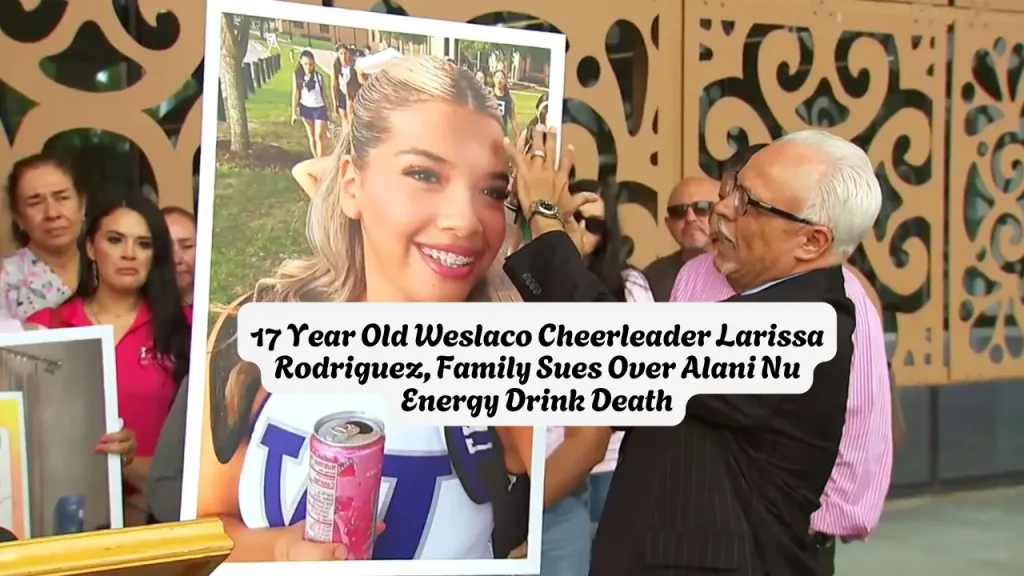
17 Year Old Weslaco Cheerleader Larissa Rodriguez, Family Sues Over Alani Nu Energy Drink Death
The parents of Larissa Rodriguez, a 17-year-old Weslaco High School cheerleader and student council president, filed a wrongful death lawsuit on April 8, 2026, against the distributor of Alani Nu energy drinks. Larissa died on October 20, 2025, after consuming the drinks in the days before her death. The Hidalgo County medical examiner determined her cause of death was cardiomyopathy caused by excessive caffeine consumption. No drugs or alcohol were found in her system. She had no prior medical history and no known family history of heart conditions.
Key Facts at a Glance
| Field | Detail |
| Victim | Larissa Rodriguez, age 17 |
| Date of Death | October 20, 2025 |
| Cause of Death | Cardiomyopathy caused by excessive caffeine consumption (medical examiner) |
| Defendant | Glazer’s Beer and Beverage, LLC and Glazer’s Beer and Beverage of Texas, LLC |
| Product Involved | Alani Nu Energy Drink |
| Lawsuit Filed | April 8, 2026 |
| Court | Hidalgo County, Texas |
| Law Firms | Abraham, Watkins, Nichols, Agosto, Aziz & Stogner / Orozco Law Firm |
| Settlement | None — litigation phase only |
Where the Case Stands Right Now
- The wrongful death lawsuit was filed April 8, 2026, in Hidalgo County court on behalf of Larissa’s parents and her estate.
- The defendant is Glazer’s Beer and Beverage — the distributor that supplied Alani Nu to the H-E-B store where Larissa bought the drinks. Alani Nu’s manufacturer has not been named as a defendant in this filing.
- No trial date has been set and no settlement exists. This case is at its very beginning.
Who Was Larissa Rodriguez?
Larissa Rodriguez was a senior at Weslaco High School in the Rio Grande Valley of South Texas. She was a varsity cheerleader, her school’s student council president, and had plans to attend the University of Texas at Austin. Her community described her as a bright, driven young woman whose sudden death in October 2025 left her school and city in mourning.
Rodriguez passed away on Monday, October 20, 2025. At the time, a cause of death was not made public. It was only after the medical examiner completed testing that her family learned what had killed her.
Her mother, Alicia Rodriguez, described her daughter’s final days to reporters at a press conference held the same day the lawsuit was filed. She drank one on Friday. She drank one on Saturday. She drank one on Sunday. I have a picture of her on Sunday after homecoming in the morning drinking her energy drink with half a bagel, cream cheese, turkey, bacon,” Rodriguez said.
Related article: Kroger No-Hire Lawsuit, Were Former Quickway Drivers Illegally Blacklisted?
What Exactly Did the Medical Examiner Find?
The county medical examiner said Rodriguez’s death was caused by “cardiomyopathy caused by excessive caffeine consumption.” Cardiomyopathy is a condition in which the heart muscle becomes enlarged, thickened, or rigid. It makes it harder for the heart to pump blood effectively and can lead to heart failure or sudden cardiac death.
A coroner’s report found Rodriguez died from an enlarged heart due to stress and “a large amount of caffeine” after consuming Alani energy drinks.
What makes these findings particularly striking is what the tests did not find. No drugs or alcohol were found in Larissa’s system. Attorneys say Larissa had no prior medical history and no known family history of heart conditions. “The medical examiner did 100 different tests, all negative, and the only finding was caffeine and the heart swollen,” attorney Benny Agosto Jr. said.
What Does the Lawsuit Claim?
The lawsuit, filed by the Houston-based firm Abraham, Watkins, Nichols, Agosto, Aziz & Stogner and the Orozco Law Firm, targets Glazer’s Beer and Beverage, LLC and Glazer’s Beer and Beverage of Texas, LLC — the distributor that supplied Alani Nu to the H-E-B grocery store where Larissa purchased the drinks.
The central claim is that Glazer’s distributed and supplied a product that was both dangerously formulated and inadequately labeled, without warning consumers — especially teenagers — about the cardiac risks.
The lawsuit makes several specific allegations about the product itself:
Caffeine content double the recommended teen limit. According to the lawsuit, Glazer’s failed to warn consumers that Alani Nu Energy Drinks contain 200 mg of caffeine per 12-ounce can — exceeding the recommended daily intake of 100 mg of caffeine per day for adolescents, as cited in a 2024 article by Johns Hopkins Medicine. The lawsuit says each can contains as much caffeine as two to two and a half cups of coffee, more than what the FDA says is recommended for teenagers.
Undisclosed stimulants that compound the risk. The lawsuit also claims the drink contained undisclosed amounts of other stimulants like taurine, L-theanine, and guarana seed extract that “compound the cardiac risks of the product.”
No adequate warning for minors. The drink does not warn that the product may cause cardiac arrhythmia, cardiomyopathy, or death, particularly in minors. The lawsuit quotes the positions of three major medical organizations on this point, noting that the American Academy of Pediatrics, the American Medical Association, and the American College of Sports Medicine have all stated that energy drinks have no place in the diet of minors.
“This is a heartbreaking and entirely preventable tragedy,” attorney Benny Agosto Jr. said. “No family should have to bury their child because of a product that was aggressively marketed as safe while failing to adequately warn about its dangerous effects.”
Why Is the Lawsuit Against the Distributor, Not the Manufacturer?
Alani Nu energy drinks are manufactured by a separate company. Glazer’s Beer and Beverage is the wholesale distributor that delivered the product to H-E-B, the Texas supermarket chain where Larissa bought the drinks. Under Texas product liability law, distributors and sellers can share legal responsibility for putting a dangerous product into the hands of consumers, even if they did not manufacture it. The family’s attorneys chose to target Glazer’s as the entity in the distribution chain most directly responsible for the sale at the point of purchase.
Neither Glazer’s Beer and Beverage nor Alani Nu’s manufacturer had publicly responded to the lawsuit as of April 9, 2026.
What Alicia Rodriguez Said About Filing the Lawsuit
Larissa’s mother, Alicia Rodriguez, spoke publicly at the April 8 press conference about why her family chose to go to court rather than grieve privately.
“Never would I think that I would be in this situation, that my family would be in this situation,” Alicia Rodriguez said. “This is the hardest thing that I’ve ever gone through in my life.”
The family described the lawsuit not as a pursuit of money, but as an act of public advocacy — a way to force the energy drink industry to face questions about how it markets products to teenagers and what it discloses on its labels.
Why This Case Matters Beyond One Family
Energy drink-related deaths and hospitalizations have drawn increasing scrutiny from pediatric medical organizations and regulators for years. The Larissa Rodriguez case is one of the most documented and medically specific wrongful death cases involving an energy drink and a minor in recent memory. The medical examiner’s finding — backed by more than 100 negative tests — removes many of the alternative explanations that defendants in prior energy drink cases have raised.
If the family’s legal theory succeeds, it could set a precedent that distributors and retailers bear a duty to warn teenage consumers about caffeine levels that exceed pediatric safety guidelines — even for products legally sold to all ages.
Alicia Rodriguez made clear she intends to see the case through. Her family’s attorneys signaled that this lawsuit is the beginning of a broader push for accountability in how energy drinks are labeled, marketed, and sold to young consumers across the country.
Frequently Asked Questions
What happened to Larissa Rodriguez?
Larissa Rodriguez was a 17-year-old Weslaco High School cheerleader who died on October 20, 2025. The Hidalgo County medical examiner ruled her cause of death was cardiomyopathy caused by excessive caffeine consumption, following her consumption of Alani Nu energy drinks in the days before her death. She had no prior health conditions and no drugs or alcohol in her system.
Who filed the lawsuit and against whom?
Larissa’s parents and her estate filed the wrongful death lawsuit on April 8, 2026, in Hidalgo County, Texas. The defendants are Glazer’s Beer and Beverage, LLC and Glazer’s Beer and Beverage of Texas, LLC — the distributor that supplied Alani Nu to the H-E-B store where Larissa purchased the drinks.
How much caffeine does Alani Nu contain?
According to the lawsuit, each 12-ounce can of Alani Nu contains 200 milligrams of caffeine — double the 100 mg daily maximum recommended for teenagers by pediatric health authorities. The drink also contains taurine, L-theanine, and guarana seed extract, which the lawsuit says further increase cardiac risk.
Is Alani Nu banned or recalled?
As of April 9, 2026, Alani Nu has not been recalled or banned. The product remains on store shelves. The lawsuit targets the distributor rather than triggering any regulatory action at this time.
Has anyone else died from Alani Nu?
The lawsuit focuses on Larissa Rodriguez’s specific case. Alani Nu has not been the subject of a publicly known prior wrongful death verdict. However, energy drinks broadly have been linked to cardiac events in young people in multiple reported cases over the past decade.
What is cardiomyopathy and how can caffeine cause it?
Cardiomyopathy is a disease of the heart muscle that makes it harder for the heart to pump blood. Excessive caffeine intake can overstimulate the heart, trigger irregular rhythms, and in cases of chronic high consumption, contribute to structural changes in the heart muscle. The medical examiner in this case attributed Larissa’s enlarged heart directly to excessive caffeine consumption.
What does this lawsuit mean for parents?
This case raises serious questions about whether energy drinks marketed to general consumers are safe for teenagers. The American Academy of Pediatrics, the American Medical Association, and the American College of Sports Medicine all recommend that teenagers avoid energy drinks entirely. Parents may want to review what their children drink and look for caffeine content on labels.
Last Updated: April 9, 2026
Disclaimer: This article is for informational purposes only and does not constitute legal advice. Legal claims and outcomes depend on specific facts and applicable law. The allegations in this lawsuit have not been proven in court, and the defendants have not been found liable for any wrongdoing. For advice regarding a particular situation, consult a qualified attorney.
About the Author
Israr Ahmad is a legal content researcher with 4+ years of experience covering class action settlements and consumer rights cases. He has researched and published coverage of 2,500+ settlements using verified court records, settlement administrator filings, and government sources. Learn more about Israr.