
How Dark Can You Tint Windows in Texas? Tint Windows 2026 Rules
How dark can you tint windows in Texas?
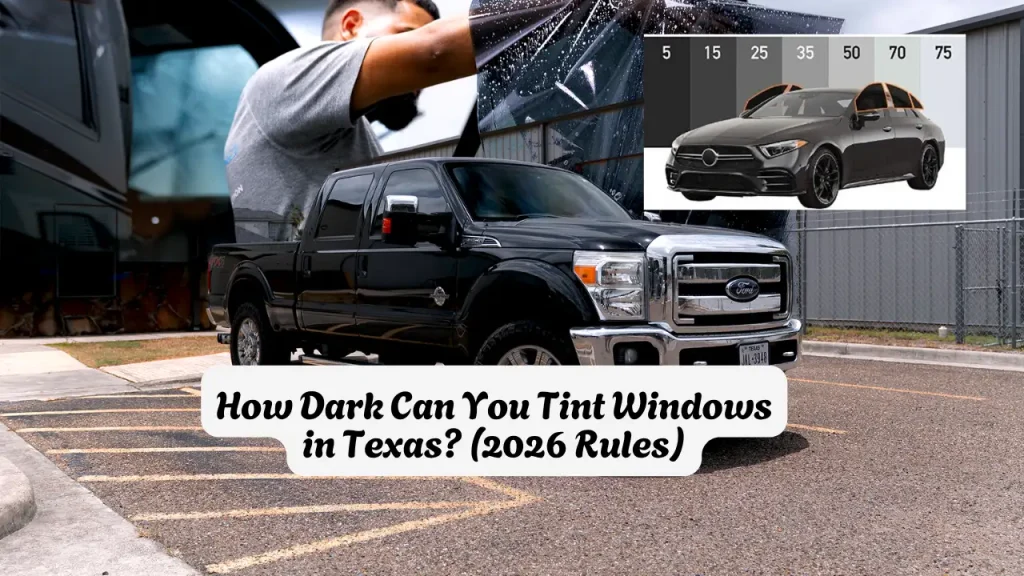
You can tint your front side windows to a minimum of 25% VLT in Texas. For SUVs, vans, and trucks, the rear side and back windows can be any darkness, including 5% limo tint. Sedans must maintain 25% VLT on all side windows. Windshield tint is limited to the top 5 inches.
In Texas, the sun is brutal, but the window tint laws are strict. If you go too dark, you won’t just get a ticket—you’ll fail your state inspection, meaning you can’t renew your registration. The “magic number” for most drivers is 25%.
This means your front windows (the ones next to the driver and passenger) must let at least 25% of light through. If you put 5% “limo tint” on your front windows, you are asking for a $200+ ticket. However, the rules change depending on whether you drive a car or a truck.
Texas Window Tint Limits at a Glance (2026)
Texas law uses Visible Light Transmission (VLT) to measure darkness. A lower percentage means a darker window. For example, 5% is very dark (limo tint), while 70% is nearly clear.
| Window Location | Sedans & Coupes | SUVs, Trucks & Vans |
| Windshield | Top 5 inches (25% VLT) | Top 5 inches (25% VLT) |
| Front Side | 25% VLT | 25% VLT |
| Rear Side | 25% VLT | Any Darkness (Limo OK) |
| Back Window | Any Darkness* | Any Darkness* |
*Back window darkness is only legal if the vehicle has dual side-view mirrors (which 99% of modern cars do).
Is 5 Percent Tint Legal in Texas?
This is the most common question drivers ask. The answer is yes, but only for specific windows.
If you drive an SUV or a pickup truck, you can legally put 5% tint on every window behind the driver. This is because these are classified as “Multi-Purpose Vehicles.” If you drive a sedan (like a Honda Accord or Tesla Model 3), putting 5% on your rear side windows is technically illegal under Texas Administrative Code § 21.1.
Why the “Front Window” Rule Matters Most
Texas police focus almost entirely on the front side windows. For officer safety, they need to be able to see into the vehicle during a traffic stop.
If a shop installs “25% film” on your windows, you might still fail an inspection. Why? Because factory glass often has a slight tint already (usually around 70%). When you add 25% film to 70% glass, the final result is actually around 18-20%, which is illegal. Always ask your installer to use a tint meter to verify the final “net” VLT is above 25%.
Reflectivity: The “Mirror” Rule
Texas doesn’t just care about how dark the windows are; they also care about how “shiny” they are. Under the Texas Transportation Code, your window tint cannot be more than 25% reflective.
If your windows look like a silver mirror or have a high-metallic sheen, they are illegal. High reflectivity blinds other drivers and is a high-priority for highway patrol.
Related article: Can I Sue a Company for Chatbot Mistakes? AI Chatbot Legal Liability
How Much is a Window Tint Ticket in Texas?
If you get pulled over for dark windows, the cost depends on the county, but here is what to expect in 2026:
- Standard Fine: $100 to $275 per violation.
- Court Costs: $50 to $150.
- The “Fix-it” Option: Many Texas judges will dismiss the fine if you show proof (a receipt) that you removed the illegal tint and replaced it with a legal version before your court date.
The Medical Exemption Loophole
If you have a medical condition that makes you sensitive to light—such as Lupus, skin cancer, or certain eye conditions—you can legally go darker than 25%.
To stay legal, you must carry a signed statement from a licensed physician or optometrist in your glove box. This note must specifically state that the darker tint is medically necessary. Note that even with a medical note, you cannot tint your full windshield; the 5-inch top strip rule still applies.
Common Mistakes to Avoid
- Assuming all SUVs are equal: Some small crossovers are registered as passenger cars, not SUVs. Check your registration. If it says “Passenger,” you cannot have 5% tint on the rear side windows.
- Skipping the Sticker: Texas law requires a “compliance sticker” to be placed between the film and the glass on the driver’s side window. If you don’t have this, an inspector can fail you even if the darkness is legal.
- Illegal Colors: You cannot use Red, Amber, or Blue tint in Texas. These colors are reserved for emergency vehicles and are an immediate reason for a stop.
Frequently Asked Questions
Q: What is the deadline or statute of limitations for fixing a tint ticket?
A: Typically, you have until your “Appearance Date” listed on the ticket (usually 14-21 days) to show proof of correction to the court to avoid the maximum fine.
Q: How long does the window tint installation process typically take?
A: A professional shop can tint a full vehicle in 2 to 4 hours. However, you must wait 3 to 5 days for the adhesive to “cure” before rolling your windows down.
Q: Do I need a lawyer, and how do I find the right one?
A: For a simple tint ticket, a lawyer is usually not needed. If the ticket led to a vehicle search or other charges, a criminal defense attorney is vital. You can find local help at AllAboutLawyer.com.
Q: Can I tint my entire windshield if the film is clear (70% or 80%)?
A: No. Under Texas law, no film—regardless of how clear it is—can be applied below the AS-1 line (the top 5 inches) of the windshield.
Q: Will illegal tint void my car insurance?
A: While it won’t void your policy, if you are in an accident and the other driver claims they couldn’t see you or you couldn’t see them due to dark tint, your insurance company may use it to assign you more “fault” in the claim.
Legal Terms Used in This Article
Visible Light Transmission (VLT): The measure of how much light passes through your window. 25% VLT means 75% of light is blocked.
AS-1 Line: The small marking on the top corners of your windshield. Tint cannot go below this line.
Multi-Purpose Vehicle (MPV): A vehicle category including SUVs and trucks that allows for darker rear windows in Texas.
Luminous Reflectance: The “mirror” effect of a window. Texas limits this to 25% to prevent blinding other drivers.
Class C Misdemeanor: The legal classification for a window tint violation in Texas, which is a fine-only offense.
Statute: A written law, specifically those found in the Texas Transportation Code regarding vehicle equipment.
Conclusion
Staying legal with your tint in Texas is about more than just avoiding a fine—it’s about passing your annual inspection and keeping your registration current. Stick to the 25% rule for your front windows, and if you drive a sedan, keep that same limit for the back.
If you are a truck or SUV owner, feel free to go as dark as you want on the rear glass, provided you have your side mirrors. If you have already received a citation, don’t ignore it. Most Texas courts are willing to work with you if you bring the vehicle back into compliance.
For more help with Texas traffic laws or to find a lawyer for a complex citation, visit AllAboutLawyer.com to protect your rights on the road.
About the Author
Israr Ahmad is a legal content researcher with 4+ years of experience covering class action settlements and consumer rights cases. He has researched and published coverage of 2,500+ settlements using verified court records, settlement administrator filings, and government sources. Learn more about Israr.