
LA Dump Truck Deaths, $11 Million Settlement Sought in Amy and Marlenne Lorenzo Case
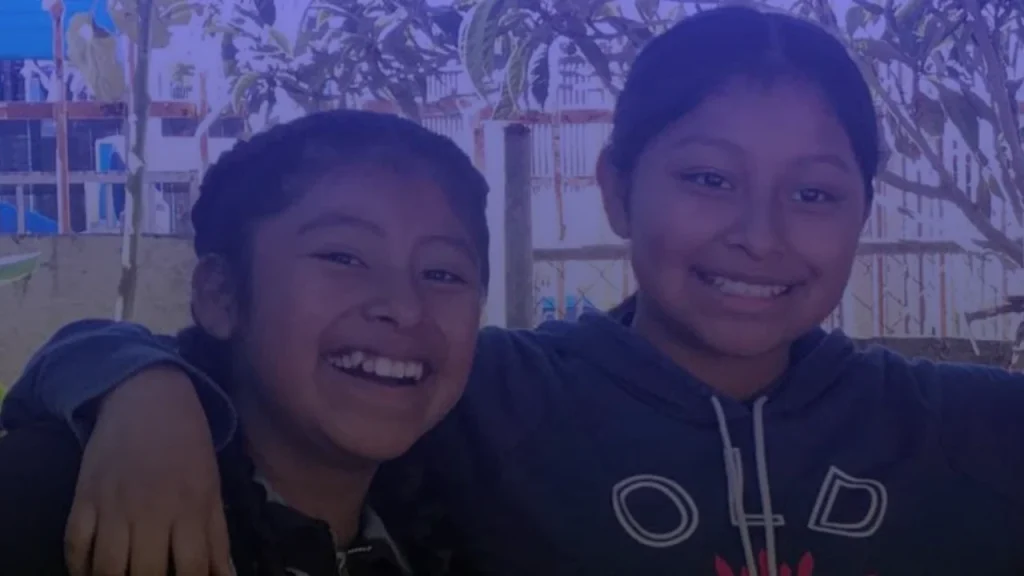
Two trucking companies are asking a Los Angeles court to approve an $11 million settlement over the deaths of sisters Amy Lorenzo, 12, and Marlenne Lorenzo, 14. A dump truck struck the girls while they were walking to school on April 4, 2019. A hearing on the proposed agreement is scheduled for January 20, 2027, according to reporting published October 25, 2026.
The companies seeking approval are Commodity Trucking Acquisition LLC and Commodity Trucking Holdings LLC. The settlement is meant to resolve only their part of a broader wrongful-death lawsuit brought by the girls’ parents, Francisco Lorenzo and Angelina Nicolas. It does not mean every defendant has settled or that the lawsuit has ended.
This is a private wrongful-death case, not a class action. There is no official settlement website, claim form, claims administrator or filing deadline, and members of the public cannot claim money from this agreement. The $11 million is also still a proposal awaiting court approval, so it should not be treated as a finalized payment.
The case matters beyond the dollar figure. In a published decision, the California Court of Appeal addressed whether a project owner and contractors can owe pedestrians a duty of care when construction trucks are sent to an unauthorized staging area. It reversed a summary judgment for several defendants, which let the negligence claims against them continue. That ruling was not a finding of liability.
Quick Facts: The Los Angeles Dump Truck Wrongful-Death Case
| Detail | What is known |
| Case | Lorenzo v. Calex Engineering, Inc., et al. |
| Court of Appeal case number | B331177 (published opinion, March 28, 2025) |
| Los Angeles Superior Court case number | 19STCV23612 |
| Plaintiffs | Francisco Lorenzo and Angelina Nicolas (the girls’ parents) |
| Victims | Amy Lorenzo, 12, and Marlenne Lorenzo, 14 |
| Settling companies | Commodity Trucking Acquisition LLC and Commodity Trucking Holdings LLC |
| Proposed settlement | $11,000,000, covering only those two companies’ part of the case |
| Incident date | April 4, 2019 |
| Location | 37th Street and Broadway, Los Angeles, California |
| Approval hearing | January 20, 2027, before Judge Alison Mackenzie |
| Current status | Proposed; approval not yet verified |
| Official settlement website | None |
| Claim form link | None |
| Public claim deadline | None |
| Relevant law | California Civil Code § 1714 and California negligence law |
The case names and numbers come from the published appellate opinion. The settlement amount and hearing date come from the October 25, 2026 reporting and have not been confirmed against the full settlement motion.
What Happened to Amy and Marlenne Lorenzo on April 4, 2019?
The sisters were walking to Clinton Middle School on the morning of April 4, 2019, when a large dump truck struck them at 37th Street and Broadway in Los Angeles.
The published appellate opinion explains that driver Stanley Bernard Randle was driving an empty double-bottom dump truck, roughly 50 to 60 feet long, toward a staging area used for a downtown construction project. He was approaching the intersection shortly before 8 a.m. when he turned right onto northbound Broadway and struck the sisters.
Marlenne died the same day. Amy was hospitalized in critical condition and died nearly three weeks later.
Why the construction project became central to the lawsuit
The dispute was not limited to whether the driver was negligent. The family alleged that decisions about construction logistics and truck staging contributed to the danger facing pedestrians.
The project involved excavating and hauling away large quantities of dirt from a downtown Los Angeles construction site. The city required a permit covering soil removal, truck staging and hauling routes. According to the Court of Appeal’s opinion, the project owner represented that trucks would stage on site, with no more than 20 trucks there at once, and the permit required on-site staging.
The appellate record instead described an off-site staging area near 23rd Street and Broadway. On April 4, 2019, the excavation contractor had requested 90 dump trucks for the operation, and trucks were dispatched from the staging area to the site as needed.
The family’s theory was that these choices about the staging location and truck movements created a foreseeable risk to pedestrians, including children walking to school. The collision happened before the driver reached the staging area that morning, which is why the question of who owed a duty became so important.
Related article: King Overton Wrongful Death Lawsuit, Family Seeks $100 Million or More From SwimRVA After 9-Year-Old’s Drowning
Who Are the Defendants and How Are They Connected?
The parents filed their lawsuit in Los Angeles Superior Court beginning in July 2019. Related actions were later consolidated with it. The defendants fall into several groups:
- The truck driver: Stanley Randle, whose driving was directly involved in the collision.
- The trucking subcontractor: Los Morales Trucking, which employed Randle.
- Commodity Trucking: the business involved in arranging trucks and operating the staging process, and the two entities now seeking approval of the $11 million settlement.
- The excavation contractor: Calex Engineering, Inc.
- The general contractor: Tishman Construction Corporation of California.
- The project owner: Core/Related Grand Avenue Owner, LLC.
- Other parties: additional defendants in the broader and related litigation, including public entities identified in reporting.
The central legal question was whether only the driver could be held responsible, or whether other businesses in the contracting chain could also face liability for decisions that allegedly increased the risk of a pedestrian collision.
The Commodity entities have reportedly disputed that they are responsible, including by arguing that the driver was outside the course and scope of work for them. The plaintiffs have argued that the trip furthered the project’s hauling needs. These are the parties’ litigation positions, and no final ruling on them has been identified.
What the family alleged about school safety
The family’s allegations, as described in reporting and the court record, included concerns about heavy construction traffic during school travel hours, the absence of crossing guards at the time of the collision, and the safety of the routes children used to reach school. They also challenged how the project handled truck staging and traffic arrangements.
These are allegations and legal theories, not a final judicial finding that every defendant caused the deaths. The appellate ruling addressed whether certain defendants could be dismissed at the summary-judgment stage, not whether they were ultimately liable for the damages claimed.
What the California Court of Appeal Decided in Lorenzo v. Calex Engineering
The most significant legal development before the proposed settlement was the Court of Appeal’s published decision of March 28, 2025, in Lorenzo v. Calex Engineering, Inc., case number B331177 (110 Cal.App.5th 49).
The trial court had granted summary judgment for Core/Related, Tishman and Calex, concluding that they owed the girls no duty of care. The parents appealed, and a majority of the Court of Appeal reversed.
California Civil Code § 1714: the duty to use reasonable care
Civil Code § 1714(a) generally makes a person responsible for injuries caused by a lack of ordinary care in managing their person or property, subject to the statute’s terms and legal exceptions. The majority explained that this statute creates a general duty to exercise reasonable care for the safety of others.
It concluded that the developers and contractors who organized the construction operation had a duty of reasonable care where their conduct allegedly increased the risk of harm to pedestrians. The court focused on the alleged use of an unauthorized staging area despite the permit’s on-site staging requirement, reasoning that the permit process would have let city agencies evaluate the location and routes and consider traffic-safety measures.
The court did not hold that every construction contractor is automatically liable whenever a truck causes a collision. Its holding addressed the circumstances in that appeal.
The Rowland factors and foreseeability
California courts use the factors from Rowland v. Christian (1968) 69 Cal.2d 108 to decide whether public policy justifies an exception to the general duty of care. The factors are:
- The foreseeability of harm.
- The degree of certainty that the plaintiff suffered injury.
- The closeness of the connection between the defendant’s conduct and the injury.
- The moral blame attached to the conduct.
- The policy of preventing future harm.
- The burden on the defendant and the consequences to the community.
- The availability, cost and prevalence of insurance.
The majority concluded that these factors did not justify exempting the defendants from the general duty. It reasoned that routing construction traffic through pedestrian-heavy streets while allegedly bypassing permit requirements could create foreseeable risks, and that recognizing a duty would encourage compliance with permitting obligations. A dissent argued that the link between the staging decision and the driver’s independent negligence was too remote and that the duty would create disproportionate liability.
Why the ruling did not decide final liability
The 2025 decision was not a damages award. The appellate court reversed the summary judgment and sent the case back for further proceedings. That allowed the negligence claims against the affected defendants to continue. It did not establish that each defendant was liable or decide how much compensation the family should receive.
The court also did not reach the plaintiffs’ alternative arguments based on negligence per se, nondelegable duty or peculiar risk. Those theories should not be described as accepted by the appellate court.
Why the $11 Million Settlement Is Being Sought Now
The October 25, 2026 report states that Commodity Trucking Acquisition LLC and Commodity Trucking Holdings LLC filed papers asking the court to approve an $11 million resolution of the claims against them. Their attorneys reportedly argued that the amount is more than reasonably proportionate to their potential liability and would avoid the continuing cost and burden of litigation and trial.
A proposed settlement is different from an approved one. Where court approval is requested, the proposed terms are not final until the judge rules.
Does the $11 million settle the entire Lorenzo lawsuit?
Not according to the available reporting. The agreement covers only the two Commodity Trucking entities’ part of the litigation, so it should not be called a global settlement. If the court approves it, those two defendants would be dismissed. Claims against the other parties, including the project owner, the general contractor, the excavation contractor, the driver, Los Morales Trucking and any public entities, would continue separately.
The full motion and agreement would be needed to confirm exactly which claims and parties are released, whether there are conditions, and how the deal interacts with the remaining case.
How much will each parent receive?
The reporting identifies an $11 million proposed settlement but does not say how much each parent would receive or what the net amount would be. It would be wrong to divide $11 million by two and report $5.5 million per parent. Allocation can depend on the settlement terms, attorney fees, costs, liens and any court-ordered arrangements, and the complete approval papers are needed to confirm the distribution.
Who Is Eligible to File a Claim in the $11 Million Lorenzo Settlement?
No one outside the case. Unlike a consumer class-action settlement, Lorenzo is a wrongful-death action brought by identified plaintiffs over the deaths of their children, and the reported agreement concerns claims against two named business entities. No settlement administrator, claim portal, claim form or claims deadline has been identified.
- Members of the public cannot assume they are eligible for a payment.
- Families in unrelated truck accidents cannot file claims under this agreement just because their cases look similar.
- The settlement is not a fund open to all Los Angeles residents.
- Anyone actually involved in the litigation should rely on the court filings and their own attorneys for information.
Do not submit personal information to any site claiming to offer a payout from this case. To learn how to spot a fake claim site, read our guide on how to verify a class action settlement is legitimate.
How to Check the Official Status of the Lorenzo Settlement
Readers who want confirmation should check the court record instead of relying only on news summaries.
- Identify the underlying case. Search Los Angeles Superior Court case number 19STCV23612 for the original wrongful-death lawsuit.
- Review the settlement papers. Look for the motion seeking approval, the proposed agreement, supporting declarations and any order from the judge.
- Check the January 20, 2027 hearing. Confirm whether it goes ahead, is continued, or ends in an order approving or denying the request.
- Read the actual order. A hearing date does not prove approval. The written order or docket entry shows the court’s decision.
- Separate the settled claims from the remaining case. Check whether the order resolves only the claims against the two Commodity Trucking entities or something broader.
The Los Angeles Superior Court website and the published appellate opinion are listed in the sources below.
What California Wrongful-Death Law Means for Similar Truck Accidents
The Lorenzo litigation shows how a fatal truck collision can raise questions about more than the driver’s conduct. California wrongful-death and negligence claims depend on the parties, the facts and the legal theories involved.
Who can bring a wrongful-death claim
California Code of Civil Procedure § 377.60 identifies who may bring a wrongful-death action when someone dies because of another party’s wrongful act or neglect. Surviving parents may, in the circumstances the law allows, seek damages such as loss of the child’s love, companionship, comfort and support, along with funeral and burial expenses. The statute decides who may sue. It does not establish that a defendant is liable or promise any settlement amount. Wrongful-death claims generally must be filed within two years of the date of death (Code of Civil Procedure § 335.1), subject to tolling and other exceptions.
Negligence and causation
A negligence claim generally requires a duty of care, a breach of that duty, causation and legally recognized harm. In a construction-related truck collision, questions can include whether the driver operated the truck negligently, whether a contractor arranged unsafe truck movements, whether the work violated permit conditions, and whether that conduct legally contributed to the injury.
The appellate decision is notable because it found that causation could not be resolved against the parents as a matter of law on that record. The majority concluded the issue should go to a factfinder rather than being treated as legally impossible.
Vicarious liability and independent contractors
A company is not automatically liable for every act of every contractor it hires. Responsibility can depend on employment relationships, control, contractual duties, legal exceptions and the conduct alleged. The “going-and-coming” rule, which often shields an employer when an employee is simply commuting, can have limits when the travel is required by the nature of the work. Lorenzo shows why courts examine the real arrangements and each company’s role. The duty-of-care holding should not be stretched into a rule that every company in a subcontracting chain is responsible for every crash.
Negligence per se and permit violations
Violating a statute or regulation can sometimes support a negligence per se theory when the legal requirements are met. But not every permit violation automatically establishes it. The Lorenzo court expressly did not decide the plaintiffs’ negligence per se theory, so its duty-of-care holding is not a finding that a permit violation conclusively proved liability.
What Does an $11 Million Truck Accident Settlement Tell Readers About Case Value?
The proposed $11 million reflects a negotiated resolution of specific wrongful-death claims against two defendants, subject to court approval. It is not a standard value for fatal truck accidents. Case value depends on the circumstances of the collision, the evidence of fault, the losses the law allows, the number of defendants, available insurance and the strength of the evidence.
For a broader explanation of what drives compensation, read How Much Is My Truck Accident Case Worth? And Why Most Victims Underestimate It and How Is Pain and Suffering Calculated After a Truck Accident?. Those guides are general. They cannot be used to calculate the Lorenzo family’s recovery, which depends on the agreement’s terms and the court’s decisions.
If you or a family member was hurt in a commercial or construction-truck collision in California, a qualified attorney can review the facts, the possible defendants and the deadlines that apply to your situation.
Lorenzo Case Timeline
| Date | Event |
| April 4, 2019 | Collision at 37th Street and Broadway; Marlenne Lorenzo dies the same day |
| Later in April 2019 | Amy Lorenzo dies of her injuries, nearly three weeks after the collision |
| July 2019 | Parents begin filing wrongful-death lawsuits in Los Angeles Superior Court (No. 19STCV23612) |
| March 28, 2025 | Court of Appeal reverses summary judgment for Core/Related, Tishman and Calex in Lorenzo v. Calex Engineering, Inc. (B331177) |
| October 2026 | Commodity Trucking entities file papers seeking approval of an $11 million settlement of the claims against them |
| October 25, 2026 | News reports the proposed settlement and the hearing date |
| January 20, 2027 | Scheduled hearing on approval before Judge Alison Mackenzie |
Frequently Asked Questions About the LA Dump Truck Deaths Settlement
Has the $11 million Lorenzo settlement been approved?
Not as far as can be verified. Reporting published October 25, 2026 says Commodity Trucking Acquisition LLC and Commodity Trucking Holdings LLC sought approval and that a hearing is set for January 20, 2027.
Can the public file a claim for the $11 million Lorenzo settlement?
No. No public claim form or claims process exists. The agreement concerns a wrongful-death lawsuit brought by the victims’ parents, not a public class-action settlement.
Who were Amy and Marlenne Lorenzo?
They were sisters, ages 12 and 14, who died after a dump truck struck them as they walked to school in Los Angeles on April 4, 2019. Their parents, Francisco Lorenzo and Angelina Nicolas, filed the wrongful-death lawsuit.
Which companies are seeking approval of the $11 million settlement?
Commodity Trucking Acquisition LLC and Commodity Trucking Holdings LLC.
What did the Court of Appeal decide in Lorenzo v. Calex Engineering?
On March 28, 2025, it reversed a summary judgment for Core/Related Grand Avenue Owner, Tishman Construction Corporation of California and Calex Engineering. The majority concluded the defendants owed a general duty of care in these circumstances and that the case could not be dismissed on the grounds the trial court used. It did not decide final liability or award damages.
What is the case number?
The appellate case number is B331177 and the Los Angeles Superior Court case number is 19STCV23612.
Does the settlement mean the driver was the only person responsible?
No. The settlement covers only two trucking-related companies’ part of a broader lawsuit. The appellate decision looked at whether other businesses on the construction project could owe a duty of care, and the settlement does not resolve every party’s liability.
Why are so many companies involved?
California law can allow claims against companies higher in a contracting chain when their decisions, such as staging practices, allegedly increase foreseeable risks. Each company’s responsibility depends on its role, the evidence and the legal theory.
When is the next hearing?
January 20, 2027, according to the October 25, 2026 report. Confirm the date on the court docket before relying on it.
Sources and Legal References
- Lorenzo v. Calex Engineering, Inc., Cal. Court of Appeal, Second Appellate District, Division One, No. B331177, published opinion, March 28, 2025
- MyNewsLA: Companies Seek $11M Settlement Approval of Suit Over Big-Rig Deaths, October 25, 2026
- Superior Court of California, County of Los Angeles (case search for No. 19STCV23612)
- California Civil Code § 1714(a)
- Rowland v. Christian (1968) 69 Cal.2d 108
- California Code of Civil Procedure § 377.60
- California Code of Civil Procedure § 335.1
Legal disclaimer: This article explains publicly available court information and reported settlement developments for general information only. It is not legal advice. AllAboutLawyer.com is a legal information website, not a law firm. The proposed settlement has not been verified as approved, and no claim form or deadline exists for the public.
About the Author
Israr Ahmad is a legal content researcher with 4+ years of experience covering class action settlements and consumer rights cases. He has researched and published coverage of 2,500+ settlements using verified court records, settlement administrator filings, and government sources. Learn more about Israr.